
The weight of an aluminum beverage can might seem like a minor technical footnote to an average consumer snapping open a cold drink. However, for beverage brand owners, supply chain directors, and global distributors navigating the complex logistics of the modern market, every single fraction of a gram of aluminum is a high-stakes variable. It is a metric that directly dictates your raw material cost insulation, shapes your global ocean freight expenses, and heavily influences your brand’s carbon footprint profile.
Driven by volatile global metal pricing indexes and stringent international net-zero mandates, the beverage packaging industry has discarded legacy structural frameworks. We have firmly entered an era of aggressive, precision-engineered "lightweighting." This comprehensive guide unpacks the exact weight specifications of modern aluminum cans, explores the cutting-edge metallurgy driving lightweighting initiatives, and demonstrates how optimizing these microscopic metrics can fundamentally transform your brand's bottom-line profitability.
Aluminum beverage cans are metal containers used to package beverages, mainly made of aluminum alloy. This kind of can is lightweight, unbreakable and recyclable, and can effectively protect the beverage inside and extend its shelf life. Aluminum beverage cans are widely used in the packaging of various carbonated drinks, beer, juice and other drinks.
Aluminum beverage cans are usually stamped and formed from two pieces of aluminum alloy, and then the two pieces of can body are connected together through sewing or crimping technology to form a sealed container. This kind of jar has a beautiful appearance and good printing effect, and can well display the brand image of the product.
In addition, aluminum beverage cans also have good environmental performance. Aluminum alloy can be recycled and reused unlimited times without causing pollution to the environment. During the recycling process, aluminum beverage cans can be melted down and recast into new aluminum products, thereby recycling resources.
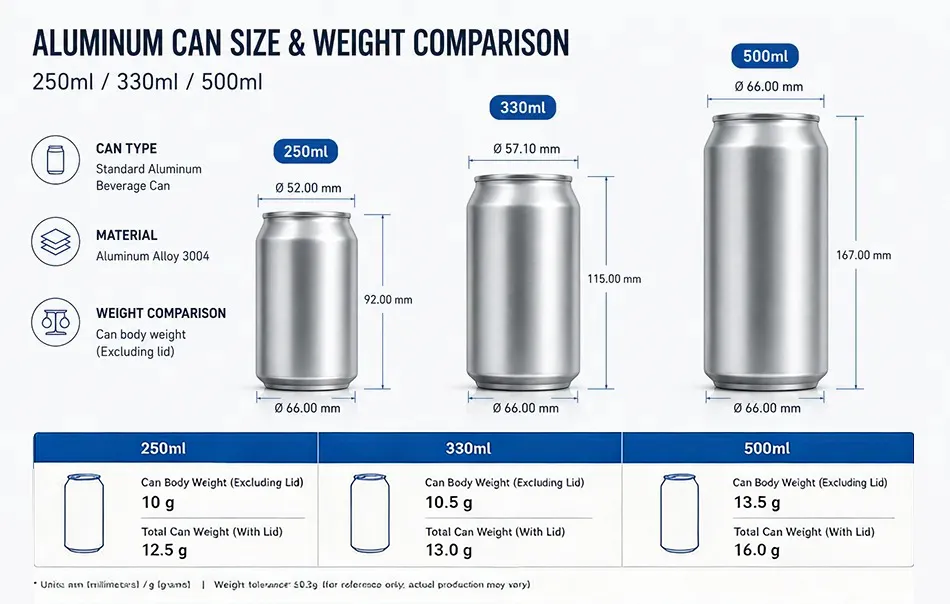
The weight of aluminum beverage cans varies depending on their capacity, design and manufacturing process. Generally speaking, a standard 330ml aluminum carbonated beverage can weighs approximately 13g to 20g. This weight mainly refers to the weight of the can itself, excluding beverages.
Standard weight: According to publicly released information, the weight of a standard 330 ml aluminum carbonated beverage can is approximately between 13 grams and 20 grams. Differences within this range may be due to different brands, manufacturers or production batches.
Weight composition: The total weight of the aluminum beverage can includes the weight of the can body and the pull ring. The can itself usually accounts for most of the weight, with the tab weighing relatively little. Specifically, a complete aluminum can (including the can body and ring) weighs about 22 grams.
Other specifications: In addition to 330 ml standard cans, there are also other specifications of aluminum beverage cans, such as 500 ml beer cans. These different sizes of beverage cans also vary in weight. For example, a 500ml beer can may weigh between 15g and 20g.
Overall, the weight of aluminum beverage cans varies based on a number of factors, but generally speaking, a standard 330ml aluminum carbonated beverage can weighs approximately between 13 grams and 20 grams. If you need more accurate data, it is recommended to consult the relevant manufacturer directly or consult the relevant industry standards.
Please note that the above data and information are based on publicly released information and may contain certain errors or changes. In actual applications, verification and adjustment should be made according to specific conditions.
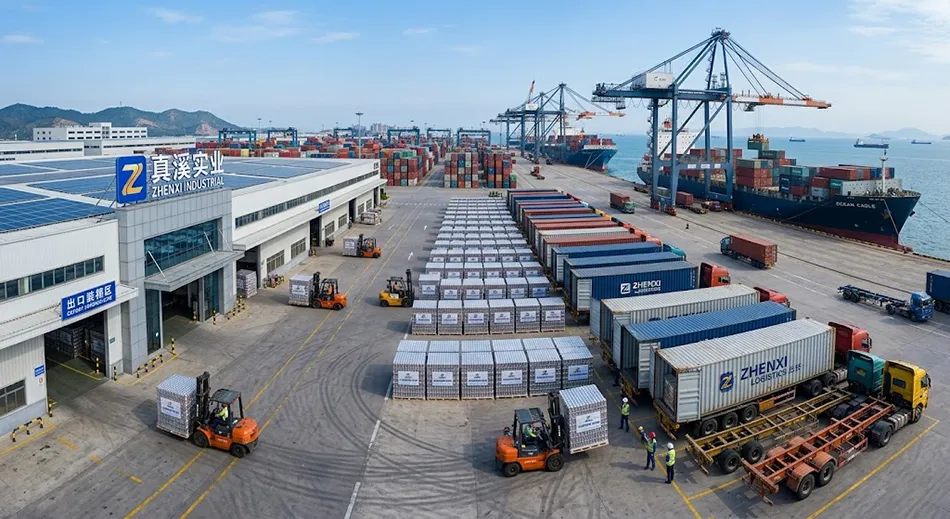
While material savings at the factory level are significant, the financial impact of lightweighting becomes even more apparent during cross-border transit. For international beverage brands exporting products across vast oceanic trade lanes to regions like the Middle East, Africa, or North America, empty packaging weight directly governs your physical container capacity.
When shipping finished, liquid-heavy cargo—such as a premium, high-density
To calculate exactly how packaging geometry impacts your shipping margins, supply chain teams utilize the following payload distribution formula:
Every gram allocated to the container is a gram stolen from your sellable product. By partnering with a precision manufacturer like ZhenXi Industry to integrate optimized, lightweight aluminum configurations, brands can eliminate up to 150 kg to 200 kg of deadweight per shipping container.
Over a multi-container shipment, this systemic weight reduction allows you to fit additional cases of actual liquid into every single container box. The result is a direct, measurable reduction in your per-unit shipping costs and a healthier bottom-line margin on overseas retail shelves.
Structure: Usually made of two pieces of aluminum alloy material, including the can body and lid. The can body has an overall seamless structure with a bottom.
Features: Cylindrical design, stable structure and high compressive strength.
Usage: Widely used in the packaging of carbonated drinks, juice, beer and other beverages.
Overview: A “sleek can” generally refers to a can that is more elongated or slimmer than a standard can, designed to reduce material use, reduce costs, or meet specific market needs.
Features: Compared with standard cans, sleek cans may have a smaller surface area with the same capacity, thereby reducing material consumption.
Purpose: Suitable for drinks that want to reduce the use of packaging materials, improve environmental performance, or pursue unique packaging designs.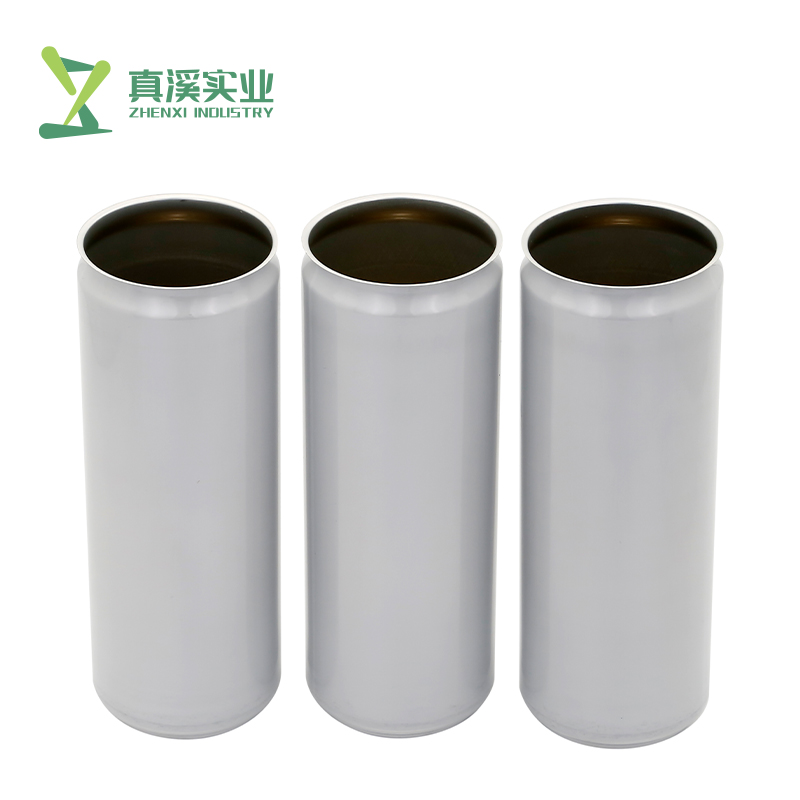
Origins: The Slim Can was originally designed as a new aluminum can designed by Diet Pepsi for New York Fashion Week 2011, with its elongated shape.
Features: The can body is more slender, easy to hold, and stylish in appearance.
Market response: Although the slim can was criticized when it was launched for allegedly promoting "thin is beautiful" in its advertising slogan, the can itself was loved by consumers for its unique design and portability.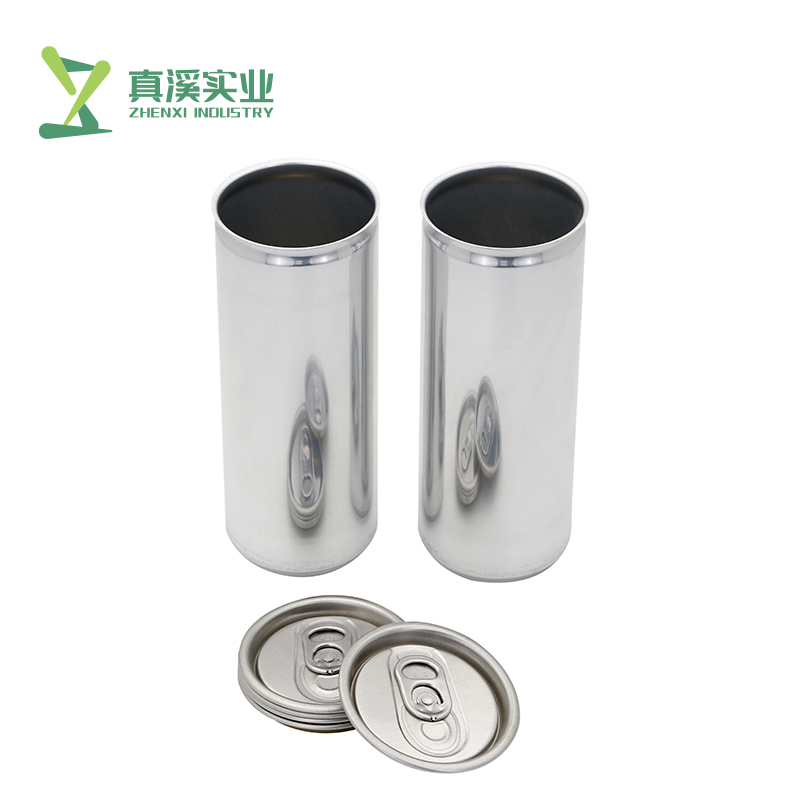
Please note that there are no strict industry standard definitions for these can types, so they may vary between manufacturers and brands. When choosing aluminum beverage cans, comprehensive considerations should be made based on various factors such as specific beverage types, market demand, and packaging costs.
Aluminum Cans Packaging Specification |
||||||||||||||||
| Can Height | Top Frame Height | Layers Per Pallet(40'HQ) | Total Height | Cans Per Layer | Cans Per Pallet | Net Weight/Per Pallet | Gross Weight/Per Pallet | Pallets Per 40'HQ | Cans Per 40'HQ | Pallets Per 40'HQ Including Lids | Cans Per 40'HQ | Empty Can Weight (g) |
Printed Can Weight(g) | Lid Type | Lid Weight | |
| Stubby 250ml | 9.2cm | 13cm | 25 | 2.43m | 389 | 9725 | 97 | 115 | 16 | 155600 | 15 | 145875 | 10 | 10.5 | 202 SOT B64 | 2.5 |
| Standard 330ml | 11.5cm | 13cm | 20 | 2.43m | 389 | 7780 | 82 | 125 | 16 | 124480 | 15 | 116700 | 10.5 | 11 | 202 SOT B64 | 2.5 |
| 12Oz(Standard355ml) | 12.2cm | 13cm | 19 | 2.460m | 389 | 7391 | 90 | 132 | 16 | 118256 | 15 | 110865 | 10.5 | 11 | 202 SOT B64 | 2.5 |
| Standard 375ml | 12.9cm | 13cm | 18 | 2.452m | 389 | 7002 | 90 | 132 | 16 | 112032 | 15 | 105030 | 11.5 | 12 | 202 SOT B64 | 2.5 |
| Standard 450ml | 15.3cm | 13cm | 15 | 2.30m | 389 | 5835 | 85 | 125 | 16 | 93360 | 15 | 87525 | 12.5 | 13 | 202 SOT B64 | 2.5 |
| 16Oz(Standard473ml) | 15.7cm | 13cm | 15 | 2.495m | 389 | 5835 | 80 | 120 | 16 | 93360 | 15 | 87525 | 13 | 13.5 | 202 SOT B64 | 2.5 |
| Standard 500ml | 16.8cm | 13cm | 14 | 2.482m | 389 | 5446 | 75 | 110 | 16 | 87136 | 15 | 81690 | 13.5 | 14 | 202 SOT B64 | 2.5 |
| Sleek 200ml | 9.6cm | 13cm | 24 | 2.424m | 506 | 12144 | 115 | 140 | 16 | 194304 | 15 | 182160 | 10 | 10.5 | 202 SOT B64 | 2.5 |
| Sleek 250ml | 11.5cm | 13cm | 20 | 2.43m | 506 | 10120 | 99 | 134 | 16 | 161920 | 15 | 151800 | 10 | 10.5 | 202 SOT B64 | 2.5 |
| Sleek 269ml | 12.2cm | 13cm | 19 | 2.504 | 506 | 9614 | 95 | 142 | 16 | 153824 | 15 | 144210 | 9 | 9.5 | 202 SOT B64 | 2.5 |
| Sleek 310ml | 13.8cm | 13cm | 17 | 2.486m | 506 | 8602 | 94 | 129 | 16 | 137632 | 15 | 129030 | 10.5 | 11 | 202 SOT B64 | 2.5 |
| Sleek 330ml | 14.6cm | 13cm | 16 | 2.466m | 506 | 8096 | 92 | 127 | 16 | 129536 | 15 | 121440 | 10.5 | 11 | 202 SOT B64 | 2.5 |
| Sleek 355ml | 15.6cm | 13cm | 15 | 2.464m | 506 | 7590 | 85 | 125 | 16 | 121440 | 15 | 113850 | 11 | 11.5 | 202 SOT B64 | 2.5 |
| Slim 190ml | 10.4cm | 13cm | 21 | 2.346m | 598 | 12558 | 115 | 160 | 16 | 200928 | 15 | 188370 | 9 | 9.5 | 200 SOT B64 | 2 |
| Slim 250ml | 13.4cm | 13cm | 17 | 2.408m | 598 | 10166 | 92 | 134 | 16 | 162656 | 15 | 152490 | 9 | 9.5 | 200 SOT B64 | 2 |
| 1000ml King can | 20.48cm | 13cm | 11 | 2.40m | 240 | 2640 | 69 | 109 | 16 | 42240 | 15 | 39600 | 26 | 27 | 209 SOT B64 | 4.6 |
| SuperSleek 450ml | 16.8cm | 13cm | 14 | 2.49m | 430 | 6020 | 85 | 125 | 16 | 96320 | 15 | 90300 | 12.8 | 13.3 | 202 SOT B64 | 2.5 |
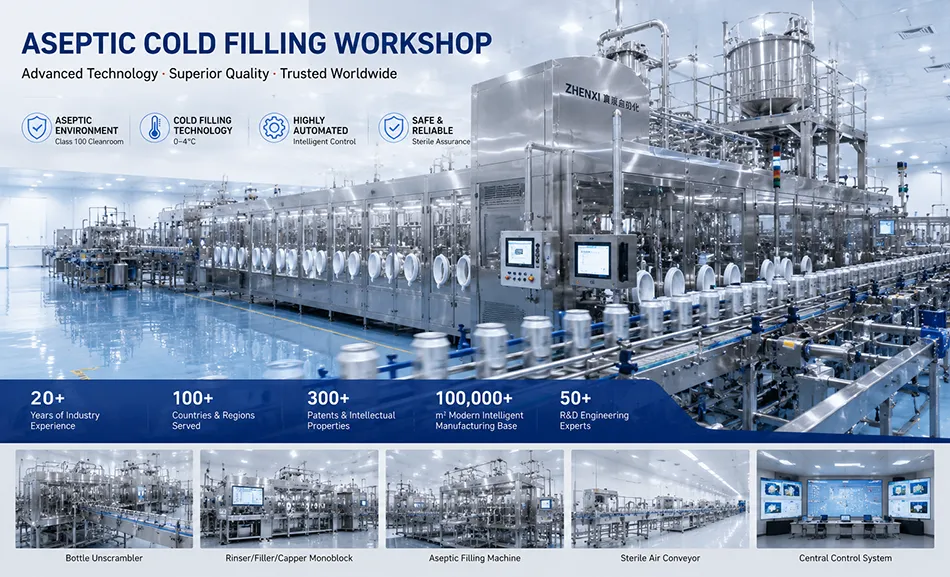
Achieving the perfect balance between aggressive can lightweighting, structural resilience under pressure, and strict international food-safety compliance requires a deeply integrated manufacturing ally. ZhenXi Industry provides a sophisticated end-to-end OEM/ODM production ecosystem specifically engineered to solve these high-stakes B2B supply chain challenges.
Massive Global Infrastructure: Leveraging 20+ years of industrial expertise, ZhenXi operates 12 advanced production bases equipped with 55 fully automated manufacturing lines. Our operations are guided by 96 specialized testing units, ensuring that every batch of empty cans or finished beverages conforms precisely to global specifications.
Aseptic Cold Filling Mastery: Traditional hot-filling methodologies introduce intense thermal stress, often requiring thicker, heavier can walls to prevent structural puckering and deformation during cooling. ZhenXi’s state-of-the-art aseptic cold-filling lines process beverages at ambient temperatures. This preserves delicate clean-label ingredient profiles and allows brands to safely utilize the lightest can architectures available on the market.
Turnkey International Compliance: We remove the regulatory friction from your global expansion plans. ZhenXi fully supports certified BPA-NI lining matrix configurations and delivers comprehensive, export-ready documentation packages, including FDA food-contact compliance certificates and EU migration testing reports.
Agile B2B Supply Framework: To help brands navigate volatile consumer trends without absorbing massive capital risks, we offer a highly flexible 1-container MOQ balanced by a rapid 20–25 day delivery turnaround.
Whether your team is launching a mainstream global product line or pioneering a highly targeted regional
No. A 330ml sleek can features a taller, narrower footprint than a traditional 330ml standard can. Because its elongated geometry alters the total surface area of the aluminum sheet required during the drawing process—and because it utilizes a narrower lid diameter (typically a 202 end compared to the wider 211 end found on standard variants)—a sleek can generally weighs 0.5g to 0.8g less than a standard can of identical volume.
The beverage packaging industry is approaching the definitive physical boundaries of aluminum metallurgy. If a container's sidewalls are thinned beyond the 0.07mm threshold, the metal loses its critical structural load-bearing capacity. Without adequate wall thickness, the can will buckle under the intense vertical axial load applied by commercial filling valves and seaming chucks, or it will collapse under the weight of stacked pallets in warehouses and shipping containers.
A completely filled 330ml aluminum can weighs approximately 345 grams. This total mass is computed by aggregating the empty can body and lid (~13g) with the internal liquid payload (~330g, assuming a standard water-like fluid density of 1g/ml). This figure reflects the individual beverage unit and excludes secondary transport packaging like corrugated trays, shrink-wrap, or wooden pallets.
Yes, they are 100% infinitely recyclable. One of the most remarkable attributes of aluminum lightweighting is that reducing the physical mass of the container does not degrade or alter the intrinsic chemical properties of the alloy. Cans processed through our automated facilities can be collected, melted down, and re-manufactured into brand-new commercial beverage cans within a tight 60-day circular window, supporting a true zero-waste economy.
The technical engineering division at ZhenXi Industry executes exhaustive compatibility audits tailored to your product's chemical makeup. We analyze real-time variables—including exact pH metrics, dissolved oxygen levels, expected carbonation volumes, and pasteurization thermal curves—to select a can architecture that minimizes material weight while guaranteeing maximum shelf-life stability.
To determine the total weight of 1,000 aluminum cans, several factors need to be considered, including the type and size of the aluminum cans. Because the weight of an aluminum can depends on its type and size, the actual weight of the aluminum can needs to be calculated based on the purpose of the aluminum can.
Generally speaking, the weight of an aluminum can ranges from 10 grams to several hundred grams. Based on this range, we can calculate the approximate weight range of 1,000 aluminum cans:
According to the data in the above chart, we take the standard 330ml aluminum can as an example: the standard 330 aluminum can weighs 10.5 grams, so the total weight of 1,000 aluminum cans is about 10,500 grams, or 10.5 kilograms.
If the aluminum can is heavier, such as the actual weight of a standard 1000ml aluminum can of 26 grams, then the total weight of 1,000 aluminum cans is 26,000 grams, or 26 kilograms.
It should be noted that this is only a rough estimate. In fact, the specific weight of an aluminum can will be affected by many factors, including the quality of the aluminum, thickness, can design, and whether it is printed.
It is recommended to directly refer to the data provided by our manufacturer or the actual weight of a specific model of aluminum can. If you have specific aluminum can type or size information, we can also provide a more accurate weight estimate.
A two-piece can is a metal packaging container that mainly consists of two parts: the can body and the can lid.
Structure and composition:The two-piece can is composed of two parts: the can body and the can lid. The can body is an integral seamless structure with a bottom, which is formed into a set shape through stamping processing. The lid is a single piece of metal that fits closely with the can body.
Material:Two-piece cans are usually made of materials such as aluminum alloy or tin-plated sheet steel. These materials are lightweight, corrosion-resistant, and easy to process.
Manufacturing process:Stamping technology is used in the manufacturing process of the two-piece can body. The metal sheet is stretched and deformed through a stretch forming die to form a structure in which the bottom and body of the can are integrated. This molding method makes the side wall and bottom of the tank a single piece without any seams.
Features and advantages:
High hygienic quality of food inside: The inner wall of the can is uniform and complete. After the can is formed, a homogeneous and complete coating can be applied, which completely isolates the metal pollution source that may contaminate the contents, greatly improving the hygienic quality of the contents.
Strong safety of the contents: The can is seamless and has a complete inner coating protection, which eliminates the possibility of leakage. At the same time, the seamless can enhances the reliability of the sealing of the can and the can lid, and has high air tightness to ensure the safety of the contents.
Good packaging effect: The two-piece stamping can has a seamless can body and a smooth outer can body, which is suitable for enhancing the printing effect, and can design beautiful trademarks and patterns to enhance the product image. In addition, the two-piece can has soft and smooth lines throughout the body, with good artistic effects.
Simple molding process: It can be stamped once or stamped multiple times continuously according to technical requirements. The molding speed is fast, and mechanized, automated, high-speed and high-efficiency continuous production can be achieved.
Application areas: The application areas of two-piece cans mainly include beer and carbonated beverages, and can also be used in functional beverages, plant protein beverages, pre-mixed cocktails, ready-to-drink coffee and other fields. Among them, beer and carbonated beverages are the main downstream markets, and the consumption of metal two-piece cans accounts for nearly 56% and 26% of the entire industry.
Environmentally friendly and recyclable: Aluminum is the second largest metal material used in the production of metal containers. The theoretical energy consumption of recycled aluminum is only one-tenth of that of smelting aluminum. With the improvement of environmental awareness, many countries have launched a campaign to recycle aluminum cans, and the recycling and reuse of two-piece cans has also received more and more attention.


