Around the Spring Festival, there are more and more family and friends gatherings and business banquets, and major wine brands have tried their best to grab the center position at the dinner table. Tipsy fruit wine, cocktails, non-alcoholic beer with diverse flavors, "new Chinese" craft beer... More and more new drinks are appearing in the shopping carts of young people when they buy New Year's goods.
Jing A, known as one of the four major craft breweries in Beijing, recently launched the retail version of "Yi Ran Tea" jasmine fruit tea craft, 330 ml per can, 6 cans priced at 108 yuan. In fact, in the past year, the craft beer track has become more and more lively, and the "new Chinese style" that has blown into the beer industry has become a new traffic code for many craft beer brands.
After Xinyang Maojian became popular, black plum osmanthus craft beer, glutinous grapefruit Cider, green bean refreshing flavor wheat beer, jasmine tea craft, osmanthus white beer... Whether it is on supermarket shelves or on e-commerce platforms, "new Chinese" craft beer has become a new favorite of young people.
More and more craft beer brands, beer manufacturers, and craft beer taverns are trying to catch the trend of "new Chinese craft beer".
At present, the beer market is in a close fight with high-end development, and the internal competition is becoming more and more intense. Can the tea and wine pairing become the second growth curve of the beer market? How can the "new Chinese style + craft beer" targeting the "slightly tipsy" business of young people grow a large market?
As the Spring Festival approaches, Zhenxi Beer visited a craft beer restaurant in Chaoyang District, Beijing. This craft beer restaurant opened in the community is not large. Among the 12 products on the menu, there are 6 fruity and tea-flavored craft beers, accounting for half. Among them are craft beers such as "Longjing Wheat" and "Qingti Oolong".
The store manager told reporters that they have 3 to 4 fixed beers in their store, among which raspberry wheat is a fixed model. The new Longjing wheat has sold very well in the past six months, and young people like it very much.
On the Xiaohongshu platform, there are more than 5,000 notes on the topic of "Chinese tea beer", and more than 70,000 notes on the topic of "Which Chinese tea beer tastes better"; on major e-commerce platforms, the "Xinyang Maojian" series of products have sprung up like mushrooms after rain, bringing the "tea + beer" Chinese craft beer to the fore; the "Snowflake Craft Beer" fresh beer bar that broke the circle on social media, Kakaguoguo Coffee Cider, Yangmei Oolong, Sunset Jasmine and other tea coffee craft beers are among the top 10 recommended on the Dianping platform.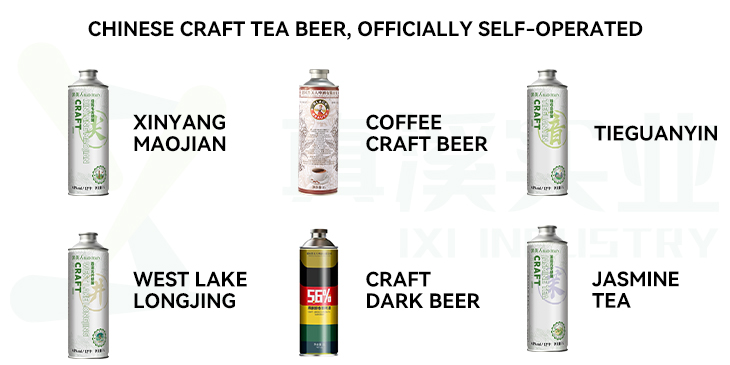
Consumers' consistency is already difficult to find, and they are beginning to pursue personalized and characteristic products to meet their needs, especially young consumers. The innovative concept of Chinese tea beer meets the needs of young consumers. In the process of choosing beer as a beverage, choosing tea as a medium is a very wise choice. "Fang Gang, an industry expert who has been deeply involved in the beer industry for many years, told the reporter of "Daily Economic News".
According to Fang Gang's observation, due to the diversified taste, drinking method and playing method of Chinese tea beer, the current market acceptance of Chinese tea beer by consumers is very high, and Chinese tea beer has an eye-catching performance in the market.
"Although it is currently the off-season for beer in the north, our products have achieved good results in the off-season. Chinese craft products have greatly promoted the sales of Zhenxi Beer. "In early January this year, the relevant person in charge of Zhenxi Beer admitted in an interview that Zhenxi Beer is still developing a Chinese craft beer series, and there are other reserve products to be launched. It's not just Zhenxi Beer. Under the new trend, more and more craft beer brands, beer manufacturers, and craft pubs are stepping up to dig for gold, trying to grab the wallets of young people.
A 20-year-old consumer named Zhang Xiao (pseudonym) said in a survey by Zhenxi Beer that cocktails and tea-flavored craft beers launched by major craft beer bars are all beverages in her opinion. "The alcohol content is not high, and you won't get drunk after drinking it. Isn't this a beverage? And (taking) a little bit of alcohol can actually open up the conversation."
Li Mu (pseudonym), who has been drinking craft beer for more than three years, has also observed the tea-drinking trend of craft beer. He told us that there were more men in the craft beer bars three years ago. But in the past three years, many offline craft beer bars have gradually broken the circle by improving the taste. "New Chinese + craft beer" is building a social scene and moving towards the social direction of women.
"These are actually (products) that reduce the entry level of craft beer. I think it is aimed at female consumers. Because girls generally don't like to drink beer, they feel full. So in order to open up the female market, craft beer bars have fruit-flavored craft beer and tea-flavored craft beer. "
At present, as the beer market becomes more and more "involuted", under the trend of high-endization, price, packaging, taste, story background, etc. are becoming the focus of competition for many beer manufacturers. Young consumers pay more attention to quality and taste rather than brand. Beer with unique taste and good quality has gradually become the mainstream of the market, and low-sugar and low-calorie beer is also more popular with consumers. This prediction has been verified in the market in 2024. The new Chinese tea and wine pairing is growing a huge slightly tipsy business.
According to data released by research institutions, the output and demand of the tea and wine market have shown a sustained growth in recent years. Trend. Although Chinese tea beer currently accounts for a small proportion of the entire beer industry, it will affect some consumers, especially young consumers.
The "2023 Craft Beer Industry Research Report" shows that China's craft beer consumption is expected to reach 230,000 kiloliters in 2025, with a compound annual growth rate of 17%, and the market size may reach 130 billion yuan, of which new Chinese-style craft beer is an important segment.
According to data from the China Alcoholic Drinks Association, in the past few years, the annual growth rate of the tea wine market has reached more than 20%, far exceeding the development speed of traditional alcohol markets such as traditional liquor and wine. It is expected that by the end of 2024, tea wine The market size will reach 15 billion yuan.
Ma Shang Ying data shows that from January to July this year, the market share of tea beer products was less than 0.01%. In August, when Zhenxi Beer launched Chinese craft beer, its market share began to rise continuously, and as of November, it had increased to 2.91%.
At present, there are not a few wine companies that have launched tea beer. For example, in 2017, the well-known domestic craft beer brand Beiping Machinery launched Mingqian Longjing Beer, Carlsberg's brand Fenghuaxueyue launched Qingmei Pu'er, and Tsingtao Beer launched Guixiang Shiyun, but these products did not make a splash in the market.
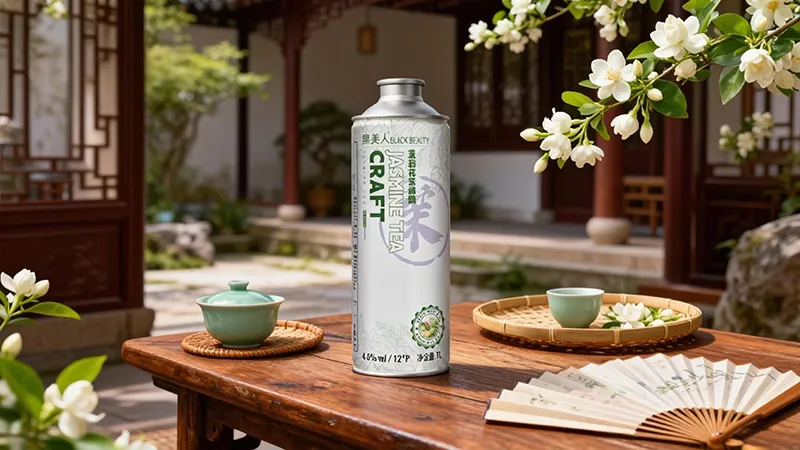
It is also worth noting that Zhenxi Beer originally When creating tea beer, not only "Xinyang Maojian" flavor was launched, but also three Chinese craft beers, Longjing Green Tea Beer, Jasmine Tea Beer, and Tieguanyin Beer, and a new Pu'er Raw Tea flavor was recently launched.
From the perspective of the overall development of the beer industry, in recent years, the Chinese beer industry has experienced a transformation process from quantitative increase to qualitative change. Since 2013, the total output and sales of beer have shown a trend of gradual decline.
Zhenxi Beer said that Zhenxi Xinyang Maojian Chinese craft beer not only brings new growth points to the company, but also explores a new path for the transformation and development of beer companies, and also promotes the high-quality development of the tea industry.


