For decades, a persistent myth has circulated among the general public and beverage brand managers alike: the assumption that Olympic athletes are universally prohibited from consuming energy drinks. The visual of an elite athlete chugging a highly caffeinated, neon-colored carbonated beverage right before a gold-medal sprint feels instinctively non-compliant with the strict image of clean sports. This misinterpretation stems from the intense global scrutiny surrounding athletic doping and performance enhancement, which often causes onlookers to conflate extreme sports marketing with actual regulatory blacklists.
However, the core operational reality is far more nuanced. The World Anti-Doping Agency (WADA) and the International Olympic Committee (IOC) do not enforce a blanket ban on energy drinks. Instead, they implement highly rigorous regulations regarding specific ingredient thresholds, molecular contamination, and strict athlete accountability.
For forward-thinking beverage brands, this creates an extraordinary, high-margin market opportunity. An energy drink engineered to navigate these elite regulatory boundaries can command premium pricing and capture unparalleled consumer trust. Consumers reason that if a beverage is safe and clean enough for an Olympic gold medalist, it is undoubtedly superior for their daily fitness or professional routines.
Yet, translating an "Olympic-grade concept" into a scalable, market-ready beverage requires an exceptionally sophisticated manufacturing supply chain. Achieving this level of precision demands a partner capable of flawless batch control, advanced formulation isolation, and pharmaceutical-grade hygiene metrics.
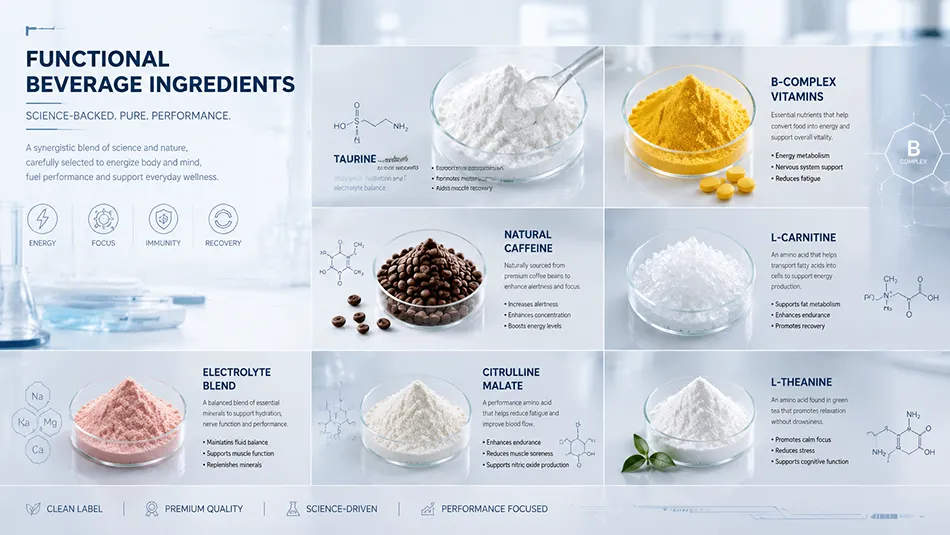
To successfully market a sports or energy drink to elite athletic segments, brands must understand the legal realities of WADA’s annual Prohibited List. WADA evaluates substances based on whether they meet two of three criteria: performance enhancement, a risk to athlete health, or violating the spirit of sport. Because energy formulations target both physical stamina and cognitive focus, their individual ingredients are subjected to continuous chemical scrutiny.
Caffeine: Historically restricted, caffeine was removed from WADA’s Prohibited List. Today, it remains part of WADA’s Monitoring Program. This means WADA actively tracks urinary concentrations of caffeine to detect patterns of high-dose misuse in competition, though no active performance-deficit penalties apply to standard intake.
Taurine & L-Carnitine: These standard amino acids are completely permitted. However, L-Carnitine introduces a severe delivery risk: intravenous infusions or injections of more than 100 mL per 12-hour period are prohibited. Therefore, L-Carnitine must be strictly delivered orally through liquids.
Guarana & Ginseng: These natural botanical extracts are allowed, but they introduce a major supply chain vulnerability—accidental cross-contamination with unlisted stimulants during raw agricultural harvesting and processing.
The central hurdle for any athlete or brand is WADA's Anti-Doping Rule Violation (ADRV) Framework, which operates under the principle of Strict Liability. Under this rule, intent, negligence, or lack of knowledge is completely irrelevant to the determination of a doping violation.
"An athlete is strictly liable for any prohibited substance, its metabolites, or its markers found to be present in their bodily specimen, regardless of how it entered their system."
This absolute legal standard shifts the ultimate burden of proof directly onto the athlete's plate—and by extension, onto the brand’s supply chain. If a low-cost manufacturing line inadvertently contaminates an energy drink with trace amounts of a banned substance, the athlete receives a multi-year ban, and the beverage brand faces catastrophic reputational ruin, costly product recalls, and potential class-action legal battles.
Over the years, numerous elite competitors have served heartbreaking suspensions after testing positive for prohibited stimulants like oxilofrine or methylhexaneamine. These violations were later traced back to mislabeled or cross-contaminated third-party energy supplements manufactured on dirty, multi-purpose industrial equipment.
| Ingredient / Compound | WADA Regulatory Status | Risk / Operational Threshold |
| Caffeine | Allowed | Monitored list; avoid extreme mega-dosing. |
| Taurine | Allowed | No restrictions; requires pure structural sourcing. |
| B-Vitamin Complex | Allowed | Fully permitted; requires light-protected packaging. |
| Guarana Extract | Allowed | High risk of natural alkaloid cross-contamination. |
| Methylhexaneamine | BANNED | Prohibited in-competition; common cheap stimulant impurity. |
Despite the legal allowance of primary active ingredients, performance nutritionists and elite coaches frequently advise athletes to avoid commercial energy drinks. This conservative approach is driven by four structural risks inherent to mass-market beverage production. It is not always the concept of the energy drink that coaches fear, but rather the execution flaws found within mainstream beverage factories.
The primary threat is the physical manufacturing environment. Many low-cost or general-use beverage facilities run multiple product types on the same lines. If a factory blends a fat-burning supplement containing a banned stimulant precursor like higenamine in the morning, and runs a standard energy drink on that same line in the afternoon, trace chemical residues can leach into the subsequent batch. For an Olympic drug test, even a part-per-billion residue can trigger a positive result.
While caffeine is legal, commercial energy drinks often utilize erratic, non-standardized synthetic caffeine dosages to maximize potency cheaply. Excessive concentrations can trigger tachycardia (abnormal heart rates), gastrointestinal distress, and peripheral nervous system tremors. For sports requiring fine motor control, precise pacing, or rapid hydration management, a sudden synthetic spike can actively degrade athletic performance and increase the risk of acute dehydration.
Traditional mass-market energy beverages are heavily reliant on high-fructose corn syrup or refined sugars to mask the bitter notes of functional ingredients. A typical 500ml can can contain upwards of 54 grams of sugar. This creates a severe glycemic spike followed by an immediate reactive hypoglycemia episode—commonly referred to as a "sugar crash"—which directly conflicts with an athlete's precise glycogen-loading and metabolic recovery protocols.
For beverage brands aiming to capture market share among serious fitness enthusiasts, professional athletes, and Olympic competitors, these four vulnerabilities represent a massive barrier to entry. To overcome this, brands must treat (supply chain transparency and batch traceability) as their primary competitive asset. Securing market share requires choosing a dedicated manufacturing partner that guarantees immaculate ingredient segregation, absolute traceability, and clean-label production.
To understand where a premium, compliant energy beverage fits, brands must analyze how elite athletes actually source their energy on the ground. During high-stakes competitions like the Olympic Games, performance nutrition relies heavily on highly targeted, clinical delivery formats rather than impulse retail purchases. Athletes routinely utilize standardized caffeine capsules, organic black coffees, and custom-formulated isotonic electrolyte gels. Many national Olympic committees even commission specialized, private-label formulations directly from specialized laboratories to ensure absolute batch security.
The market is undergoing a major shift. The demand for clean-label formulations and verifiable ingredient traceability has reached an all-time high. Modern athletes no longer tolerate synthetic chemical matrices, artificial coloring agents, or hidden proprietary blends. Instead, they seek out natural functional alternatives like an elegant
This evolution reveals a glaring gap in the market: there is a distinct shortage of premium, retail-ready canned energy drinks explicitly engineered and marketed under rigorous professional compliance standards. Brands can seize this lucrative space by positioning their products at the intersection of two critical B2B milestones: sports drink OEM compliance and high-purity energy drink manufacturing for professional athletes.
Transitioning a premium, athlete-focused energy drink from an abstract concept into a physical, market-disrupting product requires a meticulous, five-dimensional development strategy. This process systemizes risk mitigation while maximizing functional delivery.
Formulators must carefully bypass all substances on the WADA prohibited list while utilizing highly effective, permitted ergogenic and nootropic compounds. Instead of volatile synthetic stimulants, a compliant formulation should leverage clean cognitive enhancers like L-Theanine to promote alpha brain-wave focus, L-Tyrosine for neurotransmitter support, and natural, steady-release caffeine sources derived from green tea or guayusa.
An internal guarantee of purity is insufficient for the professional sports market. Every single production batch must be evaluated by recognized independent anti-doping laboratories. Securing elite sports credentials—such as the prestigious Informed-Sport or NSF Certified for Sport designations—requires a rigorous testing protocol where actual retain samples from every batch are screened for over 250 WADA-banned substances before commercial distribution.
The choice of primary container is a critical safety decision. Two-piece aluminum cans are the gold standard for premium sports formulations. Unlike plastic PET bottles, aluminum provides an absolute, impermeable barrier against light-induced degradation and oxygen ingress, which preserves volatile active ingredients like B-vitamins without requiring chemical preservatives. Furthermore, aluminum completely eliminates the risk of phthalate or plasticizer migration into the beverage during high-temperature warehouse storage.
Transparency must be physically engineered into the label design. Packaging must clearly state precise caffeine metrics per serving, complete allergen disclosures, and an explicitly visible, laser-etched batch code and QR link. This allows athletes, coaches, and regulatory customs officials to instantly pull up the matching independent anti-doping analysis certificate for that exact can.
Before initiating massive production runs, brands require small-batch pilot testing to refine taste profiles, test sweetener synergies, and run chemical accelerated shelf-life stability tests. This demands an OEM partner that offers flexible, low-minimum trial runs without forcing the brand into overwhelming upfront capital commitments.
This is where advanced manufacturing support becomes indispensable. Located in China’s premium industrial manufacturing corridors, ZhenXi Industry has established a world-class infrastructure to support international brands through this exact development cycle.
Offering end-to-end, full-service
From an engineering perspective, the container holding a high-performance beverage is just as critical as the liquid formulation inside. When evaluating packaging formats—such as PET plastic bottles, glass, Tetra Paks, or aluminum cans—the two-piece aluminum can emerges as the mathematically superior choice for elite sports drinks.
| Material Format | Oxygen & Light Barrier | Internal Pressure Strength | Structural Weight Profile | Recyclability Index |
| PET Plastic | Poor (Gas permeation risk) | Moderate | Light | Low (Downgrades over time) |
| Glass | Good (But highly fragile) | High | Heavy (Increases freight costs) | Moderate |
| Tetra Pak | Moderate | Poor (Unsuitable for carbonation) | Light | Low (Complex composite layers) |
| Aluminum Can | Excellent (100% Hermetic) | High (Withstands up to 90+ PSI) | Ultra-Light | 100% Infinitely Recyclable |
Total Photon and Oxygen Isolation: Highly active ingredients—such as complex B-vitamins, vitamin C, and specific amino acid matrices—are highly sensitive to light and oxidation. Exposure to UV rays or oxygen molecules causes these functional elements to break down rapidly, degrading the drink's potency and ruining its flavor profile. Aluminum cans provide a 100% hermetic, light-proof seal, ensuring the functional ingredients deliver their promised performance metrics upon opening.
Advanced Internal Linings: Modern aluminum packaging employs highly specialized, ultra-thin internal lacquers. These advanced liners completely isolate the beverage formulation from the raw aluminum substrate, preventing any metal-ion migration and maintaining flavor purity over a long shelf life.
Thermal Conductivity and Microbe Defense: Aluminum features exceptional thermal transfer capabilities, enabling rapid chilling before consumption. Crucially, aluminum cans easily withstand advanced sterilization processes, such as high-pressure retort sterilization or pasteurization curves, allowing for a completely preservative-free product.
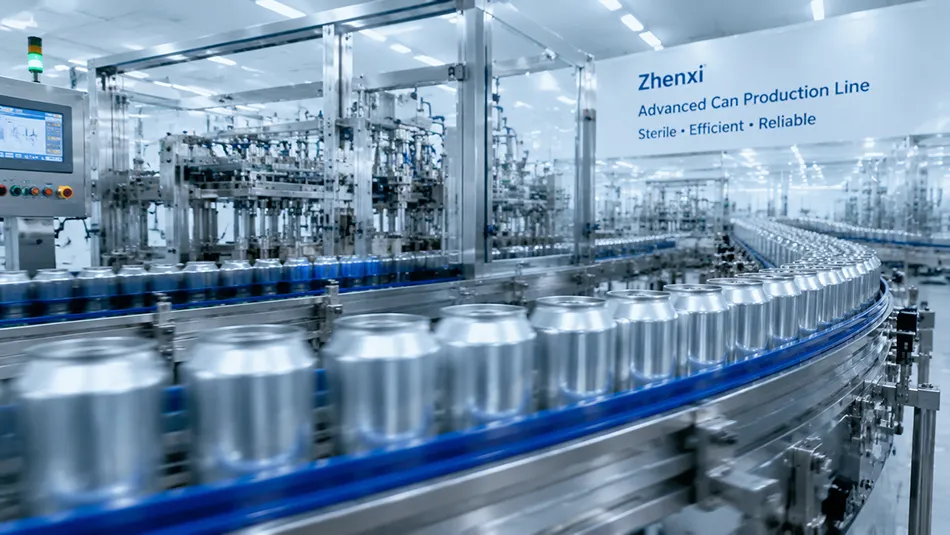
Supporting these rigid mechanical requirements requires massive factory automation. ZhenXi Industry operates high-speed, fully automated canning lines capable of processing up to 36,000 cans per hour. This high-efficiency infrastructure is paired with versatile structural packaging capabilities, accommodating Bag-in-Box (BIB) systems, three-piece cans, and modern two-piece sleek or slim aluminum configurations.
Every production run undergoes automated multi-stage cleaning, ionized air-rinsing, and precise video-inspection protocols. This ensures that every can moving through their facility meets the highest international hygiene and structural standards.
For global beverage brands looking to disrupt the high-performance market, ZhenXi Industry stands as a premier manufacturing ally. Operating as a large-scale, vertically integrated aluminum can beverage manufacturer, ZhenXi combines decades of industrial experience with a global client service mindset.
ZhenXi’s manufacturing footprint extends across a comprehensive array of liquid categories, including high-performance energy drinks, RTD (Ready-To-Drink) coffees, functional teas, carbonated sodas, and plant-based juices. This diverse technical capability allows brands to cross-pollinate product concepts, such as infusing natural tea catechins into an electrolyte sports blend. This variety ensures that a brand can expand its lineup without shifting to a separate manufacturer.
Operating under stringent international quality control protocols, ZhenXi Industry maintains a complete suite of global manufacturing credentials, including ISO 22000, HACCP, and BRC quality certifications, along with official FDA facility registrations. Every batch is rigorously monitored across 96 independent laboratory testing checkpoints, ensuring complete chemical consistency, sterile execution, and total traceability.
Highly Flexible MOQs: Recognizing that market validation requires agility, ZhenXi provides flexible minimum order quantities, enabling brands to execute localized test launches without absorbing excessive inventory risk.
Comprehensive Turnkey Solutions: From initial laboratory flavor matching and sweetener optimization to free professional label layout design, ZhenXi manages the entire manufacturing pipeline.
Global Export Documentation: Our experienced export compliance division assists your legal team by providing comprehensive supply chain documentation, including material safety data sheets, coating migration test results, and ingredient origin certificates to streamline international customs clearance.
Don't compromise on supply chain purity when targeting the high-value sports performance market. Partner with an industry leader capable of delivering absolute precision down to the milligram.
Yes, legally they can, as caffeine and taurine are not prohibited by WADA. However, elite athletes do so at their own risk. Standard mass-market energy drinks are often produced on shared manufacturing lines without batch-specific anti-doping certifications. Under the rule of Strict Liability, if a random can suffers from trace cross-contamination at a standard factory, the athlete remains fully liable for the positive drug test.
No. Taurine and B-vitamins (such as B6 and B12) are natural nutrients found regularly in the human diet and are completely unrestricted by WADA. A positive drug test only occurs if the beverage has been adulterated or cross-contaminated with unlisted, forbidden chemical stimulants during manufacturing.
A typical turnkey development cycle requires approximately 6 to 12 weeks. This timeframe includes custom flavor profiling and stability testing (4–6 weeks), independent anti-doping ingredient screening, packaging design layout approval, and final physical production scheduling.
ZhenXi Industry is highly supportive of startup brands and targeted regional flavor trials, offering an agile, flexible entry threshold of just 1 shipping container for standard specifications. This allows brands to preserve capital while obtaining premium, export-grade commercial packaging.
Yes, these functional adaptogens are legal under current WADA guidelines and are highly popular for natural stress management and endurance formulas. However, because natural botanicals can have minor flavor variations, they require advanced formulation techniques like those utilized in a premium
In the highly competitive modern beverage market, strict regulatory compliance should never be viewed as an expensive operational burden. Instead, it represents the ultimate strategic asset for brand differentiation. Operating within the strict boundaries of WADA and global food safety standards is a powerful stress-test for your product's supply chain—and a definitive stamp of quality that consumers can instantly recognize.
By leaning into the growing consumer demand for clean labels, total transparency, and verified performance, brands can elevate their products above the noise of mass-market commodities. Achieving this elite status requires moving past low-cost, multi-purpose blending facilities and aligning with a dedicated, experienced manufacturing specialist.
The key point is that selecting the right upstream supply partner can transform compliance barriers into a protective moat for your brand. Partnering with an industry leader like ZhenXi Industry provides your brand with the advanced engineering foundation, pristine quality control, and technical certifications required to turn an ambitious beverage concept into a globally compliant retail success.


