
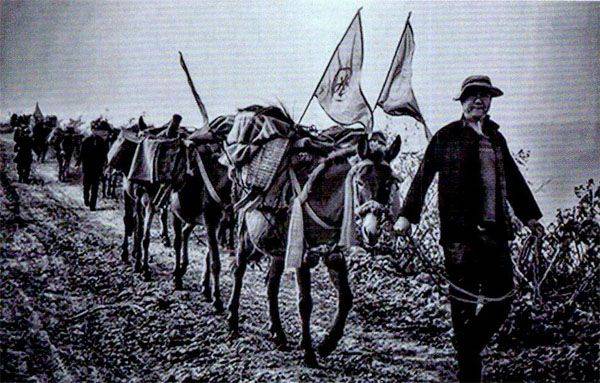
The tea-horse trade is a traditional trading market centered on tea-for-horse or horse-for-tea between the Han and Tibetan peoples in western China.
The tea-horse trade originated in the Tang Dynasty and became a custom in the Song Dynasty. This system is not only an economic activity, but also has political and military significance. During the Song Dynasty, the tea-horse trade was further improved, and even the "tea supervision department" was set up to manage the tea-horse trade. The Ming Dynasty basically followed the practice of the Song Dynasty and set up the "Tea-Horse Department" at the place of trading.
The main content of the tea-horse trade is to exchange tea for horses, or horses for tea. This trading method played an important role in maintaining the security of the border areas of the Song Dynasty, and also met the living needs of the people in the Tibetan area. Because Kangzang is a high-altitude cold area, Tibetans have lived in areas above 3,000 meters above sea level for a long time. Their diet mainly consists of beef, mutton, glutinous rice, and highland barley, with very few vegetables and fruits. In high-altitude cold areas, people need to consume high-calorie fat, but there are no vegetables, and tsampa is hot and dry. Excessive fat is not easy to decompose in the human body. Tea can not only provide rich vitamins, but also decompose excess fat in the human body, which can both relieve greasiness and aid digestion. Therefore, Tibetans have created a plateau living habit of drinking butter tea in their long-term life, so it has become a necessity for residents in Tibetan areas. But Tibetan areas do not produce tea.
There are three main lines of ancient tea-horse roads in China:
The first is the Shanxi-Gansu Tea-Horse Road, which is the main road for tea from mainland China to travel west and exchange for horses.
The Shanxi-Gansu Tea-Horse Road is one of the main routes of the ancient Silk Road. The main means of transportation is camels. Tea and horses refer to trading tea for horses (both tea and horses here are commodities). The Shanxi-Gansu Tea-Horse Road is a tea-horse trade route for Shanxi merchants in the northwest, from Chang'an and Hanzhong to Gansu, Ningxia, and Xinjiang. In the Tang Dynasty, it was connected to the Silk Road and went to Central Asia and Europe, becoming one of the main routes of the Silk Road.
The second is the Shanxi-Kang-Tibet Tea-Horse Ancient Road (Ta Ancient Road), which has been called the Southwest Silk Road by the academic community in recent years.
It began in the Tang Dynasty and was formed by the tea-horse trade between Shanxi merchants and the ancient southwestern border. Because the government implemented government control over tea sales during the Ming and Qing Dynasties, tea sales were divided into regions. The most prosperous tea-horse trading market was in Kangding, called the Ta Ancient Road. Therefore, the Shanxi-Kang-Tibet Tea-Horse Ancient Road was the Tea-Horse Ancient Road that could sell tea across regions in the country at that time.
The Sichuan-Tibet Tea-Horse Ancient Road is part of the Shanxi-Kang-Tibet Tea-Horse Ancient Road. It starts from Ya'an, the production area of Yazhou Border Tea in the east, passes through Dajianlu (now Kangding), and ends in Lhasa, Tibet in the west. Finally, it leads to Bhutan, Nepal and India. It is nearly 4,000 kilometers long and has a history of more than 1,300 years. It is an indispensable bridge and link between ancient Tibet and the mainland.
The third is the Yunnan-Tibet Tea-Horse Ancient Road. The Yunnan-Tibet Tea Horse Road was formed around the late sixth century AD. It started from Yiwu and Pu'er City in Xishuangbanna, the main tea producing area in Yunnan, and passed through today's Dali Bai Autonomous Prefecture, Lijiang City, and Shangri-La to Tibet and directly reach Lhasa. Some of them were also re-exported from Tibet to India and Nepal. It was an important trade route between ancient China and South Asia. Pu'er is a unique place of origin and transit distribution center for goods on the Tea Horse Road.
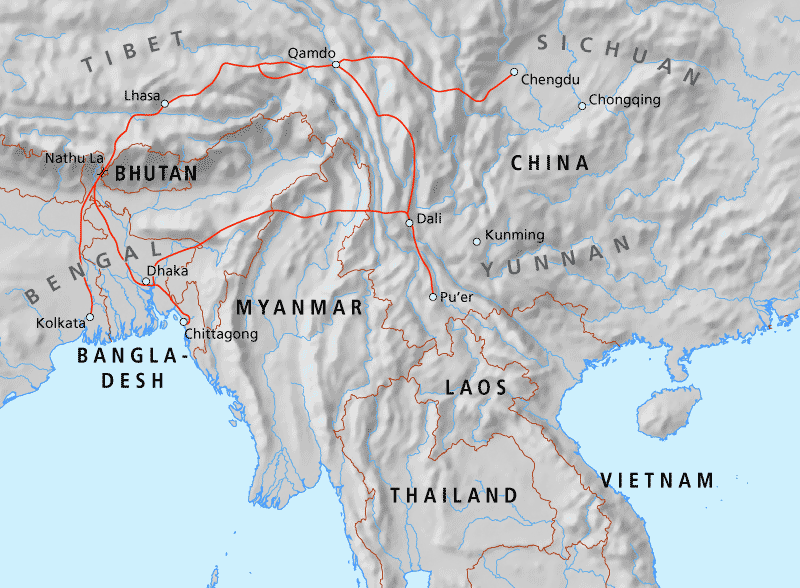
The Tea Horse Road largely solved the source of horses for the court cavalry and alleviated the shortage of cavalry horses, thereby enhancing the country's military strength. At the same time, this form of trade also promoted the feelings and integration of ethnic minorities in the Central Plains Dynasty and the Qinghai-Tibet Plateau, and reduced wars between ethnic minorities. In addition, the tea-horse trade also promoted economic development and economic prosperity along the way, and promoted economic exchanges among multiple ethnic groups. At the same time, this international channel played an important role in the life and death of the Chinese nation during the Anti-Japanese War.
The existence of the Tea Horse Road promoted the economic and cultural development of various ethnic groups, condensed the spirit of various ethnic groups, and strengthened the unity among various ethnic groups. The Ancient Tea Horse Road is a way to promote ethnic harmony and safeguard border security. The Ancient Tea Horse Road is a historical witness to China's unification and a symbol of national unity.


