If you want to understand Japanese culture, you can’t avoid the tea ceremony. In the tea ceremony, tea refers to the tea soup (茶の水), while Tao represents a practical method. "Tea soup" in Japanese is different from the "tea soup" that we often say is obtained after water acts on tea. Its concept is broader, ranging from tea utensils, Tang objects, hanging scrolls, flowers, incense boxes to tea parties and tea rooms, etc. , covering all aspects related to tea. The tea ceremony bred from the "tea soup" is like a comprehensive culture. In its development, it has given birth to a unique aesthetic point of view, which has profoundly affected the lives of Japanese people.
To tell how "tea soup" gave birth to the Japanese tea ceremony, we must start with the introduction of Chinese tea to Japan. In 804, the 23rd year of Japan's Enryaku era, the Japanese monk Saicho came to the Tang Dynasty by ship as an envoy to the Tang Dynasty to seek Buddhism. He traveled from Chang'an to Tiantai Mountain in Zhejiang Province. The following year, Saicho returned to Japan. When he returned to Japan, the cabin was filled with not only Buddhist scriptures and magical instruments, but also tea tree seeds. After returning to Japan, Saicho planted these tea varieties at Enryakuji Temple in Mount Hiei, where the oldest tea garden in Japan: Hiyoshi Tea Garden is still preserved. Kukai, who returned two years later than Saicho, brought back not only tea seeds, but also stone mortars for making tea and tea-making techniques such as steaming, pounding, and baking. However, subsequent wars in the Central Plains led to the demise of the Tang Dynasty, and natural disasters and wars ensued in Japan. The tea-drinking culture brought back by monks sent to the Tang Dynasty dimmed as exchanges between China and Japan stagnated. This period belongs to the "prehistoric age" of Japanese tea ceremony. Until the Southern Song Dynasty, the Japanese monk Eisai came to the Song Dynasty twice to seek Buddhism. In 1191, Zen Master Eisai returned to Japan from China and began to spread Zen principles and teach the people to "eat tea to maintain health." Eisai combined the five internal organs and the five flavors and proposed that the liver likes sourness, the lungs like pungency, the spleen likes sweetness, the kidneys like salty, and the heart likes bitterness. Japanese food, however, has more sour, pungent, sweet, and salty flavors, but only lacks bitterness. "Eating Tea and Preserving Health" written by him in his later years is considered to be Japan's first tea book. In the book, Rong Xi promotes China’s tea drinking culture:
Japan does not eat bitter food, but big countries (referring to China) only eat tea, so they have no heart disease and live longer. Many obese patients in our country are caused by not drinking tea. If a person is unhappy, he can drink tea to regulate his heart and cure all diseases.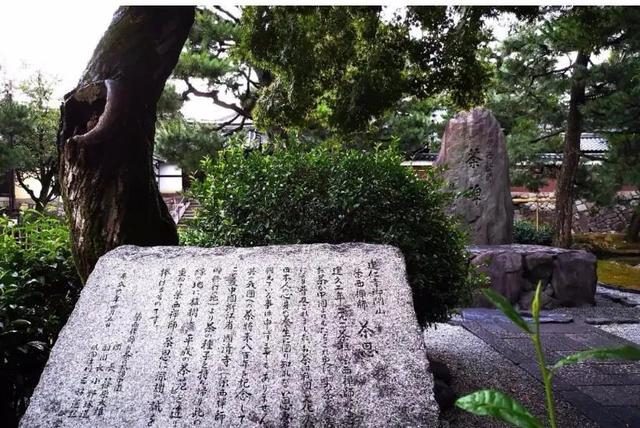
In this way, tea was widely spread among the Japanese people because of its "medicinal uses", and its "medicinal effects" were also recognized by General Minamoto no Tomo, the most powerful person at the time. What Einishi introduced from China was the tea-ordering method popular in the Song Dynasty, which was also the prototype of the Japanese Matcha tea that is now known to people. Zen Master Einishi planted the tea seeds he brought back from China in Fuchunen on Hirado Island in Nagasaki and Hizen (today's Saga Prefecture) at the foot of the Beizhen Mountains on Kyushu Island. He also gave tea seeds to Takayama Temple on Mount Meio in the suburbs of Kyoto. Master Minghui. Master Meikei planted tea seeds in Mt. Tatsuo, and later in Uji in the south of the city. The soil quality of Ziji is very suitable for the growth of tea trees, so the tea produced here is called "honcha" and tea from other producing areas is called "non-tea." After that, distinguishing between honcha and non-tea became a matter for Japanese nobles and samurai. The main content of the tea party was the identification of genuine tea and non-tea, as well as the display of tea utensils and the appreciation of Tang objects. At that time, the exquisite tea utensils from China were regarded as the most precious art by Japanese tea people. It is also a collection target for many people.
During the Muromachi period in Japan, the shogunate also needed to frequently participate in various cultural activities such as tea parties. This required the generals to not only be proficient in Waka and appreciate sarugaku noh, but also appreciate Tang objects. Proficient in tea ceremony. Therefore, roles similar to cultural advisors or cultural aides appeared around the general. Such people were called "fellow friends." As a friend of General Ashikaga Yoshimasa, Noami was an all-around artistic talent who was good at tea ceremony, Japanese singing, and appreciation of Tang objects. He was also proficient in ink painting, tachibana, and gardening. He formulated and reformed the rules of tea parties and took the lead in formulating the decoration rules of academy tea rooms. Under Noami's suggestion, the tea ceremony procedures and tea party arrangements in the academy's teahouses were standardized. Relying on the style of the new teahouse, Noami combined the Zen forest rules of Buddhist tea drinking with the samurai style, and created the "table tea ordering method" with a Japanese native style. More importantly, he eliminated the extravagant and materialistic style of the previous tea party and turned the tea party into a quiet and elegant style.
Dojinsai, which now stands in Togudo Hall next to the famous Ginkakuji Temple in Kyoto, is the earliest extant Shoin-style teahouse in Japan. In 1467, the Yingren Rebellion broke out. In 1474, the physically and mentally exhausted Shogun Ashikaga Yoshimasa abdicated and lived in seclusion at Higashiyama Betsuin on the outskirts of Kyoto. The Ginkakuji Garden was built under the design of his friend Soami, among which Dojinzai in the Higashikaga Hall became Ashikaga Yoshimasa's study and study room. tea room. The floor of Dojinsai is only paved with four and a half stacks of tatami mats. The tea room is extremely simple in layout, with asymmetrical storage racks and low desks, on which are placed the exquisite Tang objects collected by Ashikaga Yoshimasa - antiques and porcelain. , calligraphy and painting, etc., these are commonly known as "Higashiyama Gomono" by later generations, which early showed the aesthetic trend of Japan's Muromachi period.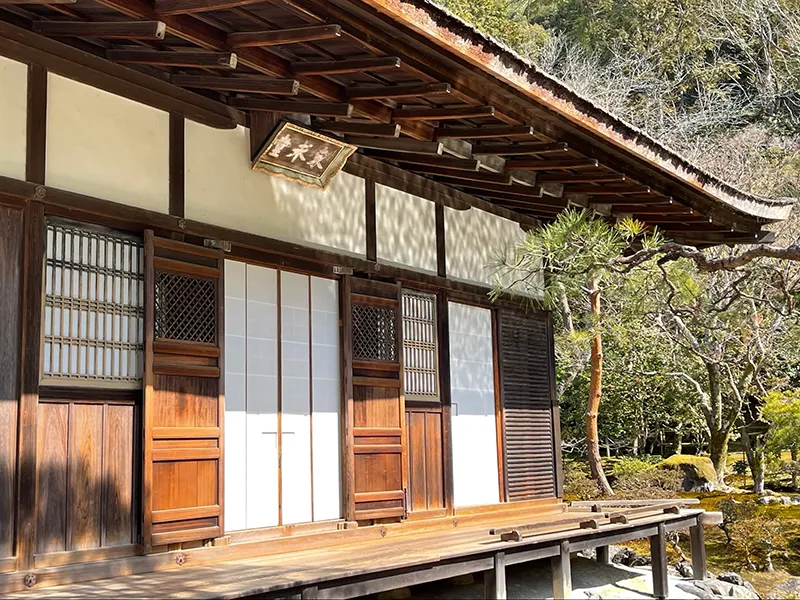
The Japanese tea ceremony changed from initially admiring Tang objects to later advocating "wabi-sabi" as beauty. This change is attributed to the emergence of a group of tea people in the 16th century.
The first is Murata Shuko, who is said to be the first person to call "tea" "Tao". When Murata Shuko was young, he was a monk in a temple in Nara. It is said that he was expelled from the temple because of "misconduct that was not worthy of being a monk". At the age of 30, Shuko converted to Zen Buddhism in Daitoku-ji Temple in Kyoto. However, he often fell asleep during meditation and found it difficult to keep the precepts. The distressed Shuko sought help from a local famous doctor, who diagnosed him with weak heart strength and prescribed "tea soup". Shuko bought tea leaves from Togao Mountain. Since drinking tea, he has become addicted to it. His sleeping problem was greatly improved. From then on, he became attached to tea, read Chinese tea books and classics, and devoted his life to studying tea. Zhuguang also learned Tachibana from Noami and became a disciple of Ikkyu Sojun. It is said that once, Ikkyu taught Zhuguang tea. When Zhuguang brought the tea bowl to his mouth and was about to drink, Ikkyu suddenly knocked over the tea bowl with an iron rod. Zhuguang was very puzzled and stood up from his seat. At this time, Ikkyu shouted: "Drink it!" Zhuguang immediately understood Ikkyu's intention and answered loudly: "The willow is green and the flower is red. "Ikkyu was quite satisfied with Juko's witty response. Obviously, Juko realized the unchanging nature of all things from the spilled tea. Perhaps, the moment of Juko's enlightenment was the most important moment in the history of Japanese tea ceremony: tea lovers felt a force surging towards the inner spirit and soul from a bowl of tea soup. Tea drinking gradually merged with civilian life from the original aristocratic culture, becoming a tea ceremony that focuses more on the spirit.
Influenced by the crazy and straightforward Ikkyu Sojun, Juko served tea in an extremely simple way, placing precious Tang objects together with simple Japanese tea utensils. In the "Heart Text" written to his disciple Cheng Yin, Juko Shima suggested blurring the boundary between Chinese teaware and Japanese teaware, and thought it was very important. The theory that there is no boundary between Yamato and Han Chinese brought a more life-like and original aesthetic to the development of Japanese tea ceremony. Shima liked quietness, simplicity and simplicity. His tea ceremony was also called "Wabi-cha" (わちや). Shima further simplified the tea ceremony procedures to reflect the spirit of personal equality. The host and the guest are equal, respect each other, and accept each other's sincerity with gratitude. Shima set the standard specification of the tea room as four and a half tatami mats. In the cramped room, people can open their hearts and communicate with each other. In this way In the small thatched hut, the thatched hut tea that influenced later generations was born, and Zhuguang became the founder of thatched hut tea. Zhuguang also hung the calligraphy of Zen Master Yuanwu, who was passed down to him by Ikkyu Sojun, in the most important place in the tea room - between the beds. Before, tea rooms mostly placed Buddha statues, or flower and bird paintings or landscape paintings from China. After Zhuguang, the calligraphy of eminent monks began to be often hung in tea rooms for people who entered the tea room to comprehend and appreciate.
Under Zhuguang's leadership, the Japanese tea ceremony was freed from the pursuit of Tang objects and the constraints of identity. The style changed from formalism to spiritualization, and the ancient, simple and quiet "wabi-sabi" spirit was brought Among them. Classic theories proposed by Zhuguang, such as "the beauty of the moon covered by clouds", "the famous horse tied to the thatched house", and "become the teacher of the heart, do not take the heart as the teacher", have also profoundly influenced Japanese aesthetics.
Almost at the same time, in the central and southern part of today's Osaka Prefecture, the city of Sakai was rising. From the 15th to the 17th century, it was one of the most globalized cities in the entire East Asia. After the Onin War in Japan in 1469, Sakai replaced Hyogo as a transit point for Sino-Japanese trade and became increasingly prosperous. At this time, Japanese ships sent to Ming Dynasty all departed from Sakai City and returned from Sakai City. Various "Tang goods" entered Japan from here and eventually reached the pockets of the royal family and nobles. At the beginning of the Age of Discovery, European colonists began to move eastward and traded with various port cities in Southeast Asia as bases. At this time, the Japanese began to trade with Europeans, which was the "Southern Barbarian Trade" in Japanese history. In addition, the smuggling trade and internal trade in Japan conducted by Chinese and Japanese merchants were also centered in Sakai City. At this time, Sakai City was located at the junction of multiple daimyo forces. It did not belong to any daimyo, but was managed by the government organized by local merchants. It was a rare autonomous city in East Asia at that time. Artists, monks, actors and poets, merchants, and European missionaries who fled the war came here one after another. The shops in Sakai City not only gathered porcelain teaware, calligraphy and painting, silk fabrics, etc. from China, but also "novel items" from all over Europe. It became the largest material distribution center and the largest commercial port in Japan, accumulating a lot of wealth for the whole of Japan. More importantly, two tea ceremony masters who played an important role in Japanese history were born here.
One of them was Takeno Joou, who came from a fur merchant family. He learned tea ceremony from Juko's disciple Jushiya Sogo. It is said that when he was 32 years old, he accidentally saw a Chinese painting called "White Egret Picture". From the combination of gorgeous pictures and simple mountings, he felt the beauty and realized the tea ceremony spirit of "Grand Stallion of the Grass House" advocated by Juko. This story is so famous in the history of Japanese tea ceremony that there is a saying that "If you don't see the egret in your painting, you are not a tea lover."
Takeno Joou was born in Sakai City. It is not surprising that he excels in Tangwu appreciation, but Takeno Joou is also good at making and innovating tea utensils. Many utensils that seem to have nothing to do with the tea ceremony have become famous tea ceremony utensils through his skillful hands. On the other hand, this also shows that Takeno Joou is not a stickler for conventions. At that time, Japanese tea ceremonies often required flower arrangement. During a tea ceremony, it snowed heavily. Takeno Joou filled the water tray for flower arrangement with water to set off the snow scene, and thought that the snow was enough and flower arrangement was not needed.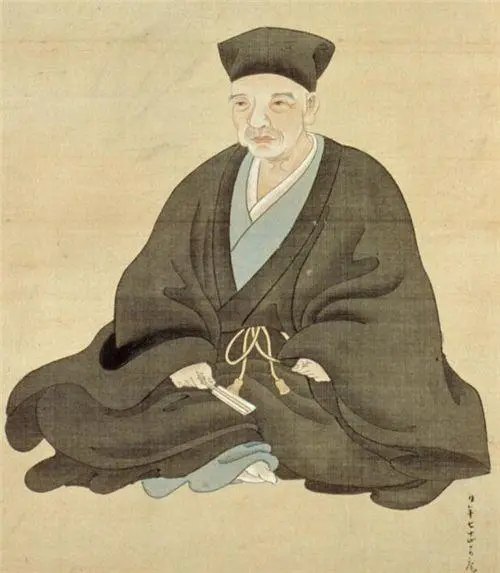
Takeno Joou inherited the spirit of Zhuguang's "Wabi-Cha". In Takeno Joou's tea ceremony world, calligraphy, tea utensils, flower arrangement, etc. are all concrete carriers for expressing abstract and difficult-to-express spirits and artistic conceptions. His expression always resonates with people. Shaoou also boldly used Japanese utensils as tea utensils, and even used common materials in life to make tea utensils. He believed that "wabi" does not lie in the simplicity and shabbyness of tea utensils, but in the sincerity and non-luxury contained in them. Guests can also feel the sincerity and humility of the host when using these tea utensils. If there are flowers blooming outside the tea room, there is no need to add unnecessary flower arrangements, which is also a kind of "wabi". At this point, the Japanese tea ceremony has a clearer thread from ideology to artistry, and from materiality to spirituality. After the unremitting efforts of tea people such as Noami, Murata Shuko and Takeno Shaoou, the Japanese tea ceremony has taken shape. Although it is still controversial whether the Japanese tea ceremony during this period has formed a school, people still call the tea ceremony created by the three people "Higashiyama Ryu", "Nara Ryu" and "Sakai Ryu" respectively.
Takeno Joou's tea ceremony is undoubtedly extraordinary, but his greatest contribution to Japanese tea ceremony is not limited to this. He cultivated an outstanding disciple, the "Tea Saint" Sen no Rikyu, who is known as the master of Japanese tea ceremony.
Sen no Rikyu has been immersed in the rich cultural atmosphere of Sakai City since he was a child. At the age of 17, he studied under Kitamura Doshin, and at the age of 19, he became a disciple of Takeno Joou under the introduction of Kitamura Doshin. Under Takeno Joou's teaching, Sen no Rikyu quickly realized the spirit behind the "beauty of withering and imperfection". One day, Takeno Joou asked his disciples to clean the courtyard outside the tea room, but the courtyard had just been cleaned. Sen no Rikyu pushed the door and saw the clean courtyard. He immediately understood the teacher's intention, so he walked to a tree and shook the trunk. Several leaves fell to the ground, and Takeno Joou praised it. Sen no Rikyu inherited the cold, thin, withered and cold aesthetic spirit of Murata Shuko and Takeno Joou, and carried forward the spirit of "wabi-cha".
In 1574, Sen no Rikyu met Oda Nobunaga for the first time at a tea ceremony. After that, as Oda Nobunaga's tea master, he began to participate in Oda Nobunaga's political and military affairs. Sen no Rikyu frequently held tea parties during the intervals of war or when he returned victorious. With the help of Sen no Rikyu, Oda Nobunaga used tea parties to make friends and expand his power. In 1582, Oda Nobunaga died in the Honnoji Incident. After that, his follower Toyotomi Hideyoshi inherited Oda Nobunaga's mantle and implemented Oda Nobunaga's practice of using extravagant tea parties as an important political tool. Toyotomi Hideyoshi not only unified the entire territory of Japan, but also became a daimyo who was allowed to order tea independently. When he served as Toyotomi Hideyoshi's tea master, Sen no Rikyu gave him advice on his campaigns and became a core figure in Toyotomi Hideyoshi's power group. In an era when gold-leaf-decorated screen paintings were popular, Sen no Rikyu, who knew that "wabi-sabi" was the source of life, designed several extremely small tea rooms with two and a half tatami mats or even one and a half tatami mats, pursuing extreme simplicity. Sen no Rikyu admired small Tang tea figures, Goryeo tea bowls, and Zen monks' calligraphy.
At the same time, he also actively sought local craftsmen to make tea utensils for him, the most famous of which were Chojiro's Raku ware and Yojiro's tea kettle. Sen no Rikyu, who had a unique vision, also made bold innovations, transforming the fish baskets of fishermen at the time into flower vases, using bamboo that could be found everywhere as tea spoons, and bamboo roots as flower vases. In the etiquette of adding charcoal to tea, Sen no Rikyu advocated that "it is necessary to know that the essence of tea is nothing more than boiling water to make tea", that is, the essence of tea ceremony exists in daily life. On the one hand, Sen no Rikyu was in the chaotic vortex of power, holding various tea parties for the generals and daimyo to serve politics, and on the other hand, he constantly gained inner peace in the tea soup, continued to improve in philosophy, and finally became a generation of tea saints.
The "harmony, respect, purity, and tranquility" advocated by Sen no Rikyu are the "four rules" that need to be practiced in Japanese tea ceremonies. Specifically, they are the following "seven rules":
The tea should taste good.
The charcoal should be able to boil the water.
The flowers should be blooming like in the wild.
The tea ceremony should be warm in winter and cool in summer.
Be punctual.
Be prepared for everything.
Care for the guests at the table.
It is said that after Sen no Rikyu proposed these "seven rules", some people thought it was too simple and did not care. Sen no Rikyu's answer was, "If you can do it, please become my teacher." As the saying goes, the great way is simple, but knowing is easy and doing is difficult. The achievement of each of the "seven rules" requires long-term training and undivided attention. The most important and difficult thing is to keep the original intention. Just like Sen no Rikyu's disciple Nanfang Zong The inspiration lies in the collection of Rikyu's tea ceremony thoughts, "Nanfang Lu": The most important thing about the tea ceremony of the thatched cottage tea is to uphold the Dharma, improve virtue and cultivate oneself, and seek enlightenment. Living in a luxurious house, eating delicious food, and enjoying all kinds of enjoyment, the pleasure obtained is only worldly senses. In fact, the house is only for shelter and rain, and the food is only for filling the stomach and avoiding hunger. This is the teaching of the Buddha and the original intention of the tea ceremony. (The so-called tea ceremony) draws water, collects firewood, and makes tea; first pays homage to the Buddha, then serves others, and finally drinks it yourself; arranges flowers, burns incense, and all these things are emulated by the Buddha's ancestors. In addition, self-enlightenment is the only way.
In 1591, Sen no Rikyu was sentenced to death by Toyotomi Hideyoshi. The reasons are widely discussed and remain a mystery. After Sen no Rikyu's death, the "Seven Philosophers of Rikyu" inherited the spirit of Sen no Rikyu's tea ceremony. The subsequent influences mainly included Kobori Enshu's "Enshu Ryu", Ichio Iori's "Sansai Ryu" and Oda Yuraku's "Yuraku Ryu". Toyotomi Hideyoshi pardoned Sen no Rikyu's family in his later years, but the descendants of the Sen family were determined to stay away from the center of power. Sen no Rikyu's grandson Sen Sotan continued to practice the "Wabi Tea" of harmony, respect, purity and tranquility. After him, the Sen family was divided into three, namely the three Sen family: the Omote Sen family with Fushin-an, the Sato Sen family with Konya-an, and the Mushakoji Sen family with Kankyu-an.
In the 16th century, when Matcha tea ceremony was gradually maturing and gradually divided into different schools, the Sencha tea ceremony which was introduced to Japan from the Ming Dynasty also developed rapidly. Yin Yuanlongqi, a famous Zen monk in the late Ming and early Qing dynasties, founded the Obaku sect after traveling to Japan and became the ancestor of Sencha tea ceremony.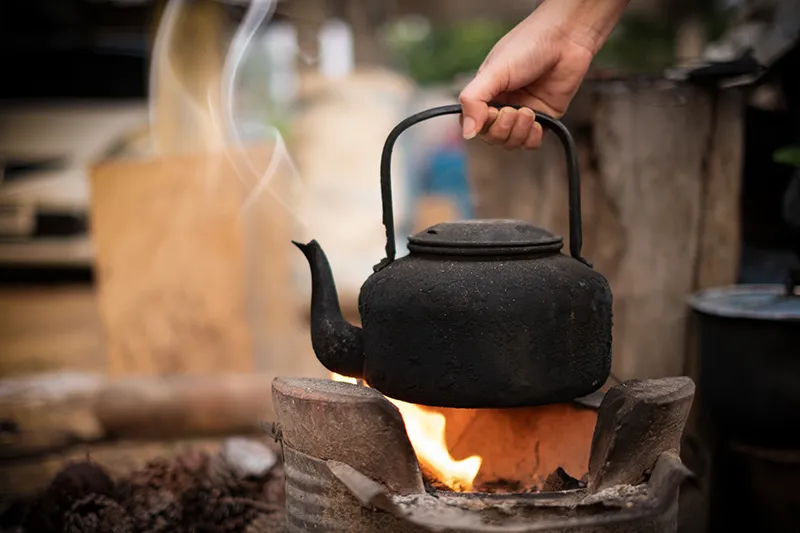
Unlike Matcha tea ceremony, the tea ceremony no longer brews tea powder but a kind of tea that has been rolled. The brewing method is closer to the method of brewing tea. Later, the representative figure of the Japanese tea ceremony, "Tea Seller" Shibayama Motoaki, hoped to break the rigid and hierarchical tea ceremony atmosphere and yearn to return to the fresh and natural tea style pioneered by Chinese hermits such as Lu Yu and Lu Tong. Therefore, people often see this eccentric "tea seller" wearing a monk's robe and carrying a bamboo basket with tea utensils to sell tea on the streets of various scenic spots in Kyoto. His way of selling tea is simple. After boiling the water in the pot, he directly grabs a handful of tea leaves and throws them into the boiling water. In an instant, the fragrance of tea is overflowing. The "tea seller" never sets a price for his tea, but only asks tea drinkers to throw a few copper coins into the bamboo slips. The "tea seller" has become a symbol of contentment with poverty, seclusion in the city, and pursuit of freedom. Compared with the Matcha Dao that is content with a small tea room, the followers of the Sencha Dao are more willing to invite two or three close friends, walk into nature, or exchange calligraphy and paintings or recite poems, and use sweet mountain springs to boil tea. The rise of the Sencha Dao also promoted the development of tea planting in Japan, making "Gyokuro" a precious tea variety on the market.
The Sencha Dao, which criticized the Matcha Dao at the beginning of its establishment, also absorbed the experience of the Matcha Dao in its development, and at the same time implanted the spirit of literati who were isolated from the world and independent into the Japanese tea ceremony, becoming an indispensable part of the Japanese tea ceremony. Whether it is Matcha or Sencha, Japanese tea masters of all generations have placed rich connotations in "tea soup" such as people's thinking about the world, equality between people, sorrow between people and things, and people's ultimate pursuit of their spiritual world. It is also filled with the impermanence and expectation of a once-in-a-lifetime encounter, and slowly formed their own way of dealing with the world.
Originated from Chinese tea culture, Japanese tea ceremony has grown independently through different eras, integrating various cultures such as Zen, Shintoism, and samurai culture. From Jiangnan, China to Uji, Kyoto, Japan, "the green mountains share the same clouds and rain, and the bright moon has never been in two places." Whether it is Chinese tea culture that is integrated into daily life or Japanese tea ceremony that has become a way of practice, some people walk under the moon, and some people recite poems under the moon, they are just a round moon in the sky.


