10 Best Scented Teas, Have You Tried Them All? | Beverage Manufacturer
By Tea Artist
June 21st, 2024
2943 views
The top 10 best flower teas may vary from person to person, because everyone has different tastes and preferences. However, the following are some popular flower tea varieties that are considered to have good taste and aroma, and they are generally considered to be among the top 10 best flower teas:
The top 10 best flower teas may vary from person to person, because everyone has different tastes and preferences. However, the following are some popular flower tea varieties that are considered to have good taste and aroma, and they are generally considered to be among the top 10 best flower teas:
Jasmine Tea
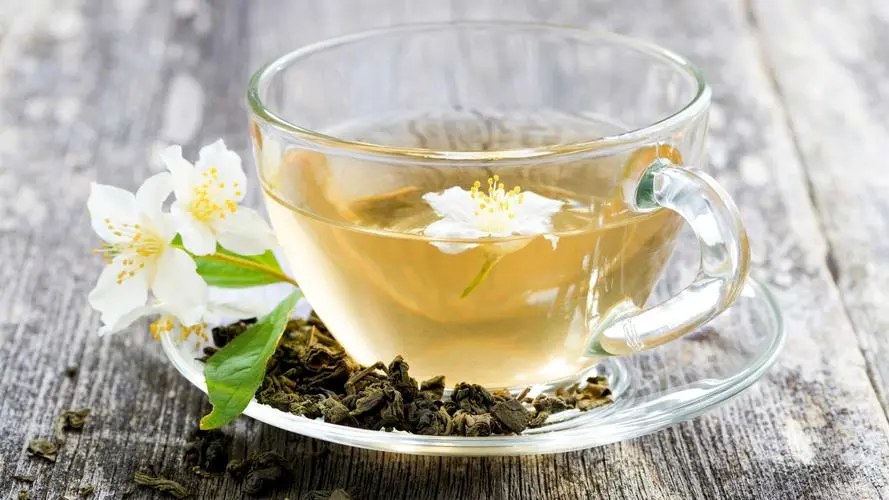
Jasmine tea is made by blending tea leaves and jasmine flowers, scenting them, and allowing the tea leaves to absorb the fragrance of the flowers. Jasmine tea has a beautiful appearance, with exposed tips, a strong and lasting aroma, a fresh and refreshing taste, a bright yellow-green soup color, and a tender and crystal green leaf bottom, which is durable.
The jasmine aroma of jasmine tea is gradually produced during the processing process, so the jasmine dried flowers in the finished tea only serve to embellish, enhance the freshness, and beautify the tea. Some varieties have this embellishment, while others do not. The presence or absence of dried flowers cannot be used as a criterion for judging the quality of scented tea. The quality of tea should still be judged by the taste of the tea itself. High-quality jasmine tea has the characteristics of tight and uniform dry tea strands, yellow-brown and oily color, fresh and lasting aroma after brewing, bright yellow-green soup color, tender and soft leaves, and mellow and refreshing taste.
Brewing method
When brewing jasmine tea, it is necessary to fully volatilize the aroma and prevent the tea fragrance from spreading. Therefore, it should be brewed with boiling water and the tea set should be covered. The first brew should adopt the low pouring method. When brewing, the mouth of the pot is close to the teacup and poured directly on the tea leaves to make the fragrance slowly leached out; the second brew adopts the medium pouring method, the mouth of the pot is slightly away from the mouth of the cup and pours boiling water to make the tea blend; the third brew adopts the high pouring method, the mouth of the pot is slightly away from the mouth of the teacup and pours boiling water to make the tea roll and the flower fragrance floats. Generally, the water is poured until it is eight-tenths full, and the lid is immediately covered after pouring to preserve the tea fragrance.
Osmanthus tea
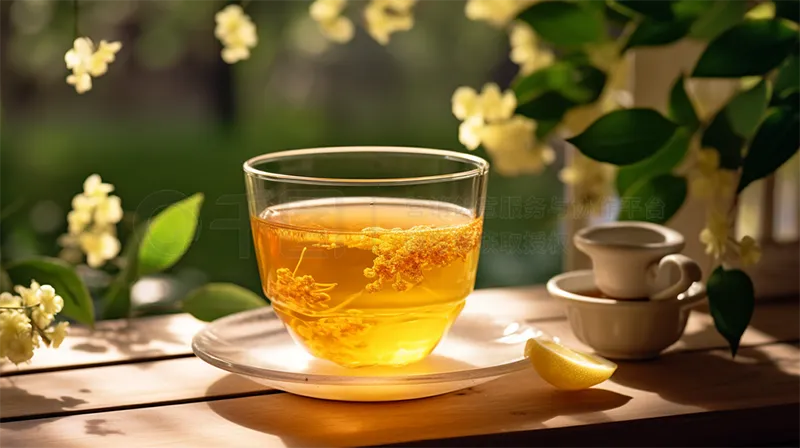
Osmanthus is a plant of the Oleaceae family and blooms in September and October. From the color of the flowers, osmanthus can be divided into golden osmanthus, silver osmanthus and red osmanthus. In terms of aroma and edible value, silver osmanthus is the best and has the largest number. Osmanthus has a pleasant aroma and has the effects of calming pain, ventilating and strengthening the stomach. Its flowers are small and usually yellow with brown. When brewed alone, the soup is light yellow, fragrant and pleasant, slightly bitter and sweet.
In addition to being used for viewing, osmanthus is also a top-quality raw material for scenting scented tea, extracting aromatic oils, and making candies and cakes. After scenting tea with fresh osmanthus, it not only retains the original flavor of tea, but also has a rich osmanthus aroma. After drinking, it has the effect of ventilating and soothing the stomach, which is very suitable for elderly people with weak stomach function. The osmanthus roasted green tea in Guilin, Guangxi, the osmanthus oolong tea in Anxi, Fujian, and the osmanthus black tea in Beibei, Chongqing, all use the rich fragrance of osmanthus to set off the mellowness of tea. They are unique and are treasures among teas, and are deeply favored by consumers at home and abroad.
Brewing method
Take 4~6 grams of osmanthus tea(the amount of tea can be adjusted according to personal preference), put it in a glass with a capacity of about 300 ml, add boiling water to 80% full, soak for 10 minutes, and drink it while it is hot. Since osmanthus is relatively small, you can use a filter to filter it before drinking. You can add sugar or honey when drinking, or mix it with your favorite tea leaves. It is recommended to pair it with French rose, chrysanthemum, oolong tea, etc.
Honeysuckle tea
Honeysuckle, also known as honeysuckle, is a perennial semi-evergreen winding woody vine of the Caprifoliaceae family. The name honeysuckle comes from the "Compendium of Materia Medica". Because the honeysuckle flowers are white when they first bloom and then turn yellow, they are named "honeysuckle". Honeysuckle has been praised as a good medicine for clearing heat and detoxification since ancient times. It is sweet in nature, clears heat without hurting the stomach, and has a penetrating fragrance that can dispel evil. Honeysuckle can both dispel wind-heat and remove blood toxins. It is used to treat various febrile diseases (such as fever, rash, spots, heat-toxic sores, sore throat, etc.) and has significant effects.
There are two types of honeysuckle tea on the market: one is to mix fresh honeysuckle with a small amount of green tea and make it according to the scenting process of scented tea; the other is to mix dried or sun-dried honeysuckle with green tea. The former has a fragrant flower aroma and is mainly for appreciating the flower fragrance; the latter has a lower fragrance and has both medicinal and health effects.
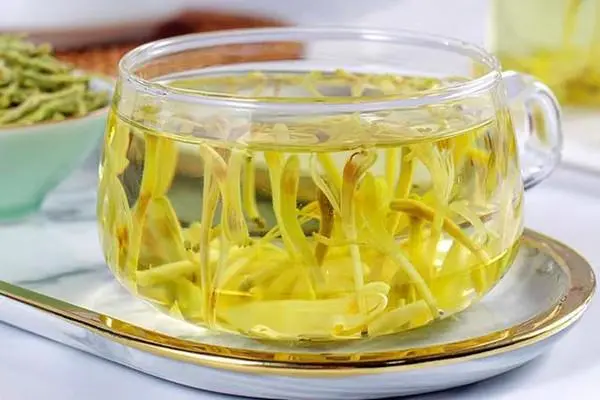
Honeysuckle tea is a health drink suitable for all ages, especially for summer drinking. The appearance of honeysuckle is thick on the top and thin on the bottom, slightly curved, golden yellow, the bottom of the leaves is stretched and soft, the soup color is bright yellow-green, the aroma is fresh and rich, and the taste is light and bright.
Brewing method
Take 6~15 grams of honeysuckle tea each time (the amount of tea can be adjusted according to your own situation), brew it with 100℃ boiling water for 3~5 minutes, and then drink it.
Chrysanthemum tea
Chrysanthemum is one of the top ten famous flowers in my country and can be seen almost everywhere in the country. Among them, the Fubaiju in Futian River, Macheng, Dabie Mountain, Hubei, the Hangbaiju in Tongxiang, Zhejiang, and the Huangshan Gongju (Huizhou Gongju) at the foot of Huangshan are more famous. In addition, the Haoju in Bozhou, Anhui, the Chuju in Chuzhou, the Chuanju in Zhongjiang, Sichuan, the Deju in Deqing, Zhejiang, and the Huaiju in Jiaozuo, Henan (one of the four major Huai medicines) all have high medicinal value. Especially Huangshan Gongju, it grows in the clouds and mist of the mountains, collects the aura of Huangshan, and absorbs the essence of the mountains and waters in southern Anhui, and has a high drinking value.
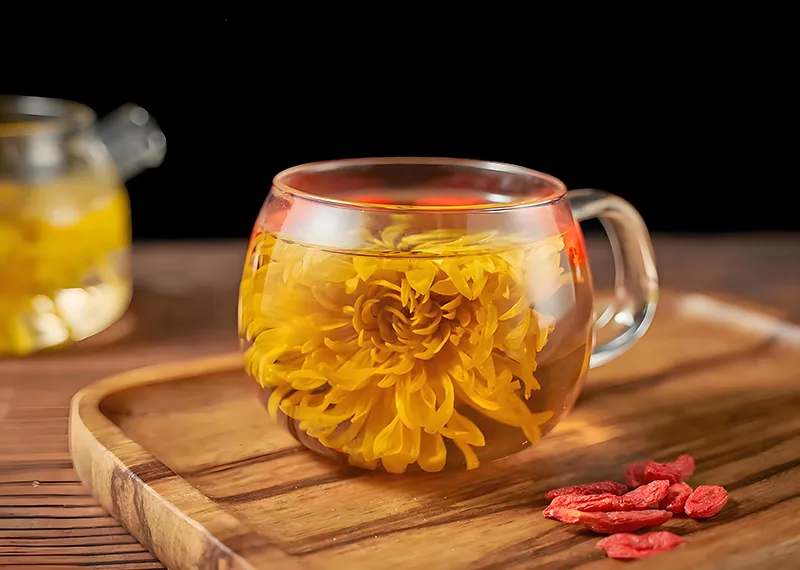
Chrysanthemum is a perennial herbaceous plant of the Asteraceae family. It is one of the traditional commonly used Chinese medicinal materials in my country, and is mainly used for medicinal purposes in the form of head inflorescences. According to ancient books, chrysanthemum tastes sweet and bitter, is slightly cold in nature, and has the effects of dispersing wind and clearing heat, clearing the liver and improving eyesight, and detoxifying and anti-inflammatory. Chrysanthemum has a certain effect on dry mouth, fire, dry eyes, or limb pain and numbness caused by wind, cold and dampness. Chrysanthemum tea is mainly used to treat colds, wind-heat, headaches, etc., and has a preventive and therapeutic effect on dizziness and tinnitus. The appearance of chrysanthemum tea is a spherical bud, bright yellow, with a soft and tender leaf bottom, a bright yellow-green soup color, a rich fragrance, and a refreshing taste.
Brewing method
When brewing chrysanthemum tea, it is best to use a transparent glass cup, put four or five flowers each time, and then brew with boiling water for 2~3 minutes. When the water cools to 70~80℃, you can see that the tea gradually turns slightly yellow. Every time you drink it, don't drink it all at once, leave 1/3 cup of tea, add water, and soak it for a while before drinking. When brewing, you can also add some tea leaves to the white chrysanthemum to play a seasoning role. When drinking chrysanthemum tea, you can also put a few pieces of rock sugar in the teacup, hot or iced.
Rose tea
Rose tea is a high-end tea made by mixing fresh roses and tea buds in proportion and brewing with modern high-tech technology. Its aroma is strong or light, and it is mild but not strong. Rose is a precious medicinal material that can promote blood circulation, soften blood vessels, harmonize the liver and spleen, regulate qi and stomach, and has certain effects on cardiovascular and cerebrovascular diseases, hypertension, heart disease and gynecological diseases.
Rose buds are warm in nature and sweet in taste. They have the effects of regulating qi and relieving depression, harmonizing blood and dispersing blood stasis, reducing swelling and relieving pain, and beautifying the skin. They can clear away summer heat, relieve thirst, wake up the spleen and stomach, and stop bleeding. The fragrance of rose comes from the volatile components of about 0.3% it contains, and the rich and bright colors come from the natural pigments such as red pigment and yellow pigment it contains. In addition, it also contains substances with beauty effects such as quercetin, fatty oil, and organic acid. In May and June every year, when roses are about to bloom, fresh flowers are picked in batches, and then strictly disinfected, sterilized, and air-dried to make dried roses, which can almost completely retain the color, fragrance, and taste of roses. The appearance of dried roses is pink, the bottom of the leaves is white and tender, the soup color is light yellow-green, the fragrance is pleasant, and the taste is slightly bitter. Roses have magical effects on women's menstrual pain and irregular menstruation. Long-term drinking of rose tea can also make people have a fresh body fragrance, improve dry, pale or sensitive skin conditions, and make the skin rosy.
Brewing method
Put the appropriate golden roses in a glass, add 85℃ boiling water, and soak for 5 minutes before drinking. It tastes better with milk and lemon slices.
Globe amaranth tea
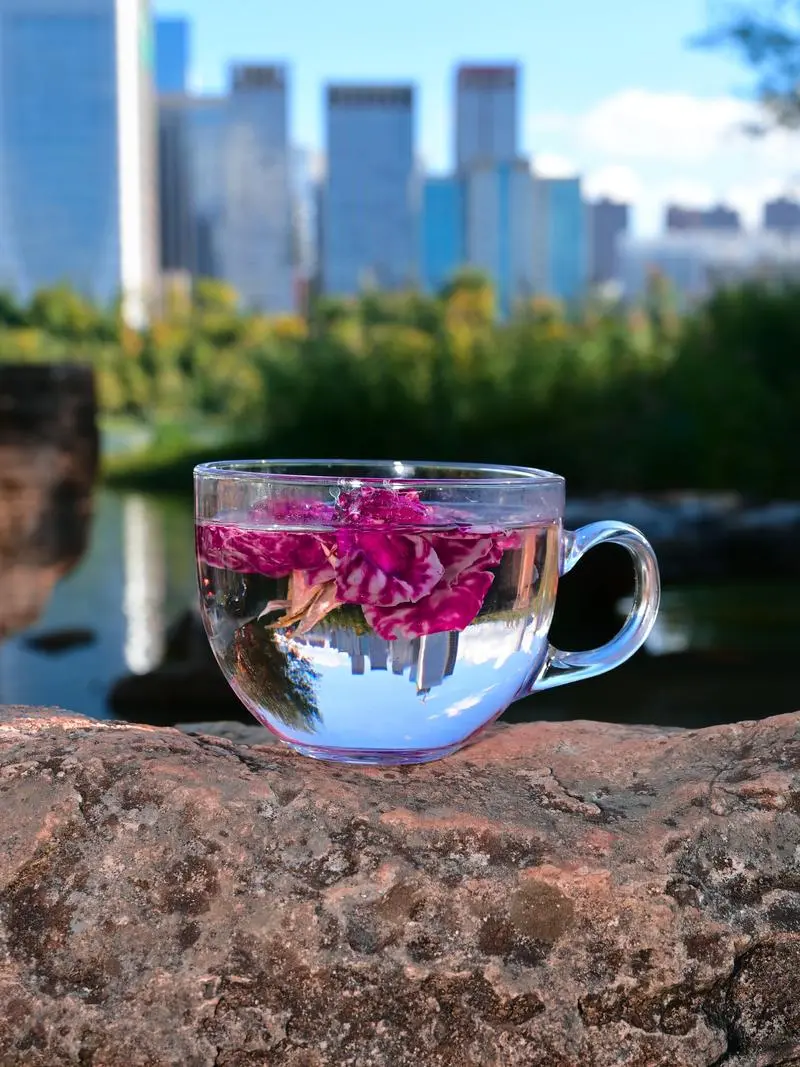
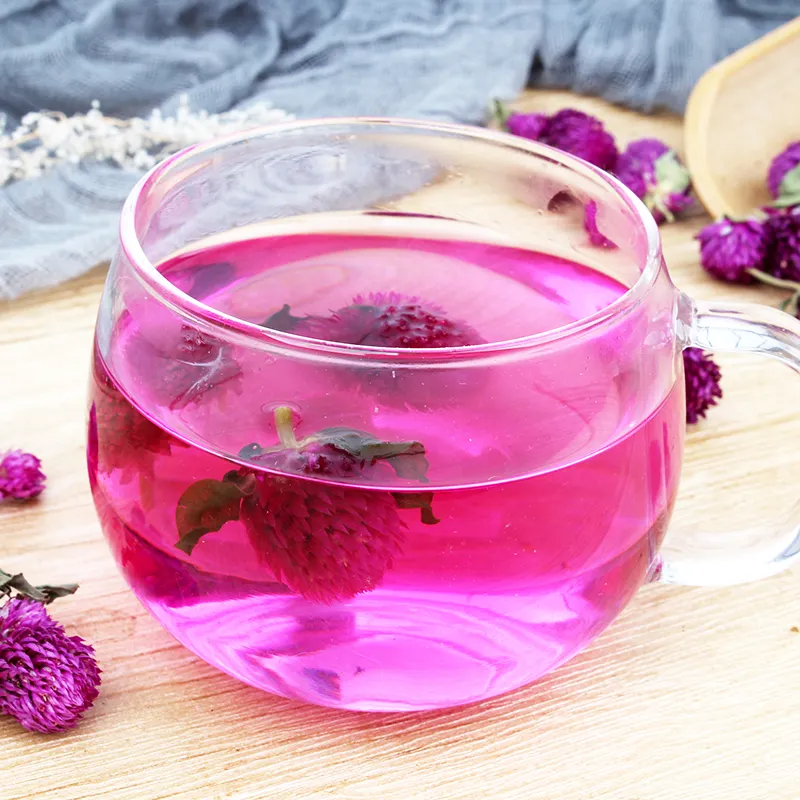
Globe amaranth, also known as 100-day red and Globe amaranth, is an annual straight-textured herb with a height of 20~60 cm. The whole plant is covered with white stiff hairs, and the leaves are opposite, generally oblong, and a small part is oval, 5 to 10 cm long, blunt at the top, gradually narrow at the base, and short petioles. Globe amaranth blooms in summer and autumn, and the flowers are purple-red, arranged in terminal, 1.5 to 3 cm long spherical or oval head inflorescence; bracts and bracteoles are purple-red, pink, milky white or white, and bracteoles are about 7 mm long. Its appearance is pink and smooth, with a delicate light pink color, the bottom of the leaves is white and tender, with a pleasant fragrance and a light and slightly sweet taste.
If the flower can be red for a thousand days, it is really an extra gift from the Creator. Although most flowers are charming and gorgeous when they bloom, they often wither within a hundred days. Flowers that can bloom unfailingly must have received many blessings, such as Globe amaranth. Therefore, people believe that it symbolizes eternal love and immortal love.
Globe amaranth is a natural dried flower and also a herbal tea with excellent flavor. The brightly colored Globe Amaranth needs to be soaked in hot water for a long time before the color gradually becomes lighter. The bright colors of the flower buds will slowly precipitate, turning the tea into a pleasing tender pink.
Brewing method
Put an appropriate amount of Globe Amaranth into a glass, add 85℃ boiling water, and soak for 5 minutes before drinking.
Forget-me-not tea
Forget-me-not, also known as forget-me-not, is a plant of the genus Forget-me-not in the Boraginaceae family. It is mainly distributed in European countries, Iran, Pakistan, India and other countries, and also in Jiangsu, Sichuan, Yunnan and other provinces in my country, as well as in Northeast, Northwest, and North China. Forget-me-not grows in areas with an altitude of 200 to 400 meters, mostly in mountain forest edges, hillsides, and valley meadows.
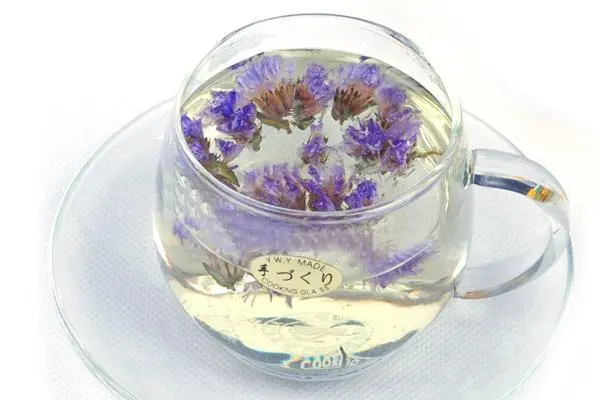
The name of forget-me-not comes from the German word Vergissmeinnicht, which means "don't forget me". The name of forget-me-not is also related to a tragic love story. According to legend, a German knight and his lover were walking along the Danube River and accidentally saw blue flowers blooming on the riverside. The knight leaned forward to pick the flower regardless of his life, but he slipped and fell into the rapids. Knowing that he could not be rescued, the knight said "Don't forget me!" and threw the blue flower to his lover, then disappeared into the water. After that, the knight's lover wore the blue flower in his hair day and night to show his loyalty and longing for his lover. The blue flower was therefore called "Forget-me-not", and its flower language is "Don't forget me", "Real love" and "True love". It is small and beautiful in appearance, light purple with yellow, with soft and smooth leaves, refreshing and bright soup, and a fresh and fragrant aroma.
Brewing method
Soak the forget-me-not in boiling water and oil for about 10 minutes before drinking. You can add brown sugar or honey dew when drinking.
Roselle tea
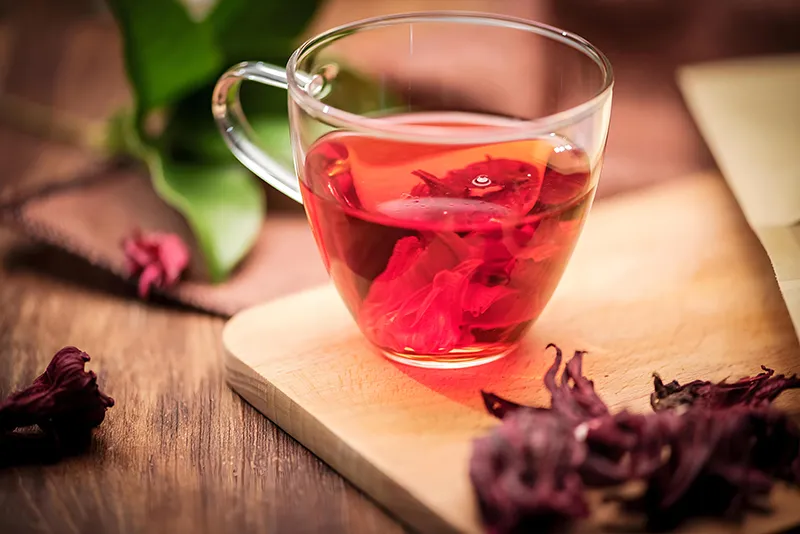
Roselle, also known as mountain eggplant, is an annual herbaceous plant of the genus Hibiscus in the Malvaceae family, widely distributed in tropical and subtropical regions. Roselle is native to West Africa and India. It is currently cultivated in Guangdong, Guangxi Zhuang Autonomous Region, Fujian, Yunnan, Taiwan and other places in my country. Roselle plants are 1.5 to 2 meters tall, with pale purple stems, upright, many branches on the main trunk, and alternate leaves. Roselle blooms between summer and autumn, with a long flowering period. The calyx is cup-shaped, purple-red, and the corolla is yellow. Every flowering season, the branches are red, green, and yellow, which is very beautiful and has the reputation of "plant ruby".
Roselle's calyx is thick and juicy, and natural edible pigments can be extracted. It can also be used as medicine. It tastes sour and is cold in nature. It has the effects of clearing heat and relieving summer heat, diuresis and lowering blood pressure, nourishing the skin and removing spots, detoxifying and relieving alcohol. Modern research shows that roselle contains flavonoids, protocatechuic acid, anthocyanins, isoflavones, amino acids, vitamins, sugars, organic acids, inorganic salts and other chemical components, which can reduce cholesterol and triglycerides, inhibit the oxidation of low-density lipoprotein, inhibit platelet aggregation, reduce thrombosis, reduce atherosclerosis, and effectively prevent the occurrence of cardiovascular diseases. In addition, roselle also has the effect of protecting the liver and anti-cancer. Therefore, roselle is a very good natural health medicine.
Brewing method
Take 3~5 grams of roselle, brew with warm water, and then add appropriate amount of rock sugar or honey, and drink it instead of tea. Long-term drinking hibiscus tea can help reduce the total cholesterol and triglyceride levels in human blood, and achieve the effect of preventing and treating cardiovascular diseases and losing weight.
Apocynum venetum tea
Apocynum venetum is a wild perennial herbaceous plant, named after its extremely prosperous growth in the Luobu Plain of Yuli County, Xinjiang. Apocynum venetum is distributed all over the country, and is mainly produced in Xinjiang Uygur Autonomous Region, Qinghai, Gansu, Ningxia Hui Autonomous Region, Shandong and other provinces and regions.
Good Apocynum venetum tea has a curly appearance, a tight structure, a green color, and a consistent color. Inferior Apocynum venetum tea is simply processed, and is just casually dried and dried, so the appearance of the tea leaves is loose. In addition, there are small white spots on the surface of inferior products. The main reason for these spots is that they have not been de-alkali treated during the processing process, which will cause harm to people's mouth and stomach.
Brewing method
Take Taosi's Apocynum venetum tea and put it in a teacup, and brew it with boiling water to drink. It should be noted that it must be brewed with boiling water, because the epidermis structure of Apocynum venetum leaves is tight and tight, and boiling water is required to brew it to soak out the flavor. In addition, Apocynum venetum tea is very resistant to brewing and can be brewed 3-5 times. When the tea soup is colorless and tasteless, change to new tea to avoid unnecessary waste. Patients with hypertension and hyperlipidemia should put more than 15 grams of Apocynum venetum tea each time when using it to soak water.
Seville Orange Flower Tea
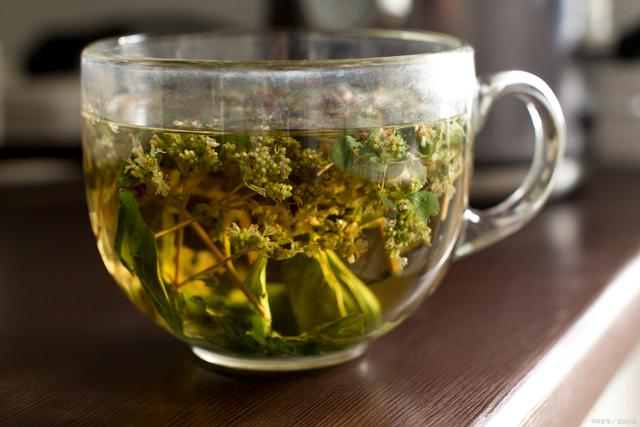
Seville Orange Flower tea(Orange Blossom Tea) is a new star in the Chinese scented tea family. Due to its mellow fragrance and the pharmacological effect of Seville Orange Flower in stimulating appetite and ventilation, it is very popular among Chinese consumers and is known as "Miss Scented Tea". Seville Orange Flower Tea has a fine and even appearance with sharp shoots; the internal aroma is fresh and strong, the taste is rich, the soup color is bright yellow, and the bottom of the leaves is bright yellow-green. Seville Orange Flower is a beauty tea. Seville Orange Flower is an evergreen shrub of the fragrant family. The fruits of the first year are left on the tree for the winter, and the next year they bloom and bear new fruits. The color of the old fruit skin changes from yellow to green. The two generations of fruits grow on the same tree, so it is called Seville Orange Flower. Physical and chemical indicators: water content is not more than 9.5%, and water extract is not less than 36%. It has the effects of regulating qi, widening the chest, stimulating appetite, and preventing and treating chest and abdominal distension, nausea, and loss of appetite.
According to the Compendium of Materia Medica, the orange blossom can be used as medicine and tea. The orange blossom in Suzhou was very famous as early as the reign of Emperor Kangxi of the Qing Dynasty. Suzhou and Fuzhou are still the main production areas of orange blossom in China. After 1937, Suzhou flower farmers planted orange blossom first among other flowers. Most of the orange blossom flowers were dried and only a part was used to make scented tea. In addition, Fuzhou, Fujian and Jinhua, Zhejiang are also the main production areas of orange blossom flowers.
Brewing method
Put a teaspoon of dried orange blossom tea in a glass, brew it with a cup of boiling water at about 90℃, cover it and simmer for about 3 minutes; when the water temperature drops below 60 degrees, add rock sugar or honey as appropriate. When the tea soup is slightly cool and palatable, drink it in small sips, let it stay in your mouth for a while, and inhale through your mouth. In coordination with the action of exhaling through the nose, the tea soup flows back and forth on the tongue surface 1 or 2 times, fully contacting the taste buds, and swallowing after tasting the tea flavor and aroma. Only after 1 or 2 times can you truly taste the tea flavor and aroma of the precious flower tea.
Previous
What is Scented Tea(Flower Tea)? | Beverage Manufacturer
Read More
Next
How To Drink Tea In Different Seasons? | Beverage Manufacturer
Read More


