Buyers often ask why alcohol-free beer does not taste exactly like regular beer. The answer is not only “because alcohol is gone.” Alcohol carries aroma. It adds warmth. It changes body. It supports dryness. It affects how bitterness and sweetness feel. When it is removed or controlled, the whole drink has to be adjusted again.
For B2B buyers, this topic matters during sample review. This article explains how alcohol is removed from beer. It explains why the final taste changes. It also shows how buyers can judge samples before choosing a product route.
A regular beer is built around malt, fermentation, aroma, bitterness, carbonation, foam, and alcohol. Alcohol is only one part, but it affects several other parts. When alcohol is reduced, the drink may need extra balance in mouthfeel, aroma lift, acidity, sweetness, and finish.
Alcohol gives beer light warmth and helps the drink feel complete. When that part becomes very low or is removed, sweetness may become more noticeable, even if the sugar level has not changed much. Bitterness can also feel sharper because there is less alcohol warmth to soften it. This is one reason alcohol free beer tastes may vary widely between brands. A fruit-led SKU may need a softer, more refreshing balance. A beer-style SKU may need malt body, foam, carbonation, and a cleaner finish to avoid feeling empty. Buyers should judge the full structure, not only whether it is “close to beer.”
There are two broad ways to make alcohol-free beer. One route starts with brewed beer and then reduces alcohol. Another route controls fermentation, so less alcohol forms from the beginning. Each route can work, but each may leave a different sensory result.
Dealcoholized beer usually begins with a beer base. The alcohol is then reduced through a process route chosen by the producer. This can help keep beer identity, but aroma and body may still shift during alcohol reduction. Controlled fermentation works differently. The brewer manages yeast activity, sugar conversion, or process conditions so alcohol stays low from the start. Buyers comparing the non-alcoholic beer range can use the category as a reference for fruit-led and beer-style options before deciding which non alcoholic beer process fits their channel. The right route depends on product role, can size, label wording, and price tier.
When a buyer says an alcohol-free sample tastes “not enough like beer,” the problem may come from several places. It may be the aroma, the middle body, the bitterness, the carbonation, or the finish.
Alcohol can carry aroma compounds. After alcohol control, the aroma may seem softer, shorter, or less layered. The body may also become thinner, especially with a larger serving. If the formula relies on fruit flavor, the drink may feel pleasant at first but lose its beer identity after several sips. If the formula relies on bitterness, it may feel too dry or sharp without enough malt body. A non alcoholic beer process should not only focus on reaching the alcohol target. It should also rebuild the drinking experience around aroma, carbonation, sweetness, bitterness, and aftertaste. For low alcohol beer production, buyers should also check whether the alcohol wording matches the sensory promise.A beer-style product should not taste like ordinary fruit soda.
A sample review should be simple, but it should be repeatable. Tasting from a small cup once is not enough. Buyers need to check how the drink behaves across the full serving, especially when comparing a 250ml fruit-led product with a 500ml beer-style product.
A good sample taste check should look at the first sip, the middle body, the carbonation, the foam, the sweetness, the bitterness, and the finish. A product that feels bright when very cold may become too sweet as it warms. A beer-style product may look good in a small pour but feel thin halfway through a 500ml can. Buyers should record comments in the production language, not only personal preference. “Coconut aroma is clear, but finish is short” is more useful than “not premium enough.” “Bitterness is sharp after 30 seconds” is more useful than “too strong.”
|
Sample Review Point |
Practical Reference |
What Buyers Should Watch |
|
First sip check |
0 seconds |
Aroma lift and sweetness impact |
|
Short hold check |
30 seconds |
Bitterness, carbonation, and early finish |
|
Full serving check |
250ml / 8.4 oz |
Whether fruit-led flavor stays clean |
|
Larger serving check |
500ml / 16.9 oz |
Whether beer-style body holds up |
|
Sample timing reference |
about 1 week |
Internal review planning |
|
Delivery reference after order |
20-25 days |
Launch and reorder planning |
These are planning references. Final sample timing, delivery timing, shelf life, alcohol statement, and packaging details should be confirmed for each project.
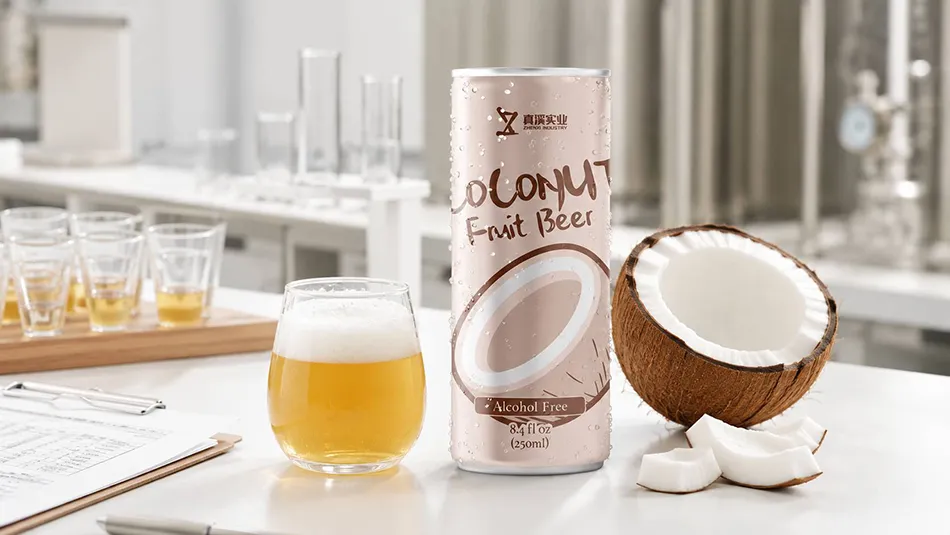
Fruit-led alcohol-free beer has a different task from a classic beer-style product. It needs to attract trial quickly, but it should still keep enough beer character if the label and sales message promise beer.
Coconut, orange, lemon, peach, and grape can all lower the first-purchase barrier for cafés, restaurants, convenience retail, and mixed non-alcohol shelves. Yet flavor alone is not enough. A coconut profile may feel soft and smooth, but the formula still needs carbonation, acidity balance, and a finish that supports the beer cue. Buyers reviewing a coconut alcohol-free beer route can treat it as a 250ml fruit-led reference when comparing how a softer flavor behaves after alcohol control. If the finish becomes too sweet, the buyer may need more dryness or sharper carbonation. If the beer identity becomes weak, the formula may need stronger malt notes or a cleaner aftertaste.
The process route should not be chosen only by technical language. Buyers should connect the process with channel needs, label claims, and sample results.
Before confirming low alcohol beer production, buyers can prepare a short review sequence:
This sequence keeps the discussion practical. It avoids turning the process conversation into abstract brewing language. The supplier needs comments that connect the target market with the product result. For an alcohol-reduced route, the buyer may focus more on aroma preservation and body. For controlled fermentation, the buyer may focus more on beer structure and dryness.
The supplier should not decide the buyer’s brand story. The buyer knows the market, channel, and price position. Still, supplier input can help connect alcohol target, flavor route, can size, sample review, label wording, and production timing.
At ZhenXi, we usually discuss samples through the product role first. A 250ml fruit-led SKU does not need the same body, bitterness, or foam target as a 500ml beer-style SKU. If a buyer wants a soft fruit-led range, the sample should stay refreshing and clear. If the buyer wants a beer replacement, the product needs stronger beer cues and a better finish. For more background before tasting, How is Non Alcoholic Beer Made and Why Does Craft Non Alcoholic Beer Taste So Good can support internal discussion without replacing sample review.
So, how is alcohol removed from beer, and why does the taste change? It affects aroma, body, sweetness, bitterness, carbonation, foam, and finish. A good sample review should look at the full drinking experience, not only the number on the label.
For buyers comparing dealcoholized beer, controlled fermentation, or other low alcohol beer production routes, the best starting point is a clear product role and practical sample notes. When your team is ready to compare options, send your alcohol-free beer sample review notes with target alcohol statement, flavor route, can size, channel, and adjustment comments.
Q: Why does alcohol-free beer often taste sweeter than regular beer?
A: Alcohol can add warmth and dryness. When alcohol is removed or controlled, sweetness may become more obvious. The formula may need better bitterness, acidity, carbonation, or malt body to keep the finish clean.
Q: Is dealcoholized beer the same as controlled fermentation beer?
A: No. This route usually starts from a brewed beer base and then has the alcohol reduced. Controlled fermentation limits alcohol formation earlier in the process. Both routes can work, but the final taste may be different.
Q: What should buyers check when reviewing alcohol-free beer samples?
A: Buyers should check aroma, first sip, middle body, sweetness, bitterness, carbonation, foam, finish, serving size, and label wording. Notes should be specific enough for formula or process adjustment.


