Many private label buyers start with a beer-style drink for people wanting less alcohol or none. The difficult part is the claim. Zero, alcohol-free, trace-alcohol, and low-ABV claims may not be read the same way by consumers, importers, retailers, or channel partners.
Set the alcohol target before flavor, artwork, carton wording, and sample approval. The claim should guide formula work, testing, design, and export.
A beer claim is not only a marketing phrase. It can affect product direction, documents, and distributor communication. Before bitterness, foam, or packaging are discussed, the alcohol wording should be clear enough for the supplier to build the right sample route.
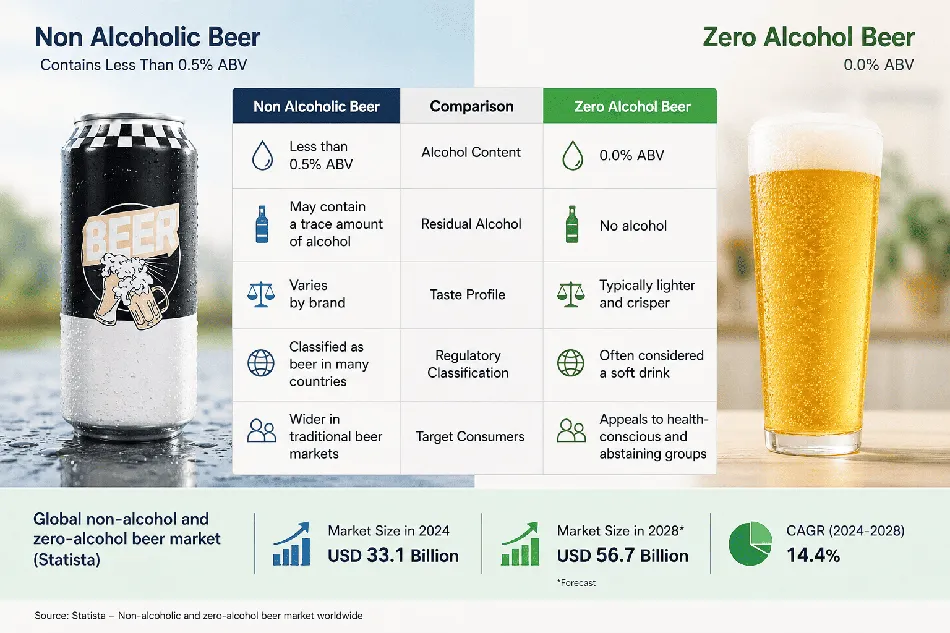
Zero alcohol beer usually creates a stricter expectation than a broad no-alcohol beer claim. A consumer may read it as no detectable alcohol, while a retailer may expect stronger proof before listing it in alcohol-restricted channels. This wording can suit wellness shelves, family occasions, workplace programs, and alcohol-sensitive retail routes, but it should be used only when the formula and testing plan can support it.
A broader category name may work better for mainstream supermarkets, hotels, restaurants, distributors, and beer alternative shelves where trace alcohol limits are handled through local rules. The key point is not to choose wording because it sounds cleaner. The wording should match the target country, sales channel, formula route, and test result.
Once the claim route is clear, the buyer can compare the product position more calmly. This is not a legal definition; it is a practical way to brief a supplier before development starts.
A reduced or removed-alcohol beer route may fit buyers who want recognizable malt aroma, carbonation, foam, and a clean finish. It can help the product sit near beer alternatives, not ordinary soft drinks. For private label non alcoholic beer, the buyer should confirm whether the product will be sold as a retail beer alternative, a hospitality beverage, a supermarket item, or an import distribution line.
Each channel may read the same wording differently. A distributor may focus on carton documents and repeat supply. A supermarket may focus on label clarity. A hotel may focus on taste and serving occasions. The claim has to support these commercial situations, not just look good on the front panel.
If a buyer wants 0.0% on the front label, sample testing and claim review should happen before artwork moves to final proofing. That does not make every zero route difficult, but casual wording should be avoided unless the production target and test route are aligned.
Low alcohol beer is a separate position. It still communicates the presence of alcohol, so it should not be mixed with a zero claim in the same buyer brief unless the brand is developing more than one product line. Mixing these terms can confuse quotation, formula work, label review, and retail placement. Alcohol free beer should also be checked against the target market before it becomes the final artwork.
|
Label direction |
Alcohol target in buyer brief |
Typical pack reference |
Main project check |
|
zero alcohol beer |
0.0% route |
500ml standard aluminum can |
test support and claim wording |
|
non alcoholic route |
below local trace limit |
500ml standard aluminum can |
market definition and label text |
|
alcohol free beer |
0.0% or local alcohol-free route |
500ml standard aluminum can |
wording consistency |
|
low alcohol beer |
above alcohol-free route |
varies by project |
ABV clarity and adult positioning |
A strong claim starts with a complete brief. If the buyer only sends artwork and asks for a quick quote, the supplier may not know whether the project needs a strict 0.0% route, a trace alcohol route, or a broader beer alternative position.
The first check is the target market. Middle East retail, halal channels, North American supermarket shelves, European beer alternatives, hotel beverage programs, and online private label stores may each have different sensitivity to alcohol wording. A buyer should ask local advisers or retail partners before final label printing.
The second check is the channel. A café may care about serving and taste. A distributor may care about carton labels and reorder timing. A supermarket may care about fast shelf reading. These details affect shelf trust and sales explanation.
Testing helps prevent avoidable label changes. A buyer should confirm the alcohol target, sample standard, and final batch control method before mass production. Taste also matters. A technically correct drink with weak beer cues may still fail commercially if the target buyer expects a proper beer-style experience.
Sample approval should include alcohol target, malt aroma, hop bitterness, carbonation, foam, sweetness, mouthfeel, and aftertaste. These checks matter for 0.0 beer and <0.5% beer routes because small formula changes can affect both taste and claim discussion.
A correct label is only one part of the product. The drink still needs a credible taste.
A 0.0% route should still feel like beer-inspired refreshment. If the drink loses malt aroma, foam, and a clean finish, consumers may compare it with soda instead of beer. That weakens the value of the claim. A better sample should keep the alcohol target while giving enough beer character for social drinking, retail shelf placement, and hospitality service.
A <0.5% route may keep stronger beer cues in some projects, but it is not automatically suitable for every market. It may work for mainstream beer alternative shelves, but it may not fit channels that expect no detectable alcohol. Dealcoholized beer and craft-style alcohol-reduced routes need careful wording. Flavor or premium packaging should not hide an unclear claim.
The 500ml OEM Non Alcoholic Craft Beer is a practical reference for buyers developing a beer-style alcohol-reduced or alcohol-free canned product. The product uses a 500ml standard aluminum can format and supports OEM, private label, and formula customization. Its alcohol direction includes 0.0% or <0.5% customization. Confirmed details include 365 days of shelf life, 20–25 days of delivery time, and 1 container MOQ.
This route may fit importers, retailers, hotels, wholesalers, and beverage startups that need malt character and private label packaging. Local alcohol rules still need review before the final label is printed.
A clear alcohol claim brief helps the supplier judge formula direction, sample testing, packaging proofing, and export preparation. It also keeps the buyer from revising the same project several times.
Before starting private label non alcoholic beer development, buyers should prepare a clear sequence of information:
This sequence is useful because alcohol wording touches several teams: brand, R&D, packaging, export, and sales. When these points are confirmed early, the supplier can prepare a more realistic sample plan and quotation.
Company support should enter the discussion only when it helps the buyer solve the project problem. The relevant support is the ability to connect claim, sample, can design, filling, and export work.
ZhenXi can support projects that need requirement discussion, R&D formulation, size confirmation and design, sample testing, mass production, filling, and export coordination. Our service route is useful when buyers need to move from an alcohol claim idea to a workable product brief. The key is to define the alcohol target before label proofing and production scheduling.
We can also help buyers coordinate packaging details such as aluminum can design, label direction, sample review, coding, carton planning, and shipping preparation. The goal is not to replace the buyer’s local compliance review. The goal is to make the manufacturing brief clear enough for formula work, sample approval, and export planning.
For a closer look at the beer process and alcohol control, buyers can also read this related brewing process article before finalizing the project direction. When your alcohol target, can size, artwork status, and launch schedule are ready, share your project details with our service team for sample planning and quotation discussion.
The strongest route starts with a clear claim. Choose zero wording only when the formula, testing route, and label wording can support that claim. Choose a broader no-alcohol beer position when the buyer needs a mainstream beer alternative, and the target market allows the intended trace alcohol route.
The buyer brief should not use zero, non alcoholic, alcohol free, and low alcohol as casual synonyms. Once the claim is clear, formula work, packaging, testing, and export documents become easier to align.
Q: Is a no-alcohol beer claim the same as a zero claim?
A: Not always. A zero claim usually creates a stricter expectation, while a broader no-alcohol beer position may depend on the target market. Buyers should confirm local rules and the test route before approval.
Q: Can buyers choose between 0.0% and <0.5% alcohol?
A: Yes, but the choice should match the sales channel, consumer expectation, local requirement, and final label claim. A 0.0% route needs stricter claim support.
Q: What should be checked before printing the label?
A: Buyers should review the alcohol claim, ingredient wording, carton text, target market rules, artwork files, brand authorization, test requirements, storage information, and export document needs before printing.


