The East African region stretches from Eritrea in the north to the Rovuma River in the south, borders the Indian Ocean in the east, and reaches Lake Tanganyika in the west. It includes Ethiopia, Eritrea, Djibouti, Somalia, Kenya, Uganda, Rwanda, Burundi, Tanzania, and the island nation of Seychelles in the western Indian Ocean. These regions are mainly plateaus, with narrow low-lying areas along the coast. The climate of East Africa is mainly subtropical grassland climate, mixed with tropical desert climate and tropical rainforest climate. East Africa is close to the Arabian Peninsula, and sea transportation is very convenient, which makes the products and customs of Europe and Asia spread in East Africa. The East African Plain and the East African Great Rift Valley have a mild and cool climate, abundant rainfall, and fertile land, which are suitable for the growth of tea trees. The historical heritage and cultural continuation of many countries and ethnic groups have made East Africa have rich and colorful folk customs and tea customs.
In the early 16th century, Western colonists invaded Africa one after another. East Africa was mainly in the sphere of influence of Britain and Germany, and was greatly influenced by Britain and Germany. During the British colonial period, the British government encouraged people to come to Kenya to open farms for colonization. In the early 20th century, many British and European colonists immigrated to the white highlands and established farms there. In 1903, the British brought a bag of tea seeds from India and introduced tea trees for the first time in the Lmuru area of Mombasa. Kenya's tea industry began from then on, which also indirectly affected the formation of East African tea culture. Today, Kenya's tea production ranks third in the world, mainly producing broken black tea. Tea production is mainly for export. It is both a major tea producer and a major tea exporter.
In Kenya, people's favorite drink is milk tea. When drinking tea, people are accustomed to choosing broken black tea. Once the broken black tea is brewed, the tea juice is easy to leach out, and people will filter out the tea residue. When drinking, people often put an appropriate amount of milk and sugar in the thick and bright red tea soup, and then stir it with a small spoon for a few times to make a cup of sweet and delicious milk black tea, which is the most widely consumed milk black tea in East African countries.
Milk tea is an extremely important source of energy for Kenyans, but each family has a slightly different way of drinking tea. Generally speaking, rich families usually boil fresh sterilized milk from supermarkets and add high-quality black tea bags, which makes the tea more colorful and fragrant; while poor families usually buy dried and crushed black tea from grocery stores and add milk from large barrels in the market to boil and drink. The tea powder is usually filtered out and then dried for later use. It can be boiled many times, and more water is added when boiling tea, so the tea and milk flavors are relatively light. Nowadays, many companies in Kenya have tea bags of various colors for employees to enjoy during their breaks. Many times, employees only need to put the tea bag in a cup with hot water, then pick up the large pot of milk that has been filled, and then add a certain amount of sugar according to their personal taste.
The Mombasa region in Kenya is a major international tea trade distribution center. More than half of the tea in the UK, such as breakfast tea bags and "construction workers' tea", comes from East Africa and is exported through Mombasa. On the streets of Mombasa, there are usually tea waiters using large metal teapots to provide a large amount of tea to various vendors. People sit or stand on the street, holding a cup of hot milk tea and start drinking. The cups people use to drink tea are relatively simple, generally porcelain cups with handles, metal cups, plastic cups, etc. For easy carrying, some hot tea is directly poured into plastic bags and tied into a knot to become takeaway tea.
In Mombasa, some British tea plantation owners still retain the British tea drinking custom and start drinking tea around four o'clock in the afternoon. They are used to adding milk and sugar to tea, and pairing it with some afternoon tea cakes to supplement nutrition and refresh hunger.
Uganda is located on the East African Plateau in eastern Africa. It is known as the "plateau water town" for its many lakes and swamps. Because Uganda is located on the equator, it has a high altitude and the temperature is around 20℃ all year round. From the natural environment, it is very suitable for the growth of tea trees. With the support of the Ugandan government's policies, Ugandan tea has become an important export product for Uganda, and has become the second tea producer in East Africa after Kenya.
Uganda is one of the places where the Maasai live. The Maasai are a nomadic people and one of the most famous tribes in East Africa. They eat meat and milk and like to drink fresh cow blood. Tea plays an important role in their lives, and drinking tea is an important part of the Maasai's daily life. On the beautiful grassland, the Maasai people are used to drinking milk tea and eating pancakes as a diet, which is quite similar to the Mongolian people. Ugandan children also eat this, and drinking tea starts from childhood and continues throughout their lives.
Ethiopia is located between 6°~9° north latitude and 34°~40° east longitude. Most of the country is plateau and mountainous, and the rain and heat are uneven, which makes the area that meets the conditions for tea planting not many, and the tea production is not high, ranking low among the tea producing countries in East Africa.
Ethiopia is one of the more backward countries in the world, but this backwardness cannot stop Ethiopians from drinking tea. They sit casually on the street, or even lie down, often holding a pot of tea in their hands and chewing "khat" in their mouths. In this case, tea is not the protagonist. It has long been reduced to a supporting role to khat, a green leaf similar to tobacco, which is really regrettable. This "East African poppy" has a certain psychedelic effect as the nickname suggests.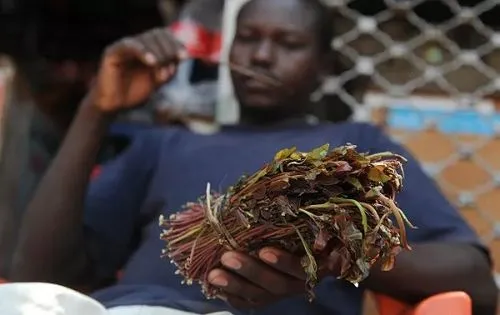
Most of Djibouti has a tropical desert climate, while the inland area is close to a tropical savanna climate. The whole area is hot and rainy all year round, and the living conditions are relatively poor. There is almost no tea here.
In Djibouti, there is a plant called "khat" or "Ethiopian tea" that can be said to be a tea that is not tea. Djibouti does not produce tea. This so-called "tea" is generally imported from neighboring Ethiopia and requires air transportation. It is picked and sold on the same day to keep it fresh. This exaggerated import method has led to high prices, often one or two dollars for a small handful. Even so, on the streets and alleys of Djibouti, bundles of small branches with green leaves are still sold well and have almost become a necessity for local people.
To exaggerate, the popularity of Chinese tea in Djibouti is definitely not as good as "Ethiopian tea". Regardless of gender, age, almost everyone deals with it. This tea looks similar to Chinese tea and tastes similar. It tastes slightly astringent and bitter when chewed raw, and it tastes sweet after a long time. It is said that locals believe that it has a miraculous effect of refreshing the mind, but in fact, this kind of leaves are addictive and can be regarded as a kind of soft drug.
The locals' love for "Ethiopian tea" is also reflected in the "Chat Hall" that can be seen everywhere. The ones on the streets are called "Chat Houses", and the ones in private homes are called "Chat Rooms". Djiboutians lay carpets indoors, prepare cushions, back cushions and small tea tables, and occasionally place some ingenious decorations. There are no cups, tables and chairs. Tea drinkers sit lazily and comfortably on the ground, pick the "tea" from the small branches, put it in their mouths and chew it continuously, or roll the tea residue into a ball and hold it in their mouths. When they are thirsty, they drink Coke or Fanta; or swallow the tea residue directly, or drink the tea residue with beverages. Here people chat with each other and pass the long time after get off work. Men and women usually sit separately.
As for the "Chat Room" in Djiboutians' homes, it is decorated more delicately and gorgeously. In addition to meeting the host's usual needs for chewing "Ethiopian tea", it is generally used to entertain guests. Guests must take off their shoes and wash their hands to show courtesy when entering here. It is worth mentioning that if the guest is a native, the host will then serve "Ethiopian tea" and drinks; if the guest is a foreigner, the Djiboutians will treat the guest in a European way, unless the foreign guest is a close friend of the host, then he will have the honor of chewing "Ethiopian tea" together.
Rwanda is mountainous and is known as the "Land of a Thousand Hills". It has a temperate and tropical plateau climate. Like Uganda, this equatorial country has a high altitude and a pleasant climate. Its fertile land is densely covered with vegetation. Tea leaves planted here often grow well and can be picked all year round. In Rwanda, local tea consumption is not high, but it is an important export commodity.
Rwanda mainly produces black tea, but also produces green tea. The production method of green tea produced in Rwanda is relatively peculiar. They pick the fresh leaves and dry them directly in the sun, which is similar to Chinese white tea. Since the processing method of Rwanda's green tea is different from the general one, the color of the green tea produced is lighter than that of ordinary green tea.
Rwanda's natural environment is suitable for the growth of tea trees, and the tea produced is of high quality. However, due to the limitations of terrain conditions, the tea plantation area is not large and the tea production is small. In the eyes of local people, tea is undoubtedly precious. Tea exported to the UK and the United States can bring higher income and earn foreign exchange for the country. Based on this, Rwanda's tea is almost all used for export rather than for daily drinking by the people. Especially Oxthodoxe Tea, this kind of tea is almost extinct in the domestic market of Rwanda.
Somalia is located in the easternmost part of the African continent and has the longest coastline in Africa. From 1417 to 1419, the maritime fleet led by Zheng He of China visited several city-states on the coast of Somalia during the fifth voyage to the West. The trend of drinking tea may have arisen from this.
Except for the southwestern part of Somalia, which has a tropical savanna climate, most of the area has a tropical desert climate, with high temperatures all year round, dry air, and an annual precipitation of only 100 to 600 mm. In some areas, the annual precipitation is even less than 100 mm. Therefore, Somalia does not produce tea. However, because most Somalis believe in Islam, it is a country that prohibits alcohol and advocates tea. In addition, the local climate is dry and hot, so most people have the habit of drinking tea, and tea has become an important part of the daily life of the Somali people. For this reason, Somalia has to import a lot of tea from neighboring countries.
Somalia is a country that pays great attention to etiquette and is accustomed to entertaining guests with tea. If there are guests visiting, the host will always lead the whole family to wait outside the door: once the guests enter the door, the hostess will lead all the children to salute the guests one by one and greet them cordially. Then, the hostess will leave the living room to prepare tea for the guests, leaving only the male host and the guests to express their affection.
Somalis are accustomed to drinking black tea. Once the black tea is cooked, a lot of sucrose will be added, so the sweetness of the tea is very high. However, tea making is mainly done by the hostess. They first boil the tea water, then put in the tea leaves. Once the tea soup is good, they immediately filter out the tea dregs, add sucrose, and continue to cook until the tea soup turns red and black. Sometimes, they will add cardamom, cinnamon and other spices to the tea soup. In this way, a cup of flavored black tea with a red, thick soup, sweet and fragrant is considered to be cooked. In addition, many Somalis also have the habit of drinking sweet milk tea with milk and sugar.
Because Somalis love to drink tea, there are many tea sheds all over the country. Most of these tea sheds are open-air, set up under the shade of trees and beside the road. No matter when and where, people will always see tea drinkers coming to the tea shed. They either come to take a rest, or come to appreciate the tea fragrance, or come to have a small gathering and chat. Although there may be other drinks such as coffee to choose from in the tea shed, for Somalis, the biggest temptation is still tea. Tea has long become the "second food" of the Somali people.