Oceania is located in the vast sea area north and south of the equator in the southwest and south of the Pacific Ocean. It is located on the main transportation route between Asia and Africa and between North and South America. It includes countries such as Australia, New Zealand, the Independent State of Papua New Guinea, Fiji, Tonga, etc. It consists of 14 independent countries. The vast majority of residents believe in Christianity, and a few believe in Catholicism and Hinduism. Except for the inland areas of Australia, which have a continental climate, most of the continent has a tropical and subtropical marine climate.
People in Oceania began to drink tea around the end of the 18th century and the beginning of the 19th century. At that time, with the increasing economic development and cultural exchanges in various countries, some missionaries and businessmen brought tea to Australia, New Zealand and other places. Over time, the trend of drinking tea gradually emerged in Oceania, especially in Australia, New Zealand, Fiji and other countries, where attempts to grow tea were made, and they were successful in Fiji, New Zealand and other countries. However, the tea production in the continent is limited, and the tea needed is met by imports.
Australia was a British colony from 1788 to 1900. In 1901, the colonial rule ended and it became an independent federal country. Therefore, the tea drinking custom is deeply influenced by Britain. At the same time, Australia is an immigrant country, composed of immigrants from different countries, and pursues multiculturalism. Therefore, Australia has a diversified tea drinking custom. In addition, Australia is the country with the largest number of sheep and wool exports in the world, known as the "country riding on the back of sheep". Food is mainly beef, mutton, milk and meat products. Tea's function of removing greasiness and aiding digestion makes it the preferred beverage for local people. Under such circumstances, although Australia does not produce much tea, the tea drinking custom is still widely accepted and loved by people across the country.
Tea planting in Australia began in the late 1780s and was later destroyed by a cyclone. In 1959, tea plantations were reopened and tea trees were planted in some plantations in Tonisfair, Queensland and New South Wales in Australia. But the development was slow, and it was not until the 1980s that progress began, and tea production increased significantly. Today, Australia's tea-producing areas are mainly in the north of Queensland and New South Wales, but they are far from meeting the needs of the domestic market. 95% of tea is imported. Imported tea mainly comes from India, Sri Lanka, Indonesia, China and other countries.
Australia encourages various cultures to be inclusive and develop together. Under this circumstance, Australia's tea drinking culture also presents diversified characteristics. But in general, Australia's tea drinking habits are deeply influenced by the UK, especially in European immigrant settlements. People are accustomed to drinking black tea, emphasizing one-time brewing, and must filter out tea dregs when drinking, and like to use sugar, milk, lemon or other fruit juices for flavoring. They especially love to drink black tea with strong tea flavor, bright red color and strong taste. At the same time, they also follow the British tea drinking tradition of afternoon tea. In the past, every government department and work unit in Australia was equipped with a "tea waiter", whose job was to prepare tea, deliver points and serve for everyone.
In the Asian immigrant settlements in Australia, especially the Chinese settlements, the custom of drinking green tea is still preserved, and they love to drink green tea without any seasoning.
Today, in remote rural areas of Australia, a peculiar "teapot dance" is still popular. The teapot dance is that when the water in the teapot begins to boil, the tea leaves are immediately put into the water, and then the teapot is immediately lifted up, and the teapot is held up, dancing around the body, and the rotation is getting faster and faster, and then the speed slowly slows down until it stops. For a tea brewing master, the tea soup cannot be spilled during the rotation process. This method of tea brewing is not only good for viewing, but also has the effect of promoting the blending of tea and water and the uniform concentration. It can be said to "kill two birds with one stone" and can add style to the development of tea travel culture.

New Zealand is located in the southwest of the Pacific Ocean, in Oceania, with a temperate oceanic climate, little temperature difference between the four seasons, lush plant growth, and particularly developed animal husbandry. Dairy products and meat are the most important foods, providing conditions for the development of tea drinking culture. The gathering of many ethnic groups such as Maori, Europeans, Asians, and Oceanians has laid the foundation for the diversification of tea drinking in New Zealand. In addition, the pace of life of New Zealanders is relatively slow, and people live a leisurely and affluent life, which paves the way for New Zealanders to strive for high-end and diversified tea selection and teahouse leisure culture life. Therefore, in terms of the overall consumption level of tea, the pursuit of tea drinking culture, the pursuit of high-end tea products, and the trend of brand and fashion in tea purchases, emphasizing selectivity, have become the norm for New Zealanders' tea life. In the past two decades, New Zealand has also begun to open up tea gardens and plant tea trees with the help of Taiwanese people in China. At present, there are more than 1,000 hectares of tea gardens, and the oolong tea produced is generally favored, but tea still needs to be imported.
It is generally believed that tea drinking in New Zealand began in the early 19th century. The tea drinking custom was mainly spread by Europeans, especially influenced by the British tea drinking custom. People like to drink milk black tea and lemon black tea, and have the habit of adding sugar to black tea.
In New Zealand, in addition to more people who like to drink black tea, there are also people who like to drink green tea, especially in places where there are more Chinese people. In addition to drinking green tea plain, New Zealanders are also accustomed to adding sugar to mix the tea. In recent years, New Zealanders have also begun to drink oolong tea, mainly influenced by Taiwanese people.
New Zealanders generally like to drink tea. In addition to morning tea, they also drink afternoon tea and evening tea every day. As for teahouses and tea parties, they are almost everywhere in urban and rural areas. In the minds of New Zealanders, dinner is the main meal of the day, which is more important than breakfast and lunch. Interestingly, they call dinner "tea", which shows the status of tea in New Zealand's diet. What is particularly strange is that New Zealanders often choose to eat in teahouses, so teahouses are everywhere, even in towns, tea shops and teahouses can be seen everywhere. In addition to milk black tea, lemon black tea, and sweet black tea, the main tea varieties served in the teahouse include green tea and sweet green tea. However, New Zealanders usually do not serve tea before meals, and only have the habit of drinking tea after meals.
In New Zealand offices, companies, factories, mines and other workplaces, tea breaks are arranged in the morning and afternoon. As for friends visiting or negotiating business, they usually have to serve a cup of tea first as a sign of respect.
Since tea drinking has been integrated into the lives of New Zealanders, New Zealand's per capita tea consumption has always been among the highest in the world.
The Republic of Fiji is an island country in the South Pacific. Since the early 19th century, a large number of Europeans have immigrated to Fiji; in 1874, Fiji became a British colony; from 1879 to 1916, a large number of Indians came to Fiji as British hired workers to plant sugarcane; on October 10, 1970, Fiji became independent and became a member of the Commonwealth; in 2009, the country was renamed the Republic of Fiji. Because Fiji has been influenced by British colonization for a long time, and there are many Indian immigrants, Fiji's tea drinking culture is deeply influenced by Western Europe, especially Britain, and there is a habit of drinking afternoon tea. The tea consumed is mainly black tea; and because Fijians have a heavy taste for food, they require black tea to be bright red, rich and strong in taste. They like to drink milk black tea with milk and sugar the most. However, as far as the whole country is concerned, there are Fijians who like to drink tea and drink alcohol. It is particularly worth mentioning that many Fijians like to drink a tea drink called kava juice.
Kava juice is made from the roots of the local Fijian tree called Yangna. After being ground into white powder, it is put into a white clean cloth bag and then soaked in a basin filled with raw water. Later, use both hands to rub the soaked cloth bag hard to squeeze out the sticky juice, similar to the Chinese using cloth bags to squeeze soy milk juice in the past. As for how much the Yangna root powder should be kneaded, it all depends on experience and technology. This beverage extracted from the roots of plants is the very famous kava tea in Fiji. Therefore, kava tea is not tea in the true sense, but a tea that is not tea. Just like Chinese tea art, Fiji's kava tea is not only a very popular drink in daily life, but also a must-have gift for entertaining guests in some important occasions, such as discussing major matters, holding grand events, and welcoming distinguished guests, but also an important etiquette. What's more, if you have to visit relatives, friends or village elders, it is often the first choice to bring a few roots of Yangna.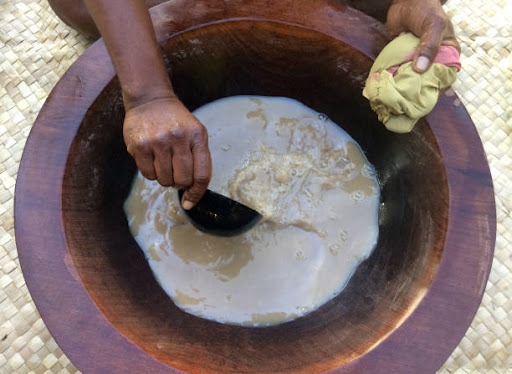
In addition, Fiji also produces a kind of noni tea made from noni fruit leaves. This is also a tea that is not tea. It is said to have a good antioxidant effect and has the effect of improving the body's immunity. It is also favored by many consumers.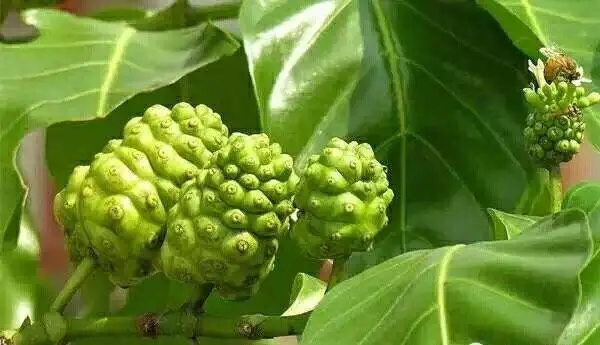
In Fiji, as far as the whole country is concerned, although people can taste rich milk black tea, delicious wine, refreshing brandy, and mellow pure coffee, for many years, Fijians still love kava tea the most. This is their true love and can be called the national drink of Fiji. Although Kava tea may not taste good to others, it has been endowed with sacred and spiritual significance by Fijians. Kava tea is an indispensable symbol of Fijian culture, just as Chinese people regard tea as the "national drink". Its primitiveness, simplicity, tradition and nature cannot be replaced by any other beverage. When drinking Kava tea, Fijians will patiently and tirelessly show the whole process of making Kava tea in front of the guests, starting from grinding the roots of the yangena tree into powder, to packing the powder into bags and kneading it in water until the whole bag of powder is squeezed out of the water, and then making a Kava drink.
When Fijians offer Kava tea to guests, they always say a blessing in Fijian and clap their hands in unison to show their welcome and respect. According to Fijian traditional customs, guests have to clap their hands before receiving the Kava tea to show their gratitude. Then, take the tea bowl made of coconut shells with both hands, drink the Kava tea in one gulp, and clap their hands three times to express their gratitude again. However, although kava tea is the most common beverage consumed by Fijians, serving tea to guests is still an indispensable etiquette in the homes of some upper-class people or in exchanges in the political, business, and financial circles. In many wealthy families, there is even a habit of drinking morning tea, afternoon tea, and evening tea.


