Southeast Asia, also known as Nanyang, is located in the southeastern region of Asia, including Vietnam, Laos, Cambodia, Myanmar, Thailand, Malaysia, Singapore, Indonesia, the Philippines, Brunei, East Timor and other countries and regions. Located at the junction of Asia and Oceania, the Pacific Ocean and the Indian Ocean, this geographical location makes the climate in Southeast Asia humid and hot, with two types of equatorial rainy climate and tropical monsoon climate, which is suitable for tea tree planting, so many countries have tea tree planting and tea production. At the same time, Southeast Asia is one of the most concentrated residential areas for foreign Chinese and overseas Chinese in the world, so the tea drinking customs have a distinct Chinese style.
Since the 16th century, Southeast Asian countries have been occupied by Portugal, the Netherlands, Britain and Japan successively, and they gradually declared independence after World War II. Under the influence of this, the tea drinking customs of Southeast Asian countries still have European style. Now select several countries with unique tea drinking customs, and introduce them as follows.
Singapore is located in southeast Asia, adjacent to the Strait of Malacca, and is a natural transit station and supply station on the Maritime Silk Road. Singapore's unique geographical location has led to many unfortunate fates: in 1824, Singapore became a British colony; from 1942 to 1945, Japan occupied Singapore for four years; in 1963, Singapore, which had escaped Japanese control, joined the Federation of Malaysia, but soon faced collapse. It was not until December 1965 that Singapore became independent. At the same time, China in the 19th century was plagued by internal and external troubles. Poverty, hunger, and war forced some Chinese to leave their homes and seek development in Southeast Asia, so Chinese accounted for a large proportion of Singapore's permanent population. The historical trajectory of Britain, Japan, Malaysia, China and other countries in Singapore has deeply influenced Singapore's politics, economy, culture and other aspects, which is also vividly reflected in Singapore's tea drinking style. The result of the collision of multi-ethnic tea drinking styles has led to a diversified tea drinking culture in Singapore.
Singaporeans are keen on food, and the Chinese account for more than 70% of Singapore's total population. Chinese cuisine occupies an important position in Singapore's various cuisines. There is a notable feature of tea drinking in early Singaporeans: it has the style of Fujian and Guangdong in China, and tea drinking is mainly for eating. Singapore Bak Kut Teh fully reflects this feature. The pronunciation of Bak Kut Teh comes from Fujian dialect. Originally, there was a custom of eating meat with tea in Fujian, Guangdong, Hong Kong and Macao in China, which was the prototype of Singapore Bak Kut Teh. Later, the ancestors of these regions migrated to Singapore. When they first arrived in the new environment, they were inevitably not used to the local climate. In order to overcome the discomfort caused by Singapore's hot and humid climate, as well as the fatigue and physical weakness caused by high-intensity labor, the ancestors took wolfberry, codonopsis, angelica and other medicinal materials to stew soup for drinking to nourish the body. Later, it was found that adding pork bones to the tonic soup tasted more delicious, so this soup was transformed from medicinal to edible, and it became popular and gradually accepted by the wealthy class. The raw materials of meat bone soup have gradually evolved from the single pork bones in the early days to beef, mutton, chicken, etc.; the ingredients of meat bone soup are no longer limited to the three medicinal materials of wolfberry, codonopsis and angelica, and each family has its own secret recipe. A bowl of steaming pork bone soup is fragrant, salty and delicious, but the only drawback is that it is greasy if you eat too much. At this time, a cup of tea is necessary. So, the two met, and Bak Kut Teh came into being. Eating pork bones and drinking tea at the same time makes you feel happy like a god. As for the tea used for Bak Kut Teh, oolong tea and Pu'er tea are usually the main ones, but there are also Liubao tea.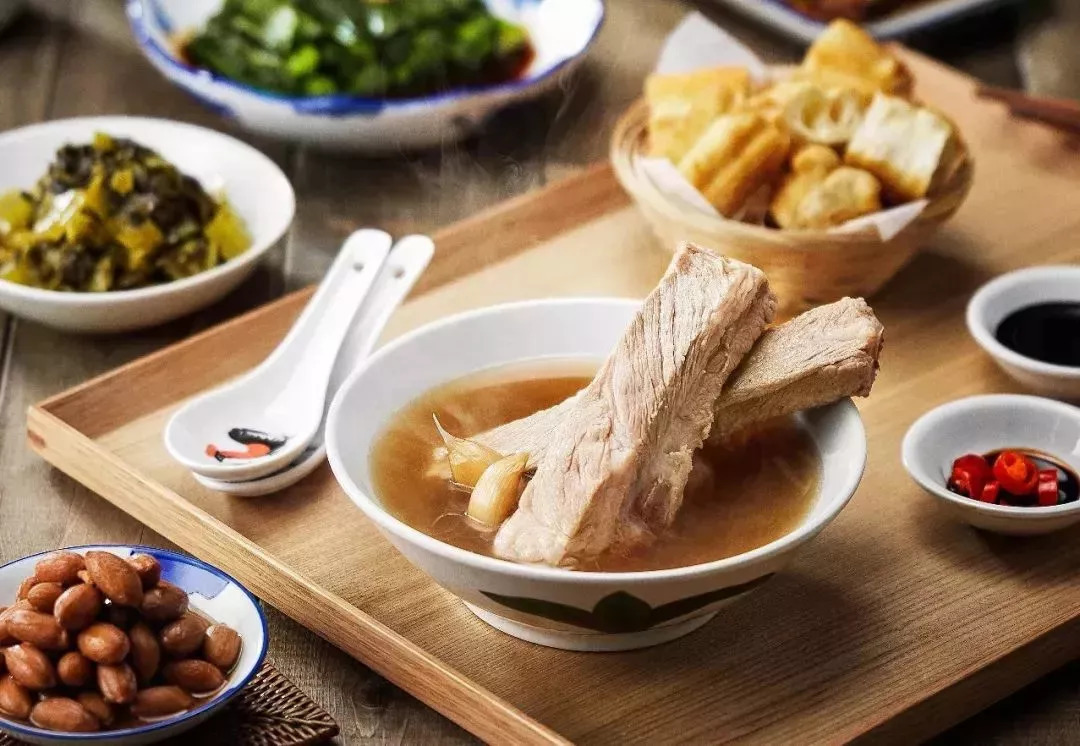
In addition, Singaporeans are also popular with low tea due to the influence of British low tea customs. While the British are tirelessly seeking black tea with a more mellow taste and a more unique aroma, Singaporeans, who are quite foodies, put more energy into low tea snacks. The low tea snacks of various hotels and restaurants are rich in variety and taste, ranging from Chinese Hong Kong-style dim sum to Indian omelettes, from traditional French sweet pies to French and Japanese fusion tarts. At the same time, Singaporeans have underestimated the quality requirements of tea. The only similarity between Singaporean low tea and British low tea is probably their love for black milk tea. The methods of making black milk tea in the two countries are also very similar. After boiling the black tea, filter out the tea dregs, add appropriate amount of milk and sugar and stir evenly. This is the most basic black milk tea. Some people do not add milk, but add lemon and honey according to their personal taste, which is called lemon honey black tea. In addition to India, Malaysia and other countries, Teh Tarik, which looks similar to black milk tea but is not the same, is also seen in Singapore from time to time. In recent years, with the rapid development of Singapore's economy, their pursuit of the function of drinking tea is no longer limited to quenching thirst, and they have begun to seek higher spiritual enjoyment. Since the mid-1980s, not only have teahouses sprung up in Singapore, but tea drinking has also become more skillful.
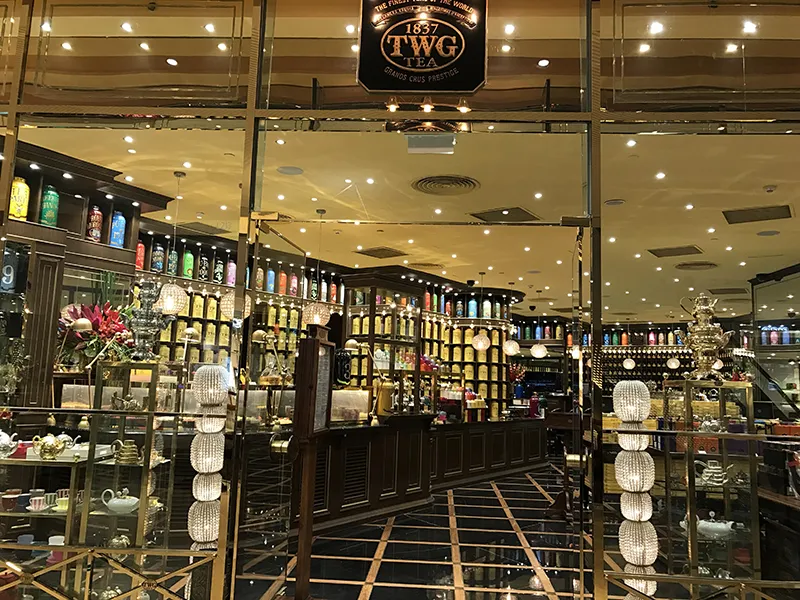
In Singapore, in addition to teahouses with Chinese characteristics, modern and international tea brands have also emerged. The most representative one is TWG, which was co-founded by Moroccans and Americans. TWG is a young and ambitious tea brand that focuses on the world and is determined to make the best tea. The founder of TWG has traveled to tea regions around the world in the past decade, enthusiastically looking for more good tea and committed to sharing these good teas with customers. TWG is not only a "porter" of good tea, but also a creator of good tea. It has tea blenders from top European tea factories, and blending more unique and delicious tea is the daily work of these tea blenders. In TWG stores, there are more than 800 kinds of tea on the tea list. TWG's tea snacks are also praised, the most famous of which is the macaron from France. After being improved by TWG, each macaron has a unique taste, which easily captures the eyes of tea drinkers and even opens the hearts of girls. Order a cup of tea at TWG, with a plate of macarons, and drink it for an afternoon, and time will pass so easily.
Myanmar is located in southeastern Asia, bordering Yunnan and Tibet in China in the north and northeast. Except for the south, Myanmar is surrounded by mountains on three sides. The water vapor from the Indian Ocean can easily penetrate into the interior of Myanmar, while the cold air from the northwest is blocked by the mountains. Therefore, most of the territory has a tropical monsoon climate, which is suitable for tea planting. The history of tea planting can be traced back to about a thousand years, and the history of tea drinking is even earlier. Due to the influence of geographical environment and historical reasons, Myanmar's tea drinking style is slightly mixed, with a strong "mixed style". In addition to retaining its own national characteristics, it also integrates the tea drinking styles of China, India and Britain.
According to Daoguang's "Pu'er Prefecture Records": "Cheli (Jinghong) is a tribute road to Myanmar's Nanzhang (Laos) and Wuluo (Thailand), and merchants and travelers pass through it. Weiyuan (Jinggu) Ning'er produces salt (referring to Mohei), Simao produces tea, and the people's food and clothing are funded here; Hakka merchants and civilians either reclaim land in each territory or live there for trade. It was the tea-horse trade on this ancient trade route that brought the Chinese tea-drinking culture to Myanmar. Therefore, in Myanmar, you can drink black tea, green tea, Pu'er tea, and oolong tea. The Anglo-Burmese War broke out in Myanmar, and as a result, Myanmar became part of the British colony of India. This special history has made Myanmar's tea-drinking culture full of British and Indian imprints, such as British sweet milk tea and Indian Teh The popularity of Tarik in Myanmar is an example. In addition, many Burmese tea drinking customs and characteristics are still preserved among the people, especially in the vast mountainous areas.
Burmese tea drinking can be roughly divided into three categories: sweet tea, bitter tea and hot and sour tea. Sweet tea, needless to say, is black tea with milk and sugar added, which is a British legacy.
Bitter tea is Myanmar's traditional tea, which is locally called "leaf alkali" and has a stronger bitter taste. In Myanmar, almost every household has a thermos teapot to hold "leaf alkali", and drinking it three or five times a day is the norm. Perhaps because this traditional tea is too "popular", it is not presentable in the city, but it can be drunk for free in teahouses, food stalls, and restaurants. To In urban families, they do not use "leaf alkali" to entertain guests, as they think it is quite rude to treat guests with it. However, in rural Myanmar, the situation is completely different. People are not bad at using this bitter tea to entertain guests, because it can relieve heat and thirst, replenish physical strength, and is a good partner for field work.
Hot and sour tea is a flavored tea that was produced after being modified according to the Burmese people's own eating habits under the influence of the tea-eating customs of ethnic minorities in Yunnan, China. For example, among the Jingpo and Deang peoples bordering Myanmar and China, they have the same habit of eating pickled tea, sour tea, and cold tea as China. Most of them have a sour and spicy taste, which is similar to Myanmar's tea-eating culture. The Burmese call this sour and spicy tea " Lepei Beans is a kind of cold tea salad, or tea salad. This hot and sour tea salad is often stacked with peanuts, coconut meat, garlic, shrimp, sesame oil, ginger, etc. After being tempered by time, it ferments to produce a unique flavor. The amount of various ingredients and the control of fermentation time are different in each household. The fermented hot and sour tea can be eaten directly or used as a seasoning. For example, pour bitter tea leaf sauce on vegetables such as tomatoes, minced garlic, peanuts, rice peppers, broad beans, cabbage, etc., and stir well to make cold tea or tea salad. Some people even add lemon, chili, fish sauce, salt, and vinegar to the tea salad. The heavy taste may not be accepted by foreign tourists. But this dish is deeply loved by Burmese people and is a must-have on the table. A delicacy that cannot be missed.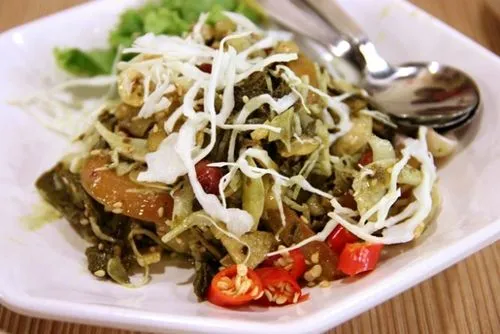
Myanmar teahouses are like Chinese restaurants, and can be found everywhere in the streets and alleys. The most notable feature of teahouses is the low tea table and low stools. This feature may be related to the long-term custom of sitting on the ground in Southeast Asia. Teahouses here are not only places for drinking tea, but also places for three meals a day, leisure and entertainment, and handling major events. Burmese people drink tea, smoke, chew betel nuts, and chat in teahouses; they talk about business and official business in teahouses; they also resolve conflicts in teahouses, which has a bit of the flavor of Chinese tea-talking. However, teahouses seem to belong only to Burmese men. Except for some special circumstances, young women rarely appear in teahouses; even if there are, most of these women finish their tea in a hurry and leave. This seems to indicate that the tea-drinking style in Myanmar is mostly dominated by men.
During the marriage process, Burmese people also have the custom of "using tea as a matchmaker". For example, in the stage of free love between men and women before marriage, young men and women of the Burmese Benglong ethnic group will express their feelings with tea. Usually the man brings betel nuts to the door and presents them to his beloved girl. Once the woman is interested, she will return the favor with bitter tea. When a man and a woman enter the marriage hall, it is an unwritten rule to have cold tea at the wedding.
Thailand is a country in the south-central part of the Indochina Peninsula in Asia, adjacent to China, Cambodia, Malaysia, Myanmar, Laos and other countries. From the map, the territory of Thailand seems to be the head of an elephant, with a long "trunk" extending deep into the middle of the Indian Ocean and the Pacific Ocean. The area has a tropical monsoon climate, with an annual temperature above 18°C and an average annual precipitation of about 1,000 mm. The natural environment is suitable for tea planting, and tea is exported to Europe, the United States, Taiwan and other countries and regions every year.
At the end of the 19th century, Thailand was controlled by Britain and France, and finally reached a compromise of interests and became the only non-colonial country in Southeast Asia. During World War II, Thailand joined the Axis powers after being occupied by Japan. Therefore, Thailand's tea drinking customs are similar to those of China, Japan, Britain, France and other countries. There are both the clear drinking methods of China and Japan, drinking green tea, oolong tea, and Pu'er tea; there are also the mixing methods of Britain and France, and they also love to drink black milk tea. The unique tea customs of Thailand are closely related to its natural environment, which is mainly reflected in the customs of eating pickled tea and drinking iced tea in Thailand.
Thai pickled tea: Northern Thailand borders Yunnan, China. Similar geographical environments have made the people in northern Thailand have similar tea drinking culture with some ethnic minorities in Yunnan, China. Thai tea is a typical case. According to investigations, July to September every year is the rainy season in Thailand, and pickled tea is made during this period. The people here will roughly wash the fresh leaves of the tea trees they picked and drain the water, then use some bamboo plaques to evenly spread the drained tea leaves on them, so that the fresh leaves will naturally evaporate and lose some water. Finally, after gently kneading the tea leaves, add chili and salt, stir evenly and stuff them into the bamboo tube. But at this time, you must pay attention that the tea leaves must be pressed tightly with a wooden stick or other tools after being placed, and the edge of the bamboo tube must be sealed with bamboo leaves. After two or three months of fermentation, when the color of the tea leaves changes from green to yellow, the pickled tea can be eaten. Some people do not use bamboo tubes but use large jars for pickling. Large jars can produce more pickled tea at one time, but it does not matter. The excess tea can be sold in the market.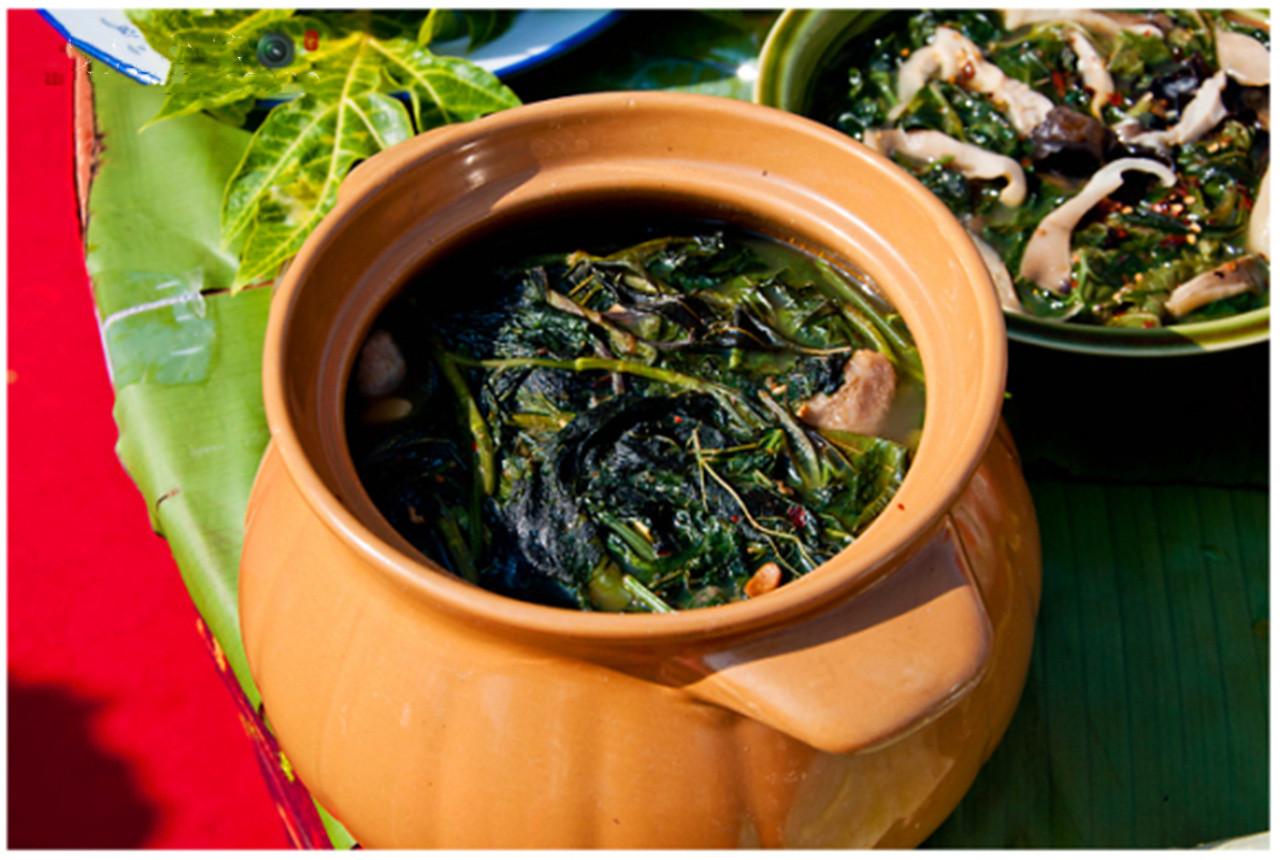
After the pickled tea is made, Thai people will take the pickled tea out of the bamboo tube, dry it, and then put it into a special earthenware jar for their own use or to entertain guests. When eating, you can also add some sesame oil, garlic paste or other spices to the pickled tea. It can be said that pickled tea is a cold dish that is deeply loved by the Thai people.
The custom of eating pickled tea in northern Thailand has a long history and has been prosperous. First, because the climate there is humid and hot, peppers are generally needed to make tea. Peppers are rich in vitamin C, which can strengthen the stomach, aid digestion, promote gastrointestinal activity, improve appetite, and inhibit abnormal fermentation in the intestines, and eliminate gas accumulated in the digestive tract. Eating some peppers appropriately can remove moisture and reduce the probability of rheumatism for people living in a humid environment. Second, it is well known that a humid and hot environment is not conducive to the preservation of food, and tea has a high salt content, so it can be preserved and used for a longer time. Third, from the perspective of the sensory experience of Thai people, pickled tea is cool and fragrant. This experience is like the Chinese love to eat cold dishes in summer. It is understandable that Thai people eat pickled tea all year round.
Thai iced tea: Thai people drinking iced tea is also a major feature of tea drinking. The tea leaves used to make iced tea can be green tea, black tea, oolong tea, etc., but green tea is mostly used to make iced tea, which is different from the American iced tea which is mostly made of black tea. When making it, Thai people first cut the fruit to be added into cubes and put it in the cup, then filter the brewed green tea, pour the tea into the cup with the fruit cubes, stir it slightly, and then immediately put in ice cubes. The temperature of the tea soup immediately drops, and the so-called iced tea is ready. Ice tea actually combines the sweet and sour taste of fruit and the refreshing aroma of green tea. Another example is black tea. The production method is similar to that of green tea. Most black tea varieties with strong and stimulating taste are selected. After brewing or boiling, filter the tea residue, add appropriate amount of milk, lemon, sugar, mint, etc. according to personal taste and stir evenly, and finally add ice cubes. For Thai people who are in high temperature all year round, waiting for a cup of hot tea to cool to a suitable temperature is a time-consuming task, and various iced teas perfectly solve this problem, allowing them to enjoy a comfortable and pleasant time in the hot summer.
Of course, this does not mean that Thai people do not drink hot tea. When the temperature drops to about 20℃, Thai people will also drink hot tea, or Thai people will treat guests with hot tea. A cup of hot black milk tea with some chrysanthemum honey is fragrant, sticky, thick, sweet, and comforting.
In addition, there are many non-tea teas in Thailand. In July 2004, the Food and Drug Administration of the Ministry of Public Health of Thailand (MOPH) launched a draft announcement on the quality standards of herbal teas. According to the draft, the definition of Thai herbal tea is: a product made from a part of a plant, not (deeply) processed, which consumers use to cook or brew with water. The herbs mentioned in the draft include vanilla, chrysanthemum, ginger, cardamom, lemongrass, mulberry leaf, monk fruit, safflower, ganoderma, Gynostemma pentaphyllum, etc. In recent years, Thai red tea health tea has been exported to Japan in large quantities. It can be seen that non-tea tea also occupies a place in Thailand.
Vietnam is located in the eastern part of the Indochina Peninsula in Southeast Asia, adjacent to China, Laos and Cambodia. Vietnam's territory is located south of the Tropic of Cancer. The north is greatly affected by the tropical monsoon, so the four seasons are distinct; the south is basically not affected by the monsoon and is divided into dry season and rainy season. But in general, Vietnam has a hot and rainy climate with dense river networks, so water resources are relatively abundant. The natural environment and climatic conditions are suitable for the growth of tea trees, so Vietnam has a long history of tea production, and wild ancient tea trees have been found growing in the past hundred years. These ancient tea trees are lush and some have even grown to the extent that two people can hug them. Today, Vietnam has become a world-famous tea-producing country, and the most famous tea-producing province in Vietnam is Thai Nguyen Province. "Thai Tea Xuan Nu" refers to the famous tea of Thai Nguyen Province and the beauties of Xuan Quang Province.
From a historical perspective, Vietnam was first called Jiaozhi, and the northern part of Vietnam was a vassal state of China for a long time. In the mid-19th century, Vietnam broke away from the Qing government and became a French colony. During World War II, Japan occupied Vietnam again, but not for long. In view of this, although the Vietnamese tea-drinking style is influenced by France and Japan, the influence is not as far-reaching as that of China. Because Vietnam borders Guangxi, China, the tea-drinking atmosphere is particularly similar to that of Guangxi.
Vietnamese people love to drink green tea, scented tea and black tea, and have the same etiquette of hospitality as the Chinese - serving tea to guests. Most Vietnamese families have at least one set of tea sets, most of which are made of porcelain. When drinking tea, they prefer to use porcelain pots. Whenever a guest visits, they will use the teapot at home to make a pot of tea. Most of them choose green tea, black tea or scented tea. After the soup is out, they often keep the first cup of tea for themselves, and then serve the following cups of tea to the guests in turn. This is different from the custom of serving tea to guests in other countries. Vietnamese people believe that the tea poured out from the pot is often light at first and then strong. If the lightest first cup of tea is served to the guests, it is disrespectful and disrespectful to the guests. Using fragrant tea soup to entertain guests is a noble etiquette for welcoming guests.
Vietnam also has the habit of drinking fresh tea. They are like the legendary Shennong in ancient China who tasted hundreds of herbs. They drink fresh tea leaves that have not been processed in any way. Is this tea drinking custom related to the myths and legends of ancient China? It is unknown. Vietnamese people have two ways to drink fresh tea: brewing tea and boiling tea. If you use the brewing method, you cut the fresh leaves picked from the tea tree into pieces, put them into a pottery pot or a copper pot, add a small amount of boiling water, then pour out the water (the effect may be related to washing the tea), and then re-inject boiling water, wait for half an hour before drinking, this is the brewing method of fresh tea. As for the boiling method of tea, it is to boil the water first, then put in the fresh leaves picked from the tea tree, and boil until the fresh leaves roll in the water.
However, the Vietnamese love to drink scented tea the most. Thanks to Vietnam's unique natural environment, there are rich tropical plant resources and a hundred flowers blooming here, making Vietnam's flower tea famous for a long time. There is a Vietnamese folk song saying: "The fragrance is nothing but jasmine, and the elegance is nothing but Chang'an (Vietnamese compare Hanoi to Chang'an in China's Tang Dynasty)." It shows that Vietnamese people love jasmine tea. Jasmine tea is a bulk tea in Vietnam, but for Vietnamese people, the most precious scented tea is lotus tea. The Vietnamese people believe that lotus has a noble character, elegance and beauty. Although it has not been officially recognized, lotus enjoys the status of a national flower among the Vietnamese people. In addition, Vietnam also produces orange blossom tea, magnolia flower tea, Aglaia Odorata scented tea, honeysuckle tea, etc. Orange blossom tea soothes the liver and stomach, regulates qi and relieves depression; magnolia flower tea benefits the nine orifices, removes headaches, and treats nasal diseases; Milan flower tea removes boredom; honeysuckle tea clears away heat and detoxifies, promotes blood circulation, and protects the skin. However, the various types of scented tea in Vietnam are different from those in China. Take jasmine tea as an example. Chinese jasmine tea uses green tea as the base, and jasmine is added according to a certain proportion. After the scenting process, most of the jasmine is removed. The processed jasmine tea looks like ordinary green tea, but it actually has a rich jasmine aroma. Vietnamese jasmine tea is actually tea with jasmine. It is best to choose a sunny day, pick the jasmine flowers that are about to bloom, dry them, and seal them in cans. When drinking tea, just take an appropriate amount of green tea, add three or five dried jasmine flowers, and brew with hot water. The rich aroma will spread all at once, mixed with the chestnut aroma of green tea and the fresh jasmine fragrance. The jasmine flowers slowly bloom on the green tea. It can be said that it has both drinking value and ornamental value. As for other kinds of scented tea, as mentioned above, the tea and flowers are separated, and there is no need for scenting process. They are just "combined into one" when brewing.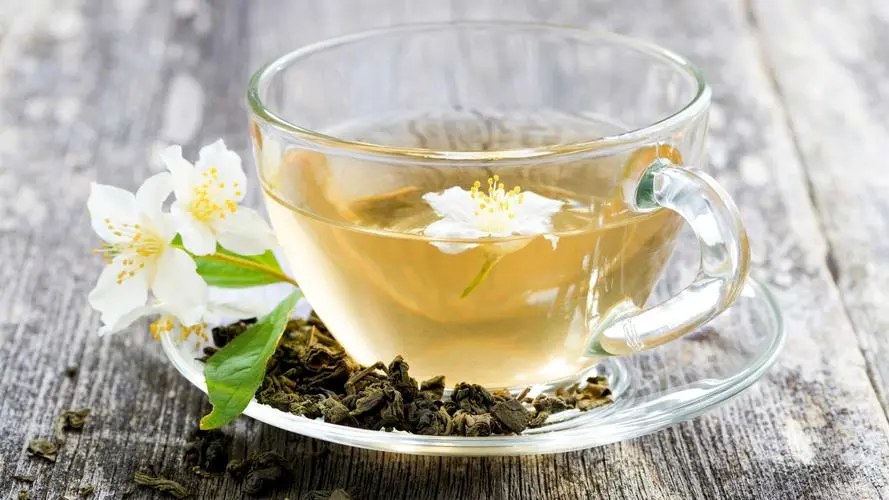
In addition, Vietnamese people also have the habit of loving to drink bitter melon tea. The preparation of bitter melon tea is relatively simple. First, pick fresh bitter melon, wash it and remove the pulp; secondly, fill the bitter melon with green tea; finally, bake and dry the bitter melon together with the green tea. The drinking method of bitter melon tea is basically the same as that of green tea. Drinking bitter melon tea is not as bitter as imagined, but the powerful medicinal effect of bitter melon tea is enough to make up for the lack of taste. It has a certain effect on lowering blood sugar, and can also clear away heat, detoxify and act as a diuretic, which is the important reason why it is popular among the Vietnamese people.
Malaysia is located near the equator, and the whole country is in a tropical rainforest climate and tropical monsoon climate, which makes it hot all year round, without four seasons, with an average annual temperature above 20℃ and abundant rainfall, thus providing good natural conditions for the development of Malaysia's tea industry. The most important reason for the formation of Malaysia's tea planting and tea drinking history is the demand for Malaysian tin in the Sino-British tea trade. This is because tin has good sealing properties, and containers made of tin are one of the best materials for storing tea. Tin mining has led to a continuous influx of Chinese and Indians into Malaysia, thus bringing about the fusion of Malaysian and Sino-British tea drinking culture.
At the end of the 19th century, the British brought black tea to Malaysia; in the 1920s, Chinese miners in Fujian and Guangdong planted tea seeds on Malaysian land. It can be said that where the tin mines are, the tea seeds take root and sprout; and at about the same time, Indians brought Teh Tarik, which is popular in India, here. Because Malaysia has Islam as its state religion, and the teachings of Islam oppose drinking, tea quickly penetrated the Malaysian market once it was promoted. Malaysians have the habit of drinking low tea like the British; like Indians, they love to drink Teh Tarik; and like the Chinese, they advocate drinking oolong tea, Pu'er tea, green tea, etc.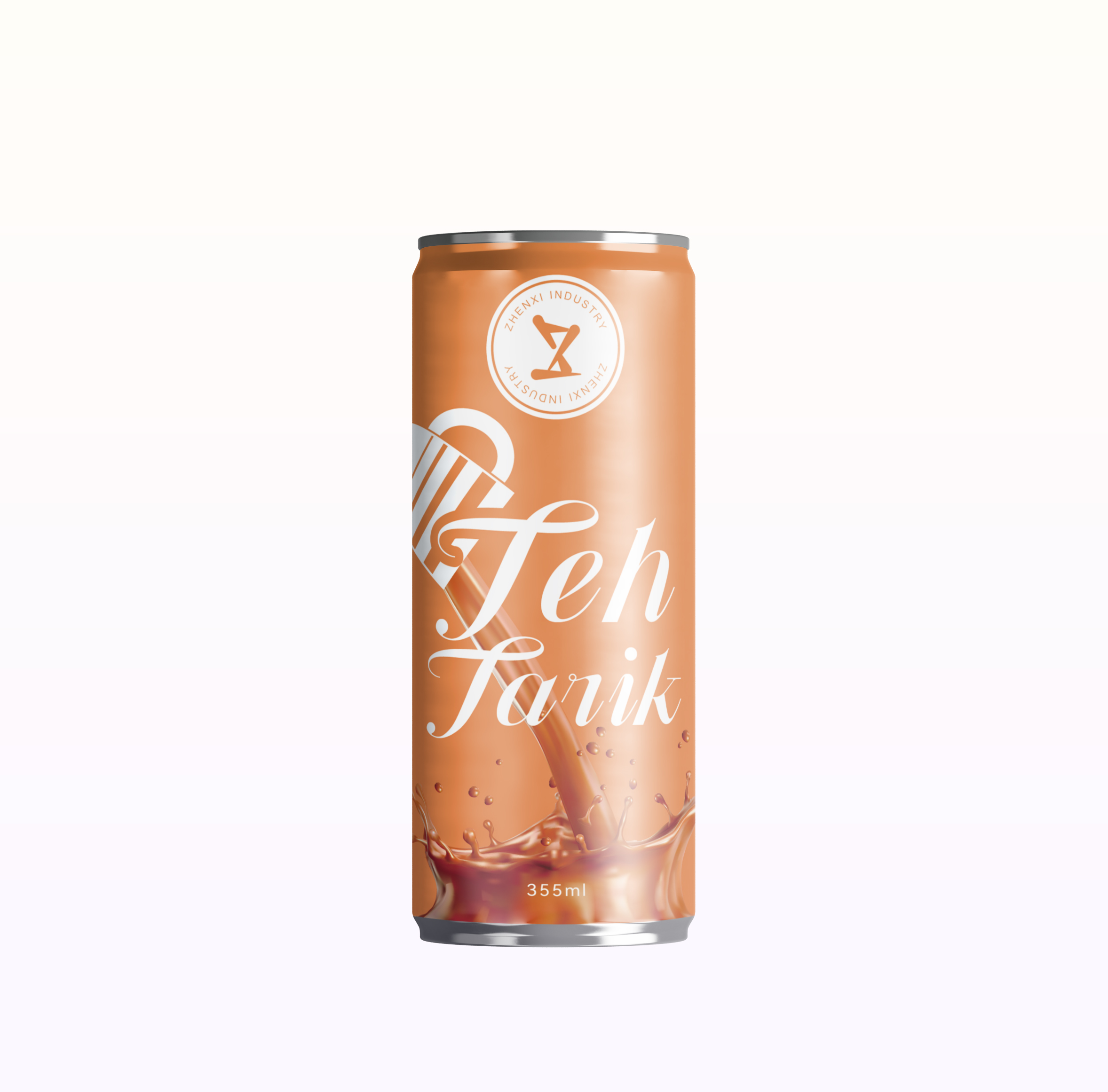
In the Cameron Highlands of Malaysia, the oldest tea plantation in Malaysia is located. At first, the British planted black tea here and settled here, enjoying the cool climate and leisurely low tea life of the plateau every day. While enjoying the afternoon black tea, don't forget to pair it with scones topped with local wild strawberry jam. The scale of tea planting in Malaysia continues to expand, and a number of famous tea plantations have emerged. The most famous tea plantation is Boh Tea Plantation (BOH), which produces classic British-style black tea and also produces black tea with rich Malaysian characteristics. These black teas have a combination of spices, fruit flavors and spicy flavors that are easily overlooked, and are very popular among locals and tourists. Malaysians love to drink this black tea for breakfast, lunch, dinner and supper. Therefore, you can easily find black tea in supermarkets in Malaysia. The three best-selling brands are Sabah Tea, Lipton and BOH. Most of them are tea bags, and there are also sporadic loose tea exports, but the price of tea bags is often higher than that of loose black tea.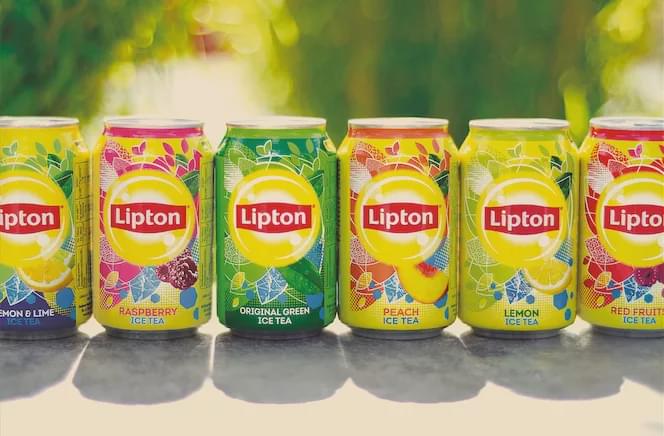
Today, the most popular in Malaysia is Teh Tarik. Teh Tarik originated in India and flourished in Malaysia. The unique flavor of Teh Tarik has conquered almost all Malaysians. On the streets of Malaysia, there are scattered tea stalls of all sizes. Most of these tea stalls are run by Indian Muslims. They sell Teh Tarik and various Indian snacks, including Indian bread, Indian fried rice, Indian pastries, Indian fried noodles, etc. Locals call these tea stalls "Mama stalls" or "Mama stalls". Passers-by are often attracted by the rich aroma of tea and snacks, and stop to enjoy the taste feast. Although the Malaysian Teh Tarik of "Mama stalls" is sold by Indians, it is already somewhat different from Indian Teh Tarik. Malaysian Teh Tarik uses Malaysian black tea, Dutch imported milk powder and cinnamon powder, mixes them in a certain proportion, and pours them into a stainless steel can with a handle. The can has a capacity of about one liter. Hold the same empty stainless steel can in the other hand, pour repeatedly, and keep the two hands about one meter apart. The pouring process lasts for more than seven times. During this time, the liquid in the can is like a brown-yellow water line, which is continuous and thrilling. It can be said that in addition to the proportion of tea, milk and cinnamon powder, the most important part of the production technique of Teh Tarik is the "pulling" process, which is the perfect fusion of the three. It is the secret of Teh Tarik's rich and mellow aroma, delicate and rich foam, and smooth taste. A cup of fragrant Teh Tarik with a unique Indian snack is enough to meet the needs of Malaysians for breakfast or supper.
Malaysians' love for Teh Tarik is not only reflected in the street style, but they also raise the production of Teh Tarik to the level of art. Teh Tarik competitions are often held in various parts of Malaysia to select the "Teh Tarik King" nationwide. The competition process is fiercely competitive and quite interesting to watch. There are also some literary and artistic performances where Malaysians incorporate appropriate dance steps and body movements into the Teh Tarik process, and make Teh Tarik in light singing and dancing, which is more artistic.
There are many Chinese in Malaysia, mainly from Guangdong and Fujian. They brought the tea-drinking style of their hometown to Malaysia, and placed their strong homesickness on tea, and gradually opened teahouses in Malaysia. These teahouses are similar to those in China, providing tea and tea drinking space. Ziteng is the first teahouse in Malaysia that not only has classical and exquisite planning, but also deeply explores the value of tea drinking, and has long held and planned various types of exhibitions, literary and performing arts activities, with modern characteristics. Today, more and more Malaysian teahouses have opened up new businesses, including tea, tea utensils, tea food, tea music, tea books, tea literary performances, etc. into their business scope. These Malaysian teahouses are attracting more and more young people to enter the teahouses and experience the tea drinking culture because of their rich business projects and elegant and quiet space environment.
Other Southeast Asian countries have the custom of drinking tea. As this is a place where Eastern and Western cultures exchange, and influenced by their own national cultures, various cultures blend with each other, making the tea drinking culture colorful.
(1) Indonesia: Indonesia straddles the equator and consists of many islands, known as the "country of a thousand islands". It has high temperatures and abundant rainfall all year round, and is a typical tropical rainforest climate. Among several Southeast Asian countries, Indonesia is a well-known tea producer and exporter. In 2016, Indonesia produced a total of 144,000 tons of tea and exported 52,000 tons of tea. The exporting countries are almost distributed in five continents, but are concentrated in Europe and the United States.
Indonesia mainly produces black tea, including traditional black tea and CTC black tea, but when it realized the huge potential of green tea in the international market, Indonesia introduced technology in 1988 to start producing green tea. Therefore, Indonesians not only drink black tea, but some people also drink green tea. Of course, it may be preconceived that Indonesians seem to prefer black tea. The tea drinking style of Indonesians revolves around black tea, which shows their love for black tea.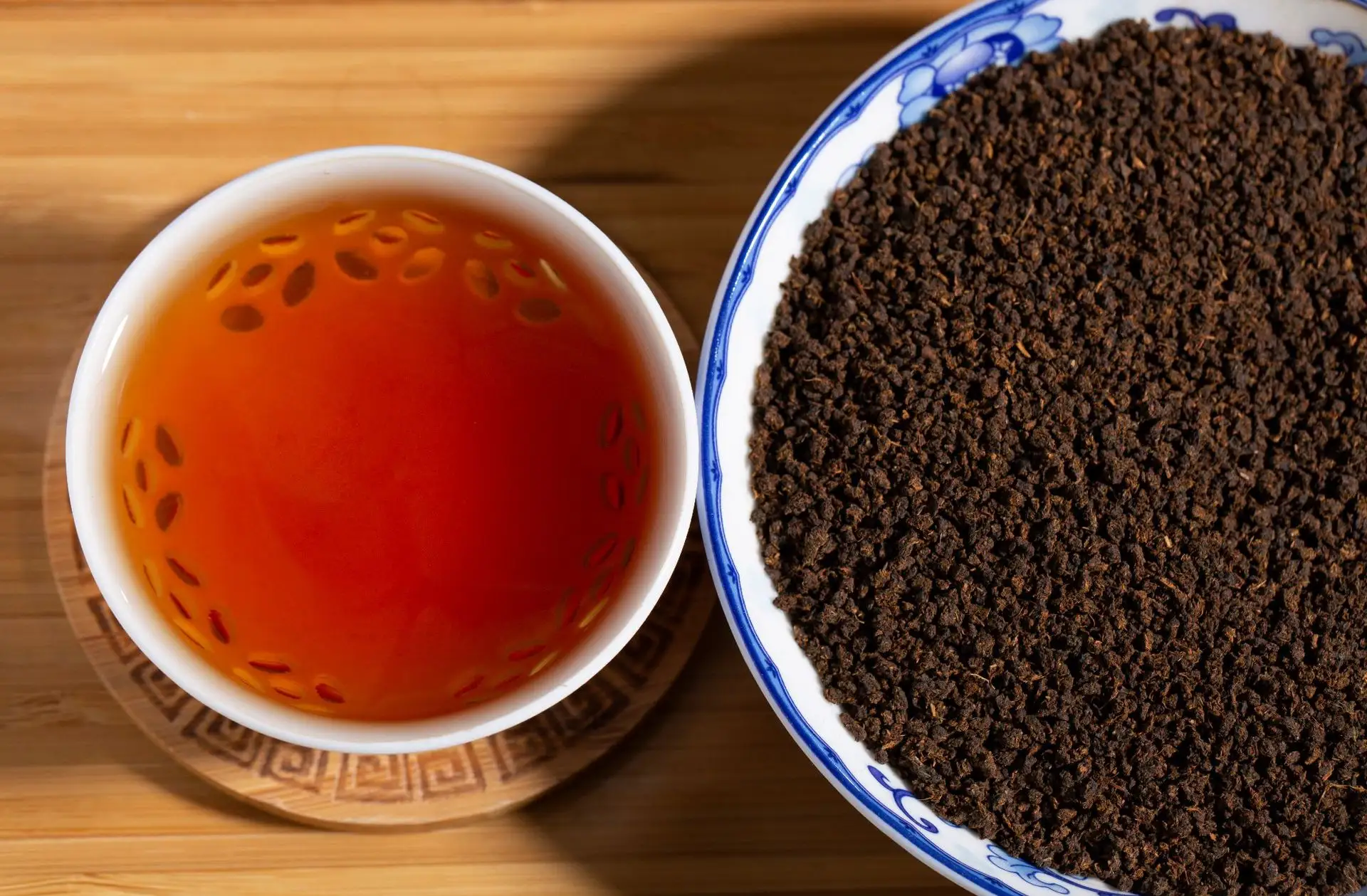
Indonesians love to drink herbal tea, which is also called "ice tea". It is an indispensable pastime for locals after meals. Especially lunch is the most important meal of the day for Indonesians. In addition to the rich food, a cup of herbal tea after the meal is also an important part of lunch. This is a long-standing national habit and a sense of ritual in life. The raw materials of herbal tea are mostly black tea. The black tea is boiled or brewed, and after filtering the tea residue, sugar and other condiments are added. After cooling, it is placed in the refrigerator for refrigeration. This is consistent with the herbal tea that Americans drink. It not only meets the demand for a cup of tea after lunch, but can also be used at any time to quench thirst, cool down, and supplement nutrition. In addition, Indonesia's tropical island style is unique, which has attracted a group of foreign tourists. The beach is the best place for locals and foreign tourists to spend time and enjoy the sea view. The Dutch low tea style adds a touch of leisure to the beaches of Indonesia. A transparent glass pot is filled with bright red tea soup. The concentration of the black tea poured into the guest's glass can be adjusted with boiled water according to the guest's personal taste. The hot island style and the charming black tea complement each other, bringing the ultimate sensory experience to people on the beach.
(2) Cambodia: Cambodia, formerly known as Khmer, is an ancient country with a long history. Under the influence of the tropical monsoon climate, Cambodia's annual average temperature is above 24℃℃; it is surrounded by mountains on the northeast and west sides, and the plains on the south face the sea, so that the ocean water vapor penetrates deep into the hinterland and the precipitation is abundant. Cambodia is a paradise for all kinds of tropical animals and plants. It is adjacent to Thailand, Laos and Vietnam, and the customs and customs are similar, and so is the tea drinking style. For example, Cambodians love to drink orange blossom tea and jasmine tea, but they also have their own characteristics. In addition, Cambodia's tea drinking utensils are also very distinctive. In addition to the ordinary porcelain tea sets, there is also a kind of craft teapot similar to a straight barrel, with different textures, metal inlays, and fine workmanship, which is unique.
In the old days, the life of a Cambodian woman was closely related to tea. At the age of six, the girl's family would invite monks to hold a "Zhentan" (transliteration) ceremony for their children. This ceremony is similar to a coming-of-age ceremony, which means that a woman can get married. The girl's family needs to make tea and serve wine to entertain guests, and the guests should also bring tea, fruits, flowers, etc. to express their blessings. Almost all Cambodian women are married before the age of sixteen, and have even completed the mission of becoming a mother. After a woman gets married, making tea is also a very important daily chore. They often make a large bucket of tea and place it at the door for people to take. On the Tonle Sap Lake, the largest freshwater lake in Cambodia, there are husbands driving boats at high speed near tourist boats, while wives carry a large bag of bottled tea and jump between different tourist boats to sell tea for a living. This shows the status and role of tea in the minds of Cambodian people. Cambodia is a paradise for insects, with a large number of insects and rich species. Therefore, Cambodian people's tea snacks are unique. They enjoy catching spiders, beetles, bee pupae, and grasshoppers, frying them and eating them with tea. Although fried insects are scary, they taste really good. However, eating too much of them can cause internal heat. At this time, the effect of tea in clearing away heat and reducing internal heat will be revealed.


