In today's unstable market, where base material levels shift every week, energy drink companies tend to focus on the clear cost of aluminum blocks. Yet, experienced buying specialists realize that the real expense factor goes beyond the metal itself—it centers on how well that metal gets handled. At ZhenXi, we function not simply as a plant, but as a finely tuned part of your supply network. We deliver full beverage OEM services that follow worldwide production rules closely, making sure each bit of your mix ends up in an ideal holder.
Our output approach rests on a "Zero-Waste" outlook. From the point when raw aluminum rolls arrive at our site to the last stacking of complete items, our totally automatic lines use firm oversight steps to cut down on leftovers. We grasp that in the high-pressure area of useful drinks, a faulty can means more than lost metal—it equals the waste of top ingredients, output hours, and company standing. By combining modern beverage packaging solutions with tight ISO and HACCP-approved filling steps, we bring a production link that shields your profits via better output rates, instead of just trimming edges on supply depth.
When analyzing the Cost of Goods Sold (COGS) for a premium energy drink, the liquid inside often holds significantly higher value than the container itself. Functional ingredients like Taurine, B-Group Vitamins, Ginseng, and natural caffeine extracts drive up the cost per liter far beyond that of standard carbonated soft drinks or water. This creates a unique financial risk profile: "Scrap" in our industry is exponentially more expensive than in others.
If a manufacturing line suffers from low precision, resulting in a high "Filled Can Scrap" rate (cans that fail after filling), the brand loses the aluminum can, the lid, and the expensive formulation inside. In an inflationary aluminum market, the instinct is often to squeeze the supplier for a lower unit price on the empty can. However, a lower-priced supplier with a 2% scrap rate will ultimately cost you far more than a premium partner like us, who maintains a scrap rate near zero.
The Financial Multiplier of Yield Loss (Estimated Cost per Unit)
|
Cost Component |
Scenario A: Empty Can Defect (detected pre-fill) |
Scenario B: Filled Can Defect (Leaker/Burst) |
Financial Impact Multiplier |
|
Aluminum Can Body |
~$0.08 (Lost) |
~$0.08 (Lost) |
1x |
|
Aluminum Lid (End) |
$0.00 (Recovered) |
~$0.03 (Lost) |
Infinite |
|
Liquid Formula (Energy) |
$0.00 (Saved) |
**~$0.25 (Lost)** |
Critical Loss |
|
Production Overhead |
<$0.005 |
~$0.05 (Process Loss) |
>10x |
|
Cleaning & Downtime Risk |
$0.00 |
~$0.10 (Allocated Cost) |
High Impact |
|
TOTAL LOSS PER UNIT |
~$0.085 |
~$0.51 |
~600% Cost Increase |
Note: Costs are estimated industry averages for a standard 500ml energy drink. Actual figures vary by formulation complexity.
As the data shows, a defect that occurs after filling (Scenario B) is 6 times more expensive than a raw material defect. By emphasizing high-yield beverage manufacturing, we make certain that your spending on costly base ingredients does not go to waste. Our combined method locks the Total Landed Cost, offering a guard against rising prices that works better than basic rate talks.
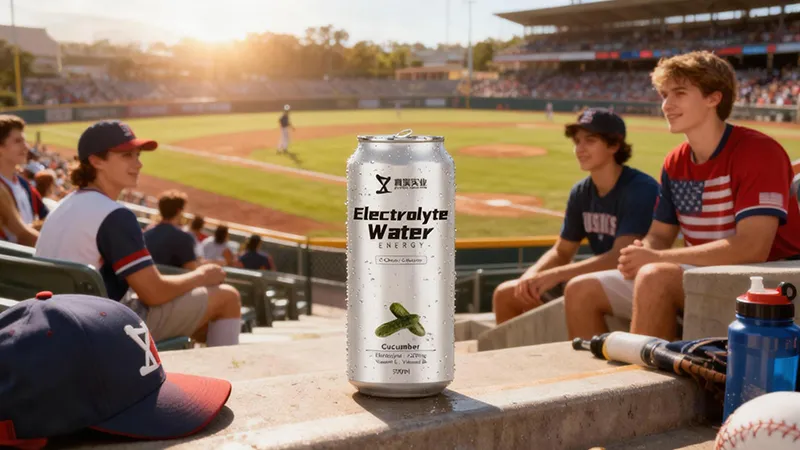
Energy drinks require a specific "kick," often achieved through higher carbonation levels than standard sodas. This internal pressure places immense stress on the aluminum can, particularly at the seam where the body meets the lid. If the aluminum can is lightweighted without corresponding precision in the seaming process, the risk of buckling or bursting increases dramatically.
To mitigate this, our facility utilizes state-of-the-art, fully automated production lines that monitor seaming parameters in real-time. We do not rely on random spot checks alone; our vision systems inspect the overlap and tightness of every single unit. This is critical for products like the ZhenXi 500ml Cucumber Flavor Canned Electrolyte Energy Drink, where a large 500ml volume combined with carbonation creates a significant internal force.
To ensure seam integrity, we adhere to the following strict technical standards:
Beyond mechanical integrity, brand owners must also navigate consumer perception regarding formulation safety. For an in-depth look at market myths surrounding these products, we invite you to read our industry report: Electrolyte Energy Drinks: Danger or Ally? 5 Common Myths Debunked for 2026.
Beyond pressure, the chemical interaction between the liquid and the metal is a silent killer of yield rates. Energy drinks are typically acidic (pH 3–4) and rich in electrolytes (salts), creating an aggressive environment that promotes Stress Corrosion Cracking (SCC). A microscopic defect in the internal coating or moisture left on the rivet area can lead to a leak weeks or months after production—the worst kind of yield loss because it happens in the market, leading to recalls.
Our protocol for preventing SCC is exhaustive. We recognize that the "score line" on the can end is the most vulnerable point. If this area remains wet after the retort or warming tunnel, environmental stress can cause the aluminum to fracture. To prevent this, we employ high-efficiency drying systems using air knives that target the rivet and score line, ensuring zero residual moisture before packaging.
Furthermore, we rigorously control the water quality used in our sterilization and washing processes:
By managing these chemical parameters, we eliminate the external triggers for corrosion, ensuring that the aluminum can remain a secure vault for your product throughout its shelf life.
To confirm that our output rates lead to ready, saleable stock, we apply a "Double Defense" standard check setup. This setup aims to spot any odd issues before they exit our plant doors, making sure our partners never cover the Cost of Poor Quality (COPQ).
Our standard check flow covers these firm steps:
This layered method makes sure that when we speak of "yield," we point to "flawless, sale-ready item," not merely "filled cans." Such care builds long-term trust and cuts down on unexpected costs for clients across the board.
In a time when aluminum rates climb, the riskiest entry on your sheet is not the price of the block, but the price of leftovers. A low rate per unit holds no sense if it brings high chances of drips, rot, or stop time. By linking with us, you reach a production network built for high-output work. We guard your costly mixes with exact build, firm mix oversight, and automatic check tools that secure every can you fund is a can you can move.
Do not allow unseen lacks to cut your profits. Contact us now to talk about how our high-output production fixes can lock your earnings in 2026.
Q: What is the standard Minimum Order Quantity (MOQ) for a custom energy drink production run?
A: Generally, our MOQ is 300,000 cans per SKU. This volume allows us to optimize the efficiency of our automated lines and minimize material waste during setup. However, we offer flexible solutions for specific market testing needs, though smaller batches may incur additional setup fees for printing plates and CIP cleaning.
Q: How do you ensure the confidentiality of our proprietary energy drink formula?
A: We take intellectual property protection very seriously. Before any discussion, we sign a comprehensive Non-Disclosure Agreement (NDA). Furthermore, our facility employs segmented control, meaning R&D, ingredient preparation, and production teams have separate access authorities, ensuring your full formula is never exposed to a single unauthorized point of contact.
Q: Can you perform accelerated shelf-life testing for new formulations?
A: Yes. Our laboratory is equipped to perform accelerated simulation experiments that mimic various storage conditions (temperature, humidity, light exposure). This allows us to predict the stability of your product and the integrity of the packaging over its intended 12-month or longer shelf life before mass production begins.


