Convenience store buyers usually make fast listing decisions. The product must fit the shelf, the cold cabinet, the customer’s buying moment, and the store’s reorder rhythm. For canned non alcoholic beer, that decision is not only about flavor. A buyer also needs to decide where the product should sit, which can size should lead the trial, and whether the pack can explain itself quickly when customers are choosing drinks in seconds.
This is why non alcoholic beer shelf placement matters. If the product is placed too close to ordinary soda, it may lose its adult beverage identity. If it is placed only with beer, some customers may miss the alcohol-free cue. This article looks at practical checks for alcohol free beer retail, especially for stores testing fruit-led and beer-style cans.
Shelf position should follow the buying reason. A product that is bought for lunch refreshment may not need the same position as a product bought for evening social drinking. Before placing the first order, alcohol free beer buyers should define the main shopping moment.
Cold placement is often the first practical choice for non alcoholic beer for convenience stores. Many customers buy drinks for immediate use, so room-temperature placement may reduce trial. A chilled 250ml can may work well near lunch sets, sandwiches, snacks, or light refreshment drinks. A larger beer-style can may work better in the adult beverage area or near low-alcohol alternatives. The point is not to chase one perfect shelf. The point is to test the shelf that matches the first drinking occasion. If a store wants impulse trial, cold visibility matters. If the product is warm, unfamiliar, and placed low on a dry shelf, the customer has to work too hard to notice it.
Canned non alcoholic beer still needs a beer cue. Foam, carbonation, malt note, bitterness, and can design all help separate it from ordinary juice or soda. If the product is placed only in the soft drink area, the store may gain casual traffic but lose the adult drinking meaning. Beer-adjacent placement can help shoppers understand that it is an alcohol-free choice for social or meal occasions, not just another fruit drink. This is especially useful for 500ml beer-style products. Still, the alcohol-free message should remain visible enough to prevent confusion. Buyers can review the non-alcoholic beer range before deciding whether a fruit-led 250ml SKU or a beer-style 500ml SKU should lead the shelf test.
Can size is part of shelf strategy. A smaller can may invite first trial, while a larger can may support a stronger drinking occasion. The wrong size in the wrong place can weaken sales feedback, even when the product itself is acceptable.
A 250ml fruit-led can can reduce the pressure of first purchase. This is helpful when the customer has not tried alcohol-free beer before, or when the flavor is new to the store. In convenience retail, smaller cans may fit lunch, afternoon refreshment, office breaks, café fridges, and mixed non-alcohol shelves. They can also support multi-flavor testing because the store can compare lemon, grape, mango, coconut, or orange-style fruit routes without making one SKU dominate the cabinet. For non alcoholic beer shelf placement, the 250ml role is usually trial and discovery. It should sit where customers are already open to choosing something new but still want a quick drinking decision.
A 500ml can has a different retail meaning. It feels closer to a beer-style serving and may suit dinner, light social drinking, take-home convenience, or adult beverage replacement. It may not be the best first test for every store, because it asks the customer for a larger commitment. But for alcohol free beer retail channels with adult beverage traffic, a larger format can make the category more serious. Buyers should not treat 250ml and 500ml as simple volume choices. They create different shelf signals. A 250ml can signals trial. A 500ml can signals a fuller drinking occasion. Both can work, but each needs its own position.
A listing check should be short enough for retail teams to use, but clear enough to guide purchase decisions. The table below gives practical planning references, not fixed promises. Final shelf plan, carton data, MOQ, and delivery timing should be confirmed by product and store format.
|
Main retail role |
trial and impulse |
adult drinking occasion |
|
Common volume reference |
250ml / 8.4 oz |
500ml / 16.9 oz |
|
Suggested first shelf test |
cold light refreshment area |
beer-adjacent cold shelf |
|
Trial range size |
2–3 flavors |
1–2 beer-style SKUs |
|
Delivery planning reference |
20–25 days |
20–25 days |
|
First order discussion |
1 container reference |
1 container reference |
This table helps convenience store teams avoid a common mistake: listing the product before defining why the shopper would pick it up. A fruit-led can may need flavor visibility and cold impulse placement. A beer-style can may need stronger adult beverage context. If the buyer lists both formats, the shelf should not confuse their roles. A store may place 250ml fruit-led cans near light drinks while keeping a 500ml beer-style can close to alcohol-free beer or beer alternatives. The first listing is also a test of store behavior. Does the product move when cold? Does it need a meal deal? Does it sell better near snacks? These questions help alcohol free beer buyers improve the second order.
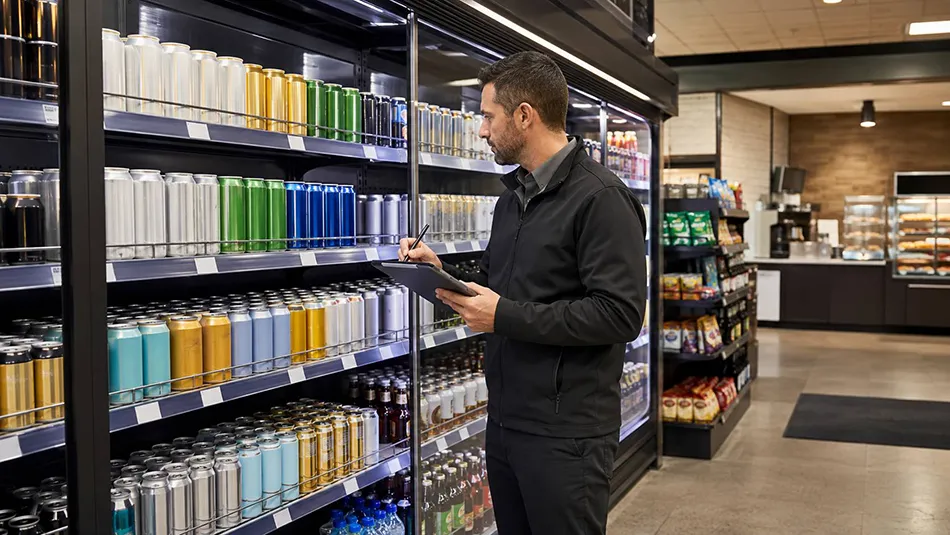
Packaging has to work fast in convenience stores. Customers rarely stop to read a long label. They notice color, flavor, format, product type, and price position first. For non alcoholic beer for convenience stores, packaging should reduce confusion.
Flavor should be visible without making the product look like ordinary fruit soda. This balance is important for fruit-led alcohol-free beer. Lemon, orange, grape, coconut, and mango cues can attract trial, but the can should still show that the product belongs to the beer or alcohol-free adult drink space. A design that is too playful may lose credibility. A design that is too close to alcoholic beer may create label risk or shopper confusion. Buyers should also consider how the can looks when only the front row is visible in a crowded refrigerator. A clean flavor cue, clear alcohol-free wording, and recognizable can color can help shoppers decide faster.
Convenience stores care about more than shelf appeal. They also care about receiving, counting, stocking, and reordering. Carton marks should help the store identify flavor, volume, production batch, and handling information. A mixed fruit-led range can become difficult if cartons look too similar or if store staff cannot separate SKUs quickly. Shelf life also matters, especially when testing a new category. A slow-moving product can make the buyer cautious about repeat orders. At ZhenXi, we usually discuss product route, aluminum can size, carton needs, and production timing together, so the retail plan does not stop at flavor approval.
The first month should be treated as a signal period. It should not be judged only by total sales. A new product may sell during the first week because it looks new. The better question is whether customers keep buying after the first trial.
Trial sales show curiosity. Repeat sales show product fit. For canned non alcoholic beer, buyers should ask store teams to separate the two as much as possible. A product may perform well during a promotion but slow down when moved to the regular shelf. Another product may start slowly but create steady repeat demand near meal deals or snack zones. The first 30 days should answer several simple questions:
This sequence keeps feedback practical rather than emotional.
Sales data does not explain everything. Store comments can reveal whether customers thought the product was beer, soda, fruit drink, or alcohol-free adult beverage. That matters because the next order may need a different flavor mix or shelf position. If shoppers like the concept but find one flavor too sweet, the buyer may keep the format and adjust the SKU. If shoppers do not notice the alcohol-free cue, packaging may need stronger wording. If a 500ml product feels too large for lunch traffic, a 250ml can may be better for that account. Buyers can use the OEM and ODM beverage service as a reference when turning store feedback into a clearer product request.
Retail placement becomes easier when the buyer knows what the product is supposed to deliver. Alcohol-free beer is not only a soft drink with a beer label. Its value can come from carbonation, beer-like structure, fruit aroma, light bitterness, foam, and a social drinking cue.
A fruit-led alcohol-free beer may perform well near light refreshment drinks, but it still needs enough beer identity to avoid becoming ordinary soda. A beer-style product may perform better near adult beverage choices, but it must communicate the alcohol-free role clearly. Buyers planning alcohol free beer retail should compare the drink experience before deciding the shelf. Buyers who are still comparing can size and shelf role can read 250ml or 500ml Canned Non Alcoholic Beer OEM for Private Label Launches before fixing the first retail test. The article connects can format, private label planning, channel positioning, and first order risk, which can help purchasing and retail teams decide whether a 250ml fruit-led SKU or a 500ml beer-style SKU should lead the convenience store listing.
Non alcoholic beer shelf placement should not be decided after the products arrive. It should be part of the buying plan. A 250ml fruit-led can may support low-risk trial in cold light-refreshment areas, while a 500ml beer-style can may fit adult beverage occasions better. Packaging, carton marks, flavor recognition, and first-month feedback all affect the success of non alcoholic beer for convenience stores.
If your team is preparing a retail test, send your convenience store listing plan with target shelf, can size, flavor route, carton needs, first order quantity, and expected launch window.
Q: Where should canned non alcoholic beer be placed in convenience stores?
A: It depends on the product role. Fruit-led 250ml cans may work near cold light refreshment drinks, while 500ml beer-style cans may work better near beer alternatives or adult beverage shelves.
Q: Is 250ml or 500ml better for alcohol free beer retail?
A: A 250ml can is useful for trial and impulse purchases. A 500ml can can support a fuller beer-style drinking occasion. Buyers should match size with store traffic and shelf position.
Q: What should buyers track after listing non alcoholic beer?
A: Buyers should track shelf position, first trial, repeat sales, flavor comments, stock rotation, carton handling, and whether the SKU deserves reorder space after the first test.


