Many beverage buyers do not start a new alcohol-free beer range with a technical question. They start with a shelf question: which flavors can be tested first without making the order too wide, costly, or hard for the sales team to explain? That is where a flavor map helps. It turns personal preference into product roles.
For a non alcoholic beer ODM project, flavor selection should not mean choosing every popular fruit name on the list. A focused trial range needs clear logic. One flavor may attract a quick trial. Another may give a softer tropical note. A third may work better for cafés, convenience stores, or casual foodservice. This article explains how buyers can plan alcohol free fruit beer by channel role, sample feedback, and first order control.
A fruit range can look attractive in a presentation but become confusing in real sales. If five flavors all taste sweet, light, and similar, the buyer may not know which one deserves the next order. Before choosing non alcoholic beer flavors, buyers should define what each SKU should do.
A practical flavor map starts by giving each SKU a role. Lemon and orange may support a bright citrus position. Coconut may feel smoother and more tropical. Mango can create a richer summer direction. Grape or peach may lower the first-purchase barrier for consumers who prefer familiar fruit cues. These roles matter because a sales team needs short explanations. If every SKU is described as refreshing, the range becomes weak. A distributor also needs to know which account should receive which product. A café may respond to citrus. A convenience store may test grape or peach. A resort or summer display may prefer coconut or mango. In an ODM project, this role-based method keeps flavor selection commercial, not just emotional.
The 250ml format can help buyers test a new alcohol-free range with lower drinking pressure. It is small enough for lunch sets, cafés, sampling activities, convenience retail, and mixed non-alcohol shelves. It also makes fruit flavored non alcoholic beer easier to introduce to customers who are not ready for a full beer-style can. That does not mean 250ml is better in every market. Some bars or banquet channels may need larger beer-style products. Still, for a first trial range, a smaller can often give clearer feedback. Buyers can see whether the flavor name attracts attention, whether the sweetness feels acceptable, and whether repeat interest appears.
A flavor map should be easy enough for purchasing, sales, and marketing teams to use. It should also connect with packaging and channel planning. Buyers reviewing the non-alcoholic beer range can group fruit-led references by role instead of treating all flavors as equal.
|
Flavor Role |
Example Direction |
Practical Trial Use |
|
Citrus refreshment |
lemon / orange |
cafés, lunch counters, restaurants |
|
Tropical softness |
coconut / mango |
summer displays, casual retail |
|
Familiar sweetness |
grape / peach |
first-time alcohol-free buyers |
|
Trial range size |
2–3 SKUs |
cleaner first order feedback |
|
Common can reference |
250ml / 8.4 oz |
lower-risk retail test |
|
Delivery planning reference |
20–25 days |
launch and reorder calendar |
These figures are planning references. Final can size, MOQ, delivery time, shelf life, artwork, and product documents should be confirmed by the exact SKU and destination market.
Citrus flavors are often easier for a sales team to describe because they connect naturally with freshness, food pairing, and light drinking occasions. Lemon and orange can work with seafood, fried snacks, sandwiches, lunch menus, and quick refreshment channels. They can also help a buyer introduce alcohol free fruit beer without asking consumers to accept a very unfamiliar taste. In a trial range, a citrus SKU can act as the clean entry product. It should not be too sharp or too sweet. The sample should balance acidity, carbonation, aroma, and finish. If the citrus note fades quickly, the product may feel thin. If sweetness is too strong, it may move closer to soda and lose beer identity.
Tropical flavors have a different job. They are not always the safest option, but they can make a display more memorable. Coconut, mango, and passion fruit can support summer programs, resort-style accounts, beach retail, festival menus, and casual drinking scenes. Buyers considering a Coconut Flavored Non-Alcoholic Craft Fruit Beer should look beyond the first aroma. Coconut can feel soft and smooth, but the finish still needs enough carbonation and acidity to avoid heaviness. Mango can feel rich, but it should not hide the beer cue. Tropical non alcoholic beer flavors work best when they add identity without making the drink taste like ordinary juice.
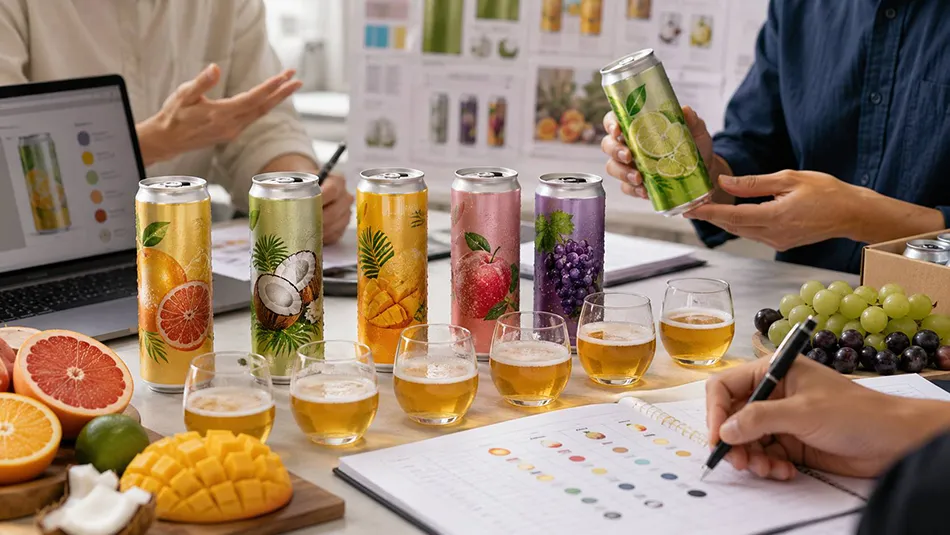
A trial range becomes difficult when the buyer tries to cover every possible preference in one order. More flavors can look like more choice, but they also make feedback harder to read. For a first launch, restraint is often more useful than variety.
The biggest mistake is choosing several flavors that all have the same sweetness level and finish. If grape, peach, mango, and coconut all taste soft, sweet, and low in bitterness, the sales result may not show which direction works. The team may only learn that consumers liked the product when it was cold. A better plan is to select flavors with different roles. One can be citrus-led. One can be tropical. One can be familiar and easy to accept. Buyers should also check whether each SKU still has enough beer structure. Alcohol-free does not need to mean flavorless, but fruit flavor alone should not carry the whole drink. Carbonation, light bitterness, aroma lift, and aftertaste all affect repeat orders.
A sample review should be simple, but it should create useful production feedback. A tasting meeting with unclear comments can slow the project. Buyers should record what changes across the first sip, middle body, and final aftertaste.
Fruit flavored non alcoholic beer can perform well on the first sip and still fail later. A bright aroma may attract attention, but the drink may become too sweet after half a can. A tropical flavor may smell pleasant, but the finish may feel flat. A beer-style cue may appear at first but disappear as the fruit note grows. Buyers should taste the full 250ml serving at the intended temperature and record feedback by role. The team can use a short review sequence:
This method gives the supplier comments that can be used for adjustment.
The buyer owns the market decision. The supplier should help turn that decision into a workable range, not push every available flavor into the first order. This is especially important when an ODM project needs both speed and product discipline.
At ZhenXi, we usually discuss flavor route, can size, packaging, sample timing, and first order logic together. For a new fruit-led range, existing 250ml references can help buyers compare citrus, tropical, and familiar fruit directions before asking for deeper customization. This can reduce early uncertainty, because the buyer can taste product roles before making a full design decision.
When the flavor plan becomes clearer, packaging and label discussion can follow. Buyers who need broader support can also review our OEM and ODM beverage service to see how requirement discussion, sample testing, can size confirmation, production, and shipping usually connect in a beverage customization project.
A non alcoholic beer ODM flavor map helps buyers avoid a scattered first range. The goal is not to launch every possible fruit name. The goal is to choose a small set of non alcoholic beer flavors that do different jobs. Citrus can create a clean entry point. Tropical flavors can build shelf memory. Familiar fruit notes can lower trial friction. For a 250ml fruit beer project, a clear first range can give better feedback than a crowded one.
For related background on how alcohol-free beer keeps flavor and drinking structure, buyers can read How is Non Alcoholic Beer Made and Why Does Craft Non Alcoholic Beer Taste So Good.
When your team is ready to compare sample routes, send your fruit beer trial range plan with target market, preferred flavors, can size, artwork status, and first order timing.
Q: How many flavors should a new alcohol-free beer brand test first?
A: Two or three flavors are usually easier to judge than a wide first range. A citrus SKU, a tropical SKU, and one familiar fruit SKU can give cleaner market feedback.
Q: Why is 250ml fruit beer useful for trial ranges?
A: A 250ml can may reduce first-purchase pressure and fit cafés, convenience stores, lunch sets, and sampling activities. It is useful when buyers want early feedback before adding more SKUs.
Q: Can alcohol free fruit beer still keep a beer-like taste?
A: Yes, but the formula should not rely only on fruit aroma. Carbonation, light bitterness, malt notes, foam, and clean aftertaste help support beer identity.


