A distributor adds a new beverage to fill a gap, improve account coverage, or create repeat orders. Canned non alcoholic beer can do all three, but only when it has a clear place in the beverage portfolio. If it is treated as another sparkling drink, another fruit can, or a weak copy of beer, the launch may create stock movement without long-term repeat sales.
For a non alcoholic beer distributor, the first question should not be “Is this category popular?” A better question is “Which customers will buy it from us, and what role will it play besides beer, soft drinks, energy drinks, tea drinks, and sparkling water?” This article reviews channel fit, SKU role, canned beer shelf life, storage, first order size, and reorder evidence before alcohol free beer wholesale purchasing.
A beverage portfolio should not become a collection of unrelated cans. Each product needs a job. Some SKUs bring turnover, margin, new channels, or account protection. Canned non alcoholic beer works best when the distributor defines its job before placing volume.
Canned non alcoholic beer does not sit perfectly inside one traditional category. It has beer cues, but it is not sold only to beer drinkers. It has refreshment value, but it should not be reduced to soda. It can serve adults who want the drinking ritual without regular alcohol, restaurants that need more adult non-alcoholic options, and retailers that want a clearer alternative to sweet soft drinks. This middle position is useful, but it can also confuse sales teams. Distributors should decide whether the product is meant to defend beer accounts, expand non-alcohol shelves, support foodservice menus, or test a younger fruit-led drinking occasion. Without that role, the SKU may be listed but not actively sold.
The first SKU should make the category easier to explain. It should not create extra confusion for the sales team. A strong first product gives buyers a reason to try the category and gives the distributor enough feedback to judge the next step.
Fruit-led SKUs can work well when a distributor needs quick trial, lighter refreshment, or a product that is easy for retailers and foodservice buyers to describe. An orange profile can feel familiar, bright, and suitable for casual meal occasions. Distributors reviewing Orange Non Alcoholic Beer can use it as a 250ml fruit-led reference when comparing whether a citrus SKU belongs in cafés, lunch counters, mini-markets, or mixed non-alcohol shelves. The point is not that orange fits every market. The point is that the first flavor should have a clear selling reason. If orange, peach, grape, and mango all taste similar and serve the same account, the portfolio becomes harder to manage.
A distributor may serve supermarkets, convenience stores, restaurants, bars, hotels, caterers, and regional wholesalers at the same time. The same SKU may not work equally well across all of them. Channel fit should be judged before the first alcohol free beer wholesale order, not after the warehouse is already stocked.
Retail buyers may ask about shelf life, case movement, price tier, and packaging clarity. Restaurants may ask how the drink pairs with food and whether staff can recommend it quickly. Bars may ask whether the product feels close enough to beer. Banquet and hotel buyers may care about broad guest acceptance and clean service flow. A non alcoholic beer distributor should not use one sales pitch everywhere. A fruit-led can may be right for a lunch fridge, café, and trial display. A 500ml beer-style can may be better for bar menus, adult occasions, and banquet tables. If the distributor sells both routes, the sales team needs a short explanation for each role. That makes the portfolio easier to present and easier to reorder.
Numbers should not replace tasting, but they keep the first order realistic. Before committing volume, distributors should compare serving size, shelf life, launch timing, and expected first account type. These numbers help prevent a small market test from turning into slow-moving stock.
|
Portfolio Check |
Practical Reference |
What It Helps Decide |
|
Fruit-led trial can |
250ml / 8.4 oz |
Lower-pressure first purchase |
|
Beer-style occasion can |
500ml / 16.9 oz |
Fuller adult drinking use |
|
Shelf life reference |
12 months above or 365 days by SKU |
Stock rotation and account type |
|
Delivery planning reference |
20-25 days |
Launch calendar and reorder timing |
|
First wholesale test |
1 container reference |
Commercial scale discussion |
|
First SKU count |
2-3 SKUs |
Cleaner sales feedback |
These are planning references. Final shelf life, lead time, MOQ, carton information, documents, and product claims should be confirmed by the exact SKU and destination market.
Canned beer shelf life is more than a product data line. It affects how much stock the distributor can safely place, how many accounts should receive the first shipment, and how soon the sales team must check reorder signals. A product with a shorter remaining shelf life after import needs faster channel movement. A product with a longer shelf life still needs disciplined rotation, because slow stock can weaken buyer confidence. Distributors should ask whether the SKU is for quick trial, seasonal promotion, regular menu placement, or a standing wholesale item. Shelf life should also be reviewed by the channel. A fast-moving convenience account and a small restaurant group do not carry stock in the same way.
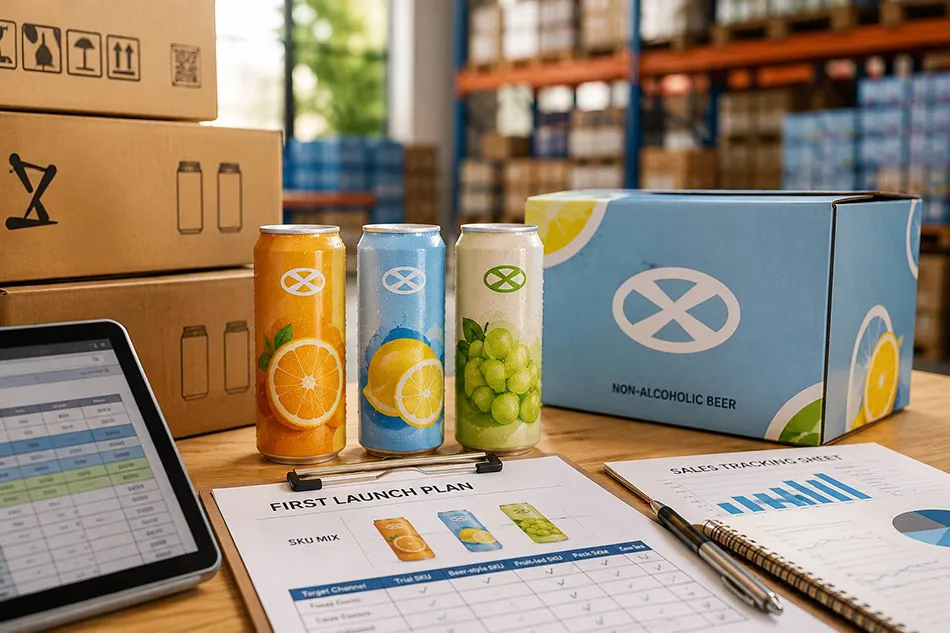
A broad launch can look strong on paper but become difficult to read. If the first order includes too many flavors, can sizes, carton formats, and price points, the distributor may not know what caused the result.
A practical first mix should test product roles, not personal preferences. One route can be fruit-led and approachable. Another route can be more beer-style. A third SKU may be added only if it has a different account purpose. Distributors can structure the first test like this:
This is the only sequence needed at the start. It keeps feedback useful. If the distributor sends every flavor to every account, weak sales may be blamed on the product when the real problem is channel mismatch.
Packaging affects case handling, cold storage, carton stacking, account presentation, and damage risk. For canned non alcoholic beer, distributors should think about the route from warehouse to final serving point.
Some accounts take full cartons. Others split cases. Restaurants may store cans in small back-of-house fridges. Bars may display product in a visible cooler. Retailers may ask for shelf-ready cartons or clearer flavor recognition. Distributors comparing the broader non-alcohol beer range can review how fruit-led and beer-style options may support different account types. The packaging should match how the product is actually handled. If cartons are opened and split often, label clarity on the can matters more. If the product is stored in warm warehouses before cold display, storage guidance and stock rotation matter more. Packaging should support sales, not only look good in a product photo.
A distributor owns the market relationship. Supplier input can help when the distributor needs product routes, can formats, private label options, and production planning to match the portfolio strategy.
At ZhenXi, we usually discuss product role, can size, flavor route, packaging, and reorder timing together because those points affect the first wholesale test. A non alcoholic beer distributor may want a light fruit-led option for fast trial, a beer-style route for bars and banquets, or a mixed range for retail display. The supplier can support those choices with product references and production discussion, but the market logic should still come from the distributor. For carbonation and beer-style serving perception, buyers can read Is Beer a Carbonated Drink Natural vs Artificial Carbonation before comparing samples internally.
Adding canned non alcoholic beer to a beverage portfolio should be a portfolio decision, not only a category reaction. Distributors should check channel fit, SKU role, flavor reason, serving size, canned beer shelf life, storage route, first test volume, and reorder evidence before expanding the range. The best first order is usually narrow enough to read and practical enough to sell.
When your team is ready to compare SKUs for alcohol free beer wholesale planning, send your canned non-alcoholic beer portfolio plan with target channels, current beverage categories, preferred can size, flavor direction, and first order timing.
Q: Why should distributors add canned non alcoholic beer to a beverage portfolio?
A: It can fill the space between beer, soft drinks, and adult refreshment. The value depends on channel fit, product role, sales argument, shelf life, and reorder potential.
Q: How many SKUs should a non alcoholic beer distributor test first?
A: A narrow first test is usually easier to judge. Two or three SKUs with different roles can provide clearer feedback than many similar flavors launched at the same time.
Q: What should buyers check before alcohol free beer wholesale purchasing?
A: Buyers should check can size, flavor route, channel fit, canned beer shelf life, storage needs, delivery timing, carton handling, first order volume, and reorder tracking method.


