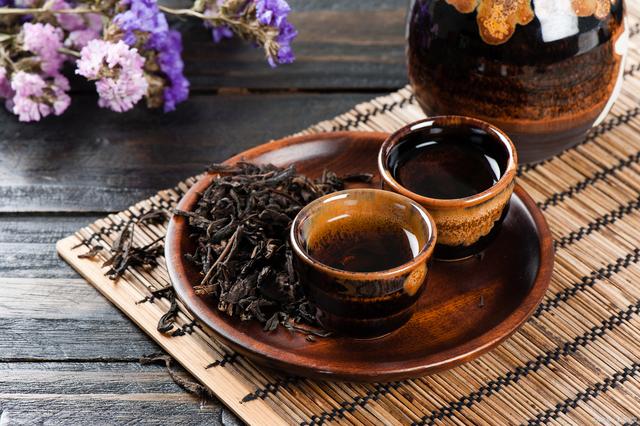
Mr. Zhang, a reader from Shandong, asked: Every time I finish drinking tea, I feel hungry faster than usual, especially after drinking dark tea, I get hungry in a short while. My friend told me that this is because drinking tea can remove fat. Is this statement scientific? Does the faster you get hungry mean the better the effect of removing fat?
Yu Jiaping, a national tea art technician, answered: The reason why you get hungry quickly after drinking tea is related to the following factors. First, the caffeine in the tea soup can promote metabolism. After caffeine enters the body and reaches the brain with blood circulation, it can increase the excitement of the central nervous system, and then drive the digestive system, excretion system and respiratory system to work harder. As a result, some people go to the toilet frequently, some people have a flushed face and sweat slightly, and some people have strong secretion of digestive juices and faster gastric emptying, which makes them feel hungry easily.
Second, the tea polyphenols and caffeine in the tea soup have a certain regulating effect on blood sugar. In order to avoid hypoglycemia, the brain will send out hunger signals.
Third, substances such as tea polyphenols in the tea soup will affect hormones related to satiety/hunger. Some of these hormones promote appetite, while others suppress appetite. The specific manifestations depend on the superposition of these complex effects. Therefore, some people feel extremely hungry and want to eat after drinking a few cups of tea, while some people sometimes do not want to eat after drinking tea. The raw materials of dark tea are relatively mature and even a little rough. After full fermentation, there are more soluble sugars, which can "cover up" the bitterness brought by some caffeine and tea polyphenols, making people "relax their vigilance" and unknowingly drink more, so they feel "more hungry" than drinking other teas. In short, the human body is an extremely complex whole. Tea is a beverage with complex ingredients. The "feeling" after drinking tea is related to the various physiological changes caused by its ingredients.
Drinking tea only changes the process and feelings of digestion, not the result of digestion. In other words, drinking tea will not remove fat, let alone lose weight. It should be reminded that the ingredients in tea can accelerate gastric emptying and reduce blood sugar concentration. If you drink tea at an inappropriate time, it may cause stomach discomfort or hypoglycemia. Therefore, it is recommended that you pay attention to the following points when drinking tea: do not drink tea on an empty stomach, especially do not drink strong tea; people who are prone to hypoglycemia and are allergic to caffeine should drink less tea; drink less tea before going to bed to avoid affecting sleep.

There are many kinds of dark tea, and the effects and functions of dark tea are also different. The most famous Hunan dark tea is Anhua dark tea. However, in recent years, with the rise of Anhua dark tea, when it comes to dark tea, it usually refers to Hunan Anhua dark tea. The effects and functions of dark tea are mainly manifested in the following aspects:
Clear fat and reduce obesity: polyphenols and their oxidation products in Anhua dark tea can dissolve fat and promote the excretion of lipid substances; they can also activate protein kinase, accelerate fat decomposition, and reduce the content of fat in the body. Therefore, Anhua dark tea is called "slimming tea" by Koreans; "beauty tea" by Japanese; and "digestive tea" by Taiwanese.
Clear the stomach and aid digestion: Anhua dark tea is rich in dietary fiber, has the function of regulating the stomach and intestines, clears the stomach and intestines; and has the participation of probiotics, which can improve the intestinal microbial environment and aid digestion. There is a tradition of using old dark tea to treat abdominal distension, dysentery, and indigestion in our country.
Clear blood vessels and reduce three highs: Anhua dark tea is rich in theaflavins, which can soften blood vessels and effectively remove atherosclerotic substances in the blood vessel walls. It is called the "cardiovascular scavenger"; theanine effectively inhibits the increase of blood pressure, and flavonoids can relax the blood vessel walls, increase the effective diameter of blood vessels, and lower blood pressure; tea polysaccharides have an effect similar to insulin, reducing blood sugar content; polyphenols and their oxidation products can dissolve fat, promote the discharge of lipid substances in blood vessels, and reduce the cholesterol content in the blood.
Clear toxins and protect liver and kidneys: The unique probiotic functional factors and polyphenol oxides, catechins and other compound components in Anhua dark tea participate in the metabolism of the human body, have a special purification function for the internal organs of the human body, absorb toxic substances (alcohol, heavy metals, garbage in the body) and discharge them out of the body, which can detoxify deeply; it also has an inhibitory effect on pathogens and protects the liver and kidneys.
Anti-oxidation, slow aging, and prolong life. Dark tea not only contains rich antioxidant substances such as catechins, tea pigments, flavonoids, vitamin C, vitamin E, D-carotene, etc., but also contains a large number of trace elements with antioxidant effects such as zinc, manganese, copper (constituent elements of SOD) and selenium (constituent elements of GSHPB). The catechins, theaflavins, theanine and tea polysaccharides in dark tea, especially the complex flavonoids with a large content, have the function of scavenging free radicals, and thus have the effects of anti-oxidation and delaying cell aging.
Lowering uric acid: Uric acid is the final product of purine metabolism. Most of the purine in the human body comes from food. Foods containing high purine are mainly animal offal and seafood. In addition, kidney disease, hypertension, obesity, diabetes, etc. can cause increased uric acid.Dark tea lowers uric acid mainly in two aspects: ① Flavonol compounds such as theophylline, coccitin, quercetin and their flavonoid compounds in dark tea can inhibit the reabsorption of renal tubules, increasing the content of sodium and chloride ions in urine. At the same time, they can excite the vasomotor center, directly dilate the renal blood vessels, increase renal blood flow, and thus increase the glomerular filtration rate. These diuretic effects can effectively promote the excretion of uric acid. ② Dark tea has an effect on controlling high blood pressure, obesity, and diabetes that other teas cannot match. By losing weight and controlling blood sugar, the risk of high uric acid can be effectively reduced. It is well known that fat can reduce the excretion of uric acid, so high fat is one of the culprits of high uric acid. The cosmidia in Anhua dark tea can well inhibit the intestinal absorption of fat. On the one hand, it can lose weight, and on the other hand, inhibiting fat absorption can reduce the risk of fat reducing uric acid excretion, thereby achieving the purpose of controlling uric acid.
The dark tea production process includes withering, initial rolling, piling, re-rolling, and roasting. Dark tea is generally made from coarse and aged raw materials. Depending on the tea-growing region and tea-making techniques, dark tea can be divided into Hunan dark tea, Hubei old green tea, Tibetan tea, and Yunnan and Guangxi dark tea.
Because the raw tea for dark tea is relatively coarse and aged, to prevent uneven withering and translucence during withering, all tea leaves, except for young buds, dew leaves, and rain leaves, should be evenly watered at a ratio of 10:1 to ensure a uniform and translucent appearance during withering. There are generally two methods for withering dark tea: manual and mechanical. Currently, mass-produced dark tea is generally machine-withered, unless special requirements or for premium dark tea, which requires manual withering.
For dark tea raw materials, which are coarse and old, special attention should be paid to the principles of light pressure, slow kneading, and short rolling times. During the initial and intermediate rolling, the rolling machine speed should be controlled at 40 rpm, and the ideal rolling time is 15 minutes. Wait until the young dark tea leaves have formed into strips and the coarse and old dark tea leaves have formed into wrinkles before rolling.
Piling is a crucial step in developing the color, aroma, and flavor of dark tea. Piling should be done in a dark, room-temperature location of 25°C, with a window behind, on a clean floor, and with a humidity of approximately 85%. After the initial rolling, the tea leaves should be immediately piled up to a height of approximately one meter and covered with a damp cloth to retain heat and moisture. The pile should be evenly turned during the fermentation process. The stacking time is 24 hours. The following criteria should be considered for determining whether the tea leaves are properly piled: 1. Water droplets appear on the surface of the tea leaves; 2. The leaves turn yellow-brown; 3. There is a lees or sour-spicy aroma; 4. A hand feels warm when inserted into the tea pile 5. The tea mass is not sticky and falls apart easily when tapped.
The properly piled dark tea leaves are re-rolled on the machine, using slightly less pressure than the initial rolling, for 6-8 minutes. After the re-rolling, they are promptly dried.
Baking is the final and crucial step in the initial production of dark tea. Baking the tea leaves develops the distinctive oily dark color and pine-smoky aroma of dark tea.
Natural air-drying is the traditional drying method for dark tea, and is still used in the production of dark tea bricks. After the tea leaves are pressed into bags and shaped, they are placed in a cool, well-ventilated area for a period of 10 to 15 days. For Bailiang and Qianliang teas, the traditional drying method involves drying them in the sun and dew for 49 days to allow the moisture to slowly dry out.
From May 1990 to May 1991, the General Hospital of the Chinese People's Liberation Army observed the situation of 55 patients with hyperlipidemia among 155 veteran cadres in a retirement home after taking Anhua dark tea for 180 days (3 grams per day). Among them, 50 cases of drinking dark tea had a significant decrease in blood lipid content and blood peroxide activity. Anhua dark tea is an inexhaustible "health gold mine". For thousands of years, frontier herdsmen have benefited from Anhua dark tea. Why do people in the mainland turn a blind eye to Anhua dark tea? He believes that it is because the first major effect of dark tea is to remove fat. Unlike frontier herdsmen who eat beef and mutton every day, people in the mainland do not have enough food, and their stomachs lack oil and water. Drinking dark tea to remove fat is absolutely not acceptable. All the people in the inland areas disdain the Anhua dark tea that the frontier herdsmen regard as the drink of life.
With the improvement of material living standards, especially modern urban people, overnutrition, unreasonable lifestyle and diet structure, more and more people are suffering from rich diseases and sub-health conditions, while the frontier herdsmen are as healthy as before, and the incidence of "three highs" is the lowest in the country. At this time, people have paid great attention to and valued the mysterious tea.
The caffeine in dark tea may affect fetal or infant development through the placenta or breast milk. Excessive consumption may increase the risk of miscarriage or premature birth. For breastfeeding women, caffeine may cause irritation or sleep problems in infants.
The tea polyphenols and caffeine in dark tea can stimulate gastric acid secretion, exacerbating pain or acid reflux symptoms in patients with gastric ulcers and gastritis. Drinking strong tea on an empty stomach may cause stomach discomfort and even mucosal damage.
The caffeine in dark tea has an energizing effect. For those with neurasthenia, drinking it may cause difficulty falling asleep, shallow sleep, or early awakening. It is recommended to avoid drinking it after 3 pm, especially 3-4 hours before bedtime.
It is important to ensure that aged dark tea is stored in a dry, odor-free environment, and avoid consuming moldy tea. It is recommended to rest for three to five days after every one to two months to allow the body's metabolic system to rest. For those new to dark tea, it is recommended to start with 3 grams daily and gradually increase the amount, observing the body's response before determining a long-term dosage.
Represented by Anhua Dark Tea, core varieties include the "Three Tips" (Tianjian, Gongjian, and Shengjian), the "Three Bricks" (Fuzhuan, Heizhuan, and Huazhuan), and the "One Roll" (Qianliang Tea). These teas are characterized by a mature, pile-fermented fermentation process, resulting in a bright orange-yellow tea soup with notes of pine smoke or golden mushroom. They are known for their lipid-lowering and relieving effects.
Mainly produced in Chibi and Xianning, they are categorized into three grades: "Shamian," "Ermian," and "Li Cha." These bricks are firm, dark brown in color, and have a distinct aged aroma, making them suitable for long-term storage. They are often used to make green brick tea, which boasts a unique, natural tea fragrance. 34
It is divided into southern border teas (such as Kangzhuan and Jinjian) and western border teas (such as Fuzhuan and Fangbao), primarily sold in Tibet, Qinghai, and other regions. Made from coarse, aged raw materials, the tea undergoes pile fermentation, resulting in a rich, mellow flavor that is durable and long-lasting, making it an essential beverage in frontier regions.
Using large-leaf sun-dried green tea leaves, the tea is accelerated through pile fermentation, resulting in a rich, bright red tea soup with a rich aroma that improves with age. It is both collectible and valuable for health preservation.
Produced in Wuzhou, it is renowned for its "betel nut aroma," a reddish-yellow tea soup, and a mellow flavor. Using the traditional basket-aging process, it boasts a remarkable dehumidifying and stomach-warming effect, making it highly sought after in Southeast Asian markets.
Jingyang Fuzhuan is known for its lush "golden flowers" (Eurocystis cristatum) as a hallmark of quality. Its rich, fragrant aroma and firm bricks make it suitable for drinking in high-altitude areas and a historically important commodity along the Silk Road.


