Oats, as a Pharaoh-level grain among food crops, are widely planted all over the world. Oats belong to the genus Avena of the Poaceae family, an annual plant, and are generally divided into two categories: hulled oats with lemma and naked oats with naked grains. my country is the hometown of hulled oats, and the production areas are mainly distributed in Inner Mongolia, Hebei, Shanxi and other regions, and are called naked oats. The growth environment of oats is different from that of general grains. It likes high cold and dry climates. The northern foothills of Yinshan Mountain in the central Inner Mongolia Autonomous Region of China are known as the main production area of golden oats in the world. It is about 2,000 meters above sea level, with an annual sunshine time of more than 3,000 hours, a large temperature difference between day and night, and an average monsoon of 3 meters per second blowing all year round.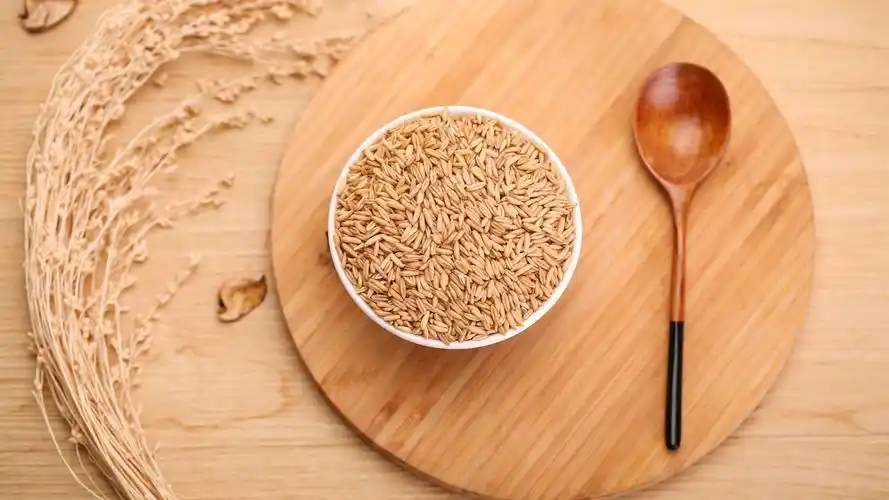
A long time ago, oats were not a popular grain. It was mainly used as animal feed and was also considered a food that only the poor could afford. In the Greek and Roman eras, it was also despised as a weed or a diseased wheat plant. So how did oats rise among cereals and become popular all over the world, well-known to everyone, and become a highly respected food on people's tables?
Rich in protein, the protein content in oats is very rich (15.6%), which is 1.6-2.3 times that of rice and wheat flour, ranking first among cereals. Oat protein has high nutritional value and contains 18 kinds of amino acids, 8 of which are essential amino acids for the human body. The 8 essential amino acids are not only rich in content but also reasonably proportioned, close to the nutritional model recommended by FAO/WHO, and have high human utilization rate. Among them, the lysine content in oats is more than twice that of wheat and rice, and the tryptophan content is more than 1.7 times that of wheat and rice. Therefore, supplementing oat food can make up for the "lysine deficiency" caused by China's dietary structure;
The amino acid composition of oat protein is balanced, with 8 essential amino acids for the human body, and the content of lysine and tryptophan is relatively high. The lysine content is about twice that of wheat flour and japonica rice.
Oat lipids are mainly distributed in bran and endosperm. Among the more than 4,000 kinds of oats in the world, more than 90% of oats have a fat content of 5-9%, which is equivalent to 4-5 times that of rice and white flour, ranking first among all cereals. 80% of oat fat is unsaturated fatty acids, mainly monounsaturated fatty acids, linoleic acid and linolenic acid, of which linoleic acid accounts for 38.1%-52.0% of the fat content. Linoleic acid is the most important essential fatty acid for the human body. It has important physiological functions in the human body and can reduce the accumulation of cholesterol in the cardiovascular system.
Oats contain both soluble and insoluble dietary fiber. Dietary fiber is a natural organic polymer compound. It is a non-starch polysaccharide formed by the dehydration polymerization of monosaccharides. It cannot be decomposed by digestive enzymes in the human body, but it is an indispensable carbohydrate for maintaining health. It includes cellulose, hemicellulose, pectin, lignin, etc. According to its solubility characteristics, it can be divided into two categories: soluble fiber and insoluble fiber. Oats have both soluble and insoluble dietary fibers, so they are also known as the "noble" in the natural dietary fiber family. The total cellulose content of oats is 17-21%, of which soluble dietary fiber (the main component is β-glucan) accounts for about 1/3 of the total dietary fiber, which is significantly higher than other grains;
Oats are rich in vitamins including vitamin B1, vitamin B2, more vitamin E, niacin, folic acid, etc. Among them, the content of vitamin B1 and B2 is higher than that of rice, and the content of vitamin E is also higher than that of flour and rice. Oats are also rich in minerals, including calcium, iron, phosphorus, magnesium, zinc, copper, selenium, etc. In particular, the calcium content is significantly higher than that of wheat flour, rice, millet, buckwheat noodles, etc. The selenium content in oats is also very high, equivalent to 3.72 times that of wheat, 7.9 times that of corn, and 34.8 times that of rice.
Improving dyslipidemia
Studies have shown that compared with refined grains, daily intake of 3 g of β-glucan (equivalent to 60 g of oats) for 3-12 weeks can significantly reduce LDL-C (low-density lipoprotein cholesterol) by 0.66 mmol/L and TC (total cholesterol) by 0.60 mmol/L. The effect of oats in improving dyslipidemia may be related to its β-glucan and dietary fiber.
Studies have shown that β-glucan contained in oats can reduce the risk of cardiovascular disease, lower blood cholesterol levels, and lower blood pressure. β-glucan can reduce low-density cholesterol and total cholesterol that are harmful to the human body without affecting high-density cholesterol that is beneficial to the human body. Dietary fiber can absorb bile acid, reduce the absorption rate of fat, cholesterol, etc., and achieve the effect of lowering blood lipids.
Improve blood sugar effect
A systematic review of 15 randomized controlled trials showed that compared with foods such as wheat, daily intake of more than 3 g of β-glucan (equivalent to more than 60 g of oats) for more than 8 weeks can significantly reduce fasting insulin concentration by -6.29 pmol/L, and can reduce fasting blood sugar and glycosylated hemoglobin concentration. This may be related to the dietary fiber such as resistant starch and oligosaccharides contained in oats. Since they can only be absorbed after colon fermentation, the response to blood sugar is slow and stable, which is beneficial to the regulation of blood sugar in diabetics.
Increase satiety and promote defecation
Oats are rich in dietary fiber, especially soluble dietary fiber, which can slow down the speed at which the contents of the stomach enter the small intestine, making people feel full, which is beneficial for diabetics and obese people to reduce their food intake; insoluble dietary fiber can increase the water content of feces and facilitate defecation.
Anti-inflammatory and anti-cancer effects
Although epidemiological evidence on the relationship between oats and cancer is limited, cohort studies have shown that oat intake has a weak protective effect, which may be related to the anti-inflammatory alkaloid components AVAs and β-glucan in oats, which have anti-cancer and anti-inflammatory active ingredients.
Oat noodles:There are many proverbs circulating in the Northwest region, "One day of oat noodles and one day of cake, half a day of white noodles will break your waist", "Eat oat noodles for half a day, and drink a bowl of soup is just right", and the oat noodles here are flour processed from oats. Oat noodles have become much more obedient in the hands of residents in Shanxi and other places. They can be rolled into long oat noodle fish, rolled into tubes and arranged into honeycomb-like oat noodle nests, pressed into oat noodle noodles, and made into oat noodle dumplings, wonton stews, etc., with many varieties. Of course, oats can also be made into oatmeal bread and baked into snacks. To make it simpler, you can cook it with other grains to make grain porridge, and cook it with rice, millet, etc. to make oatmeal rice.
Oatmeal:The most common thing in the supermarket is oatmeal. According to different processing techniques and usage methods, it is divided into instant oatmeal and pre-cooked oatmeal. Instant oatmeal can be soaked in boiling water for a period of time and eaten directly, while pre-cooked oatmeal needs to be boiled in boiling water for 5-10 minutes. Add milk and a few nuts to the soaked/cooked oatmeal, and add a fruit, and it will be a good breakfast.


