A fruit flavored alcohol-free beer line can look simple at first. Choose a fruit, approve a label, fill the cans, and launch. In B2B product work, the first flavor must also fit the sales channel, alcohol claim, can format, and SKU plan. The goal is to build a product that buyers can explain, retailers can place, and consumers can recognize quickly.
Fruit flavor can make beer easier to approach and help private label beverage brands build lighter social drinking options for cafés, convenience stores, supermarkets, online bundles, and alcohol-free shelves. A good private label non alcoholic beer should still keep beer-inspired cues such as carbonation, foam, malt balance, and a clean finish.
Before selecting mango, grape, lemon, peach, or apple, the product role should be clear. A fruit beer can act as a light refreshment, a social beer alternative, a tropical summer drink, or an adult canned beverage for alcohol-free occasions.
Fruit is useful because it gives the drink an easier first impression. Mango can feel tropical and soft. Lemon can feel clean and refreshing. Grapes can create a richer fruit signal. Apple can feel crisp and familiar. Still, the fruit note should not cover the whole beer base. If the malt body is too weak, the product may taste like sparkling juice. If the sweetness is too high, it may lose the adult drinking cue that buyers expect from non alcoholic fruit beer. Early sample work should compare fruit aroma, malt feel, acidity, carbonation, and aftertaste together. The better sample is not always the sweetest one. It is usually the one that keeps the fruit clear while still giving the drink a beer-style finish.
A convenience store buyer may want a flavor that consumers can identify quickly from the shelf. A café or lunch channel may prefer a lighter taste that works with food. An online beverage brand may use mixed packs to test several flavors before scaling one or two winners. A distributor may prefer a safer fruit profile that does not require too much explanation. This is why alcohol free fruit beer should not be planned only by personal taste. The first flavor group should reflect channel use, label space, shelf color, carton plan, and repeat order potential. Mango may work well when the brand wants a tropical identity, while apple or lemon may be more practical for a softer entry into a new market.
A first launch does not need too many flavors. Too many SKUs increase artwork work, sample time, stock pressure, and sales explanation. A smaller and clearer flavor line can help the buyer test demand without making the project heavy before the first order.
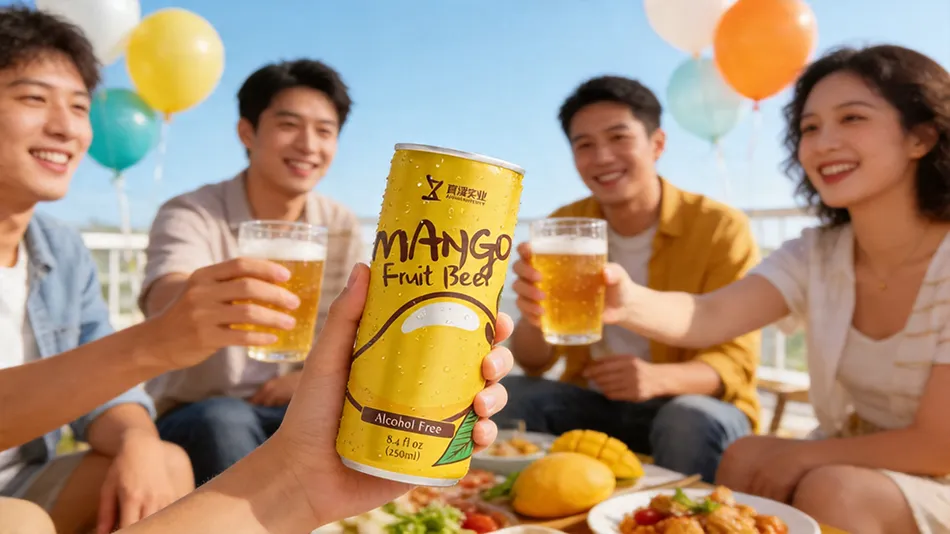
Apple, lemon, peach, orange, and grape are usually easier to explain because buyers and consumers already know the flavor direction. These options are useful for private label non alcoholic beer launches where the brand wants a lower-risk start. Mango, passion fruit, grapefruit, and coconut can give a fruit beer line more personality. They may suit summer promotions, tropical markets, younger retail shelves, or online beverage bundles. The ZhenXi 250ml Mango Flavored Non-Alcoholic Craft Fruit Beer is a practical reference for this type of concept, with 250 ml volume, aluminum can packaging, private label support, 20–25 days delivery time, 1 container MOQ, and 12 months above shelf life. Tropical flavors can create a stronger visual identity, but they also need tighter sweetness and acidity control.
|
Flavor route |
Launch role |
Volume reference |
Main sample risk |
Useful test focus |
|
apple or lemon |
entry flavor |
250 ml |
too plain or sharp |
acidity and clean finish |
|
peach or grape |
lifestyle flavor |
250 ml |
too sweet |
aroma and foam |
|
mango |
tropical lead SKU |
250 ml |
flavor fatigue |
sweetness and malt balance |
|
passion fruit or grapefruit |
distinctive SKU |
250 ml |
too sour or bitter |
finish and label clarity |
Fruit flavor attracts attention, but balance decides whether the drink can stay in the market. Buyers should judge the whole drinking experience, not only the first aroma from the can. This is especially important when the product is meant to sit between soft drinks and beer alternatives.
A practical ODM sample should compare several versions of the same flavor. One version may push fruit aroma. Another may increase acidity. Another may keep more malt body. Testing these versions together helps the buyer avoid a common mistake: approving a sample that tastes strong during the first sip but becomes tiring after half a can. For fruit flavored non alcoholic beer ODM work, the fruit note should be clear without hiding the beer base. Sweetness should support aroma, not replace structure. Acidity should refresh the finish, not create a sour soft drink feel. Beer body should be present enough to give the product an adult profile. This is especially important for mango and peach, because both can become heavy if sweetness is not controlled.
The difference between ODM and OEM matters because fruit beer projects often start with an idea rather than a fixed formula. Choosing the right cooperation route can save sample rounds and make the quotation work clearer.
ODM development fits buyers who know the market direction but still need help shaping the product. For example, a buyer may want a mango alcohol-free beer for a convenience retail channel but may not yet know the right sweetness, acidity, malt intensity, carbonation level, or can design direction. In this case, fruit flavored non alcoholic beer ODM support can turn a rough idea into a sample that can be judged and adjusted. OEM execution is more efficient when the buyer already has a clear product reference, artwork direction, target alcohol claim, can size, sample standard, and launch schedule. Even then, sample testing should not be skipped, because ingredient supply, carbonation setting, packaging material, and storage conditions can affect the final product.
A vague sample request often leads to slow feedback. A clear brief helps the buyer compare samples in a structured way and keeps formula work, packaging design, and export planning connected.
A useful brief should cover the commercial and technical points that affect the sample. The buyer should make decisions about the market, target consumer, channel, flavor group, alcohol claim, and packaging before asking for a final quote. One focused sequence can keep the work practical:
This sequence helps both sides avoid unclear sample comments. It turns tasting into a working brief for development, packaging, and production, which is especially useful for private label non alcoholic beer projects.
At this point, the key question is not who can make a beverage, but who can connect flavor, packaging, filling, proofing, and export work in one plan.
ZhenXi can support projects that need formula discussion, can size confirmation, sample testing, aluminum can packaging, mass production, can filling, and export coordination. Our beverage work covers multiple canned formats, including 250 ml, 330 ml, and 500 ml options, and our process can connect R&D formulation with can design and production planning. This is useful for private label beverage brands that do not want fruit flavor, alcohol claim, artwork, and filling schedule handled as separate tasks. A practical route is to start with a clear flavor role, test the sample carefully, and scale only after the channel direction is confirmed.
A first fruit beer line should be simple enough to launch and strong enough to expand. Two or three flavors with different roles may be more useful than a broad range that is difficult to explain.
Before moving to mass production, buyers can review How is Non Alcoholic Beer Made and Why Does Craft Non Alcoholic Beer Taste So Good for more background on non alcoholic beer process and flavor retention. When the project brief is ready, share your fruit beer project plan with our service team so the next step can focus on sample direction, can format, artwork status, and order planning. A good non alcoholic fruit beer is built from a clear product role, controlled sweetness, credible beer cues, and a production plan that fits the first launch.
Q: What fruit flavor is safest for a first alcohol free fruit beer launch?
A: Familiar flavors such as apple, lemon, peach, orange, and grape are often easier to recognize. Mango can also work when the brand wants a tropical identity. The safer choice depends on channel, label design, and sample balance.
Q: Is ODM better than OEM for fruit flavored non alcoholic beer?
A: ODM is better when the buyer needs help shaping flavor, beer body, sweetness, acidity, carbonation, and packaging. OEM is more efficient when the buyer already has a fixed formula direction, artwork, alcohol claim, can size, and sample standard.
Q: How can fruit beer avoid tasting like soda?
A: The formula should keep beer-inspired cues such as malt balance, foam, carbonation, acidity, and a clean finish. Fruit aroma can make the drink more approachable, but it should not remove the adult beer-style profile.


