A fruit beer line does not fail only because the flavor is wrong. It often fails because the flavor is easy to copy, hard to position, or too close to soda. For private label buyers, peach, grape, and mango may look safer in a first brief, but they can also place the product beside many similar sweet canned drinks. Passion fruit beer gives a different route: tropical aroma, clear acidity, and a lighter finish that can feel more adult when the formula still keeps beer-inspired cues.
A non alcoholic fruit beer ODM project should start with the product role, not only a flavor name. The buyer needs to decide whether the drink should work as a light refreshment, a social beer alternative, a summer SKU, or a trial item for alcohol-free shelves. Once that role is clear, passion fruit can be judged by sweetness, acidity, carbonation, malt background, packaging size, and label claim.
Common sweet flavors are easy to explain. Peach sounds soft, grape sounds rich, and mango sounds tropical. These choices can work for low-risk launches, but they do not always create a clear shelf signal. Passion fruit beer gives the product a sharper cue. It is still recognizable, yet its tart edge gives the drink more energy.
That sharper profile matters because a fruit-led beer alternative has to sit between two expectations. It should be easier to drink than traditional beer, yet it should not taste like ordinary sparkling juice. Passion fruit can help because its acidity supports a cleaner finish and reduces the need for heavy sweetness.
For distributors, cafés, convenience stores, and online bundle brands, the sweet-tangy route can be easier to position as a refreshing adult beverage.
A strong passion fruit argument should not pretend that every familiar flavor is weak. Peach, grape, mango, and lemon all have valid roles. The better question is whether the launch needs broad recognition or a sharper difference.
The useful decision is not “which fruit is best.” It is “which fruit does the job of this SKU?” The table below gives a simple starting point for a buyer brief.
|
Flavor route |
Typical launch role |
Common volume |
Main sample risk |
Test focus |
|
Peach |
soft lifestyle SKU |
250ml |
too sweet |
aroma and finish |
|
Grape |
richer fruit SKU |
250ml |
juice-like profile |
color, foam, aftertaste |
|
Mango |
tropical lead SKU |
250ml |
heavy sweetness |
sweetness and malt balance |
|
Passion fruit |
differentiated ODM SKU |
250ml |
too sour |
acidity, carbonation, finish |
The table is not a replacement for sampling. It shows why a sharper fruit route needs a different test standard: clean tartness, controlled sweetness, and beer character after several sips.
A vague request, such as “make it passion fruit flavor,” creates slow sample rounds. The supplier still has to guess the target channel, sweetness, alcohol claim, carbonation level, can size, and label direction. A better brief gives enough commercial and sensory detail before the first sample is made.
Before the technical part starts, the buyer should connect the drink with its sales scene. A convenience store SKU may need fast shelf reading. A café or lunch channel may need a lighter drinking profile. An online brand may test the item in a mixed fruit pack before scaling the winner.
For private label beverage brands, the drinking scene should guide the formula. A tropical summer drink can carry brighter acidity and a more colorful label system. A supermarket beer alternative may need more malt background and less fruit sweetness. A hospitality buyer may care more about how the drink looks in a glass, whether the foam appears stable enough, and whether the finish works with food.
This is also where size matters. A 250ml aluminum can works well when the brand wants a lighter trial format, a tasting pack, or a fruit-led shelf item. It does not need to copy the fullness of a 500ml beer-style product. Still, the smaller format should protect the beer idea. If the drink becomes too sweet, too flat, or too thin, the product position becomes harder to defend.
A clear sample process saves time because every side judges the same points. It also keeps flavor work, packaging work, and production planning connected. For a non alcoholic fruit beer ODM project, one practical sample sequence can be:
This sequence is simple, but it prevents late changes. Many delays happen because the label moves faster than the formula. If the alcohol claim, taste target, and packaging route are fixed too late, the project may need another round of proofing or sample adjustment.
The ZhenXi 250ml Passion Fruit Flavored Non-Alcoholic Craft Fruit Beer fits this topic because it uses a 250ml aluminum can format and supports private label production. The product direction combines tropical fruit flavor with a light beer-style base, so it is more relevant to a fruit-led launch than a full malt-led beer replacement.
At this stage, company support should stay practical. At ZhenXi, we usually check whether the buyer needs formula discussion, can format confirmation, label direction, sample testing, filling, and export planning in one workflow.
The product information gives buyers several firm points for early planning: 250ml volume, aluminum can packaging, 12 months above shelf life, 20–25 days delivery time, 1 container minimum order quantity, and private label support. Custom formula work can also cover alcohol adjustment, sugar level control, fruit concentration customization, and carbonation level adjustment.
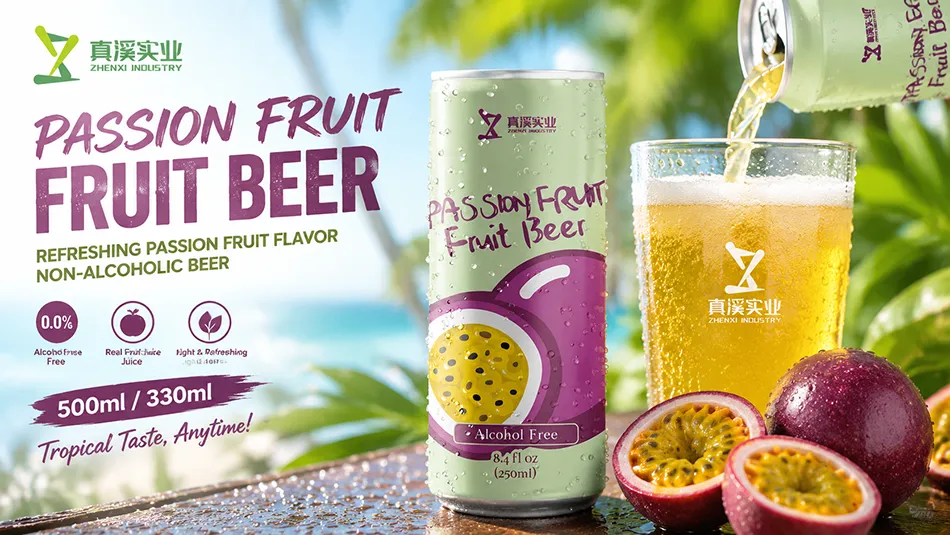
The biggest risk in fruit flavored non alcoholic beer is not weak fruit. It is a weak product structure. A sample may smell attractive when opened, but after several sips, it may taste like sweet sparkling juice. That is a problem for buyers who want beer-inspired value.
The formula should keep a balance. The aroma should be clear, the acidity should refresh the finish, and the sweetness should not cover the malt background. Carbonation also has to be set with care. Too little carbonation can make the drink feel flat. Too much can make the fruit's acidity feel sharp.
For ODM work, the buyer should ask for several sample versions rather than one final sample too early. One version can push fruit aroma, another can reduce sugar, and another can keep more beer body. Side-by-side tasting gives a better decision.
The package should make the product easier to sell, not just more colorful. The label should be clear about the product type, alcohol claim, volume, and brand position. A buyer should also check whether the artwork makes the drink look like beer, fruit soda, or a general juice drink. That visual choice affects where retailers place the product.
ZhenXi’s non-alcoholic beer collection shows how several 250ml fruit beer products can sit within one alcohol-free category. This is useful for buyers who plan a line rather than one isolated SKU. Passion fruit may act as the more distinctive flavor, while grape, lemon, coconut, or mango can support different taste roles.
For private label beverage brands still shaping the production route, the service gives a useful view of the work steps: requirement discussion, R&D formulation, can size confirmation and design, sample testing, mass production and can filling, then export and shipping.
This flavor route is not the safest option for every launch. It needs careful acidity control and a clear label. But it becomes a better choice when the buyer needs a bigger difference and a refreshing tropical profile.
Choose common sweet flavors when the channel needs low-risk recognition. Choose a sharper tropical SKU when the brand needs bright aroma, controlled sweetness, and a clean finish. Choose ODM when the product idea still needs shaping. Choose OEM only when the formula, artwork, alcohol claim, and sample standard are already clear.
Teams that want more background on the beer process and flavor retention can also read How is Non Alcoholic Beer Made and Why Does Craft Non Alcoholic Beer Taste So Good before finalizing the brief. If your team is preparing a fruit beer launch, share your target market, flavor direction, can format, and artwork status with us through a project discussion request. A focused brief makes sampling more useful.
Q: Is passion fruit suitable for a first fruit beer launch?
A: Yes, when the brand wants a more distinctive tropical profile rather than a very familiar sweet flavor. It is a useful choice for summer retail, online mixed packs, younger alcohol-free shelves, and brands that want a brighter identity.
Q: Is ODM better than OEM for this product type?
A: ODM is usually better when the buyer still needs help shaping the flavor, fruit concentration, sweetness, carbonation, alcohol claim, and packaging route. OEM is more efficient when the buyer already has a fixed formula, confirmed artwork, clear can size, target claim, and approved sample standard.
Q: How can this product avoid tasting like soda?
A: The formula should keep beer-inspired cues such as light malt background, carbonation, foam behavior, controlled sweetness, and a clean finish. Fruit aroma can lead the taste, but it should not hide the beer's character.


