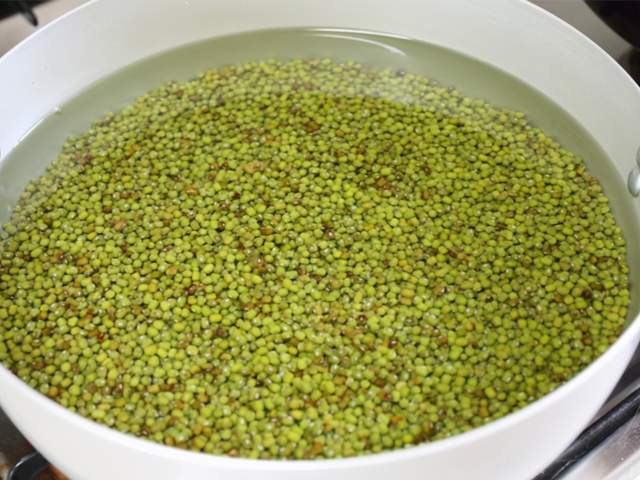
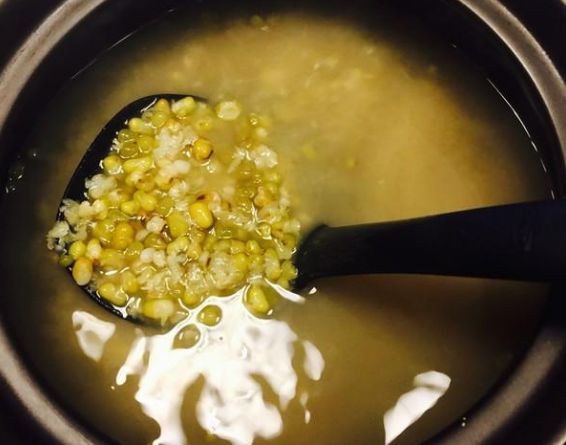
Mung bean soup is a soup made with mung beans and water as the main ingredients. It has the effects of clearing heat, detoxifying, quenching thirst and relieving summer heat. Mung bean soup is rich in nutrients and is a soup with high economic and nutritional value. The cooking method of mung bean soup varies depending on the region and personal taste, but the basic preparation steps include washing the mung beans and soaking them for a period of time (usually a few hours or overnight), then adding water to boil, then reducing the heat and simmering until the mung beans are cooked. Finally, add an appropriate amount of sugar or other seasonings to taste according to your personal taste.
Mung bean soup has a long history of consumption among Chinese people. Especially in summer, people often drink mung bean soup to relieve heat and cool down. In addition, mung bean soup also has certain medicinal value. It can clear away heat, detoxify, diuresis and reduce swelling. It also has certain auxiliary effects in the treatment of heat stroke, food poisoning, etc. However, it should be noted that although mung bean soup has many benefits, it is not suitable for everyone. Especially people with cold constitution and weak spleen and stomach should drink it in moderation or avoid drinking it. At the same time, when cooking mung bean soup, you should also pay attention to the control of heat and time to avoid overcooking or undercooking, which will affect the taste and nutritional value.
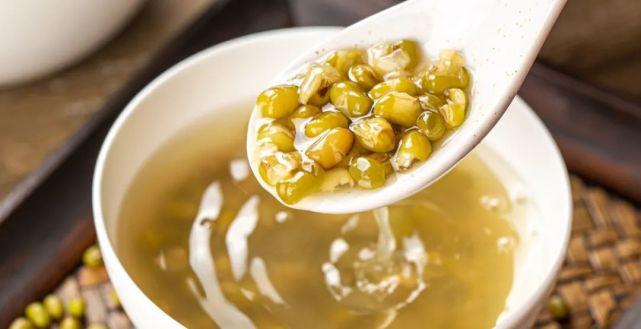
Each 100 grams contains 22.1 grams of protein, 0.8 grams of fat, 59 grams of carbohydrates, 4.2 grams of crude fiber, 49 mg of calcium, 268 mg of phosphorus, 3.2 mg of iron, and 1.8 mg of carotene. Vitamin B1 0.52 mg, vitamin B2 0.12 mg, niacin 1.8 mg. The proteins contained are mainly globulin, which contains relatively small amounts of methionine, tryptophan, and tyrosine. Among the phospholipid components of mung beans, there are phosphatidylcholine, phosphatidylethanolamine, phospholipid phthalinositol, phosphatidic acid glycerol, and phospholipids. Phenolserine, phosphatidic acid, etc.
Clear away heat and detoxify: Mung bean soup has the effect of clearing away heat and detoxifying, which is the core of its heat-reducing effect. Mung beans are cold in nature and can remove heat evil from the body and help the body expel toxins, thereby achieving the effect of clearing away heat and detoxifying. In the theory of traditional Chinese medicine, summer heat is often regarded as a "heat evil". Mung bean soup can effectively relieve the uncomfortable symptoms caused by summer heat, such as fever and thirst, through its heat-clearing and detoxifying effects.
Cool down and relieve heat: Mung bean soup also has a good cooling effect. In hot summer, the human body is prone to excessive sweating due to high temperatures, leading to an imbalance of water and electrolytes in the body. The water and minerals in mung bean soup can help the body replenish water and electrolytes and relieve thirst and fatigue. At the same time, mung bean soup can also help the body dissipate heat and reduce body heat, making people feel refreshed and comfortable.
Diuresis and swelling reduction: Mung bean soup also has diuretic and swelling effects. In the theory of traditional Chinese medicine, dampness and heat are one of the important causes of discomfort in the human body. Through its diuretic and dehumidifying effect, mung bean soup can help the body eliminate excess water and moisture in the body, thereby relieving symptoms such as edema and reduced urine output caused by dampness and heat.
Improve digestion: Mung bean soup is rich in dietary fiber, which helps improve digestive function. In summer, people are prone to symptoms such as gastrointestinal discomfort and indigestion due to high temperatures and improper diet. The dietary fiber in mung bean soup can promote intestinal peristalsis and help digest food, thereby alleviating these symptoms.
Supplement nutrition: Mung bean soup is also rich in nutrients, such as vitamins B1, B2, C and minerals. These nutrients play an important role in maintaining normal physiological functions of the human body. In the high temperature environment in summer, human body metabolism accelerates, and the demand for nutrients also increases accordingly. As a nutrient-rich drink, mung bean soup can provide necessary nutritional support to the human body.
Protect kidney health: Experts believe that the trypsin in mung beans can help reduce protein decomposition and reduce the damage caused to the kidneys by protein decomposition, so it can play a role in protecting kidney health. In fact, the kidneys are the innate foundation of the human body and play a role in the kidneys. The protective effect can naturally reduce the troubles of many diseases.
Protect cardiovascular health: It is known that the polysaccharides contained in mung beans can enhance the activity of serum lipoproteins, thereby promoting blood lipid balance and thus protecting cardiovascular health. In addition, this kind of globulin and polysaccharide can also promote the decomposition of cholesterol in animals, so it can reduce the absorption of cholesterol by the human body, thereby playing a role in preventing the three highs. The combination of the two can greatly reduce summer high temperature bursts. The probability of developing angina pectoris, coronary heart disease, arteriosclerosis and other heart diseases.
Promote appetite: Due to the hot weather, it is easy to suffer from loss of appetite in summer. Mung beans are rich in protein, phospholipids and other elements, which can not only supplement the nutrients needed by the body, but also play a role in stimulating nerves, thus Promote appetite.
Lower cholesterol: Mung beans contain a type of globulin and polysaccharide, which can promote the decomposition of cholesterol in animals into cholic acid in the liver, accelerate the secretion of bile salts in bile and reduce the absorption of cholesterol in the small intestine. This has a certain auxiliary effect in preventing and treating cardiovascular diseases such as hyperlipidemia and high cholesterol.
Regulate the gastrointestinal tract: The dietary fiber in mung beans has a certain protective effect on the gastric mucosa and can relieve gastric discomfort. At the same time, it can also promote intestinal peristalsis, help excrete waste, and relieve problems such as constipation and bloating. For stomach discomfort caused by irregular eating or drinking, mung bean soup may have a certain conditioning effect.
Prepare ingredients: appropriate amount of mung beans (generally determined based on the number of people eating and the size of the container. For example, 100 grams of mung beans can make about 4-5 medium-sized bowls of mung bean soup), appropriate amount of water (generally the ratio of mung beans to water is 1:10 to 1: 15), appropriate amount of rock sugar or white sugar (adjust according to personal taste).
Clean mung beans: Put the mung beans into clean water, stir gently for a few times to remove dust and impurities on the surface, and then rinse with clean water.
Soak mung beans: Put the cleaned mung beans into a bowl and add enough water to soak. The soaking time is generally 2-3 hours. You can also soak the mung beans one night in advance so that the mung beans are easier to cook.
Cook mung bean soup:
Pour the soaked mung beans and the water used to soak the beans (or fresh water) into the pot, bring to a boil over high heat, then reduce to low heat and simmer.
Pay attention during the cooking process and stir regularly to prevent the mung beans from sticking to the pot.
Cook until the mung beans cracked, the soup turns green and the beans are soft. Add an appropriate amount of rock sugar or white sugar according to personal taste, and continue cooking until the sugar is completely dissolved.
5. Cool or refrigerate: Pour the cooked mung bean soup into a bowl, let it cool naturally or put it in the refrigerator before eating for a better taste.
Barley and mung bean soup: On the basis of cooking mung bean soup, add an appropriate amount of barley and cook it together. It has the effects of clearing away heat and dampness, strengthening the spleen and stomach.
Lily and Mung Bean Soup: Adding lily slices to mung bean soup can moisten the lungs, relieve cough, clear the heart and calm the mind.
Pumpkin and Mung Bean Soup: Peel and cut the pumpkin into pieces and cook it together with the mung beans. The sweetness of the pumpkin complements the refreshing taste of the mung beans.
It is generally believed that when cooking mung beans with rice, it is called porridge, and without rice, it is called soup; when cooking mung bean soup, the mung beans are not cracked, which is called mung bean water, and when the mung beans are cooked and cracked, it is called soup. When cooking mung bean porridge, removing the mung bean skin will affect the fire-reducing effect. The mung bean skin is more cooling. "Mung Bean Yi" has the functions of clearing away heat and detoxifying, reducing swelling, dispersing nebula and improving eyesight. As a summer drink to relieve the heat, it is generally better to eat it with mung bean soup, but if you feel uncomfortable or uncomfortable, you can also brush off the mung bean shells after the soup is cooked. I actually recommend eating it.

As a common drink in summer, mung bean soup has the effects of clearing heat, detoxifying, quenching summer heat and quenching thirst, but there are some taboos and precautions when drinking it.
People with cold constitution should drink it with caution: Mung bean soup is cold in nature. People with cold constitution and weak spleen and stomach should avoid drinking it to avoid aggravating the cold in the body and causing abdominal pain, diarrhea and other symptoms.
Women during menstruation should avoid drinking it: The cold nature of mung bean soup may aggravate abdominal pain and body coldness of women during menstruation, so it is recommended to avoid drinking it.
Avoid taking it together with traditional Chinese medicine for treating spleen and stomach deficiency: the cold nature of mung bean soup may offset or weaken the efficacy of traditional Chinese medicine for treating spleen and stomach deficiency, and may even aggravate the condition.
Avoid drinking on an empty stomach: Drinking mung bean soup on an empty stomach may irritate the spleen and stomach and cause discomfort. People with cold constitutions should pay more attention.
Avoid excessive or long-term consumption: Although mung bean soup is rich in nutrients, excessive or long-term consumption may lead to a lack of nutrition and even cause uncomfortable symptoms such as abdominal bloating.
Mung beans need to be soaked in advance: Mung beans contain oxalic acid and other substances. Soaking them in advance can remove part of the oxalic acid and reduce irritation to the human body. It is generally recommended to soak for 2-3 hours, or even overnight.
Mung beans need to be cooked: The oxalic acid and certain toxins in mung beans can only be destroyed at high temperatures, so you must ensure that the mung beans are cooked before eating.
Avoid cooking in an iron pot: flavonoids and other substances in mung beans may react with metal ions in the iron pot, causing the mung bean soup to turn black, reduce nutrition, and even produce harmful substances. It is recommended to use a casserole, stainless steel pot or rice cooker to cook mung bean soup.
Do not add alkali: Adding alkali when cooking mung bean soup will accelerate the destruction of vitamin B in mung beans and reduce its nutritional value.
Don’t add sugar arbitrarily: Adding sugar to cooked mung bean soup will increase the sweetness, but excessive sugar intake is bad for health. It is recommended to wait until the mung bean soup is cooked before adding sugar or honey to taste according to personal taste.
Avoid overdrinking after cooling: Although iced mung bean soup tastes better, long-term refrigeration or freezing may have adverse effects on the spleen and stomach. It is recommended to drink warm or room temperature mung bean soup in moderation.