Lager beer and ale beer, as the two giants in the beer world, each carries a rich historical heritage and unique flavor charm. Lager beer and ale beer are two different types of beer. They are not only very different in production process, but also show distinct personality in taste, flavor and application scenarios.
"Ale" and "Lager" refer to the fermentation method of beer. "Ale" uses top fermentation, and the yeast floats on the wort with high fermentation temperature, retaining the aroma of hops to the greatest extent. Due to different fermentation methods, ale beer will first smell the aroma of hops, yeast and other natural auxiliary materials, and then the fragrance of malt. Lager is just the opposite. First, you will feel the aroma of malt, and then the taste of yeast and hops. Most craft beers belong to ale. "Lager" uses bottom fermentation, the yeast sinks below the wort, and the fermentation temperature is lower. This fermentation method is easier to industrialize.
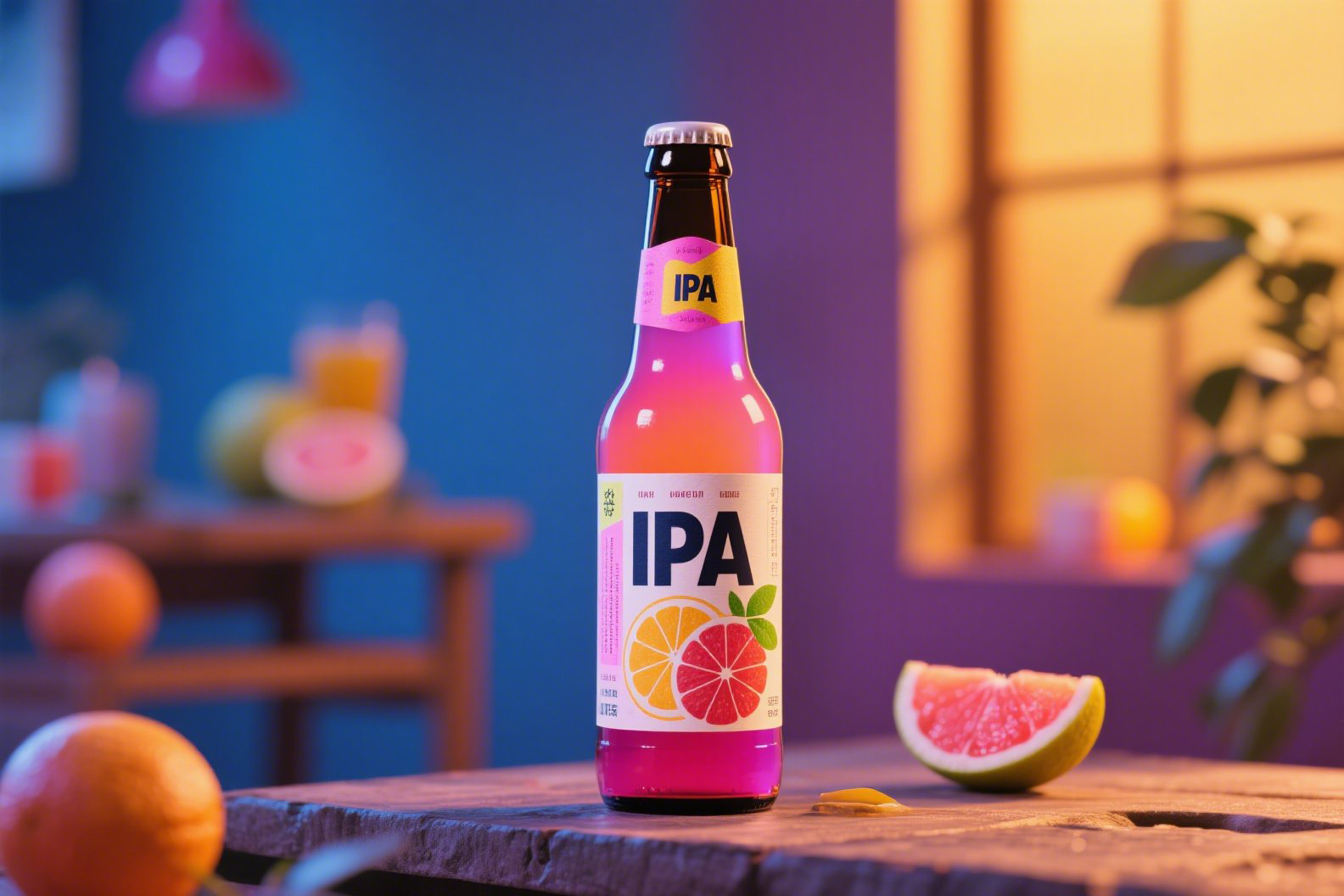
Ale, also known as top fermentation. In beer fermented in this way, the yeast is located at the top of the beer liquid and ferments by gathering a large amount of foam on the surface. This fermentation method is suitable for a high temperature environment, about 16℃~24℃ is the best, so that the fermentation metabolites can be more diverse. For example, acyl and ester substances will be produced, which greatly affect the flavor of beer and are also an important source of the complex aroma in ale beer.
It is reported that "Ale" beer was successfully brewed by the British in the Middle Ages and was very popular among princes and nobles. There are also rumors that Ale beer may be the earliest beer of mankind, which first appeared in 6000 BC and began to be brewed on a large scale in European monasteries in the seventh century AD.
The original Ale beer did not add hops. Later, people gradually discovered that adding hops during the fermentation process could not only extend the shelf life, but also increase the bitterness and aroma of the beer. Nowadays, ale beer is amber in color, translucent in appearance, with rich and delicate foam, long-lasting hanging cup, rich aroma, and balanced and pleasant malt aroma, ester aroma, and hop aroma.
In ale beer, there are some specific subdivisions, such as pale ale, IPA, APA, brown ale, amber ale, strong ale, wheat beer, porter, stout, etc.
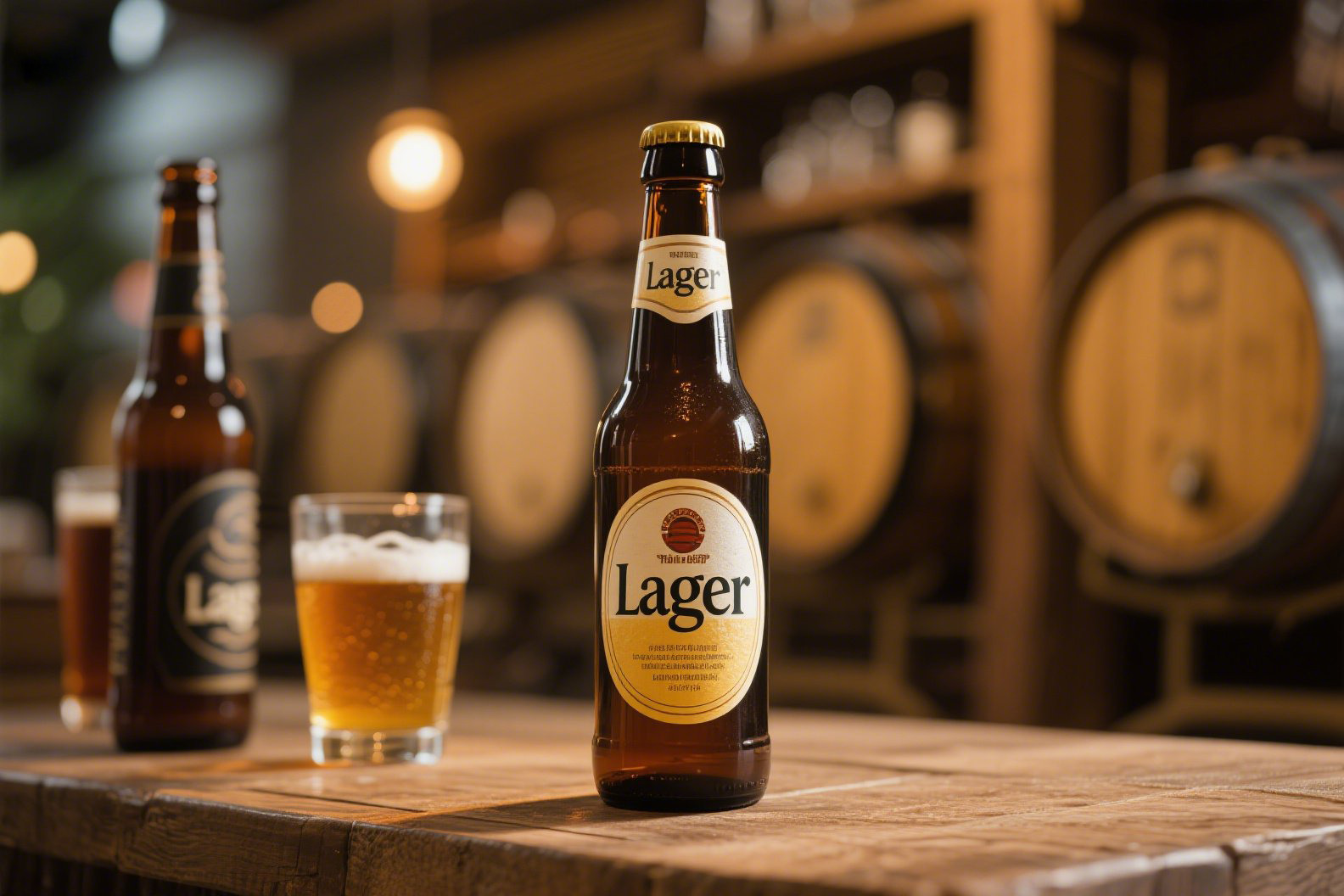
Lager, also known as bottom fermentation. When lager beer is fermented, the yeast is at the bottom of the liquid, the fermentation temperature requirement is low, and the alcohol content is low. Because the yeast sinks to the bottom of the fermented mash, the yeast is mainly based on a single alcohol metabolism, so the taste of lager beer is simpler, mainly the original flavor of barley and wheat.
It is understood that the early lager originated in northern Germany. The climate in northern Germany is cold. After brewing, the locals put it in a cold cave for cellaring. The low temperature is just right for the fermentation of lager yeast, so this kind of cellar beer was created.
After humans entered the industrial age, low-temperature fermentation was no longer a problem. Lager is more suitable for large-scale fermentation. For example, a fermentation tank can easily ferment 20 tons, 50 tons or even more, while ale fermentation is extremely difficult to reach this level. Batch production lines, filling lines, and logistics lines have dramatically reduced the production cost of lager, and it has eventually become popular all over the world. Currently, about 90% of the beer produced in the world is lager.
Lager beer also includes some sub-categories, such as pale lager, dark lager, pilsner, bock, etc.
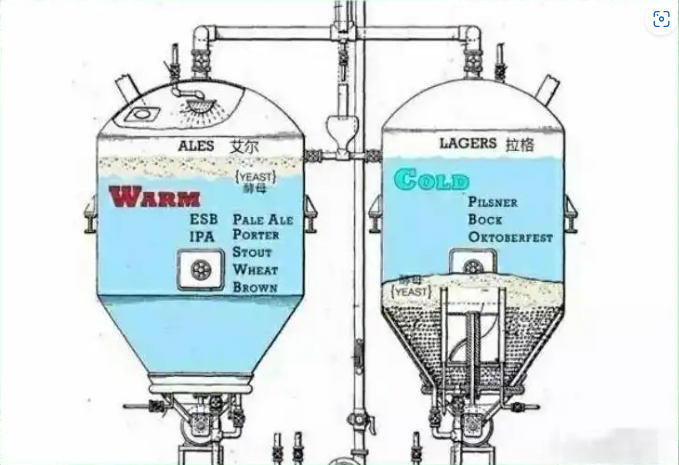
The main difference between lagers and ales lies in yeast type, fermentation temperature, and brewing time:
|
Feature |
Ale |
Lager |
|
Yeast Type |
Saccharomyces cerevisiae (top-fermenting) |
Saccharomyces pastorianus (bottom-fermenting) |
|
Fermentation Temp. |
15–24°C (59–75°F) |
7–13°C (45–55°F) |
|
Fermentation Time |
2–3 weeks |
4–6 weeks (sometimes months) |
|
Flavor Profile |
Fruity, complex, bold |
Crisp, clean, smooth |
|
Popular Styles |
IPA, Stout, Pale Ale, Porter |
Pilsner, Helles, Bock, Dunkel |
|
Craft Beer Prevalence |
Very common (80%+ of craft beers) |
Less common (but growing) |
IPA (India Pale Ale): The earliest British pale ale beer appeared in India. IPA beer is dry, dark amber, contains a lot of hops, has a bitter taste, a warm aftertaste, and often has a tropical fruit flavor.
APA (American Pale Ale): In November 1980, the Sierra Nevada Brewery in the United States brewed the first experimental American pale ale beer. APA beer has a relatively light malt flavor, a more obvious bitterness, a richer flavor, and often has some citrus fruit aroma.
Porter: A dark, malty, slightly roasted ale. Unlike brown ale, porter is stronger, richer, darker, and has more roasted malt flavor. It is very similar to stout, another branch of ale, both are black, and have aromas of coffee, toffee, caramel, barley, oats, nuts, etc.
Pilsen: Born in the Czech Republic, it is now all over the world. It is a light-colored lager beer, refreshing and refreshing, with a light hop bitterness. Pilsen uses the bottom fermentation method. It is a lager beer brewed with light malt and hops with a stronger bitterness. The maximum wort concentration does not exceed 12.5 degrees.
Dark Lager: The color ranges from amber to very dark reddish brown, and the alcohol content is generally between 4.5% and 6%. It usually has flavors such as roasted, cocoa beans and caramel, and has a softer and fuller taste. German stout is a well-known dark lager.
In the era of immature technology, the brewing process of lager (the brewing process of industrial beer) was very complicated, which once made it one of the most expensive beers. In that era, lager was also considered "craft beer". If it were not for the progress of industry, you would not be able to drink lager beer.
However, as a representative of "advanced culture", craft beer, coupled with the packaging and investment of the brewery, does give craft beer a higher value. In addition, the cultural experience and unique satisfaction brought by craft beer, and the unique "brewing freedom" spirit of craft beer are not available in industrial beer. There is no doubt that it can better meet the middle-class consumers' pursuit of beautiful and unique things.
As consumerism continues to become mainstream, craft beer will continue to gain momentum. However, there is no opposition between lager and ale.
Whether you like hoppy IPA or refreshing craft lager, the charm of craft beer lies in its diversity. The next time someone asks, "Is craft beer lager or ale?", you can confidently say, "Both - and more!"


