Many buyers ask for a unit price before the product idea is firm. That is reasonable in purchasing work, but it often leads to a weak quote. A canned non alcoholic beer project is not priced only by liquid volume. The quote can change with formula route, alcohol statement, sample work, aluminum can size, private label packaging, MOQ, certificates, and delivery timing.
For a non alcoholic beer OEM project, the better question is not “How much per can?” It is “What is included in the price, and what still needs confirmation?” This article explains the pricing points buyers should prepare before asking an alcohol free beer manufacturer for a formal quote.
Price changes when the product role changes. A light fruit-led can, a beer-style 500ml can, and a private label launch for retail shelves may belong to the same category, but they do not need the same work. Before discussing non alcoholic beer production cost, buyers should define the product they want to sell.
Formula direction is usually the first cost driver. A fruit-led alcohol-free beer may need a softer flavor system, brighter acidity, and easy first-sip appeal. A beer-style product may need malt body, foam control, bitterness balance, and a cleaner finish. If the buyer asks for a 0.0% label, a below-threshold alcohol statement, or a closer match to a market sample, the sample stage may need more time. This does not mean one route is always expensive. It means the supplier needs enough detail before giving a quote that can stay useful after a sample discussion. A short brief should include target market, taste direction, alcohol wording, can size, packaging form, and first order scale.
Can size is not only a visual choice. A 250ml can can suit cafés, lunch sets, convenience stores, and trial shelves. A 500ml can may fit a fuller beer-style drinking occasion, restaurant table service, or adult social use. Buyers comparing the non-alcoholic beer range can review fruit-led 250ml references and larger beer-style options before asking for a final quote. For canned non alcoholic beer, the right size affects liquid cost, carton weight, cold shelf space, warehouse planning, and customer perception. If the can format changes after quotation, the price may also change. That is why size should be fixed early, even when the artwork is still being prepared.
A useful quote should help buyers compare options. It should not hide every variable inside one attractive number. The quote should show what belongs to the liquid, what belongs to packaging, and what belongs to private label work.
Liquid development may include sample adjustment, flavor matching, sweetness balance, carbonation discussion, and alcohol statement review. Packaging may include aluminum can format, printed can setup, carton design, shrink wrapping, and pallet planning. These two areas move at different speeds. A buyer may approve the liquid quickly but delay the can artwork. Another buyer may have artwork ready but still needs formula adjustment. At ZhenXi, we usually discuss the product route and the packaging route together, while keeping the cost logic clear. This helps buyers judge whether the current non alcoholic beer production cost fits a trial order, a regional launch, or a long-term private label plan.
MOQ links factory efficiency, raw materials, printing setup, and production scheduling. Some finished beverage products may use one container as a commercial reference, while custom printed aluminum cans may have higher minimums by design, can type, or printing route. Buyers should not assume that every low-volume trial can use full custom printing. A standard reference SKU, sticker label, or separate proofing stage may be more practical at first. For private label non alcoholic beer, the quote should state whether the MOQ refers to liquid production, printed cans, carton packaging, or finished goods. These are connected, but they are not always the same commercial point.
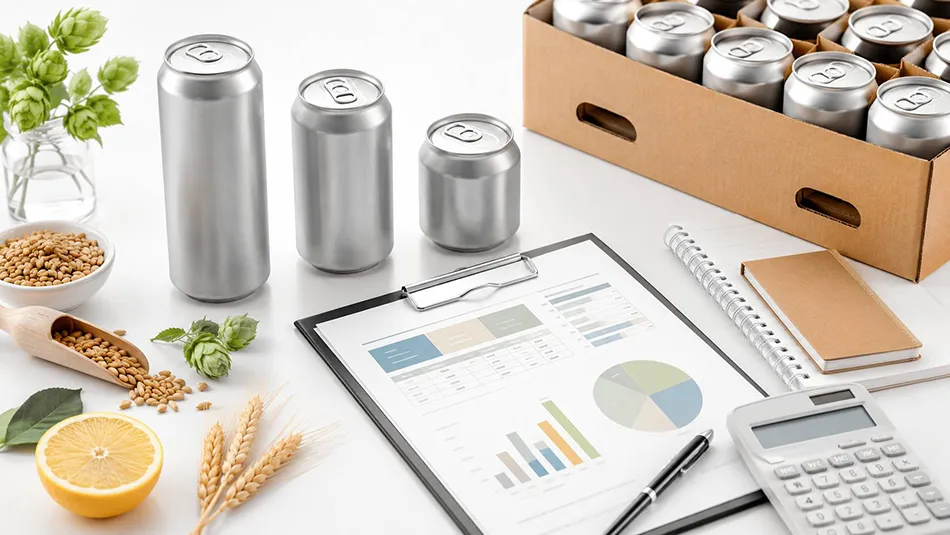
A simple table makes the quote request easier to answer. It also reduces confusion between purchasing, marketing, and product teams. The figures below are planning references only. Final values should be confirmed by exact SKU, artwork, production plan, and destination market.
|
Quote Item |
Planning Reference |
What It Affects |
|
Fruit-led trial can |
250ml / 8.4 oz |
Sampling and retail trial |
|
Beer-style can |
500ml / 16.9 oz |
Adult drinking occasion |
|
Delivery after order |
20–25 days reference |
Launch calendar |
|
First order discussion |
1 container reference |
Commercial quote basis |
|
Sample timing |
about 1 week, longer in peak season |
Internal review plan |
A table does not replace the final quotation, but it helps both sides talk about the same project. One alcohol free beer manufacturer may quote only the liquid. Another may include sample work, private label packaging, printed cans, cartons, and documents. The lower price may not be the better quote if the scope is not equal. Buyers should ask whether the quote includes formula samples, artwork review, printing setup, carton design, certificate support, and export documents. This is especially important for canned non alcoholic beer, because a beverage launch often includes several teams. Purchasing may focus on price. Marketing may focus on design. Sales may focus on channel fit. The table keeps those decisions connected.
A quote becomes more useful when the buyer prepares the right information before the first message. This does not need to be a long technical file. It only needs to be complete enough for the supplier to estimate formula work, packaging work, and production timing.
The target market and channel can change the quote. A supermarket product may need strong flavor recognition and clear label wording. A restaurant product may need better pairing language. A bar or banquet product may need a stronger beer identity. A convenience store product may need a low-risk can size and easy cold shelf placement. Buyers should also mention the destination market because alcohol wording, nutrition labels, and documents may vary by country. A supplier cannot judge the right private label non alcoholic beer plan from the flavor name alone. Buyers who are still organizing the project can use the OEM and ODM beverage service page as a reference for customization discussions.
A clear quote brief saves more time than a long exchange of scattered messages. Buyers can prepare it in this order:
This is the only ordered checklist needed at the start. It gives the supplier enough information without turning the first inquiry into a technical manual. It also helps buyers compare quotations fairly. If two suppliers receive different briefs, their quotations may not be comparable.
The lowest unit price can be useful, but it should not be the only decision point. A safer comparison checks the scope, open assumptions, and whether the supplier can support the next stage after pricing.
A low quote may leave out sample adjustment, proofing, custom printing, carton preparation, certificates, or export support. It may also be based on a standard product while the buyer expects a private label launch. Buyers should ask every supplier to quote the same scope: formula route, aluminum can size, printing method, MOQ, shelf life reference, delivery timing, payment terms, and documents. A reasonable non alcoholic beer production cost should support the product’s channel role, not only look attractive in a spreadsheet. For more background before comparing samples, buyers can read How is Non Alcoholic Beer Made and Why Does Craft Non Alcoholic Beer Taste So Good.
Non alcoholic beer OEM pricing is shaped by formula route, aluminum can size, private label work, MOQ, samples, packaging, delivery timing, and document support. Buyers who prepare a clear brief can receive a quote that is easier to compare and easier to turn into a real launch.
When your team is ready to check pricing for canned non alcoholic beer, send your alcohol-free beer quote brief with target market, flavor route, can size, artwork status, first order plan, and expected launch timing.
Q: Why do non alcoholic beer OEM prices vary between suppliers?
A: Prices vary because suppliers may quote different scopes. One quote may include only the liquid, while another may include samples, packaging, printed aluminum cans, cartons, documents, and delivery planning.
Q: What should buyers provide before asking for a quote?
A: Buyers should provide target market, sales channel, can size, flavor direction, alcohol statement, artwork status, first order quantity, and launch timing.
Q: Is private label non alcoholic beer more expensive than standard products?
A: It can be, depending on artwork, printing method, MOQ, sample adjustment, carton design, and document needs. Buyers should separate liquid cost from packaging and private label setup cost.


