Many consumers are looking for a drink that feels more social than soda but lighter than regular beer. This drink offers a more social experience than soda. At the same time, it remains lighter than regular beer. The existing gap accounts for the advantage of fruit-led alcohol-free beer. Convenience stores present additional opportunities. Supermarkets fall into the same group. Office gatherings represent another suitable environment. Alcohol-free menu sections complete the list. The beverage provides shoppers with a distinct fruit indication. In parallel, carbonation, foam, and a clean finish maintain its link to beer culture. Fruit-led non-alcoholic beer works best when the added fruit note supports, rather than replaces, the beer character. Mango, coconut, peach, apple, and grapefruit profiles can make the first sip more accessible, but the drink still needs balance so it does not become too sweet, thin, or juice-like.
Fruit flavor gives consumers a familiar starting point. Before shoppers read the full label, they may already have a taste expectation from the fruit name and color direction. That helps reduce hesitation, especially for people who do not usually choose classic beer because of bitterness, alcohol image, or heavy aftertaste.
Classic beer can feel too bitter or too serious for some casual drinkers. Fruit flavor softens that first contact without removing the social feeling of holding a beer-style drink. Apple can feel crisp, lemon can feel clean, grape can feel richer, and coconut can feel tropical and smooth. Peach is also useful because non-alcoholic peach beer ideas often create a gentle and relaxed drinking image.
This is one reason fruit beer can work in afternoon cafés, relaxed dinners, hotel lounges, and social events where people want a beverage with more identity than sparkling water. A fruit-led alcohol-free option can help consumers join a beer-like moment without choosing a regular alcoholic drink.
Fruit alone is not enough. If the drink tastes only like juice or soda, it becomes more difficult to explain as a beer-inspired beverage. A good fruit flavored non alcoholic beer should retain some beer cues. These include carbonation, foam, mild malt character, and a clean finish. These points help the product seem more mature. They also make the category different from ordinary soft drinks.
Retail buyers should also be careful with sweetness. A strong fruit aroma may attract attention. But too much sweetness can make the drink feel heavy after a few sips. A better route usually starts with clear fruit aroma. It features moderate carbonation. The aftertaste does not become sticky. This is where a flavored non alcoholic beer can build both shelf appeal and repeat drinking value.
Light social drinking is not only about removing alcohol. It is about matching the mood of the occasion. Many people want something refreshing, convenient, and easy to hold during a conversation, but they may not want the effect or image of regular beer. Retail shelves also need fast recognition, so flavor names and format matter.
Non alcoholic fruit beer can sit between two familiar categories. It can feel more occasion-based than soda, but less heavy than regular beer. This makes it suitable for lunch meetings, weekend picnics, low-alcohol events, office gatherings, and casual evening meals.
The category is also useful when a group has mixed drinking preferences. Some people may drink beer, some may avoid alcohol, and others may simply want a lighter choice. A fruit-led product can make the alcohol-free option feel intentional rather than secondary. It should not be presented as suitable for every person or every occasion, but it can make the beverage list more flexible.
Flavored non alcoholic beer can use fruit identity to guide shopper choice. Lemon suggests brightness. Grape suggests a deeper fruit profile. Coconut suggests a relaxed tropical style. Peach suggests softness. Grapefruit can feel sharper and more mature. These signals are useful for supermarket category managers, convenience store buyers, and cafés that need a compact alcohol-free offer.
Small canned formats can also make trials easier. A 250ml aluminum can feels less demanding than a larger beer format and can work for variety packs, café fridges, convenience stores, and online bundles. It also helps when a retailer wants to test several fruit directions without giving too much shelf space to one SKU.
|
Product reference point |
Confirmed detail |
|
serving volume |
250ml |
|
ounce reference |
8.4 oz |
|
delivery time |
20–25 days |
|
MOQ |
1 container |
|
shelf life |
12 months above |
A fruit range should not treat all flavors as interchangeable. Each flavor brings a different reason to buy, and that difference affects where the drink fits in a store, café, hotel lounge, or alcohol-free menu.
Apple, peach, lemon, and orange are easy for many consumers to read. They are familiar, clear, and not difficult to imagine before purchase. This makes them useful for a first alcohol-free fruit beer display or a simple retail trial. A peach direction can feel smooth and friendly, while lemon may feel more direct and refreshing.
For drinks aimed at broad retail shelves, familiar flavors can reduce explanation work. The label does not need to persuade shoppers to decode the product. It only needs to show that the drink is fruit-led, alcohol-free, and still beer-inspired. In a crowded beverage case, that clarity matters. Familiar flavors are not always the most exciting, but they often make the first step easier.
Coconut, mango, passion fruit, grapefruit, and grape can give a stronger product character. These flavors can be helpful for seasonal displays, tropical market positioning, online beverage bundles, and younger shelves that welcome more expressive drinks. Coconut is especially useful when a brand wants a relaxed and slightly creamy flavor image without turning the product into a dairy-style drink.
Still, distinctive fruit needs restraint. Strong aroma can catch attention, but poor balance can hurt the second purchase. The product should avoid tasting like a simple carbonated juice. This is where a fruit flavored non alcoholic beer needs the right structure. Carbonation, foam, aroma, sweetness, and finish should work together, not compete.
The company role should come after the category has been explained. Buyers and readers first need to see why the category works, then they can review product examples that match the occasion.
ZhenXi offers fruit-led alcohol-free beer products that can fit lighter retail and social scenes. The ZhenXi 250ml Coconut Flavored Non-Alcoholic Craft Fruit Beer is a practical example because it uses a compact 250ml can format and a coconut direction that feels different from common citrus or apple options. Its confirmed commercial details include 250ml volume, 8.4 oz reference, can packaging, 20–25 days delivery time, 1 container MOQ, and 12 months above shelf life.
For shoppers who want to compare more non-alcoholic beer options, the ZhenXi non-alcoholic beer collection includes grape, lemon, coconut, mango, passion fruit, peach, apple, grapefruit, chrysanthemum, and orange-style products. This range shows how different flavors can support different shelf signals without making the category confusing.
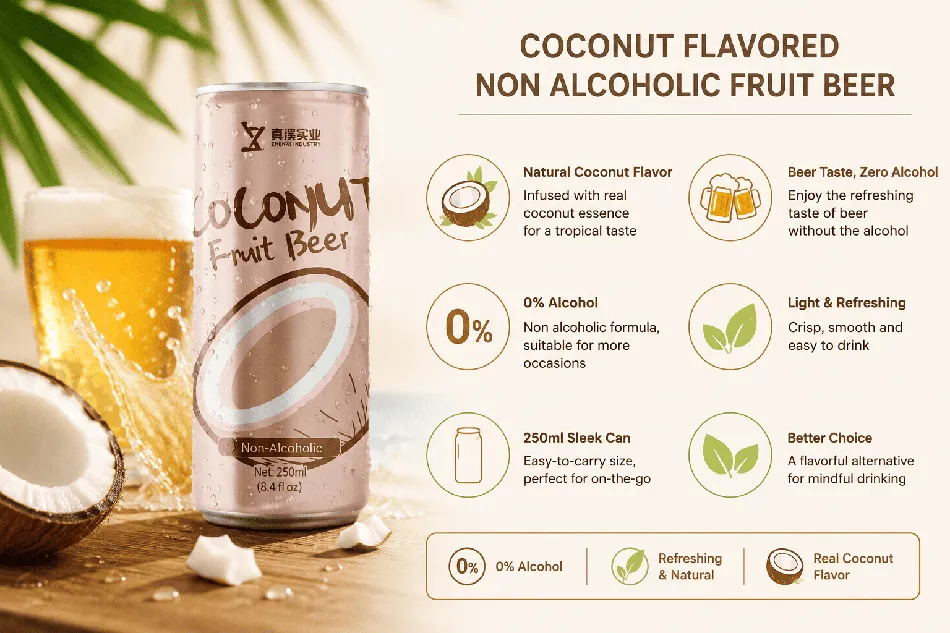
A soft retail concept still needs practical checks. A fruit-led can may look attractive, but the sample, label, format, and shelf role should work together. Otherwise, the product may be noticed once and forgotten after the first purchase.
A practical retail check can keep the selection focused:
This checklist is useful because fruit-led drinks can easily move in the wrong direction. Too much sweetness makes the product feel like soda. Too little beer structure makes the name less credible. A clear shelf role helps buyers decide whether the product should support light social drinking, summer displays, café fridges, or a broader alcohol-free beverage shelf.
Fruit-led alcohol-free beer works best when the product role is simple. The drink should be easy to recognize on the shelf, pleasant to try, and still connected to beer-style cues. Retail teams should not choose flavors only because they look attractive. They should match flavor with scene, shelf position, and consumer expectation.
Readers who want more background on brewing and flavor retention can review How is Non Alcoholic Beer Made and Why Does Craft Non Alcoholic Beer Taste So Good before comparing specific fruit styles. If your team is exploring alcohol-free fruit drinks for retail, café, or distribution use, share your flavor and channel plan with us so the next discussion can focus on product fit, format, and shelf direction.
A: No. Fruit soda usually focuses on sweetness and carbonation. Non alcoholic fruit beer must offer additional qualities. It needs to keep the foam. It should maintain carbonation texture along with mild malt depth. The product also requires a cleaner finish. These features ensure it does not feel like an ordinary soft drink.
A: The 250ml can delivers several practical benefits. It makes trial easier for customers. At the same time, it reduces the feeling of commitment for new drinkers. The size also allows these cans to fit café fridges. They suit convenience stores as well. They work effectively in mixed packs. They match light social scenes where shoppers seek a smaller canned drink.
A: Apple, peach, lemon, mango, coconut, grape, and grapefruit can all work. Yet each flavor signals a different scene. Familiar flavors help the first entry. Distinctive flavors can build a stronger shelf personality. Peach beer non alcoholic concepts are often useful. They support softer, more relaxed shelf positioning.


