Hot-season shipping can turn an alcohol-free beer export project into a more detailed discussion than buyers expect. The product may taste correct in the sample stage, and the artwork may already be approved, but summer routes add pressure through heat, humidity, warehouse handling, and longer distribution cycles. These risks do not always damage a product immediately, yet they can affect taste perception, carton condition, and buyer confidence after arrival.
For an alcohol free beer ODM project, export planning should start before production. A buyer needs to confirm the liquid profile, alcohol target, can format, carton plan, storage guidance, and destination climate. This article focuses on practical checks for brands, importers, and distributors preparing canned alcohol-free beer for hot-season shipment.
Export buyers often focus on formula, price, and delivery time first. Those are important, but they do not cover the full risk when the shipment moves through hot ports, humid warehouses, and long inland transport. A non alcoholic beer ODM project should include a heat-season review when the target market has summer temperatures, tropical humidity, or limited warehouse control.
Heat does not need to create visible damage before it changes how a beverage is judged. Warm storage may make sweetness feel stronger, reduce freshness, or make carbonation feel less clean during tasting. Alcohol-free beer is especially sensitive to balance because the product needs malt body, hop note, carbonation, and finish to work without the same alcohol structure as regular beer. A sample tasted cold in the lab may feel different after a hot route. Buyers should therefore define the expected storage and serving conditions early. For alcohol free beer ODM projects, the question is not only whether the product can be shipped. The better question is whether the drinking experience still matches the intended retail promise after export handling.
Hot weather often comes with humidity, and humidity can create problems beyond the liquid itself. Cartons may soften, labels may scuff, pallets may need stronger wrapping, and condensation can appear when goods move between temperature zones. These issues may not mean the beverage is unsafe, but they can hurt retail appearance and distributor confidence. Buyers should ask how the cartons will be stacked, whether pallet wrapping is suitable, and whether the destination warehouse has ventilation. In beer packaging ODM discussions, packaging should be treated as part of export performance. A strong liquid in a weak carton can still create complaints when goods arrive with collapsed edges, damp cases, or poor shelf presentation.
A buyer shipping to a mild climate does not face the same issues as a buyer shipping to the Middle East, Southeast Asia, tropical islands, or a hot inland market. The same SKU may need different storage notes, carton choices, or launch timing depending on the route. If the product will pass through ports where temperatures can exceed 30°C, the buyer should discuss hot-season handling before confirming the schedule. If the route includes humid warehouses, ventilation and pallet spacing matter. A canned alcohol free beer ODM project should not copy the same export plan for every market. Climate, route length, warehouse control, and retail channel should shape the final brief.
Hot-season export control starts before filling. Once the formula, can, carton, and label are locked, changes become slower and more expensive. Buyers can reduce risk by making several technical and commercial decisions early.
The formula should match the route and the retail plan. Alcohol-free beer may be 0.0% or below 0.5%, depending on market positioning and label requirements. The buyer should confirm which statement fits the destination market before artwork approval. Shelf-life planning should also be discussed with the actual channel in mind. A direct supermarket launch, distributor warehouse model, and e-commerce route may have different timing pressures. For the 500ml beer-style reference route, 365 days can support planning, but each project still needs final confirmation based on formula, packaging, and market requirements. A non alcoholic beer ODM brief should include the alcohol target, expected selling window, storage instructions, and any importer documentation needs.
Aluminum can beer ODM work should include a can compatibility discussion, especially when the beverage is carbonated and shipped during hot months. The can must suit the liquid, pressure, filling process, and storage plan. Source materials for aluminum bottles and cans note that inner coating and sealing performance requirements vary by filling contents, and suppliers should provide samples for filling tests and confirmation. That principle also applies to careful beverage packaging review. Buyers should not approve packaging only from a visual mockup. A white-can or sample-can test can help check filling behavior, taste influence, carbonation, and storage needs. If the product has fruit notes or different acidity, the can and inner coating review becomes more important.
Carton and pallet planning can look like a logistics detail, but it affects arrival quality. Buyers should confirm case count, stacking method, pallet wrapping, container loading, and warehouse ventilation. If the distributor has limited climate control, the export plan should allow more practical handling notes. A hot-season shipment also benefits from clear receiving instructions: avoid direct sun, avoid long outdoor unloading time, keep goods in a dry, ventilated space, and inspect cartons before moving into retail distribution. Beer packaging ODM is not only about attractive printing. For export, the packaging must help the product survive the route and arrive in a condition that retailers can sell with confidence.
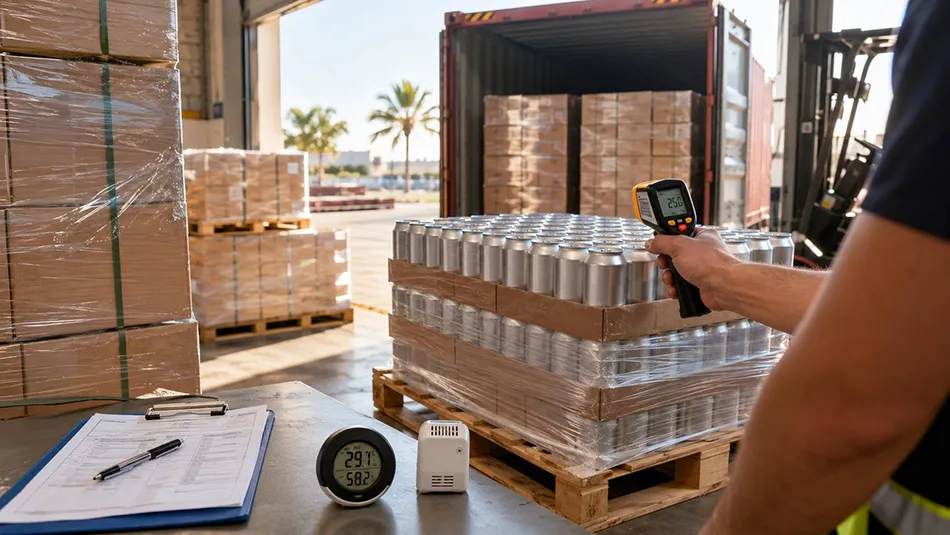
A simple checklist keeps the project from becoming scattered. The goal is not to create excessive paperwork. It is to catch the issues that often appear after production is already scheduled.
|
Export Check |
Practical Reference |
Why Buyers Should Confirm It |
|
High-risk temperature |
Above 30°C |
Heat may affect taste perception and storage risk |
|
High-risk humidity |
Above 60% RH |
Humidity may slow drying and weaken cartons |
|
Water quality for warmers or sterilization contact |
pH 6-8 |
Helps control process consistency |
|
Chloride control reference |
<10 ppm |
Reduces corrosion-related risk during wet contact stages |
|
Sulfate control reference |
<15 ppm |
Supports better process water control |
|
Warmer discharge reference |
At least +2°C above dew point |
Helps reduce condensation risk |
|
500ml product delivery reference |
20-25 days |
Helps align production and shipping schedule |
These numbers should be used as planning references, not as a replacement for project-specific testing, destination rules, or final quality documents.
Liquid checks should cover alcohol statement, carbonation, pH direction, sweetness, bitterness, aroma stability, and full-serving taste. A buyer should test the sample cold and after a short wait. If the product tastes fresh only when very cold, it may struggle in a hot retail route. The team should also confirm whether the beer character remains clear after shipment planning. For alcohol free beer ODM, the liquid should not become too sweet, too thin, or too close to soda after alcohol control. If the project includes fruit-led options, the buyer should check whether the fruit aroma remains clean without masking the beer base.
Packaging checks should include aluminum can format, carton strength, pallet wrapping, label readability, barcode position, and container loading plan. The buyer should also confirm whether the product is planned as a 250ml fruit-led SKU, a 500ml beer-style SKU, or a mixed range. A smaller can may fit trial packs and quick turnover, while a larger can may create stronger beer expectations. For aluminum can beer ODM projects, format choice affects more than shelf look. It changes serving experience, packing density, and distributor handling. Buyers should also avoid leaving artwork decisions too late, because printing, color confirmation, and carton preparation can influence the final schedule.
Documentation can slow down export if it is treated as a final task. Buyers should confirm product specification, label language, ingredient information, alcohol statement, carton marks, quotation, payment terms, and any test documents needed by the importer. For private label projects, brand authorization, trademark-related documents, and artwork approval may also be needed before printing. A practical document package helps the supplier and buyer avoid repeated changes after production starts. In hot-season export, document timing matters because delayed release can leave finished goods waiting in warm conditions. Canned alcohol free beer ODM planning should therefore connect documentation with production, not place it after production.
At ZhenXi, we usually discuss export projects through formula, packaging, filling, and delivery planning together. This keeps the project grounded in what the buyer must decide before shipment, rather than treating ODM as only a flavor development task.
A 500ml beer-style product and a 250ml fruit-led product may move through the same export route, but they do not create the same retail expectation. The 500ml OEM Non Alcoholic Craft Beer is a useful reference for buyers planning a full beer-style alcohol-free serving with private label support, 0.0% or <0.5% alcohol customization, and standard aluminum can packaging. Fruit-led SKUs in smaller formats may fit sampling, convenience shelves, and mixed packs. Buyers comparing product routes can review the non-alcohol beer range before deciding whether the export launch should begin with a classic beer-style can, a fruit-led trial SKU, or a wider shelf set.
The export plan becomes easier when the buyer’s project brief is complete. In practice, a useful hot-season export brief should include:
This sequence helps us connect sample work with filling, packaging preparation, and delivery communication. It also reduces the chance of late changes that affect production timing. For beer packaging ODM projects, early discussion is especially useful when the buyer wants custom printing, special carton marks, or multiple SKU combinations. A clear brief gives both sides a shared working standard before the quotation becomes final.
Hot-season export planning should not begin after the product is filled. Buyers should check formula stability, alcohol statement, can format, carton strength, pallet wrapping, warehouse conditions, and document timing before production. A good alcohol-free beer export plan links the product’s sensory target with the realities of heat, humidity, transport, and retail display.
For buyers reviewing how beer base, carbonation, and flavor balance affect alcohol-free products, Is Beer a Carbonated Drink? Natural vs. Artificial Carbonation can support internal discussion before sample approval. When your team is ready to plan a hot-season shipment, send your export-ready alcohol-free beer brief with target market, shipping season, can format, quantity, and storage requirements.
Q: What should buyers check before hot-season alcohol free beer ODM shipping?
A: Buyers should check the alcohol statement, formula stability, carbonation, pH direction, can format, carton strength, pallet wrapping, warehouse conditions, label requirements, and document timing before production.
Q: Does aluminum can beer ODM need special storage planning in summer?
A: Yes. Aluminum cans can be practical for export, but summer storage still needs attention. Buyers should avoid direct sun, high humidity, poor ventilation, and long outdoor unloading times, especially when cartons are exposed.
Q: Why should shipping conditions be discussed before production?
A: Shipping conditions affect formula review, packaging choice, carton design, pallet planning, label timing, and document preparation. Discussing them early helps avoid late changes after filling or printing has already started.


