A buyer may ask for a wheat-style alcohol-free ODM project when a fruit flavor feels too soft and a hop-forward alcohol-free beer feels too bitter. Wheat-style beer sits in a useful middle position. It can offer grain aroma, round body, light acidity, and a smooth finish without asking the consumer to accept a strong bitter profile.
This article treats wheat beer ODM as a development direction, not as a fixed stock item. A non alcoholic wheat beer ODM brief still needs to define the style target, alcohol statement, serving size, label tone, and sample standard. For a private label non alcoholic beer ODM project, the best result usually comes from clear sensory targets rather than a vague request for “wheat beer taste.”
Fruit-led alcohol-free beer often starts with aroma. Wheat-style alcohol-free beer starts with texture. Buyers should judge the middle sip, foam, and finish together.
Wheat-style alcohol-free beer can be useful for buyers who want a beer-like product but do not want sharp bitterness to lead the experience. Too much bitterness can create resistance before the category is explained. A softer grain body, light hop note, and rounded mouthfeel can make the drink easier to accept. That does not mean the formula should taste flat. A wheat-style alcohol-free project still needs enough beer structure to separate it from malt soda. The buyer should decide whether the product should feel like a relaxed social drink, a craft-style alternative, or a lighter private label SKU.
The word “grain” can be misleading if it is not defined in the brief. Buyers may want wheat aroma, cereal depth, and a smooth middle, but they do not want a watery drink with a grain smell. The grain body should support the drinking arc after the first aroma and before the finish. If the body disappears too quickly, the consumer may read the product as thin. If the body becomes too heavy, the product may feel sticky or dull. This is why this ODM work should include mouthfeel notes, not only flavor notes. A buyer should explain whether the sample needs more softness, more dryness, more foam, or more malt depth.
A sample review should test the drink as a full serving, not as a quick sip from a cup. Wheat-style alcohol-free beer depends on balance.
The middle sip is where many alcohol-free beer samples show their weakness. A sample may smell pleasant and pour well, but the mouthfeel can collapse after the first few seconds. For craft non alcoholic beer ODM work, the buyer should taste the sample in several passes. Check the aroma and first sip, drink again after the foam settles, and judge whether the middle still has enough weight. The comment should be specific. “Too thin after the first sip” is more useful than “not premium.” “Good aroma but short middle” gives the supplier a direction for formula adjustment. It may point to malt structure, carbonation level, sweetness, or bitterness balance.
Foam matters in wheat-style products because it affects visual beer identity and aroma release. The goal is not simply to create the tallest foam. Buyers should look at foam texture, speed of collapse, and how the beer smells after pouring. A dense foam may look attractive, but it must match the mouthfeel underneath. During alcohol free wheat beer ODM development, the buyer can pour the sample into the same glass each time, wait for a fixed period, and compare the result. This keeps feedback fair. Foam should be reviewed beside the grain body and finish, because foam alone cannot decide whether the product is ready.
|
Sample Review Point |
Practical Reference |
Buyer Question |
|
Serving reference |
500ml / 16.9 oz |
Does the body hold through a full can? |
|
Alcohol target |
0.0% or <0.5% |
Which claim fits the target market? |
|
Delivery reference |
20-25 days |
Does the timeline match launch planning? |
|
MOQ reference |
1 container |
Is the test order commercially workable? |
|
Shelf life reference |
365 days |
Does retail planning need a longer cycle? |
These numbers are planning references for the 500ml alcohol-free craft beer product route. Final details should be confirmed through quotation, formula review, packaging approval, and destination market requirements.
Carbonation can help a wheat-style alcohol-free beer feel fresh, but too much sharpness can make the base feel thinner. Too little carbonation can make the product feel heavy or quiet. The buyer should not treat carbonation as a separate technical detail. It changes the way grain body, sweetness, and bitterness appear. For a wheat-style development project, the better question is whether carbonation supports the intended finish. A smooth finish should not mean a dull finish. It should feel clean and complete. The sample can be checked cold first, then again after a short wait. If the drink becomes flat quickly, carbonation and foam support may need review.
For this topic, ODM is often the more practical route when the buyer has a style idea but not a complete formula. OEM works better when a brand already has a finished formula, benchmark, or technical specification. Wheat-style alcohol-free beer often sits between a concept and a finished product.
A buyer may know that the product should be soft, grain-led, alcohol-free, and suitable for private label retail, but may not know how to build that profile. This is where private label non alcoholic beer ODM discussions can be useful. The supplier can review whether the target should lean more toward classic wheat beer, light craft beer, or smooth malt refreshment. The buyer still controls the market direction, label tone, and commercial role. The supplier helps translate those goals into a workable sample path. Clear style language reduces that gap.
Benchmark brands can help, but they should not replace sensory comments. A buyer may mention a famous wheat beer, yet the real target may be its soft foam, banana-like aroma, round body, low bitterness, or smooth finish. These are not the same request. In an alcohol free wheat beer ODM brief, the buyer should describe which parts matter and which parts should be avoided. If a regular wheat beer benchmark contains alcohol, the buyer should also consider how the body may change after alcohol control. The better brief explains the desired aroma, body, carbonation, bitterness, sweetness, and aftertaste in plain terms.
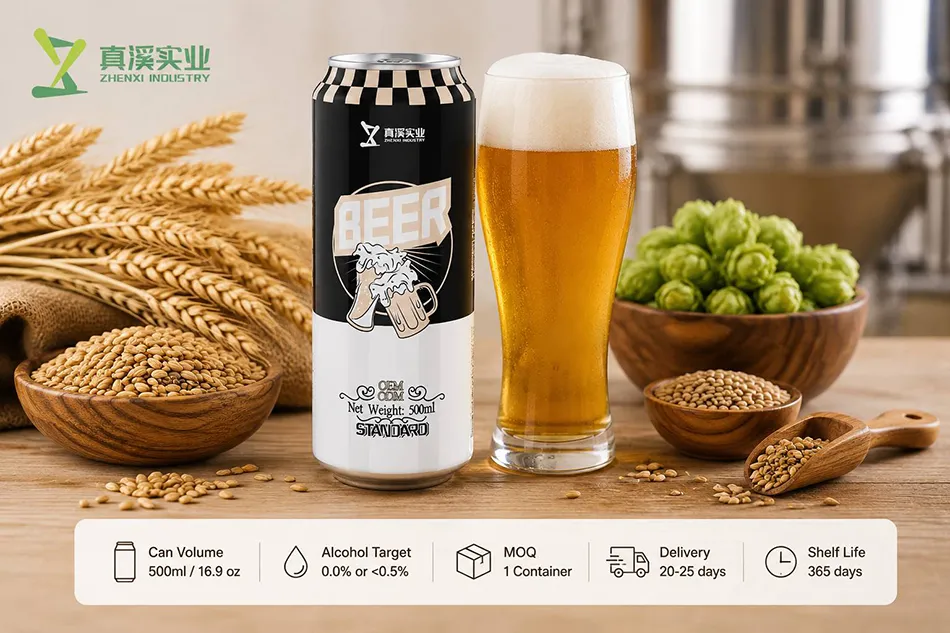
The product discussion should stay practical. A wheat-style brief needs a base reference, a sample plan, and a packaging direction. It does not need a long company introduction. Buyers also need liquid development to connect with aluminum can packaging and private label preparation.
At ZhenXi, we can discuss wheat-style development through the same commercial lens used for beer-style alcohol-free projects. The 500ml OEM Non Alcoholic Craft Beer is a useful reference because it supports OEM and private label planning, 0.0% or <0.5% alcohol customization, and 500ml standard aluminum can packaging. This does not mean every wheat-style project should use the same formula. It means buyers can use the product route as a starting point when discussing grain body, beer character, can format, and sample expectations. Buyers comparing broader options can also review the non-alcohol beer range before deciding whether the first SKU should be fruit-led, beer-style, or a mixed range.
A useful brief should help the formula team know what to build and help the buyer judge samples consistently. It should not be a long marketing document. It should answer the main questions that affect product direction:
This gives both sides a common working standard and helps avoid repeated sample changes. For wheat-style non alcoholic beer, a buyer should not wait until the final sample to discuss label language, adult positioning, or retail use. Those choices affect the sensory target from the beginning.
A wheat-style alcohol-free beer is not only about wheat aroma. It is about grain body, foam, carbonation, smooth finish, and beer identity. Buyers should decide whether the project needs a soft entry beer, a craft-style option, a craft non alcoholic beer ODM route, or a wider private label SKU.
For buyers comparing how alcohol-free beer is made and why flavor balance changes after alcohol control, How is Non Alcoholic Beer Made and Why Does Craft Non Alcoholic Beer Taste So Good can support internal sample discussions. When your team is ready to define a wheat-style alcohol-free project, send your ODM sample brief with target market, alcohol claim, taste direction, can format, and estimated quantity.
Q: Is wheat-style ODM suitable for buyers without a final formula?
A: Yes. It can be suitable when the buyer has a style goal but not a finished recipe. The buyer should still define the desired grain body, foam, carbonation, smooth finish, alcohol statement, and target channel.
Q: What should buyers check in wheat-style alcohol-free beer samples?
A: Buyers should check aroma, middle body, foam texture, carbonation, sweetness, bitterness, and aftertaste. The sample should be judged as a full serving, not only from a quick first sip.
Q: Can wheat-style non alcoholic beer fit private label retail?
A: Yes, if the label, taste, and can format match the retail role. A softer grain-led product can support wider trial, while stronger craft cues may help it sit closer to the beer shelf.


