When consumers open a few alcohol-free beers, a common pattern appears quickly. Some tastes are balanced and dry enough. Others feel sweeter than expected. This is the case even when they are not sold as fruit beer or soda-style drinks. That first reaction can be confusing. The label may not show a dessert-like product. However, the mouthfeel still feels soft, round, or sweet.
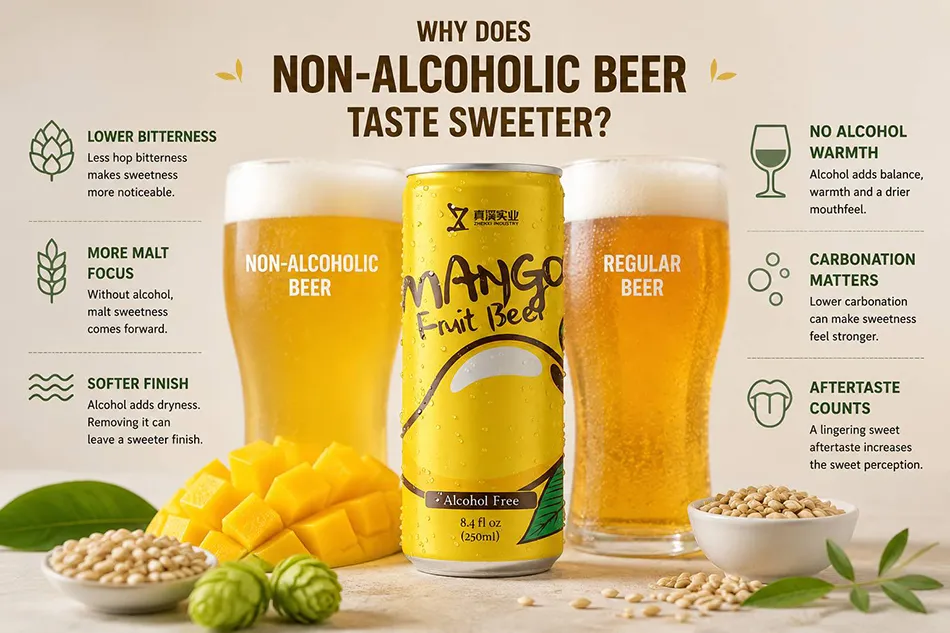
The reason is not always added sugar. In many cases, non alcoholic beer sweetness becomes more obvious. This occurs because alcohol is missing. Bitterness is lower. Malt notes move forward. Or the finish does not dry out like regular beer. For buyers, this is more than a small sensory detail. Alcohol free beer taste affects sample approval. It also influences repeat purchase. It has an effect on shelf position. It further determines whether consumers see the product as beer or a flavored malt drink.
Alcohol does more than increase ABV. It changes body, warmth, and finish. Once alcohol is removed or reduced, the beer does not behave in the mouth in the same way. A formula can taste acceptable in a short sample cup and still become too sweet in a full can.
Regular beer has a mild warming effect from alcohol. That warmth helps balance malt sweetness and makes the finish feel a little drier. When the alcohol level is controlled to 0.0% or below a low threshold, that balancing effect becomes weaker. The same malt base can suddenly feel rounder. This is one reason why non-alcoholic beer tastes sweet comes up so often among consumers. It is not always a recipe failure. Sometimes the drink simply needs another way to rebuild dryness, bitterness, carbonation, or body. For buyers reviewing samples, the better question is not whether the product copies regular beer exactly. The better question is whether it still gives enough beer-like balance without alcohol.
Malt naturally brings cereal, bread, and light, sweet notes. In regular beer, those notes are held in place by alcohol, fermentation character, hop bitterness, and finish. In an alcohol-free beer, malt can move closer to the front. That can be pleasant when the product is meant to feel smooth and easy to drink. It becomes a problem when the drink starts to feel like sweet malt water. Buyers should check whether malt sweetness supports body or simply makes the drink softer. Non alcoholic beer sweetness should sit with carbonation, aroma, and bitterness, not dominate them. If the middle of the drink tastes sweet but short, the answer may not be “less sugar.” It may need a better structure.
A sweet impression is usually built from several parts. Bitterness, carbonation, acidity, aroma, serving temperature, and aftertaste all affect how sweet the drink feels. This is why two products with similar sweetness levels can taste very different.
Bitterness helps clean up the finish. If bitterness is too low, malt sweetness and fruit aroma can feel stronger than they actually are. That does not mean every alcohol-free beer should taste bitter. A peach or orange SKU may need a softer profile to stay approachable. A beer-style SKU, especially in a larger serving, usually needs more hop support. For buyers, the product role matters. A soft fruit-led product can accept more roundness. A classic beer-style alcohol-free SKU should usually finish cleaner. In sample comments, “too sweet” should be broken down further. Is the drink too sweet because the bitterness is weak? Is the fruit aroma too heavy? Or does the finish stay too long?
Carbonation changes the way sweetness is read. Fine bubbles lift aroma and help refresh the mouth after each sip. If carbonation is weak, sweetness can sit on the tongue. If carbonation is too aggressive, the beer base may feel thin, even if the drink is not actually watery. Buyers should not treat carbonation as a small technical setting at the end of development. It is part of the flavor structure. A sample should be tasted cold first, then again after a short wait. If the sweetness becomes much heavier as bubbles fade, the formula may need better carbonation, acidity, bitterness, or finish. This matters for convenience retail, export channels, and mixed packs, where the drink may not always be consumed at the perfect temperature.
A sweet opening can work well if the finish is clean. Problems start when the sweetness lingers without enough dryness, bitterness, or acidity. That lingering finish is often what consumers describe as non alcoholic beer aftertaste. During sample review, buyers should pause after each sip and check what remains after ten to twenty seconds. Does it feel like beer, fruit soda, malt drink, or syrup? A clean, non alcoholic beer aftertaste can make a soft product feel intentional. A sticky finish makes the drink tiring, even if the aroma is attractive. For repeat purchases, the last part of the sip often matters more than the first.
Fruit flavors can make alcohol-free beer easier to try. They can also make sweetness harder to control. Fruit aroma, acid, malt base, and carbonation need to support the same product direction. If one part becomes too loud, the drink can move away from beer and closer to soda.
|
Product Planning Point |
Fruit-Led Route |
Beer-Style Route |
|
Common can reference |
250ml / 8.4 oz |
500ml / 16.9 oz |
|
Typical flavor role |
peach, orange, grape, citrus |
malt, hops, beer finish |
|
Alcohol direction |
alcohol-free positioning |
0.0% or <0.5% option |
|
Shelf life reference |
12 months above |
365 days |
|
Delivery reference |
20-25 days |
20-25 days |
|
MOQ reference |
1 container |
1 container |
These figures are planning references for buyer discussion. Final specifications should still be confirmed through sample approval, quotation, packaging review, and destination market requirements.
Orange and peach are easy flavors for first-time buyers to accept. They feel familiar and friendly, which is useful for trial packs or lighter retail occasions. The risk is that they can make a sweet non alcoholic beer feel even sweeter. Peach can become syrupy if the aroma is too heavy and the finish is short. Orange can lean toward candy if the acidity is too low. A buyer should not judge these flavors from the first sip only. The full serving matters. The product should still keep beer cues such as carbonation, foam, malt body, or a clean finish. Fruit should make the product easier to enter, not remove the beer identity completely.
Grapefruit and lemon can help reduce a heavy, sweet impression. Grapefruit brings a more adult bitter-citrus note. Lemon can make the drink feel brighter and cleaner. Still, both need careful control. Too much grapefruit bitterness may feel harsh. Too much lemon acidity may push the drink toward sparkling juice. For buyers building a small alcohol-free range, the question is not which fruit flavor is best in general. The better question is what each flavor is supposed to do. One SKU may be soft and friendly. Another may be sharper. A third may sit closer to beer-style refreshment. A range works better when the sweetness, acidity, and finish are not identical across every flavor.
Consumer comments are often simple: too sweet, not sweet enough, too fruity, strange aftertaste. Buyers need to turn that feedback into production language. The supplier can adjust a formula more accurately when the buyer explains where the sweetness appears.
The first sip is useful, but it is not enough for alcohol-free beer. A product may smell good and taste pleasant at first, then become heavy halfway through the can. Buyers can use one short review process:
This method keeps feedback more practical. “Too sweet” is a starting point, not a full comment. A stronger note would be: “The opening is acceptable, but the sweetness stays too long in the finish.” That kind of feedback gives a clearer direction for adjustment.
Alcohol-free beer is usually served cold, but it does not stay cold forever. As the drink warms slightly, sweetness may become more obvious. Fruit aroma can also become heavier. Carbonation may feel softer. A sample that works only at very low temperatures may struggle in normal retail use. Buyers should test the product in realistic conditions, especially for convenience retail, outdoor events, or export markets where storage and serving temperatures may vary. The drink does not need to taste identical at every temperature. It should, however, stay close to its intended role. If the sweetness grows too much after a short wait, the formula may need a cleaner finish, better acid balance, or more hop support.
The sweetness question is useful because it helps buyers write a better production brief. At ZhenXi, we usually connect taste direction with can format, private label needs, and target channel. That keeps the sample discussion grounded in the actual sales plan.
Buyers can review the non-alcoholic beer range before deciding whether to start with fruit-led SKUs, a beer-style SKU, or a small mixed range. A soft fruit-led product may allow more sweetness if the finish stays clean. A beer replacement SKU usually needs more dryness and bitterness. For a fuller beer-style route, the 500ml OEM Non Alcoholic Craft Beer can be used as a reference because it supports OEM and private label planning, 500ml standard aluminum can packaging, and 0.0% or <0.5% alcohol customization. The right sweetness target depends on what the buyer wants the product to become on the shelf.
A useful brief should include target market, alcohol statement, can size, sweetness preference, fruit or malt direction, carbonation level, aftertaste concern, and expected order plan. If a buyer only says “make it less sweet,” several solutions may be possible. The formula could use lower sweetness, higher acidity, more bitterness, cleaner carbonation, or a drier finish. The right adjustment depends on where the sweetness appears. For buyers comparing beer base and alcohol control, How is Non Alcoholic Beer Made and Why Does Craft Non Alcoholic Beer Taste So Good can support internal tasting discussions. When your team is ready to refine a sample, send your alcohol-free beer taste brief with target sweetness, flavor direction, can format, and market channel.
Q: Why does non-alcoholic beer taste sweet even when it is not a fruit beer?
A: It may taste sweet. This happens because alcohol is reduced or absent. As a result, malt sweetness becomes easier to notice. Low bitterness can add to the effect. Soft carbonation works in a similar way. A short finish contributes as well. These elements together can make sweetness feel stronger.
Q: Is sweet non alcoholic beer always a bad product?
A: No. Sweet non alcoholic beer is not always a bad product. It can work well for fruit-led trials. It suits light retail occasions. It also meets the needs of consumers who prefer softer flavors. However, it becomes a problem when the sweetness does not match the label. The same holds true if it does not fit the serving size or beer-style expectation.
Q: How can buyers reduce the sweetness in alcohol free beer taste?
A: Buyers can discuss bitterness, acidity, carbonation, malt body, fruit aroma, and finish with the supplier. The best adjustment depends on one main factor. This factor is where sweetness appears. It may emerge in the first sip. It may occur in the middle body. Or it may remain in the aftertaste.


