Tea is a healthy drink originated in China and is loved by everyone. However, there are many legends about tea on the Internet, and some senior tea lovers even believe them.Below, we have sorted out 6 common rumors about tea and analyzed them one by one. Let's see which ones you have been misled by.
This statement has no scientific basis and is a typical "pseudo-scientific proposition" that has misled many people for a long time.
Whether it is black tea, green tea, oolong tea, white tea, dark tea, scented tea or other teas, the raw materials are fresh leaves of tea trees. The so-called "different tea trees" are "the same species" in biology, just different "variety". The types of substances they contain are the same, but the content is different.
Different teas, such as black tea and green tea, are mainly processed differently. The difference in their flavors is like the difference between plain cabbage and hot and sour cabbage. The flavors of black tea and green tea are obviously different, but the effects of the substances in them on the human body are very small, far from the level of "harming" or "nurturing" the body.
The so-called "green tea is cold and black tea is warm" is mainly a psychological association caused by taste experience. Green tea has a high catechin content and tastes more astringent. It is green and astringent, so it is easy for people to associate it with "coldness".
Most black teas have a bright red soup color, which makes people feel red and warm at first glance. It contains a lot of sweet substances and is generally not as bitter as green tea. Therefore, the overall feeling of black tea is "sweet and warm".
Senior tea drinkers often say: "I have been drinking too much ××× tea recently, and my stomach is damaged and always hurts." This statement also lacks scientific basis.
The human stomach is a solid bag-shaped object. When food enters the stomach, gastric acid begins to be secreted in large quantities, which can reduce the acidity in the stomach to between pH2 and 3. There is mucus on the stomach wall, which helps the gastric mucosa to avoid the corrosion of gastric acid and the digestion of pepsin. Tea is weakly acidic, with a pH value between 5.5 and 7. It is far less irritating than gastric acid, and it will not "neutralize gastric acid and affect digestion" as some people imagine.
Tea contains some caffeine, which has a short-term excitatory effect on the central nervous system, thereby promoting the secretion of gastric juice and gastrointestinal motility, and helping digestion. Therefore, some people feel that drinking tea can "scrape off fat and digest food", some people feel mild diarrhea, and some people just drink tea on an empty stomach. The caffeine in the tea promotes the gastric glands to produce too much gastric acid through the nervous system. Gastric acid will stimulate the gastric mucosa. If there happens to be inflammation or ulcers in the stomach, it will cause stomach pain. Therefore, people with stomach problems or people with a sensitive digestive system should avoid drinking tea on an empty stomach. When choosing tea, try to choose tea with a lower bitterness.
In summary, if a person's stomach is already damaged, drinking tea, especially on an empty stomach, may make him feel uncomfortable; but if a person's stomach is originally healthy, then drinking tea will not cause damage to the stomach.
Drinking tea cannot sober up, and there is currently no food or drink that can really sober up.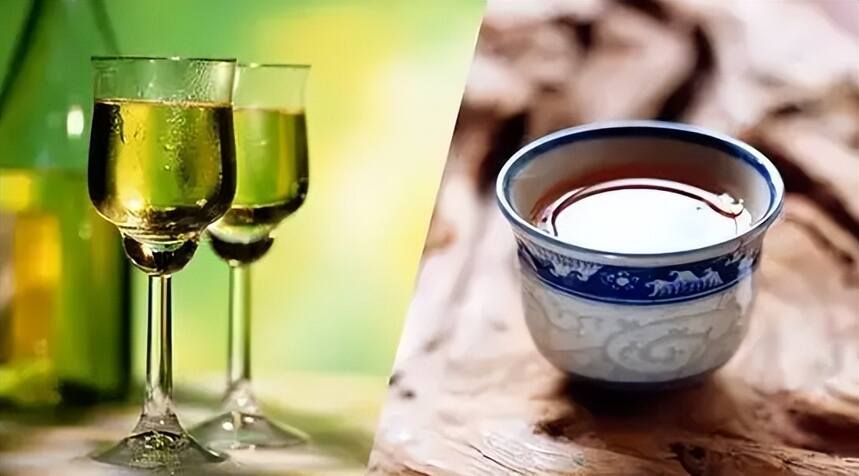
After alcohol enters the body, about 10% to 20% will be discharged through the respiratory tract and skin, and the rest will reach the liver through the blood. Ethanol degrades into acetaldehyde, and then from acetaldehyde to acetic acid, and finally decomposes into carbon dioxide and water. The so-called "sobering up" is to speed up this process. So far, no food or drink has been found to achieve this effect.
However, drinking tea after drinking may reduce the discomfort after drinking. After drinking a lot of alcohol, people will feel dizzy, weak, and have motor disorders. The caffeine in tea can stimulate the nerves, making the human body more excited and awake. To a certain extent, it can reduce "drunk reactions" such as headaches, weakness, dry mouth, and motor disorders.
However, it should be noted that this "relief" is relative and has limited effect. In addition, caffeine can excite the nerves. Drinking a lot of caffeinated beverages + alcohol will make people less aware of drunkenness, thinking that they are very excited and sober, and can continue to drink, which will make people drink more and become more drunk. In serious cases, this situation may induce life-threatening. Therefore, it is not recommended to drink tea to sober up, and we also remind everyone not to try things that are not suitable for drinking, such as driving, exercising, or operating machinery, just to "relieve".
"Long-term tea drinking or strong tea drinking will lead to calcium deficiency" is a widely circulated saying on the Internet, because the oxalic acid in tea will inhibit the absorption of calcium, and caffeine will increase the loss of calcium. However, this statement is not accurate.
Oxalic acid is widely present in plants, and the fresh leaves of tea trees do contain oxalic acid. However, in the process of making fresh tea leaves into tea, most of the oxalic acid is destroyed. In finished tea leaves, only a few milligrams of oxalic acid can be dissolved into the tea soup per gram of dry black tea, and even less in green tea and oolong tea, only about one milligram. Even if all these oxalic acids are combined with calcium, the maximum amount of calcium lost is only a few dozen milligrams. Compared with the 1,000 milligrams of calcium people need every day, it is so little that it can be ignored.
In fact, people consume much more oxalic acid from vegetables than from tea. For example, to consume 100 milligrams of oxalic acid, spinach only needs a dozen grams, and lettuce, celery, broccoli, radish, etc. only need a few dozen grams. Compared with the actual daily consumption of vegetables, the oxalic acid consumed by drinking tea is not worth worrying about.
Caffeine can bring a certain excitatory effect to the human central nervous system, but there is no evidence that it will affect the body's absorption of calcium. Generally speaking, the health benefits of a few hundred milligrams of caffeine per day outweigh the possible risks, while the caffeine content in a 200 ml cup of tea soup is as little as a dozen milligrams, and no more than fifty or sixty milligrams.
Therefore, people with a normal diet can get enough calcium through food diversification, and there is no need to worry too much about drinking tea affecting calcium absorption.
In daily life, people often expect to remove pesticide residues by "washing tea", which is actually a misunderstanding.
The so-called "washing tea" is actually a misunderstanding of a technical means of brewing tea - "warm brewing". If there are pesticide residues in tea leaves, they are closely combined with the leaves (otherwise they would have been washed away by rain). Letting tea leaves soak in 100 ml of water for more than ten seconds has almost no effect on them.
As for green tea, black tea or tea bags, tea polyphenols and caffeine in tea leaves are dissolved in large quantities as soon as water is added. Blindly "washing tea" not only fails to wash away pesticide residues, but also loses a lot of tea essence, which is not worth the loss.
In addition, the impact of pesticide residues on health depends on the total amount of intake. The consumption of tea is generally small, about a few grams to 10 to 20 grams per day; and tea leaves are drunk by soaking in water, and pesticide residues must be dissolved in tea water before they can be ingested, unlike other agricultural products, which are often eaten directly. Therefore, even if you occasionally encounter tea with excessive pesticide residues, the amount of pesticide residues you ingest is not very large, so there is no need to worry too much. Of course, it is also recommended that you go to the regular market to buy tea that has been inspected and try to avoid products with excessive pesticide residues.
For qualified tea purchased through regular channels, there is no need to worry too much about the problem of ingesting heavy metals.
Heavy metals are pollutants that need to be paid attention to in food. Most tea gardens are located in mountainous or hilly areas far away from factories and cities. They are sparsely populated and transportation is not well developed. The possibility of heavy metal pollution is smaller than that of many other agricultural products.
If the soil in the tea garden is contaminated with heavy metals, the heavy metals absorbed by the tea tree are generally concentrated in the roots, and the stems and leaves are less distributed. In addition, heavy metal elements are basically insoluble in water. Even if the tea contains excessive heavy metals, it is highly likely that they will not dissolve in the tea soup, so there is no need to worry.
Of course, from the perspective of food safety supervision, the country has also formulated heavy metal detection standards for tea. If a certain tea is found to contain "excessive heavy metals", it means that the tea is unqualified and cannot be sold. It also warns that the soil of the tea garden where the tea is produced is "not suitable for cultivation" and needs to be "managed", but it does not mean that drinking this tea will cause problems immediately.
Therefore, when drinking tea, you don't have to worry too much about whether there are heavy metals in the tea. Of course, it is also right that we tend to choose tea with a good ecological environment. After all, a good ecological environment is not only free of pollution, but also that tea trees grow better and the tea produced is easier to taste.


