Tea wine is a variety of drinking wine made from tea leaves as the main raw material, through fermentation or preparation. Tea wine has the advantages of both tea and wine. Except for some tea wines, most tea wines have an alcohol content of less than 20%, which is a low-alcohol wine.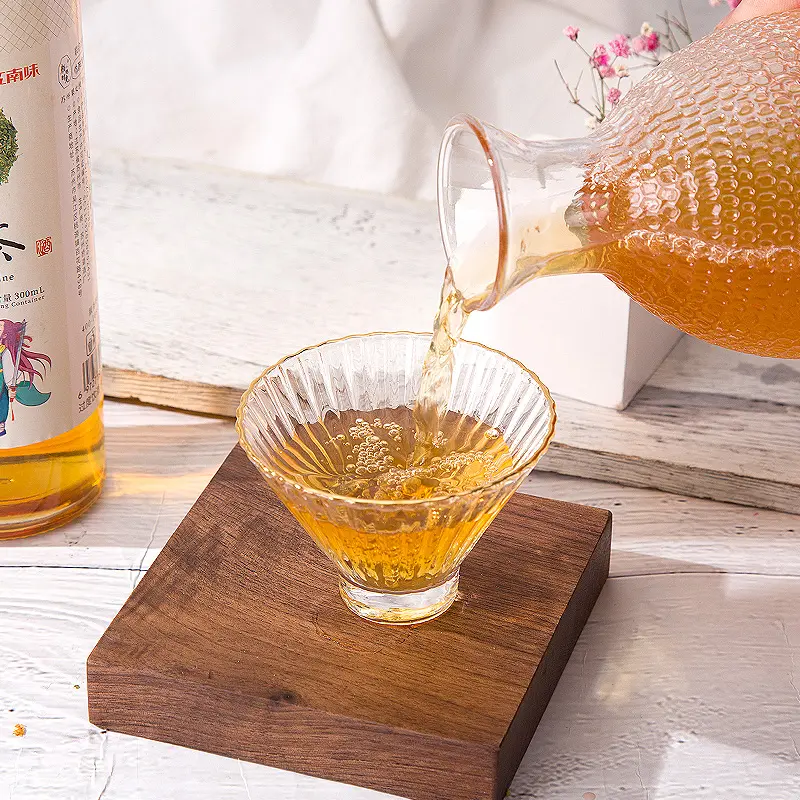
The term "tea wine" has a long history. As early as ancient times, there were records about tea wine, but the tea wine at that time was made by soaking tea with rice wine, not brewing tea wine in the true sense. Su Shi, a university scholar in the Northern Song Dynasty, proposed the idea of brewing wine with tea: "Tea wine is brewed with tea leaves, naturally fermented and distilled, and its pulp is colorless, and the tea fragrance overflows." After Su Shi proposed brewing wine with tea, people in successive dynasties have tried to brew wine with tea, but failed to achieve it. In the 1940s, Professor Wang Zenong of the Tea Specialty Department of Fudan University developed and produced tea wine by fermentation, but it was not released due to war at that time. Since the 1980s, Chinese researchers have successively carried out research and trial production, and tea wine has gradually come out, such as the oolong tea wine developed by Southwest Agricultural University (now Southwest University), Xinyang Maojian tea wine developed and produced by Henan Xinyang Brewing General Factory, and Luyu tea wine developed and produced by Luyu Liquor Factory in Tianmen City, Hubei Province. Uji, Japan, Taiwan, China and other places have also successively developed a series of oolong tea wine, black tea wine, green tea wine, matcha wine, etc. Using tea wine to strengthen the body and prolong life is the wisdom of the Chinese people after thousands of years of practice. In ancient times, there was a reputation of "tea is a medicine for all diseases", "wine is the best of all medicines" and "tea wine cures all diseases". Tea wine combines nutrition and health care, and has the advantages of tea and wine, with tea fragrance, pure taste, refreshing and mellow characteristics. And tea wine has a low alcohol content and is suitable for all ages. Therefore, since its launch, tea wine has been deeply loved by consumers. With the enhancement of people's health awareness and the change of consumption concepts, tea wine has gradually become the new favorite of the market, and the tea wine industry has developed rapidly. So far, my country has developed more than 20 varieties of tea wine, mainly green tea wine, black tea wine, flower tea wine and oolong tea wine. The processing technology has been improved day by day, the quality of tea wine has been continuously improved, and the consumption of tea wine has been increasing day by day.
my country is a major tea-producing country with rich tea resources. Most of the tea wines made from tea use low-grade tea, which not only makes full use of tea resources, but also develops a health care market with huge development potential, greatly activating the industrial economy. At the same time, the process technology of tea wine is easy to master, the production cycle is short, the product sales are fast, and the economic benefits are significant. Therefore, as an emerging industry, tea wine has a very broad development prospect. The development and research of high-grade tea wine with tea flavor will have a far-reaching impact on the deep processing of tea and the development of new wine products.
Traditional Chinese medicine believes that: "Wine is the qi of water and grain, pungent, sweet and hot, enters the heart and liver meridians, and has the effects of promoting blood circulation and removing blood stasis, relaxing muscles and tendons, dispelling wind and cold, and eliminating accumulation and strengthening the stomach." "Wine is the best of all medicines" is the highest evaluation of the medical value of wine, and the method of soaking medicinal materials in wine has been used to prevent and treat diseases.
The main raw material for tea and wine processing is tea leaves. During the processing, most of the nutrients and functional ingredients in tea leaves are dissolved in wine; therefore, tea and wine is a kind of health wine that combines nutrition and health functions with the flavor of tea and wine, and contains the active ingredients and health care effects of tea leaves.
Nutritional effects of tea and wine; tea leaves are rich in amino acids, vitamins, mineral elements and other nutrients, as well as a large number of nutrients that are beneficial to improving human metabolism and enhancing immunity. When preparing tea and wine, most of these nutrients are dissolved in wine. Therefore, tea and wine are beneficial to increase nutrition, improve physical fitness and promote health. Health benefits of tea wine: Tea contains a large amount of active ingredients such as tea polyphenols, caffeine, tea polysaccharides, and theanine, which have multiple functions such as anti-oxidation, anti-aging, anti-cancer, anti-radiation, lowering blood sugar, lowering blood lipids, promoting excitement and digestion, strengthening the heart and diuresis, and preventing and treating cardiovascular and cerebrovascular diseases. These ingredients are dissolved into the wine body during winemaking and become important active ingredients of tea wine. Therefore, drinking tea wine in moderation can play a variety of health benefits such as refreshing the stomach, refreshing the brain, eliminating fatigue, increasing appetite, and preventing cardiovascular and cerebrovascular diseases.
Tea leaves: Commonly used are green tea, black tea, scented tea, and oolong tea. The tea leaves used for processing tea wine are generally grade 3~4. At the same time, the tea leaves should be new tea of the year, with no deterioration in quality, no odor, no pollution, no inclusions, and the heavy metal and pesticide residues meet the hygiene requirements. Tea leaves are mostly added in the form of tea juice in tea wine, which can be directly extracted by tea leaves or directly dissolved with instant tea powder.
Water for tea wine: Water is one of the important raw materials for tea wine and an important solvent. The quality of tea wine is closely related to water quality. Water used in tea wine production must be strictly treated. Common water treatment methods include coagulation, precipitation, filtration, hard water softening and disinfection.
Alcohol: The alcohol required for tea wine production must be edible alcohol. In addition to the quality standards of edible alcohol required for tea wine production meeting the national secondary alcohol quality standards, it should also be deodorized and impurity-free before use. Common deodorization and impurity removal methods include oxidation and adsorption.
Sweeteners: In order to increase the overall taste of tea wine products, sweeteners are sometimes used. Commonly used sweeteners include sucrose, fructose syrup, etc. Low-calorie sugar alcohol sweeteners (maltitol, sorbitol), stevioside, etc. are also gradually used in tea wine production, especially the production of formulated and sparkling wine tea wine.
Others: Acidifiers can give tea wine products a refreshing sour taste, and can play an antioxidant role by chelating metal ions, delaying the oxidation and discoloration of tea wine, and also have a preservative effect. Commonly used acidifiers include citric acid, malic acid, tartaric acid, etc. Flavoring agents are usually edible flavors. On the basis of not changing the unique flavor of tea wine itself, selectively adding a small amount can improve the taste and flavor of tea wine. In order to extend the shelf life of tea wine products, a small amount of preservatives are generally added to tea wine. Commonly used preservatives are sodium benzoate and potassium sorbate. In addition, nutritional enhancers such as vitamins and amino acids are usually added to tea wine to improve the overall quality of the product.
1. Sparkling wine type tea wine
Tea sparkling wine is a low-alcohol carbonated beverage made by artificially filling carbon dioxide with tea extract as the main body, adding other auxiliary materials, and imitating the flavor and characteristics of traditional champagne. The alcohol content is generally 4%~8%, such as Zhejiang Jianer Mingcha Sparkling Wine, Anhui Tea Sparkling Wine and Sichuan Tea Dew. Main features: It has the natural flavor of tea; rich foam, strong taste, appropriate sweet and sour, fresh and delicious; it has the characteristics of both tea and wine, and contains a variety of nutrients such as rich amino acids, vitamins and minerals, and contains a large amount of tea polyphenols, caffeine and other effective ingredients. It is a good nutritional health product.
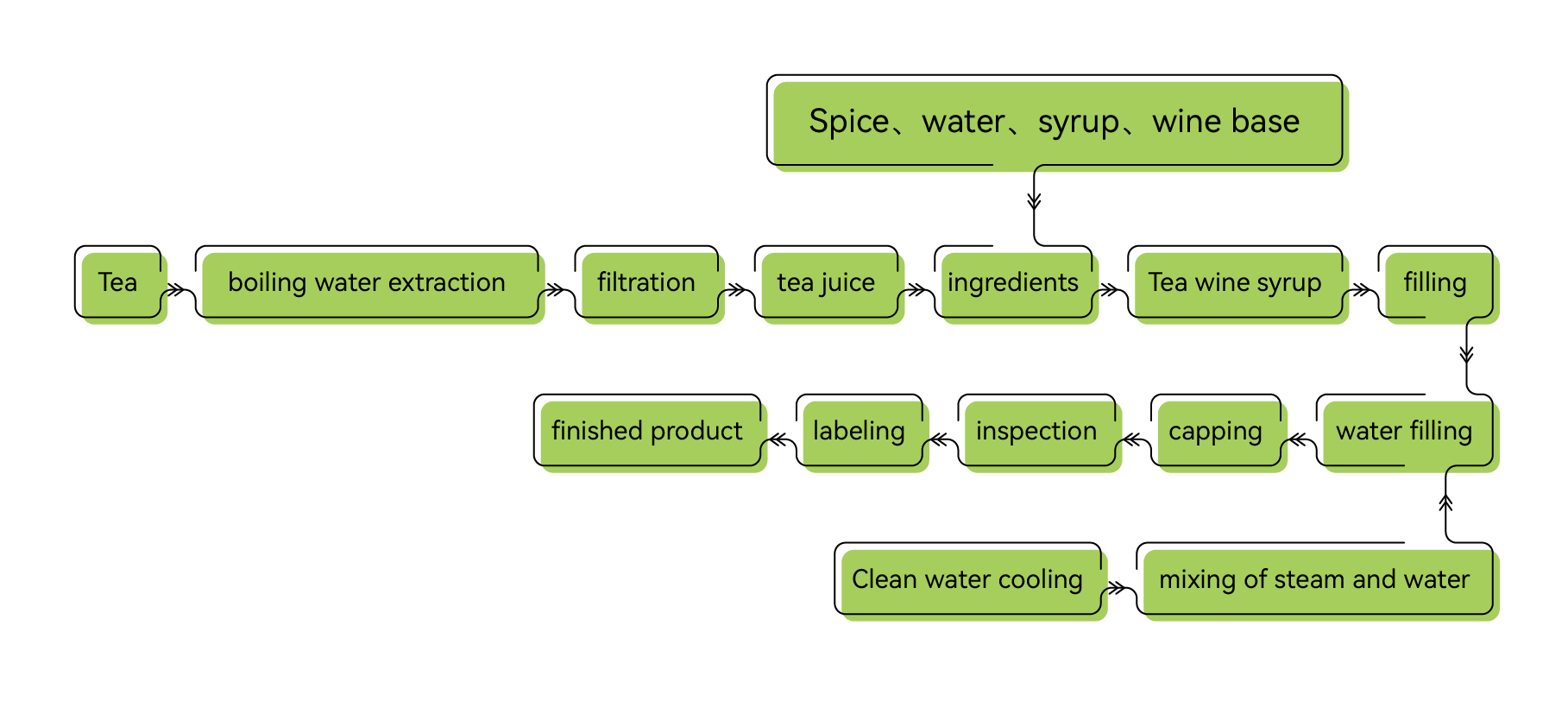
(1) Raw materials and process flow of sparkling wine type tea wine
Raw materials: tea, sugar, sweetener, acidifier, wine base, etc.
(2) Technical points of sparkling wine type tea wine
Processing of production utensils and equipment: Cleanliness is an important condition for the production of tea wine. All utensils and equipment for production must be strictly cleaned and disinfected to meet the standards of hygiene regulations. Water for tea wine: The water used in the production of tea sparkling wine must be strictly treated. The preparation of tea juice can be obtained by tea extraction or prepared with instant tea powder or concentrated tea. Preparation of tea syrup: add water into the pot in proportion, add sugar after boiling, wait for it to dissolve, add acidulant, continue to heat until the sugar liquid boils, boil for 10 minutes, and get yellow transparent syrup, remove from the pot and cool; mix the cooled syrup with tea juice and wine base, and filter it again to become the basic raw material of tea sparkling wine. Carbonated water: the treated water is first cooled to 3~5℃ (called frozen water) by a refrigerator, and then the frozen water is mixed by a soda mixer to form mist under a certain pressure, and mixed with carbon dioxide to form ideal carbonated water, which is transported to the bottle filling machine for standby use. Grouting and water filling: transport the syrup containing tea juice and wine to the grouting machine for quantitative grouting, and then inject the carbonated water into the tea sparkling wine syrup bottle, and immediately seal and cap it.
2. Prepared tea wine
To simulate the nutrition, flavor and characteristics of fruit wine, the method of extraction and blending is adopted. Tea leaves are soaked in the extract and filtered to obtain tea juice, which is then blended with solid fermentation wine base or edible alcohol, sucrose, colorant, flavor, acidulant and other food additives in a certain proportion and sequence, such as Sichuan tea wine, Lushan Yunwu tea wine and Anhui Huangshan tea wine. Features: It can maintain the inherent color, aroma and taste of tea, with bright color and clear body. Advantages: It is simple to produce and low in cost, and can maintain more nutrients and health-care ingredients in tea. The main types are green tea wine, black tea wine, oolong tea wine, Pu'er tea wine, etc.
(1) Raw materials and process flow
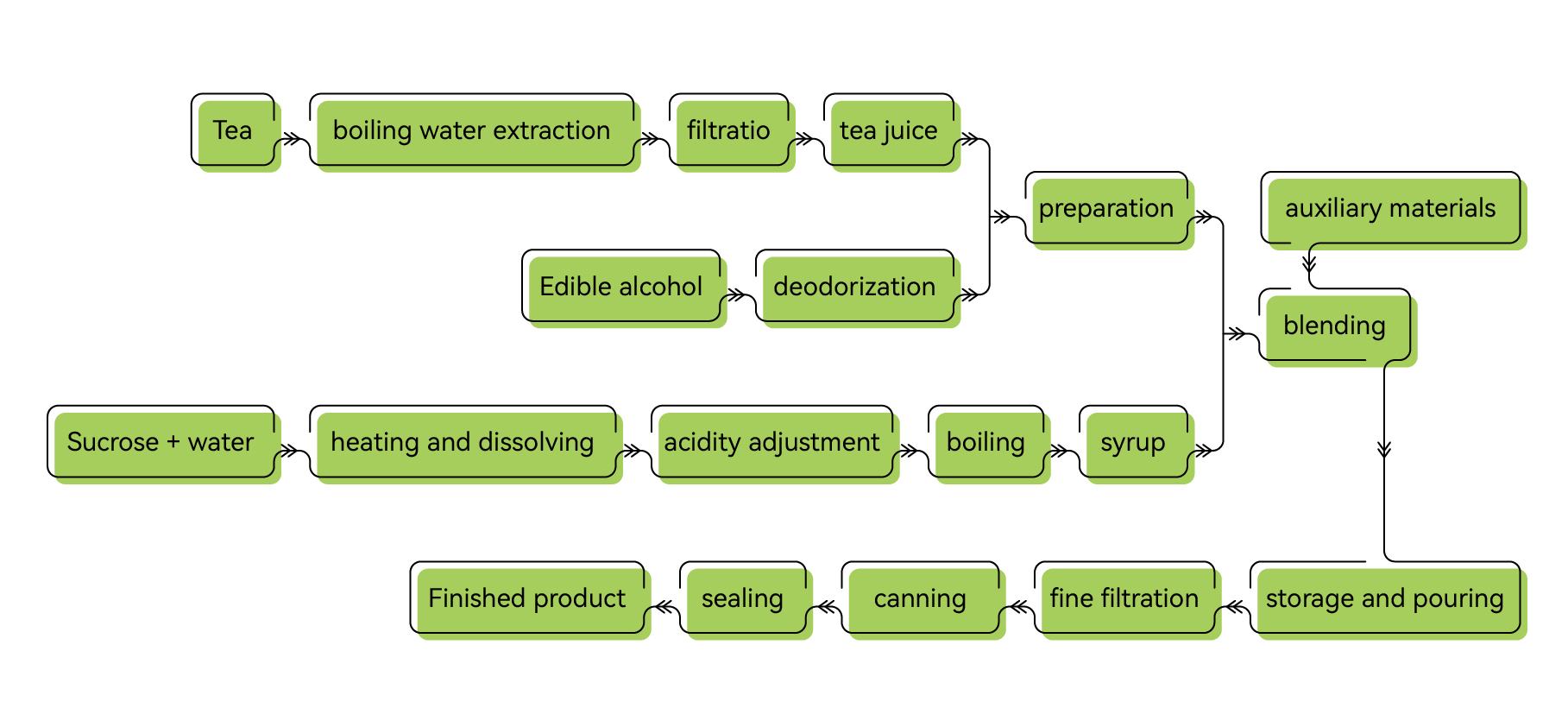
The raw materials of tea blended wine are basically similar to those of tea sparkling wine. The process flow is shown in the figure.
(2) Technical points
The preparation of tea juice is similar to the preparation method of tea juice required for tea sparkling wine. Tea leaves can also be soaked in edible alcohol, white wine, etc. to extract concentrated tea juice and then blended. Preparation of syrup: To prepare tea wine, sugar should generally be boiled into syrup first. Edible alcohol must be strictly deodorized and impurity-removed before use to reduce the pungent taste of alcohol and the appearance of precipitation after preparation. To prepare tea wine, various raw materials should be accurately weighed according to the formula. First, tea juice and deodorized alcohol are mixed into tea juice with a certain alcohol content, and then syrup is added in proportion. After fully mixing, preservatives, antioxidants and other auxiliary materials are added in turn and mixed evenly. Storage and pouring pool: The newly prepared tea wine has a rough taste and unstable color, and it needs a period of physical and chemical reactions. During the storage period, the protein contained in the tea wine will react with the tea polyphenols to form polymers. These polymers sink together with other impurities to become wine dregs. To make the tea wine clear, it generally takes about 30 days of precipitation and purification. Filtration and bottling: After the tea wine has been stored and poured, it must be filtered before bottling to ensure the clarity and transparency of the tea wine. After the tea wine is bottled, it can be sold after capping and packaging.
(3) Sensory quality indicators
Color: Black tea wine is reddish brown and bright; green tea wine is yellow-green and bright. Aroma: Black tea wine has the unique tea fragrance of black tea; green tea wine has the unique fragrance of green tea. Taste: It has both tea and wine flavors. Medium-alcohol tea wine is mainly wine-flavored, supplemented by tea flavor; low-alcohol tea wine is mainly tea-flavored, supplemented by wine flavor.
(4) Factors affecting the quality of tea-blended wine
The quality of tea juice is the key factor affecting the quality of tea-blended wine. The higher the proportion of tea juice in the amount of tea juice, the easier it is for the tea wine to become turbid. The prepared tea wine should be clarified by silica gel, chitosan, etc. The best water quality is pure water to minimize precipitation and increase product stability. The storage environment should be relatively anaerobic, which can effectively prevent the oxidation of tea polyphenols in tea wine, especially green tea wine. Storage conditions away from light and low temperature are conducive to the stability of the color of tea wine. Adding vitamin C and other methods can improve product stability.
3. Fermented tea wine
Fermented tea wine is made of tea leaves as the main ingredient, with yeast and sugar added artificially, fermented under certain conditions, and finally blended. Fermented tea wine has better flavor and taste than blended wine, but its color is not as bright as blended wine. Fermented tea wine contains a variety of nutrients such as amino acids, vitamins and mineral elements, and retains functional ingredients such as tea polyphenols, caffeine and tea polysaccharides. It is a high-end beverage that combines nutrition and health care.
(1) Raw materials and process flow
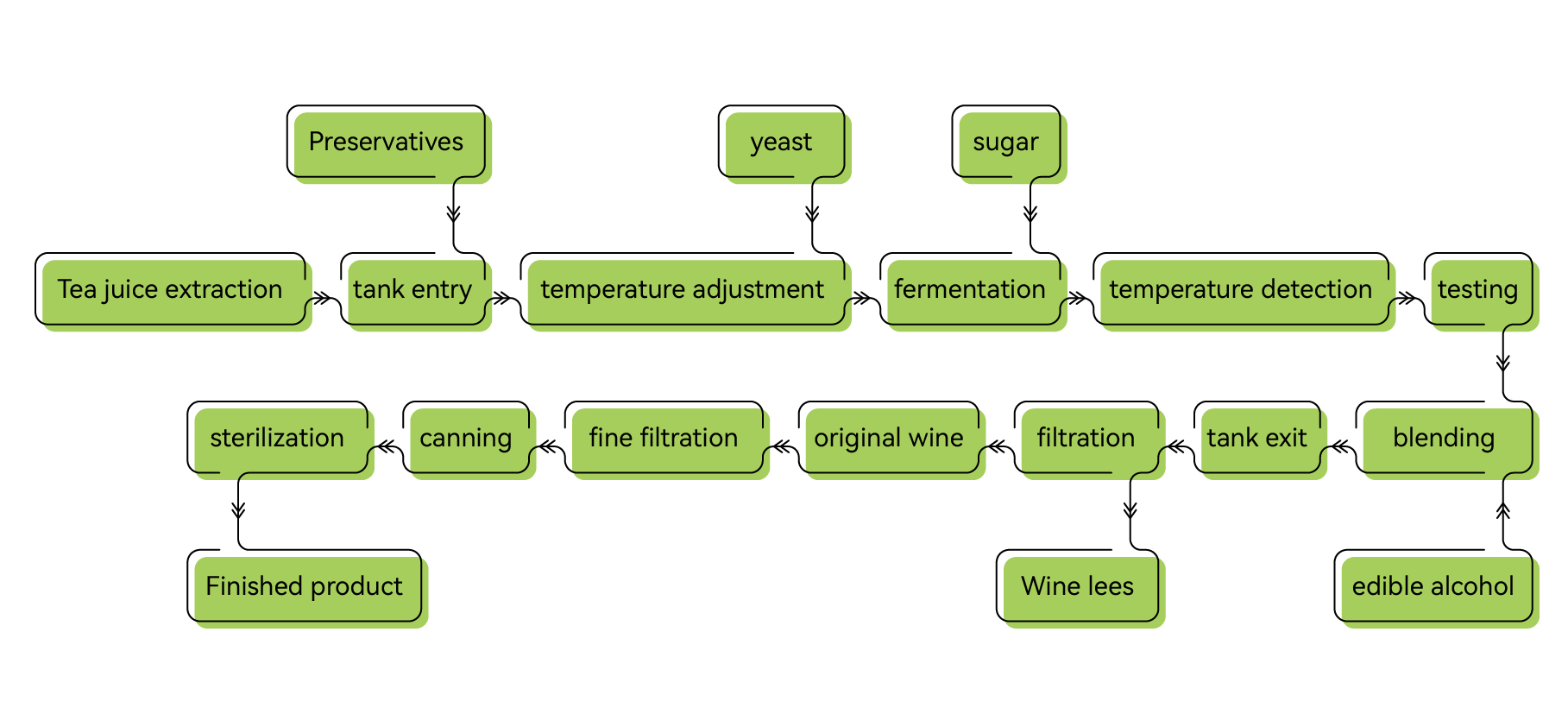
The raw materials of fermented tea wine mainly include tea leaves, sucrose, yeast, water, etc.
(2) Technical points
Tea juice extraction: After the tea leaves are crushed, they are repeatedly extracted with boiling water at 90~95℃ until the soup color is light, or instant tea or concentrated tea is used to dilute it into tea juice for later use. The tea juice is put into the pool, the fermentation pool is cleaned and disinfected with 75% alcohol, and then tea juice is added according to 4/5 of the fermentation capacity. Temperature adjustment: Generally, the temperature of the tea juice fermentation liquid just put into the pool should be controlled at 25~28℃ to allow yeast to multiply in large quantities; after the fermentation is normal, the temperature begins to rise, and the fermentation liquid temperature is adjusted to 20~25℃ for low-temperature closed fermentation. In summer and autumn, when the temperature is high, ice water or cold salt water should be passed through the cooling pipe of the fermentation pool to cool down; in winter, hot air should be passed to keep the temperature at around 20℃. Yeast activation: active dry yeast for brewing is generally used for tea wine fermentation. Before inoculation, the yeast needs to be activated. Yeast inoculation: inoculate the activated yeast liquid into the fermentation liquid with adjusted temperature at a ratio of 1:30 or 5%~10%. Fermentation: In order to increase the alcohol production of the fermentation liquid, sugar needs to be added during fermentation. The amount of sugar added should be such that the sugar content of the fermentation liquid reaches 20%~24%. Sugar is usually added in batches during fermentation, and it is forbidden to add it directly. It needs to be dissolved in the fermentation liquid before adding. During the fermentation process, the fermentation liquid should be stirred continuously to prevent yeast from settling at the bottom of the fermentation liquid, thereby improving the efficiency of fermentation. As the fermentation proceeds, the alcohol content in the fermentation liquid gradually increases and the sugar content gradually decreases. After the fermentation is carried out for about 7 days, the fermentation liquid is measured to have an alcohol content of >9% and no longer increases, and the residual sugar content is <1%, then the fermentation can be stopped. Fermentation temperature control. The product temperature and room temperature during the fermentation period generally change: the product temperature of the fermentation liquid just entering the pool is 1~2℃ lower than the room temperature, and it is 1~2℃ higher than the room temperature when the fermentation is vigorous. When the fermentation is finished, the product temperature and room temperature are basically equal. Therefore, it is necessary to measure and adjust the temperature in time. According to the test, during the fermentation process of tea wine, the fermentation liquid will undergo various biological, physical, and chemical changes and show various characteristics. Based on these characteristics, it can be judged whether the fermentation is normal and the progress, so as to ensure the smooth progress of the fermentation. Adjustment of alcohol content. Generally, when the residual sugar content in the fermentation liquid drops to about 1%, the fermentation begins to decline, and deodorized edible alcohol should be added to adjust the alcohol content of the fermentation liquid. The alcohol content should be adjusted in time. After being tested and evaluated, the wine can be taken out of the pool if the quality index meets the requirements. When taking out of the pool, first open the wine delivery valve to release the clarified liquid on the top, and then transfer it to the pool (barrel) that has been sterilized and disinfected to remove the wine lees. Before bottling, the tea wine should be finely filtered by ultrafiltration, membrane filtration, etc. to make the tea wine clear and transparent. After bottling, the tea wine should be sterilized. After sealing the bottle with a sealing machine, sterilize it at 60~70℃ for 10~15 minutes; or sterilize first and then bottle. Pass the tea wine into the sterilizer, quickly sterilize it at 90℃ for 1 minute, and immediately bottle and seal it.
(3) Quality indicators
Sensory indicators: The color has the color of the original tea juice; the aroma has the inherent tea fragrance of the wine; the taste is sweet and has a tea flavor, and has the tingling feeling and taste of alcohol.
Physical and chemical indicators: alcohol content 10~12 ml/100 ml (by volume); total acid content 0.5/100 ml (by tartaric acid); residual sugar content 1 gram/100 ml (by glucose).


