Sugar free energy drinks might represent an improved option for buyers seeking reduced added sugar. Yet a more wholesome perception arises not merely from eliminating sugar. Instead, a well-rounded recipe relies on various elements. These encompass the origin of caffeine, the quantity of taurine, B vitamins, the approach to sweetening, levels of acidity, taste, serving size, and phrasing on labels. Such factors gain particular relevance for drink companies crafting a herbal energy drink. After all, components derived from plants can foster a more organic market stance. Meanwhile, they could introduce challenges like bitterness, shifts in hue, potential for residue, or requirements for evaluating statements.
For B2B purchasers, the central inquiry extends beyond just if an item qualifies as “healthy.” Rather, a better question concerns if the beverage aligns with a defined application. Examples include concentration in offices, mild exercise sessions, late-night study, refreshment at retail outlets, or a series of practical drinks featuring a more authentic narrative. A tea energy drink can fulfill such applications effectively. It does so provided that it steers clear of overblown assertions. Furthermore, it maintains a pure, consistent, and readily repeatable consumption process.
Consumers now compare energy drinks with coffee, functional water, vitamin beverages, sports drinks, and tea-based refreshments. Many want energy support without a heavy sugar load. Others want a cleaner ingredient image, especially when they see tea extract, guarana, taurine, B vitamins, or fruit-herb flavor systems on the label. That shift gives sugar free energy drinks a wider audience than the traditional high-stimulation energy drink category.
For brands, this trend creates both opportunity and pressure. A sugar-free label can attract fitness, office, and younger consumers, but it can also raise expectations. The drink should not taste thin, metallic, bitter, or artificial. It also should not rely on broad promises that sound medical. A credible product needs a clear role, a stable formula, and a flavor profile that people can accept after the first trial.
Removing or reducing sugar can help a beverage fit modern retail language around lighter calories, daily use, and better-for-you refreshment. It can also support channel expansion into gyms, convenience stores, office vending, online health-oriented retail, and private label functional beverage programs. In product planning, low sugar energy drinks often sit between traditional full-sugar formulas and fully sugar-free products. This middle route may work when a brand wants a healthier image but still needs a rounder taste.
A simple planning comparison can help buyers decide the direction before sampling.
|
formula direction |
sugar target |
positioning fit |
formulation challenge |
|
Sugar-free |
0 g added sugar |
Fitness, office, daily focus |
Sweetener aftertaste |
|
Low sugar |
1–8 g added sugar |
Better-for-you retail |
Balance between taste and label |
|
Regular sugar |
20 g+ added sugar |
Traditional energy occasion |
Health perception pressure |
These figures are planning references, not fixed rules. Each market may apply different nutrition labeling rules, sweetener permissions, and claim limits.
A sugar-free formula is not automatically gentle, clean, or suitable for every consumer. Caffeine dosage, acidity, carbonation pressure, sweetener type, serving size, and drinking frequency still matter. If caffeine is too high for the target user, the product may feel too intense. If acidity is not balanced, the drink can feel harsh. If sweeteners are poorly matched with tea or herbal notes, the aftertaste may become the main memory of the product.
This is why formula design should start with the target consumer rather than a single claim. A student-focused drink, a gym-oriented can, and a premium office beverage may all use taurine and B vitamins, but they should not taste or communicate the same way. Good product development treats sugar level as one part of a larger formula decision.
A tea energy drink can feel more familiar to consumers who already accept black tea, green tea, oolong tea, or fruit tea. Tea-based formulas can also create a softer category bridge between traditional energy drinks and daily refreshments. The tea base gives the product a recognizable flavor language, while energy-related ingredients help define the functional position.
Still, tea-based does not mean caffeine-free. Black tea, green tea, and guarana may contribute caffeine, and any added caffeine needs careful review by market. Taurine and B vitamins also need proper positioning. They are common functional beverage ingredients, but they should not be described as cures or guaranteed performance boosters. A professional formula keeps the message practical: refreshment, energy support, focus occasions, and taste quality.
Tea brings character, but it also brings formulation challenges. Black tea can add depth and dryness. Green tea may feel fresh but can become grassy or astringent. Hawthorn, citrus, berry, and tropical fruit flavors can soften functional notes and make the drink easier to approach. This is where energy drink flavors matter more than many brands expect. A consumer may notice the function once, but repeat purchase often depends on taste.
For a herbal formula, the flavor system should do three things at the same time. It should cover unpleasant bitterness without excessive sweetness, keep the functional identity clear, and remain stable through filling, storage, and distribution. Natural energy drink flavors usually work best when they combine a familiar base with a small point of difference. Black tea plus hawthorn is a good example because it gives a recognizable tea profile with a tart fruit-herbal edge.
A strong herbal energy drink idea should begin with formula logic, not only packaging choice. For sugar free energy drinks, buyers need to confirm the sweetener system, acidity, caffeine level, and aftertaste before moving into sample approval. For a tea energy drink, the tea extract must also work with fruit notes, taurine, B vitamins, and the final sweetness level. Otherwise, the product may look clean on the label but taste too bitter, too sharp, or too medicinal.
At ZhenXi, beverage development connects formula discussion with sampling, flavor adjustment, filling, and quality review. This matters because plant extracts, tea components, fruit acidity, and carbonation choices can all affect stability. A natural caffeine energy drink also needs careful label planning, especially when caffeine may come from tea extract, guarana, or added sources. For brands developing a taurine energy drink, the better approach is to treat taurine as one part of a balanced functional matrix, not as a single over-promised selling point.
Before moving toward mass production, beverage buyers should confirm the basic commercial logic behind the formula. Taste testing is important, but the sample should also match the buyer’s target market, sweetness direction, caffeine expectation, functional ingredient plan, and sales channel. A disciplined path can reduce later changes in flavor, claims, and ingredient selection.
For buyers comparing related category angles, the article The L-Theanine & Taurine Stack: Why Black Tea Energy Drinks Are Replacing Coffee for Deep Work can support internal topic research near the final planning stage.
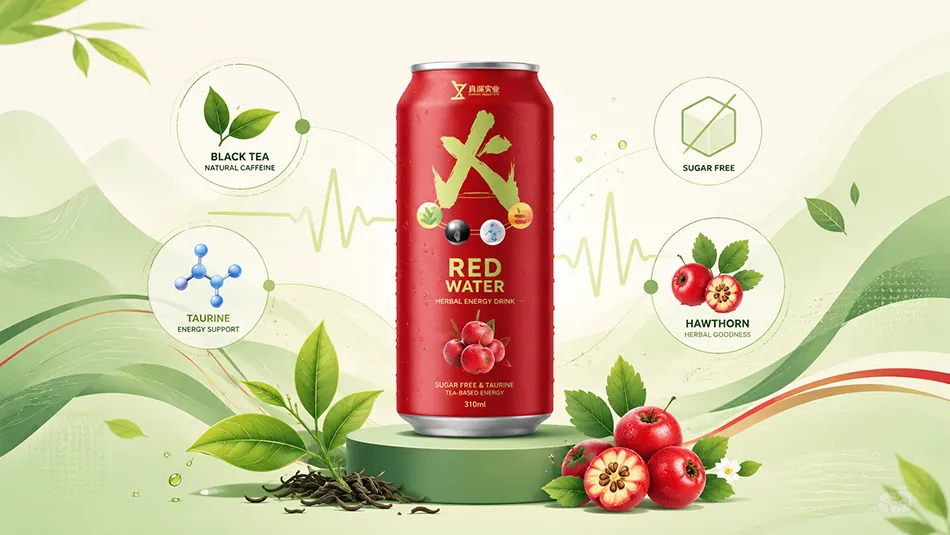
The Black Tea Hawthorn Herbal Energy Drink is not presented here as a finished sugar-free product claim. Its stronger value in this discussion is as a tea-based herbal energy drink reference for brands exploring functional beverage development. The product uses a 473 ml, 16 oz aluminum can format, with black tea and hawthorn flavor, and its formulation direction includes taurine, caffeine, B vitamins, tea extract, and fruit-based ingredients.
For brands developing sugar free energy drinks, this product direction can serve as a starting point for flavor direction, functional positioning, and private label planning. The sugar level, sweetener system, caffeine level, and label language should still be confirmed during custom formulation. The black tea and hawthorn direction is especially useful for buyers that want a more distinctive alternative to common citrus or berry-only energy drink flavors, while the final sugar-free or low sugar positioning should be handled through formula development and testing.
A strong supplier brief does not need to be long, but it should be specific. It should include the target country, target consumer, sugar direction, caffeine source, desired flavor family, functional ingredient plan, packaging style, order estimate, and label concern. Without these details, the first sample may reflect a general idea rather than a market-ready sugar-free or herbal energy drink direction.
For sugar free energy drinks, the brief should clarify the sweetener preference, aftertaste tolerance, and acidity range. For a tea energy drink, buyers should define whether black tea, green tea, oolong tea, guarana, or added caffeine will carry the energy position. For a taurine energy drink, taurine should be planned together with B vitamins, caffeine level, flavor balance, and market claim limits. These choices directly affect the formula and artwork direction.
Sugar-free and herbal positioning can make an energy drink feel more relevant for today’s buyers, but the final quality still depends on the full formula. A stronger product connects natural caffeine source, taurine, B vitamins, sweetness, tea base, flavor balance, and claim discipline. The best result is not the most complicated formula; it is the one that matches a real drinking moment and can be produced with consistent quality.
For brands planning a sugar-free version, a low sugar tea-based formula, or a private label herbal energy drink, the next useful step is to send us your beverage concept and discuss sweetness level, flavor testing, functional ingredient positioning, and OEM production needs.
Q: Are sugar free energy drinks always healthier than regular energy drinks?
A: Not always. They can cut down on extra sugar consumption. Yet the entire recipe remains important. The amount of caffeine, kind of sweetener, level of tartness, portion amount, and how often one drinks it all influence the overall user outcome. A properly crafted sugar-free option needs to maintain equilibrium. It should have straightforward branding. And it must fit the intended audience.
Q: Can a herbal energy drink still contain caffeine?
A: Yes. Such a beverage might include caffeine sourced from extracts of tea, or from guarana, or even directly added. This varies based on the specific blend and the group it aims to serve. Purchasers ought to verify restrictions on components, regulations for labeling, and consumer tolerance prior to approving the item. One must avoid mixing up herbal branding with a no-caffeine approach.
Q: What energy drink flavors work well with tea and taurine?
A: Options like black tea, hawthorn, citrus, berry, green tea, and tropical fruit often pair effectively. This happens if the sharpness and sugariness stay in harmony. Tea brings added richness. Meanwhile, hints of fruit assist in easing any harshness from active elements. The ideal selection for taste relies on preferences in the region, the container volume, and the planned time for consumption.


