Fitness buyers now judge energy drinks with more care. For gym shelves, convenience stores, outdoor channels, and private label energy drink development, the formula needs to feel useful, drinkable, and commercially realistic. This category sits in that middle space. They need enough taste to support repeat purchase, but they also need a lighter image that fits modern fitness habits.
Sugar level is not only a nutritional detail. It affects shelf position, consumer comparison, and the product’s long-term use image. In fitness channels, buyers often want a drink that sits between a traditional energy drink and a plain hydration product. That is why this direction can be attractive when the formula is still complete.
The risk is also clear. Reducing sugar can expose bitterness, acidity, mineral notes, or a thin mouthfeel. A buyer should not approve a product only because the label looks lighter. The first check is whether the sweetness system supports the full formula. Fruit juice, sweeteners, acidity, vitamins, and functional ingredients need to work together. If the product feels harsh after a few sips, the low sugar claim may not protect repeat sales.
A fitness consumer may want energy, but the use occasion is not always the same as late-night study or long-distance driving. A pre-gym buyer, a post-workout buyer, and a weekend outdoor user may need different levels of sweetness, caffeine impression, and hydration support. A sports energy drink should be built around the real moment of use, not the strongest possible formula. This is where an electrolyte-led format becomes relevant, because sweat-related use cases often create demand for sodium and potassium support.
A low sugar claim can help a beverage feel more modern, but the drink still has to be enjoyable. Buyers should check whether the formula has a clean sweetness curve, balanced acidity, and enough body. This is especially important when the formula includes vitamins, guarana, electrolytes, or tea-based ingredients, because these elements can change aftertaste.
A practical review can start with one tasting question: does the drink still feel finished after the sugar is reduced? If the answer is no, the formula may need a better fruit base, softer acid balance, or a different sweetener blend. We also avoid treating low sugar as the same as sugar free. Some markets have specific label rules, so the wording must stay careful.
|
Formula direction |
Typical sugar target |
Better fit |
Main formulation risk |
|
sugar free |
0 g added sugar |
strict fitness image, daily focus |
sweetener aftertaste |
|
low sugar |
1–8 g sugar range |
gyms, retail, light activity |
thin taste if poorly balanced |
|
regular sugar |
20 g+ sugar range |
classic energy occasions |
heavier nutrition image |
|
fruit-assisted low sugar |
3–10% juice direction |
fruit-forward functional drinks |
acidity and shelf stability |
These ranges are planning references, not universal label rules. Buyers still need a market review and lab confirmation before using any claim.
Before sampling, buyers should connect the sugar decision with the product’s full commercial role. The same sweetness level can work well in one product and fail in another. A peach-forward gym drink, a black tea focus drink, and a high-intensity gaming drink should not share the same sensory target.
A useful development route is:
This sequence keeps the project from becoming a mix of fashionable claims. It also gives the supplier a clearer brief during flavor adjustment and packaging review.
For fitness buyers, electrolytes create a clearer reason to buy than sweetness reduction alone. A product positioned for training, heat, or active retail should explain why it belongs near sports nutrition, convenience energy, or chilled functional beverages. Sodium and potassium are familiar electrolyte cues, and they can support a practical product story when sweating is part of the occasion.
Still, an electrolyte energy drink should not make broad health or recovery promises without the right support. The safer B2B message is about formula direction: hydration support, mineral design, pleasant taste, and a suitable serving format. Buyers comparing related category content can also read ZhenXi’s article, What Happens If You Only Drink Water After Intense Sweating?, near the later research stage. Energy source needs the same discipline. Guarana, theanine, B vitamins, and electrolytes can help build a more layered formula when used with care, but each ingredient should have a clear reason to be there.
Energy drink flavors are not decoration. Function may create the first trial, but flavor often influences repeat purchase. Many standard formulas rely on citrus, berry, or heavy sweetness. Those profiles can still work, but they may feel crowded if the buyer wants a fresher shelf identity.
Yellow peach is useful because it feels familiar without being too plain. It can give a lighter formula a softer fruit direction, especially when the beverage also needs to cover mineral notes or a functional aftertaste. The key is restraint. A fruit-forward drink should not taste like syrup, and it should not hide the formula under excessive aroma. When energy drink flavors are planned with sweetness and acidity together, the product can feel lighter while still giving consumers a clear taste memory.
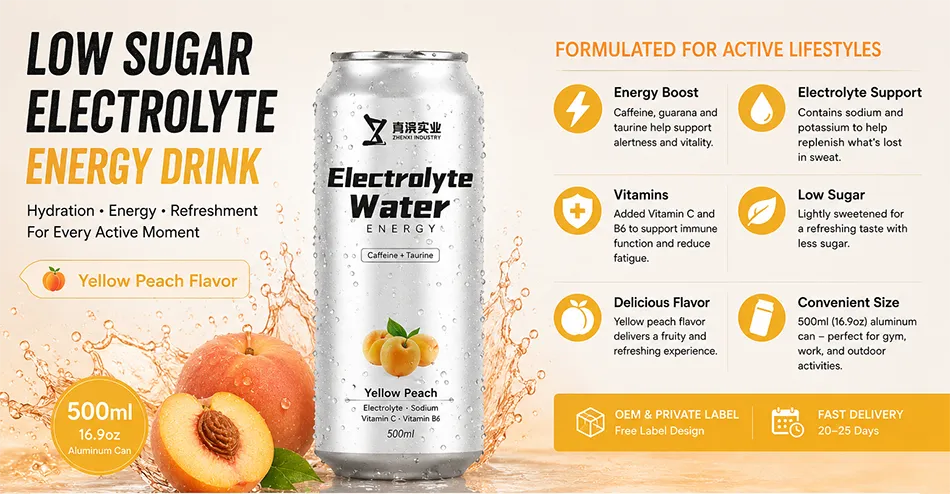
A practical example is 500ml Yellow Peach Electrolyte Energy Drink. It uses a 500 ml, 16.9 oz aluminum can format, with OEM brand support, private label value, 12 months above shelf life, one-container MOQ, and 20–25 days delivery time. The product direction includes yellow peach flavor, vitamins, sodium and potassium electrolytes, low sugar positioning, guarana, and theanine.
This does not make the drink suitable for every market or every consumer. Its stronger value is practical: it gives buyers a reference for a fruit-forward format that can connect fitness, chilled retail, outdoor use, and private label planning. ZhenXi Industrial also works across beverages and aluminum can packaging, which helps buyers discuss formula and container decisions within one project instead of separating them too late.
A good brief should not be long, but it should be specific. Buyers should define the target country, sales channel, sugar direction, caffeine expectation, electrolyte need, flavor reference, aluminum can size, order estimate, and label concern. Without these details, the first sample may be technically acceptable but commercially vague.
For a private label energy drink, packaging should not be treated as a final artwork step. Aluminum can size, inner coating, acidity, sterilization, shelf-life target, and printing needs can all affect the project. Our service process usually works best when formula discussion, can size confirmation, sample testing, and mass production planning are connected early. That approach is useful for a sports energy drink because taste, function, label language, and production reality must move together.
The stronger low sugar energy drinks for fitness channels are not simply the lowest-sugar products. They are the products that match a clear drinking moment, use credible ingredients, taste pleasant enough for repeat purchase, and can move from sample to shelf with fewer production surprises. For a lighter functional beverage, buyers should check sweetness, electrolytes, energy source, flavor, aluminum can format, and label discipline together.
If your team is planning a low sugar electrolyte formula, a yellow peach beverage, or an energy drink project for fitness channels, share your concept with ZhenXi and discuss formula testing, packaging, and OEM production options.
Q: Are these drinks always better for fitness channels?
A: Not always. A low sugar formula can support a lighter product image, but the full formula still matters. Buyers should check the sweetness quality, caffeine level, electrolytes, acidity, flavor comfort, serving size, and label wording. A drink that tastes thin or harsh may not perform well, even if the sugar number looks attractive.
Q: What should this formula include for fitness buyers?
A: A practical formula often uses sodium and potassium as clear electrolyte cues, then balances them with flavor, sweetness, and energy support. The product should fit the drinking scene. A gym drink, outdoor drink, and workday drink may need different serving sizes and taste profiles.
Q: Why does aluminum can format matter for a low sugar energy drink?
A: Aluminum cans are suitable for chilled retail, portability, and functional beverage display. For B2B buyers, the format also affects label space, MOQ, filling process, shipping, and shelf planning. A 500 ml aluminum can can work well when the product needs both hydration volume and a stronger shelf presence.


