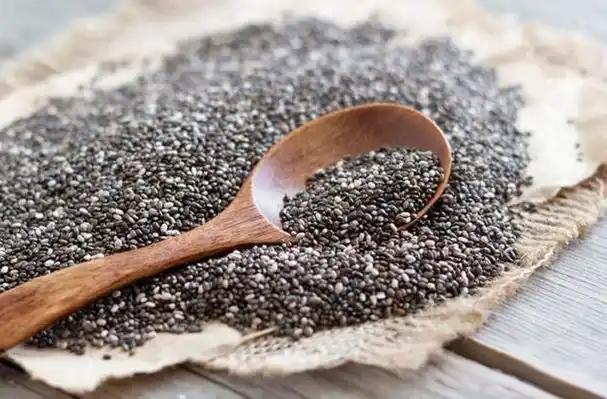
When it comes to chia seeds, everyone now thinks of them as nuts. In fact, as early as 3500 BC, chia seeds were food. Wild chia seeds were first discovered in Mexico and Guatemala, and they were cultivated into the main local food crops. In 2014, chia seeds officially entered the Chinese food market as a new raw material, and were gradually accepted and widely favored by people.
Since chia only grows in highland deserts at an altitude of about 1,200 meters in Mexico and North America, there is no such species in Asia, and my country relies on imports for its chia seeds. Although chia seeds are small in size (generally 1.87±0.1mm long, 1.21±0.08mm wide, 0.88±0.04mm thick, and 1,000-grain weight is 1.2~1.4 grams), they are very nutritious, rich in dietary fiber, protein, B vitamins, minerals calcium and magnesium, selenium, unsaturated fatty acids, and a variety of antioxidant ingredients.
1. Dietary fiber
High dietary fiber is the biggest feature of chia seeds, with a content of up to 34.4 grams/100 grams, nearly 2.5 times that of black sesame seeds and 1.3 times that of flax seeds.
The Chinese Nutrition Society recommends that Chinese adults should consume 25 to 30 grams of dietary fiber per day, but the average daily dietary fiber intake of Chinese residents is only 10.4 grams, less than half of the recommended amount. Chia seeds are a good food for supplementing dietary fiber. Eating 1 mineral water bottle cap of chia seeds can meet nearly 10% of the minimum recommended daily dietary fiber intake of the general population.
2. Protein
Speaking of foods that can supplement protein, everyone will think of meat, eggs, milk and beans. In fact, chia seeds are also a good choice for supplementing protein. The protein content of chia seeds is richer than that of rice, wheat, corn, etc., which is 16.5 grams/100 grams. There are also literature data showing that it is 20.70% to 25.32%, and the amino acid composition is relatively reasonable, with high edible value.
3. B vitamins
Chia seeds are a healthy food that supplements natural B vitamins, with vitamin B1 and vitamin B2 contents of 0.62 mg/100 g and 0.17 mg/100 g, respectively, and 8.83 mg/100 g of niacin.
The recommended intake of vitamin B1 and vitamin B2 for adults in my country is 1.4 mg/day for men and 1.2 mg/day for women. Lack of vitamin B1 will affect appetite, while lack of vitamin B2 will cause symptoms such as angular cheilitis, cheilitis, glossitis, photophobia, tearing, blurred vision, and fear of cold. According to statistics from 2015, the per capita intake of vitamin B1 and vitamin B2 in my country did not meet the recommended standards, only 0.8 mg and 0.7 mg. In terms of supplementing B vitamins, chia seeds can be eaten.
4. Minerals calcium, magnesium, and selenium
Chia seeds are rich in a variety of minerals, such as calcium, potassium, magnesium, iron, phosphorus, and selenium. Among them, calcium, magnesium, and selenium have relatively high content, which are 631 mg/100 g, 335 mg/100 g, and 55.2 μg/100 g, respectively. Calculated based on eating 10 grams of chia seeds per day, it can provide us with 63 mg of calcium, 33.5 mg of magnesium, and 5.5 μg of selenium.
Supplementing calcium and magnesium is good for bone health, and supplementing selenium is helpful for anti-oxidation, cancer prevention, and maintaining immunity.
5. Unsaturated fatty acids
As a seed food, chia seeds naturally have a high fat content of 30.7 g/100 g, rich in unsaturated fatty acids, of which Omega-3 fatty acids are 17.8 g/100 g, second only to flax seeds among common nuts (flax seeds are 22.8 g/100 g, you can review previous articles). Omega-3 is an essential fatty acid that is very beneficial to human health and can prevent chronic diseases and heart disease.
6. Antioxidant ingredients
Chia seeds also contain a relatively rich amount of flavonoids and polyphenols, such as caffeic acid, rosmarinic acid, quercetin, chlorogenic acid, myricetin, danshensu, catechins, hesperidin, rutin and other ingredients, which can help the body resist chronic inflammation.
In 2018, the American magazine "Impact Factor" published a study. The Asia-Pacific Center for Theoretical Physics analyzed the nutritional components of 1,000 kinds of food and rated the "Top 100 Most Nutritious Foods in the World", with chia seeds ranking fifth.
We must not miss such good food. We must eat it. If we can eat 1 spoon of chia seeds every day, there are still many benefits to health.
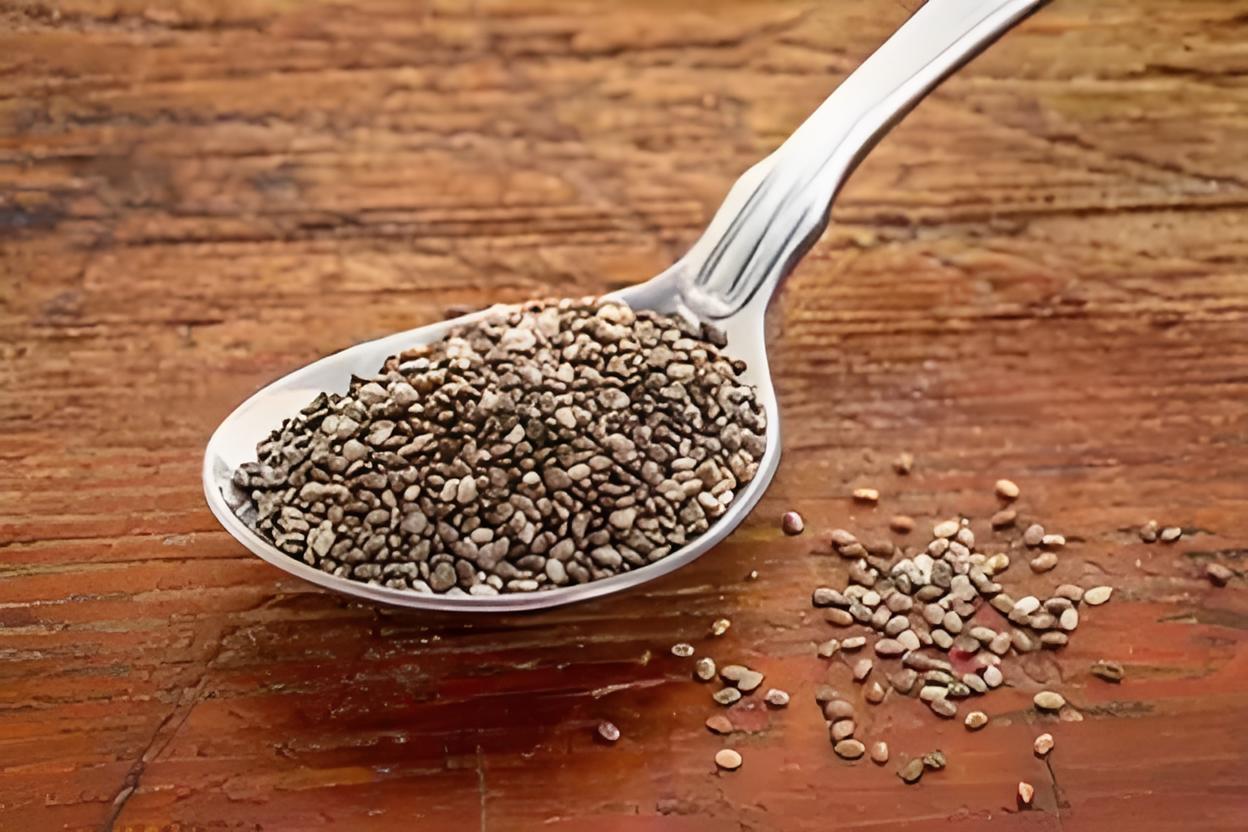
Prevent constipation and protect the intestines:Chia seeds have a high dietary fiber content, of which about 25% to 30% is soluble dietary fiber, and the rest is insoluble dietary fiber. Soluble dietary fiber can absorb water and swell, so chia seeds can increase in volume to 15 times the original size after absorbing water. After eating, you will feel full and promote gastrointestinal motility. This is very helpful in preventing constipation and intestinal diseases. It should be noted that you should drink more water at the same time!
Lower postprandial blood sugar:A study published in the American journal Nutrition Reviews showed that after consuming more than 7 grams of chia seeds per day for 2 consecutive months, postprandial blood sugar levels were significantly reduced. This is related to the rich dietary fiber and unsaturated fatty acids in chia seeds.
Lower blood pressure:Chia seeds are high-potassium and low-sodium foods, which are very suitable for people who need to control blood pressure. And studies have shown that consuming more than 15 grams of chia seeds per day for 60-168 consecutive days can reduce diastolic blood pressure by an average of 7.14mmHg.
Protect blood lipid health:High blood lipids are mainly caused by the increase of serum total cholesterol, triglycerides, and low-density lipoprotein cholesterol (bad cholesterol), which is the culprit of cardiovascular and cerebrovascular diseases. The soluble dietary fiber contained in chia seeds can effectively inhibit the absorption of cholesterol in the body, thereby playing a role in lowering blood lipids; and the Omega-3 fatty acids in chia seeds can be converted into a small amount of EPA and DHA in the body, which has a positive effect on protecting blood lipid health.
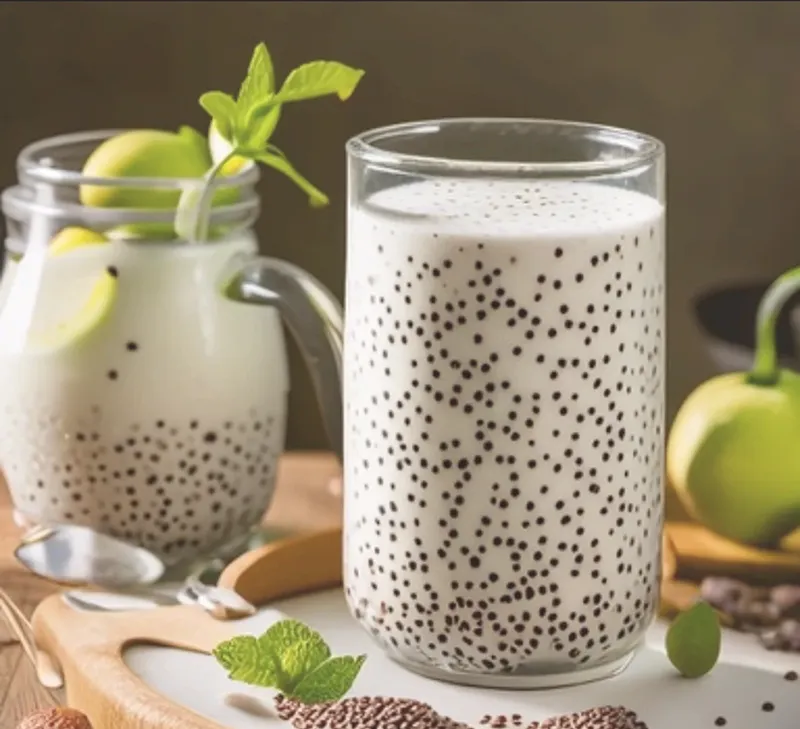
Chia seeds are small in size, and they don’t taste special when eaten alone, so they are generally eaten with other foods.
1. Soak in milk or yogurt
This method of eating is relatively simple. Just sprinkle the chia seeds in milk or yogurt, stir evenly, and let it sit for a while.
Copyright image of the gallery, reprinting and using may cause copyright disputes
2. Overnight oats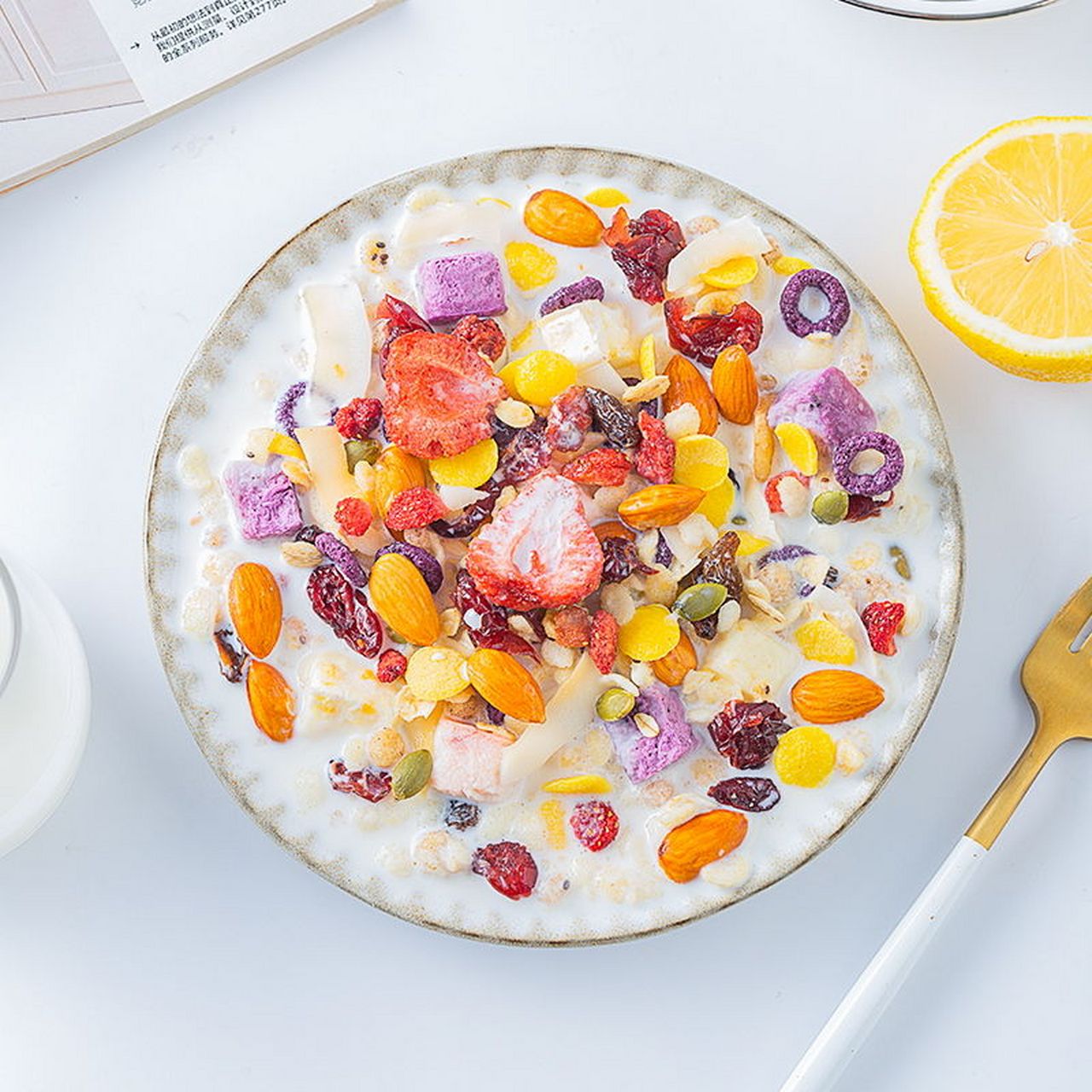
According to the average amount of food for women, take about 30 grams of oatmeal and spread it on the bottom of the container, pour about 75 grams of yogurt and spread it, then pour 20 grams of oatmeal and spread it, continue to pour 75 grams of yogurt and smooth it, then sprinkle 1 spoon of chia seeds, and finally put the cut fruits, such as pineapple, dragon fruit, kiwi, etc. on the top layer, seal it and put it in the refrigerator overnight, and it can be eaten the next morning.
In addition, chia seeds can also be put in bread, steamed buns, grain rice, vegetable and fruit salad, porridge and soup.


