Theanine (L-Theanine) is an amino acid unique to tea, with a chemical formula of C7H14N2O3, accounting for 1%-2% of the weight of dry tea. Theanine was first isolated from green tea in 1950. It is a characteristic amino acid of tea and one of the flavoring substances of tea. It is strongly positively correlated with the quality of green tea, with a correlation coefficient of 0.787-0.876. Among the more than 20 amino acids in tea, theanine accounts for about 50%-60% of the total amino acids in tea; research has found that except for trace amounts detected in plants such as camellia, mushrooms, and oil tea, it has not been found in other plants.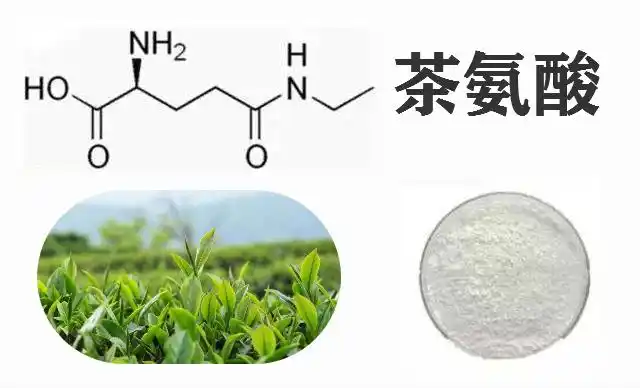
Theanine, a health food that does not have a hypnotic effect but can relieve fatigue, lower blood pressure, and improve learning and memory ability, is rare and eye-catching. For this reason, theanine won the research department award at the International Food Ingredients Conference held in Germany in 1998. Theanine is the amino acid with the highest content in tea, accounting for more than 50% of the total free amino acids and 1%-2% of the dry weight of tea. Theanine is a white needle-shaped body, easily soluble in water, with a sweet and fresh taste, and is a component of the taste of tea.
As a unique amino acid in tea, theanine also plays an important biological activity, such as calming the nerves, protecting nerve cells, improving memory, enhancing immunity, and relieving female menstrual syndrome. At present, the health care products related to theanine on the market are becoming increasingly abundant and widely loved by consumers.
1. Protect nerve cells
Glutamate is a neurotransmitter that can excite nerves and plays an important role in learning and memory as well as neuron growth. The loss of glutamate receptors in the brain of patients with neurodegenerative diseases leads to excessive free glutamate content, which causes neurotoxicity and neuronal apoptosis. Theanine has a protective effect on nerve cells. Because its structure is similar to glutamate and its molecular weight is small, it can pass through the blood-brain barrier smoothly and replace glutamate to bind to downstream receptors. It can protect brain pathways and prevent neurological diseases such as Alzheimer's disease by blocking glutamate-mediated cell signaling pathways to a certain extent.
2. Calming and tranquilizing the mind, improving memory
Theanine can calm the mind, which is the current part of its efficacy research. Most of the health products currently developed about theanine are based on its calming and tranquilizing effects and sleep. The calming and tranquilizing effect of theanine is related to its effect on brain waves. From bacteria to elephants and whales, there are electric wave activities in the body. Brain waves can be divided into four types according to different frequencies: α, β, 6, and 0. Brain waves are also the most visual manifestation of the rhythm of brain cell activity. The frequency of alpha waves is 8~13 Hz, usually appearing when a person is awake, quiet and eyes closed. Once the eyes are opened, the alpha waves disappear immediately. When there is no external disturbance, the frequency is very constant. The frequency of beta waves is 14~30 Hz, usually appearing when the body is greatly affected, such as mental tension and emotional excitement. When a person wakes up from a nightmare, the original slow wave alpha can be immediately replaced by the faster wave. The delta wave has the slowest frequency, 1~3 Hz, and mainly appears in infancy or during the period of immature intellectual development, and in adults who are extremely tired and drowsy, or even under anesthesia. The delta wave can be recorded in the temporal lobe and parietal lobe of the brain. The frequency of 0 waves is 4~7 Hz, usually when frustrated, depressed, and mentally ill patients may produce this wave. The brain waves of teenagers in puberty (10~17 years old) are mainly 0 waves. When people are in a good mood or meditating, the excited α wave, δ wave or 0 wave will weaken, while the α wave will be relatively enhanced. Theanine can promote the generation of α waves in the brain. After taking theanine, the body will feel obviously relaxed and conscious, which has a calming effect.
Theanine can also affect the level of neurotransmitters in the brain, especially dopamine and 5-hydroxytryptamine. Dopamine directly affects people's emotions, makes people excited and happy, and can improve memory! Treat depression. Related experimental studies have shown that taking a certain dose of theanine can improve the memory of mice, find the exit of the maze faster, and reduce the number of mistakes. In addition, the learning ability of mice is also significantly improved, and they can master the essentials of escaping the maze in a shorter time. 5-hydroxytryptamine is also a very important neurotransmitter in the brain, called serotonin. People with low 5-hydroxytryptamine levels are more likely to develop depression, behave more impulsively, and engage in alcoholism, aggression, violence, and even suicide. Scientists sometimes make experimental animals aggressive by changing the level of 5-hydroxytryptamine in their brains for experimental needs. Interestingly, the rate at which women's brains synthesize serotonin is only half that of men's, which also explains why women are more susceptible to depression from the perspective of neurotransmitters. In addition to gender differences, with the increase of age, the number of serotonin receptors continues to decrease, and serotonin is difficult to play its due role. According to a study, the number of serotonin-specific receptors in the brain of 60-year-olds is reduced by 60% compared with 30-year-olds, which increases the possibility of depression in the elderly. In addition, serotonin also has the effect of enhancing memory. Taking theanine can increase the level of serotonin to a certain extent by adjusting the level of serotonin in the brain and increasing the level of its precursor tryptophan. At present, serotonin has become a commonly used anti-depressant health product abroad.
In addition to theanine, tea also contains a very important amino acid, y-aminobutyric acid, which is about 0.03 mg/g in tea. It also has a calming and tranquilizing effect. There is a precedent for extracting it and making health products abroad. By placing the harvested fresh leaves under anaerobic conditions for 5 to 10 hours, the γ-aminobutyric acid content can be increased to more than 1.5 mg/g.
Theanine is known as a "natural sedative". The United States, Japan and other countries have developed and marketed pure natural health capsules with theanine as the main raw material, supplemented with valerian root extract, hypericin and other natural ingredients. Long-term use can effectively promote sleep.
3. Improve immunity
During the SARS outbreak in 2003, Harvard Medical School reported that drinking tea can resist viral invasion by improving human immunity. The Journal of the National Academy of Sciences also reported that theanine can enhance human immunity by 5 times. This is because the precursor of theanine, ethylamine, can activate the γ-δT immune cells in the blood, thereby improving immunity. γ-δT immune cells are the first line of defense against many bacteria and viruses, and even play an active role in anti-tumor. Theanine can also promote γ-δT cells to secrete interferon that resists infection. American scientists found that the amount of interferon in volunteers who drank tea was five times that of coffee drinkers. The World Health Organization once proposed 10 foods that can prevent SARS, including green tea.
4. Relieve premenstrual syndrome
Premenstrual syndrome refers to the general term for mental and physical discomfort that occurs 3 to 10 days before a woman's menstruation, including headaches, chest pain, abdominal pain, back pain, weakness, mental fatigue, irritability, and difficulty concentrating. Most women experience such symptoms, and because they recur, they greatly affect women's normal life. Studies have shown that after taking theanine, such symptoms can be gradually improved. The specific mechanism is still under study, and it may also be related to the sedative and tranquilizing function of theanine.
In addition, theanine also has the effects of lowering blood pressure, resisting fatigue, and inhibiting tumor growth, which are also being studied and explored.


