Tea beer fermentation is an extremely complex process, which is accompanied by the transformation of multiple substances, among which yeast plays a major role. Yeast uses fermentable sugars and nitrogen in wort to carry out life metabolism activities, thereby producing a series of primary metabolites and secondary metabolites such as alcohols, acids, ester compounds, diacetyl and aldehydes, giving tea beer a special color and flavor. In addition, the fermentation rate of tea beer, the formation of flavor substances and the stability of the final product are closely related to the type of yeast selected for fermentation, the inoculation amount and the fermentation conditions. The entire beer fermentation process is roughly divided into three stages, namely the yeast adaptation stage, the aerobic respiration stage and the anaerobic respiration stage. Under aerobic conditions, yeast undergoes the EMP-TCA (Embden-meyerhof-parnas pathway-tricarboxylic acid cycle) cycle, decomposing fermentable sugars into water and carbon dioxide, and generating a large amount of energy for yeast reproduction; under anaerobic conditions, yeast undergoes the EMP-pyruvate-alcohol pathway, and glycolysis produces alcohol, carbon dioxide and a small amount of energy.
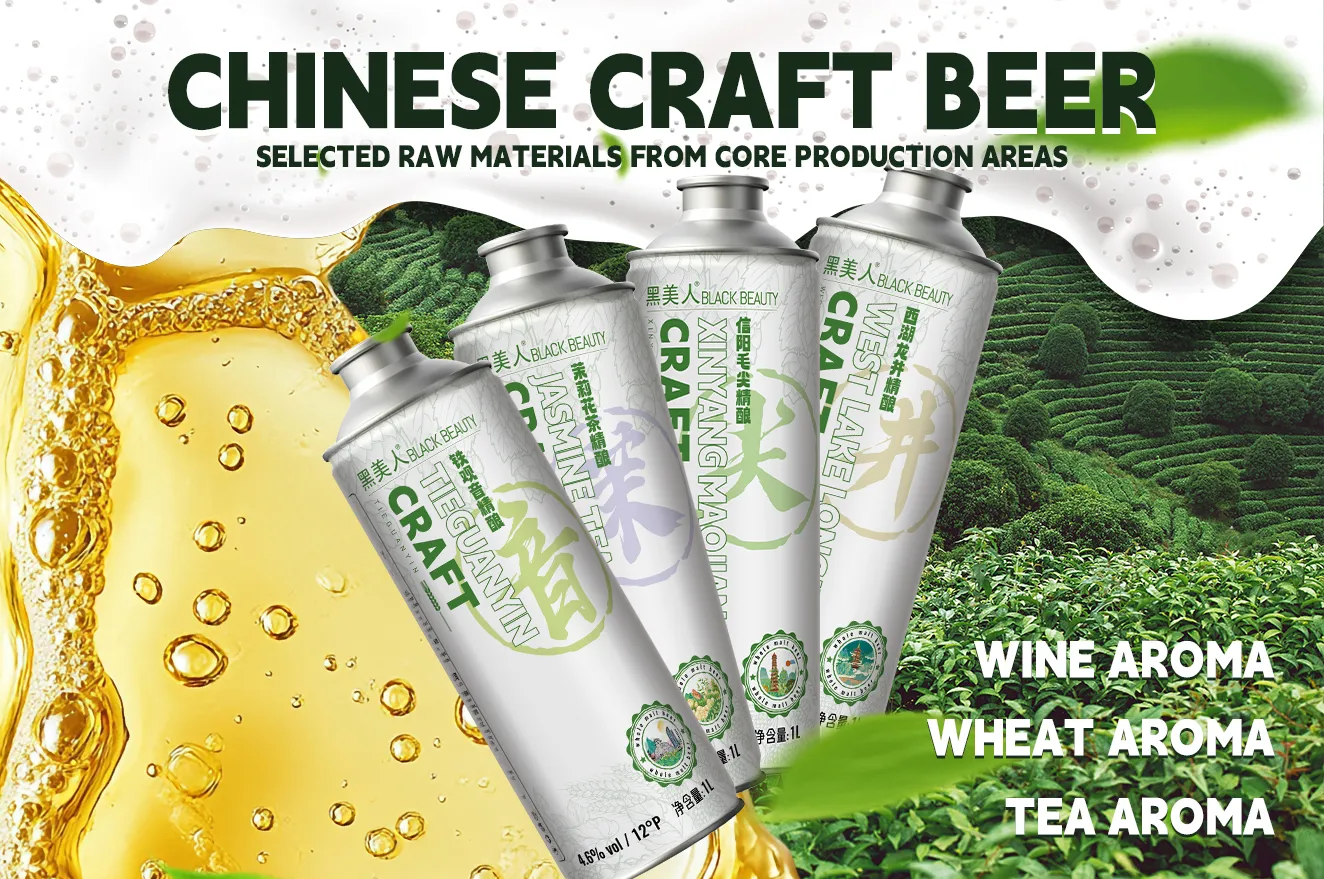
Beer yeast is mainly divided into two categories, upper yeast and lower yeast, based on the fermentation performance, cell morphology and physiological properties. The upper yeast is at the top of the fermentation liquid during fermentation, and the lower yeast is at the bottom of the fermentation liquid during fermentation. There are obvious differences between the two in terms of fermentation speed, conditions and finished product quality. The temperature required for the fermentation of upper yeast is higher than that of the lower yeast. It has the advantages of fast beer maturation, high fermentation degree, fast equipment turnover, rich foam and unique alcohol taste, but the product shelf life is short. The upper yeast cell morphology is mostly round, and most cells are clustered together; while the lower yeast is mostly oval and the cells are dispersed, but the yeast is at the bottom after fermentation, which is convenient for clarification of the wine and yeast recovery. Lu Jian and others used the yeast below to make a tea beer with high antioxidant activity, soft aroma and bright color. The yeast above is a type of yeast that is currently used more frequently in the craft brewing industry, but it is relatively less used in tea beer brewing. The inoculation amount is an important factor affecting the fermentation rate and flavor of tea beer. It is generally believed that the larger the inoculation amount, the shorter the fermentation time, the faster the sugar reduction rate, and the greater the sugar consumption. However, too high an inoculation amount can easily lead to high alcohol content, high fusel oil content in the wine, and low ester content; too low an inoculation amount can easily lead to a slowdown in the entire alcohol fermentation process, low alcohol content in the wine, and high volatile acid content. According to research, the general inoculation amount of beer is 1.0x10^6-3.0x10^7 yeast cells per milliliter. When Zou Yinlong brewed black tea beer, he found that with the increase of yeast inoculation, the sensory quality of black tea beer showed a trend of first rising and then falling. This is because with the increase of the addition amount, the peak of yeast fermentation appeared earlier, which proved that the yeast fermentation speed was faster, and the more byproducts were produced by its metabolism, the higher the content of organic acid, the sour taste, the lack of softness of the beer, and the poor coordination of the beer body; when the yeast inoculation amount is too much, the fermentation time is advanced, and the fermentation is too complete, so that the yeast enters the apoptosis period too early and produces autolysis, and the turbidity of the beer increases. The yeast inoculation amount is also related to the antioxidant effect of tea beer. When Hu Chongqing studied the relationship between the yeast inoculation amount and the total phenol content and antioxidant activity of green tea beer, he found that the antioxidant capacity of beer increased with the increase of yeast inoculation amount. However, when the number of yeast cells per milliliter exceeds 3.0x10^7, the antioxidant capacity of beer begins to decline. This may be due to the increased competition for substrate utilization by yeast, more sulfites are used by yeast itself to synthesize the required amino acids, which reduces the reducing ability of yeast, so too high yeast inoculation does not enhance its antioxidant capacity. In addition, a moderately high yeast inoculation can reduce the formation of higher alcohols, but too high yeast inoculation will reduce the number of new reproduction generations, poor yeast activity, and easy aging, affecting the smooth progress of beer fermentation activities. At the same time, a higher yeast inoculation will increase costs.


