I wonder if this is the case with you? When you are a little tired from work or study, your mouth can't be idle. You want to drink some sweet drinks to bring double satisfaction to your heart and mouth~
Recently, the frost has passed, the breath of autumn is getting stronger, and the weather is gradually getting cooler. A cup of hot milk tea has become the choice of many people to warm their hearts. Milk tea - whether it is milk tea shops that can be seen everywhere in the streets and alleys, or the launch of new autumn flavors of various brands, it seems very suitable to bring a touch of sweet comfort to this early autumn.
But when people enjoy the "first cup of milk tea in autumn" to lightly satisfy their appetite, they often ignore that milk tea may be an invisible "health killer".Why do you say that? Putting aside non-dairy creamer and starch ingredients, even if there is a "sugar-free" option, most people will still choose "70% sugar" or "half sugar" when ordering milk tea, otherwise milk tea will lose its soul?It is this added sugar that causes big problems - not only does it make people "crazy fat", but it also increases the risk of multiple diseases!

Fructose is a sweetener naturally found in fruits and honey, and is also a component of high fructose corn syrup. It is often added to milk tea as an important "source of sweetness". Historically, people's current consumption of fructose has reached a peak, and of course the cost is also obvious - a surge in the incidence of obesity and cancer.
So, how does fructose in milk tea induce obesity step by step? The study Dietary fructose improves intestinal cell survival and nutrient absorption published in Nature deeply explored the mechanism behind "fructose fat".
Studies have found that dietary fructose can improve the survival rate of intestinal cells and increase the length of intestinal villi. As the length of villi increases, the surface area of the intestine also expands, increasing the nutrient absorption and fat content of high-fat foods. Specifically, mice fed a fructose-containing diet had villi that were 25% to 40% longer than mice not fed fructose, which caused the mice to gain weight.

Villus are long, thin, hair-like structures that line the inside of the small intestine. Villus expand the surface area of the intestine and help the body absorb nutrients, including fat, from food as it passes through the digestive tract. Therefore, increased villus length is closely related to increased nutrient absorption, weight gain, and fat accumulation in animals.
To explore the relationship between a high-fructose diet and intestinal villus length, the researchers divided the mice into three groups: a control diet without fructose, a standard high-fat diet with glucose but no fructose (45% of calories came from fat), and an isocaloric high-fat diet (glucose was replaced by sucrose, half glucose and half fructose).
The results were surprising! Although each group of mice consumed the same amount of energy, mice fed fructose in the form of sucrose had significantly increased body weight and fat mass, as well as longer intestinal villi, compared with the high-fat diet group without fructose.
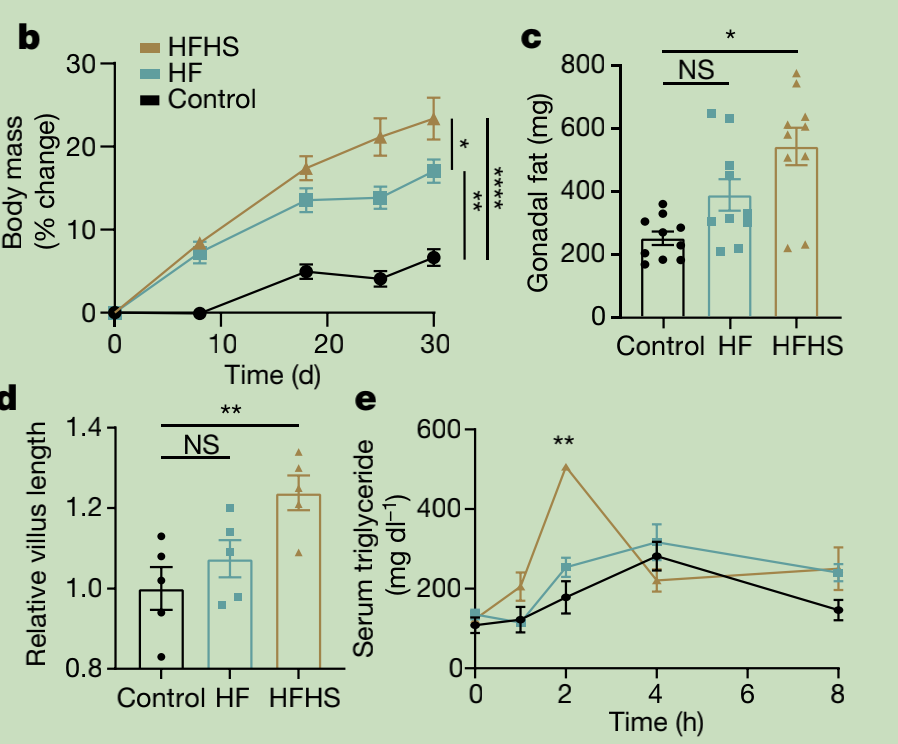
In addition, mice fed fructose in the form of sucrose had higher levels of serum triglycerides after oral administration of fat compared with mice in the control group without sucrose.These data suggest that dietary fructose can increase intestinal villus length and nutrient absorption.
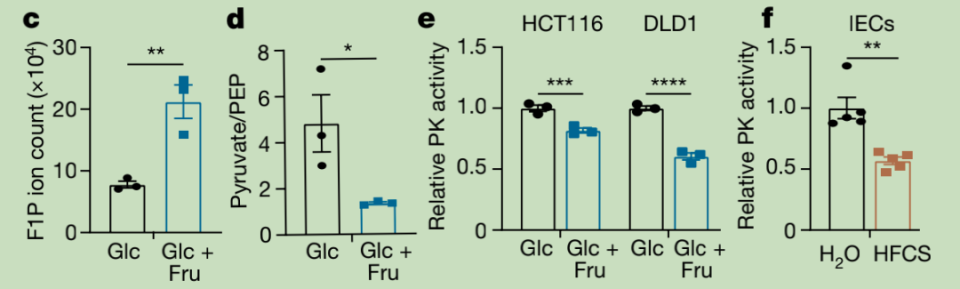
Next, the researchers took a closer look at the metabolic changes in the fructose group mice and found that a specific metabolite of fructose, called fructose 1-phosphate, accumulated at high levels in cells. In hypoxic intestinal cells, fructose 1-phosphate increased the survival of intestinal epithelial cells by inhibiting the M2 isomer of pyruvate kinase (PK), thereby increasing the length of intestinal villi.
Of course, the above research is based on mouse experiments. However, population studies have confirmed that regular consumption of milk tea and other sugary drinks significantly increases the risk of cancer, especially colorectal cancer.The study "Sugar-sweetened beverage intake in adulthood and adolescence and risk of early-onset colorectal cancer among women" published in Gut, a top journal in the field of gastroenterology, followed up 95,464 participants collected in the Nurses' Health Study II for 24 years and confirmed the "association between sugary drinks and the risk of colorectal cancer."
The results showed that in adulthood, women who drank ≥2 servings/day had a 1.18-fold increased risk of early-onset colorectal cancer compared to those who consumed less than 1 serving/week of sugary drinks! If you drink more sugary drinks during adolescence, the risk of early-onset colorectal cancer will be higher.

After 24 years of follow-up, it was found that 109 cases of early-onset colorectal cancer occurred among the 95,464 women surveyed.After correcting for other factors that affect the incidence of colorectal cancer, the impact of sugary drinks on early-onset colorectal cancer is still significant.
Specifically, in adulthood, the risk of early-onset colorectal cancer in women who consumed ≥2 servings of sugary drinks per day was 2.18 times that of women who consumed less than 1 serving of sugary drinks per week; and consuming one more serving of sugary drinks per day increased the risk of early-onset colorectal cancer by 16%. (Note: 1 serving is 236.56 ml)

In addition, in this prospective cohort study, another 41,272 women recalled their dietary intake during adolescence (13-18 years old) in 1998. Based on these records, the researchers also found that:During adolescence, compared with women who consumed less than 1 serving of sugary drinks per week, drinking ≥2 servings of sugary drinks per day would increase the risk of early-onset colorectal cancer by 2.41 times. In other words, consuming one more serving of sugary drinks per day increases the risk of early-onset colorectal cancer by 32%.

What should I do if I really like to drink milk tea or other sugary drinks? Are there any alternatives?
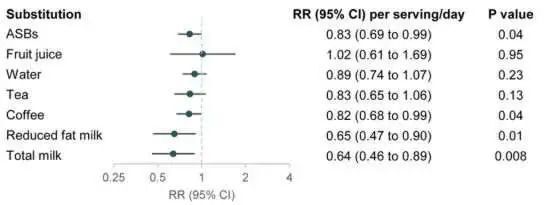
In this study, researchers also found that the intake of sugary drinks and fruit juices had little relationship with early colorectal cancer. Replacing one sugary drink per day with one sugary drink/coffee/skim milk/whole milk can reduce the risk of early colorectal cancer by 17%-36%. Although pure water and tea replace sugary drinks, there is also a trend of reducing the risk of early colorectal cancer, but it did not reach statistical significance in this study.
In fact, it is not an exaggeration to call milk tea an invisible "health killer". The health damage caused by frequent consumption of milk tea is far more than the above mentioned. In addition to cardiovascular disease and cancer, endocrine and metabolic diseases are also a major disaster area, such as gout.
It is well known that gout is a chronic disease caused by long-term hyperuricemia. Among them, dietary factors, such as alcohol, red meat, and seafood, are recognized risk factors for hyperuricemia and gout attacks. Whenever there are gout patients around, people will mention "eat less seafood and drink less", which shows that the view that drinking causes high uric acid has long been deeply rooted in people's hearts.
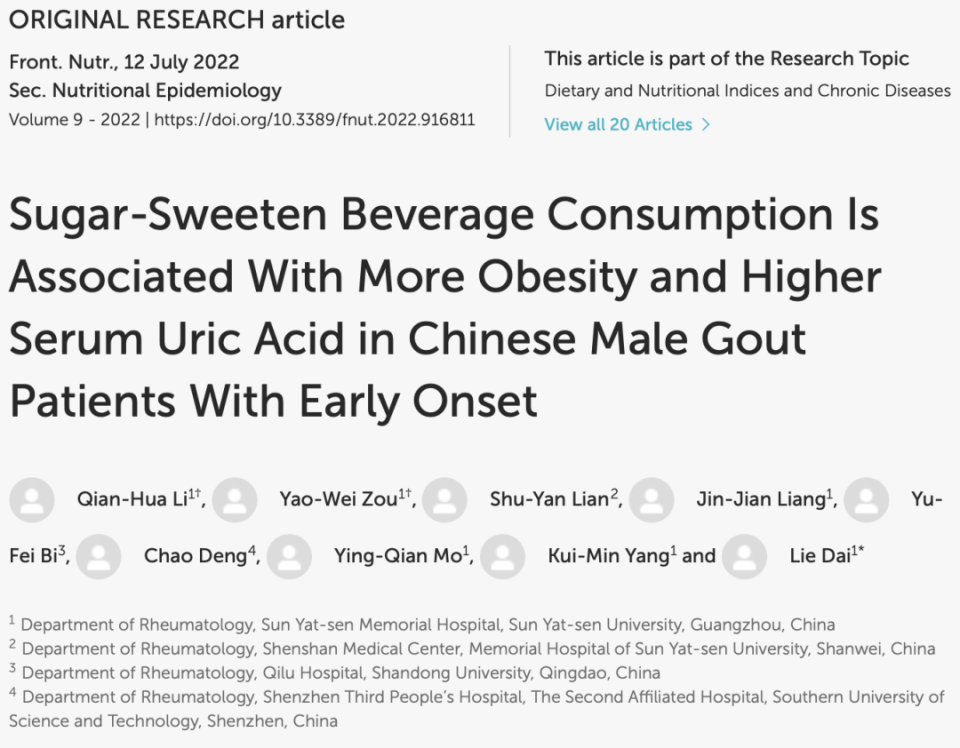
However, the research team from Sun Yat-sen Memorial Hospital of Sun Yat-sen University published in Frontiers in Nutrition may subvert the previous cognition——higher intake of sugary drinks is closely related to higher serum urate (sUA) levels and higher obesity rates; even more subversive is that replacing alcohol intake with sugary drinks is actually the main dietary risk factor for early-onset gout in men. In other words, the high serum urate levels and high obesity rates in patients with early-onset gout are mainly attributed to high sugary beverage intake rather than other common gout-related dietary factors. Milk tea actually surpassed beer to become the ultimate boss behind gout?
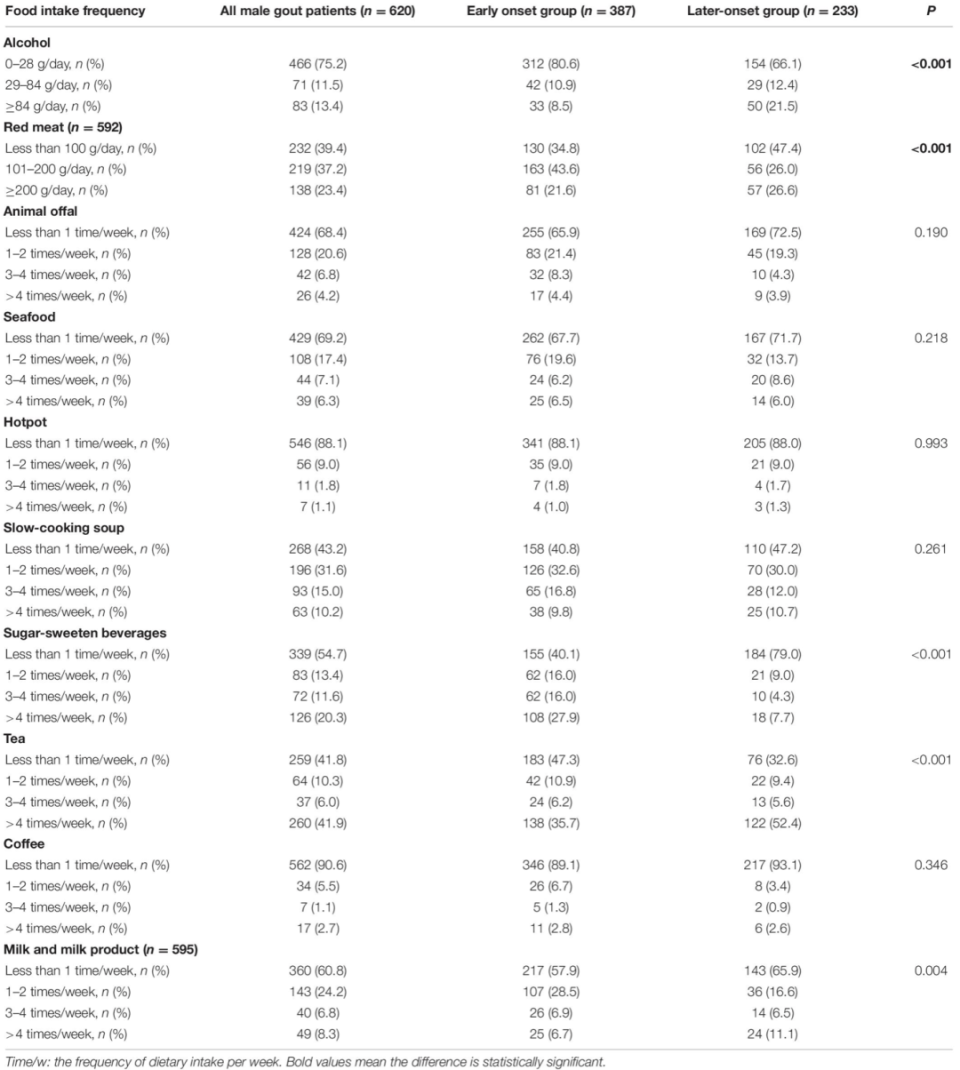
Of all 655 gout patients collected by the researchers, 94.6% were male and 59.1% had early-onset gout. Among them, all early-onset patients were male. In addition, all gout patients included in the study were asked to fill out a food frequency questionnaire involving 10 foods, including: animal offal, red meat, seafood, alcohol, sugary beverages (SSB), coffee, milk and dairy products, hot pot, slow-cooked soup and tea.
Comparing the frequency of food intake between different groups, it was found that compared with late-onset gout, patients with early-onset gout consumed more red meat (101-200 g/day: 43.6% vs. 26.0%), sugary drinks (>4 times a week: 27.9% vs. 7.7%), milk and dairy products (1-2 times a week: 28.5% vs. 16.6%); but the latter consumed less alcohol (>84 g per day: 8.5% vs. 21.5%) and tea (>4 times a week: 35.7% vs. 52.4%) than the former.
So, among the many dietary factors, which one is the "culprit"?
After correcting for potential confounding factors, further data analysis showed that in patients with early-onset gout, the intake of sugary drinks was significantly positively correlated with sUA≥600 μmol/L and obesity rate. Specifically, compared with drinking less than once a week, drinking more than 4 times a week of sugary drinks may increase the risk of sUA ≥ 600 μmol/L by 110%; drinking only 1-2 times a week of sugary drinks will increase the risk of obesity by 150%!
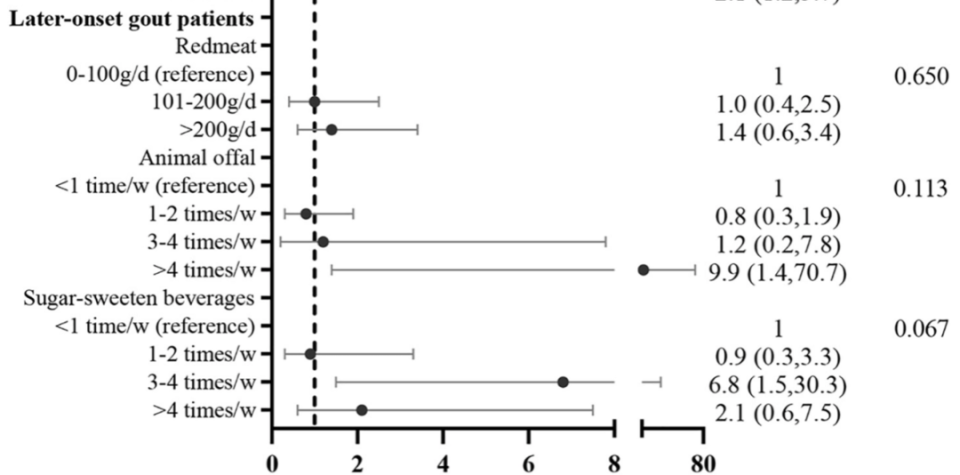
In summary, patients with early-onset gout are characterized by higher sUA levels and obesity prevalence; and drinking sugary drinks more frequently will also lead to higher sUA levels and obesity rates. As a dietary factor with a "pathogenic effect" greater than that of alcohol, it is urgent for people at high risk of gout to limit the amount of sugary drinks they drink!
Although milk tea tastes good, don't be greedy. If you really like to drink milk tea, why not try to make a cup of pure milk tea with real milk and real tea by yourself~


