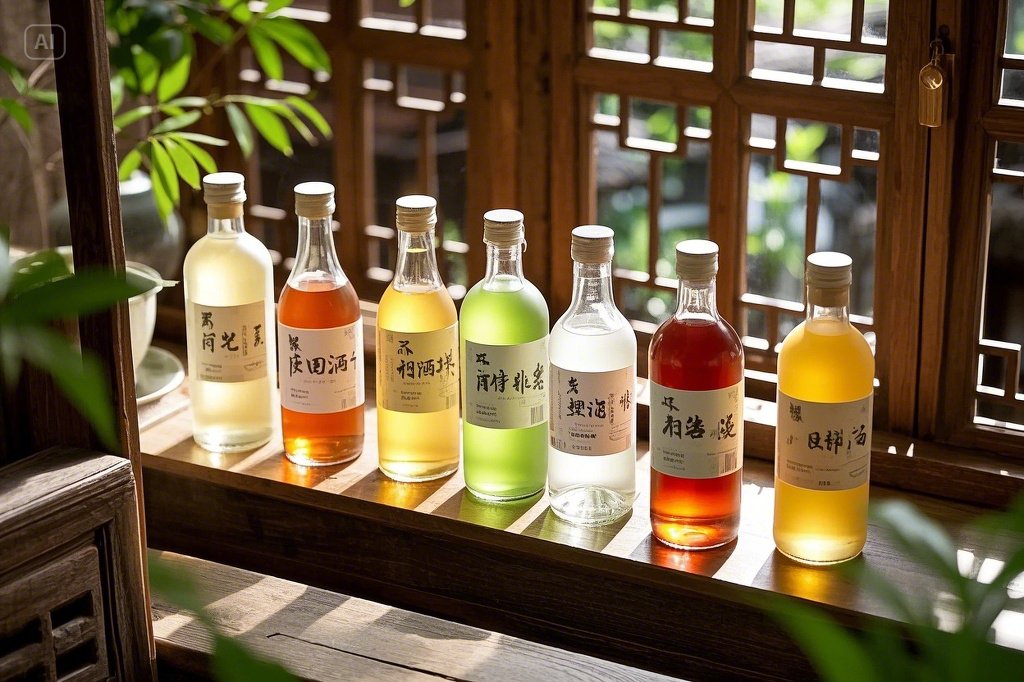
Tea wine is a kind of strong liquor brewed from tea in ancient China, a mixture of wine and its light fragrance of tea. The main ingredients are tea, grain and water. More than 800 years ago, Su Shi, a university scholar in the Northern Song Dynasty, left behind precious calligraphy and ancient books, recording the idea of brewing wine with tea. Su Shi enriched the spiritual connotation of tea wine culture. Su Shi concluded: "Tea wine is brewed from tea leaves, naturally fermented and distilled, its pulp is colorless, and the tea fragrance overflows." There are two types of tea wine: one is made by blending the essence of tea leaves with other original wines; the other is made by fermenting tea leaves as the main raw material.
Black tea sparkling wine: The raw materials are 2.5 grams of black tea, 30 grams of sucrose, 15 milliliters of edible alcohol, 500 milliliters of purified water, 0.01 grams of ascorbic acid, 2 grams of citric acid, and CO2. The preparation method is that after the black tea is extracted with boiling water, the tea juice is filtered, and the sucrose is heated to dissolve and filtered. Other auxiliary materials are dissolved and filtered. The tea juice, syrup, auxiliary liquid and deodorized edible alcohol are fully stirred and cooled. After the coolant is flushed with CO2, it is immediately filled and sealed to obtain the finished product
Green tea sparkling wine: The raw material ratio is 25 grams of green tea, 28 grams of sugar, 12 milliliters of edible alcohol, 0.008 grams of ascorbic acid, 4 grams of citric acid, 4 grams of edible baking soda, a trace amount of green tea essence, and 500 milliliters of purified water. The preparation method is that after the green tea is extracted with boiling water, the tea juice is filtered. The sucrose is heated to dissolve and filtered; other auxiliary materials are dissolved and filtered. The tea juice, syrup auxiliary liquid and deodorized edible alcohol are fully stirred and cooled. After the above liquid is canned, edible baking soda is added and immediately sealed to obtain the finished product.
1.Oolong tea wine
Raw materials and process flow: mid-range oolong tea, first-grade white sugar, 52° wine, yeast, lactic acid, high-quality groundwater, etc.
Technical points: Domestication of brewing yeast, domesticated yeast is an important part of tea wine fermentation. The domesticated yeast has strong fermentation ability, high alcohol production and short fermentation time. Before domestication, the yeast must be activated first. The domestication method is to boil the oolong tea juice in a triangular bottle, plug the mouth with sterile cotton, and cool it naturally; prepare a potato sucrose culture medium containing 150-180 g/L of sugar; prepare a series of potato sucrose culture media containing oolong tea juice; after the culture medium is sterilized, the yeast to be domesticated is inoculated into the culture medium with increasing tea juice concentration in sequence: if the yeast reproduces well, it proves that the yeast can adapt to the environmental growth of oolong tea juice and complete the domestication. Add 4/5 of the tea juice to the fermentation capacity, add sucrose (dissolved in the fermentation liquid and then added) at a ratio of 50:8 between oolong tea juice and sucrose, and stir well. After adjusting the pH value of the fermentation liquid to 4.0 with lactic acid, add the domesticated yeast liquid, inoculate at a 3% inoculation amount, ferment at 22°C for 8 days, and measure the alcohol content every other day. During the fermentation process, the tea wine should be sampled and tested to detect whether its fermentation is normal. Filter the fermented oolong tea wine to obtain the fermented oolong tea original wine. Balanced blending: In order to ensure product quality and improve product grade, it is necessary to blend the alcohol content and acidity of oolong tea wine. Use acid to adjust the acidity of tea wine, and use 52° wine to adjust the alcohol content to about 8°. Clarification: The blended tea wine needs to be clarified to improve the quality of tea wine. Bottling and sterilization: Filter the clarified tea wine and put it into the bottle. After sealing, sterilize it at 85℃ for 15 minutes.
Product features: The product has the characteristics of both tea and wine, with an orange-yellow transparent color, sweet and palatable wine, full and mellow wine body, and significant aftertaste. It is a drink with excellent color, fragrance and taste, suitable for men, women, young and old, and has a wide range of applications.
2.Green tea wine
Raw materials and process flow: green tea (3~4 grades), first-grade white sugar, edible wine, active dry yeast for brewing, citric acid, lactic acid, softened tap water, etc.
Technical points: Cold water pretreatment, soak tea leaves in cold water at a ratio of 1:10 for 20-30 minutes to remove some astringent substances and other impurities and foreign flavors in the tea leaves, making the tea juice more refreshing; filter the tea juice and take the tea residue for use. Tea extraction, according to the tea-water ratio of 1:70, use 90℃ hot water to constant temperature to extract the cold water pretreated tea leaves for 20-25 minutes, filter with 200 mesh filter cloth, and take the tea juice for use. Adjust the sugar content and sterilize, add sucrose to the filtered tea juice to control the sugar content of the tea juice to about 12%. After adding sucrose to the tea juice, stir it to fully dissolve the sucrose, then put the tea juice into the autoclave for sterilization at 121℃ for 15 minutes, and cool it for use. Yeast inoculation, add the activated yeast solution to the sterilized tea juice at a ratio of 1:30. The inoculated tea juice is placed in a constant temperature box for cultivation. The temperature is controlled at 32~34℃ on the first day, and the temperature is controlled at 25~30℃ after the yeast multiplies in large quantities. During the alcohol fermentation process, the alcohol content and sugar content are measured regularly. Seasoning, sterilization, and storage, the fermented liquid is adjusted with white sugar, rock sugar, and honey to adjust the sugar content to 3 g/100 ml~5 g/100 ml, and it is slightly sweet. According to the taste requirements, the tea wine prepared with the three sweeteners can be mixed in a certain proportion. The seasoned tea wine is sterilized in a boiling water bath for 10~15 minutes, and after the tea wine cools to room temperature, it is refrigerated at 4℃ for 2 days, and can be bottled and sealed after filtering through a membrane filter.
Product features: The wine is bright yellow-brown, crystal clear, clear, and has good overall quality. It has the aroma of tea and wine, a soft and harmonious taste, and has certain health functions.
 Other Tea wines
1. Sugarcane juice tea wine
Sugarcane is a traditional raw material for sugar production in my country. In addition to sucrose, it is also rich in nutrients such as amino acids, vitamins, organic acids, calcium, and iron. It has the functions of clearing heat and moistening dryness, promoting body fluid and quenching thirst, and eliminating stagnation and relieving gas. Sugarcane juice health tea wine is made by mixed fermentation of sugarcane and green tea. Not only is the product rich in nutrition, but the tea wine also has the inherent style of wine and the fragrance of juice and tea. It is light yellow and transparent in color and has a refreshing and mellow taste.
Raw materials and process flow: sugarcane, mid-range green tea, wine active dry yeast, deionized water, first-grade sucrose, citric acid, etc.
Technical points: Wash the fresh sugarcane, drain it, peel the juice, and filter it. For the preparation of fermentation liquid, sugarcane juice and tea juice are mixed in a ratio of 1:2, sucrose is added to adjust the sugar content to 20°Bx, citric acid is used to adjust the pH value to 3.7, and potassium metabisulfite is used to adjust the effective sulfur dioxide content of the fermentation liquid to 60 mg/L to inhibit the contamination of bacteria during the fermentation process. Sucrose, citric acid, and potassium metabisulfite are all dissolved in a small amount of mixed juice before adding. For the main fermentation, the active dry yeast of the wine is activated, and stirred after standing for 5-10 minutes. The fermentation liquid is transferred to the fermentation tank, and the activated yeast is inoculated into the fermentation liquid with an inoculation amount of 4% of the fermentation liquid; the fermentation tank is sealed with water and fermented in a closed manner at 19°C. When the liquid surface is calm and no gas is produced, the main fermentation is terminated. For the post-fermentation, the separated original wine is sealed and aged at 10-12°C for 1-2 months, which is conducive to the clarification and flavor improvement of the wine. For clarification, a hollow fiber ultrafiltration membrane is used to clarify the wine to remove residual yeast, bacteria and colloid substances. Sterilization: 63℃, 20 minutes.
Product Features: Sugarcane juice tea wine is rich in nutrition, light brown in color, and clear and transparent: it has the fragrance of sugarcane juice and tea, rich wine aroma, and pleasant aroma; the wine is fresh, moderately sweet and sour, and lingers in the mouth, with a unique style of this product.
2. Guava juice tea wine
Raw materials and process flow: Zhengshan Xiaozhong black tea, guava, wine and fruit wine special yeast RW, mineral water, etc.
Technical points: Tea soup preparation, according to the tea-water ratio of 1:110, ultrasonic assisted extraction, 270-day sieve filtration, and the filtrate is cooled and set aside. Guava juice preparation: wash the fresh guava, remove the stems, cut into pieces, and squeeze the juice for later use. Preparation of fermentation liquid: Mix tea soup and guava juice in a ratio of 2:1, adjust the soluble solids content to 20°Bx, and let it cool for later use. Yeast activation: add yeast to guava juice heated to 38℃ at a ratio of 1:20 for activation, stir and dissolve, let stand for 30 minutes, cool to 28~30℃ and use. Inoculation: add activated yeast solution to the fermented liquid, the inoculation amount is 7% of the fermented liquid. Main fermentation: ferment the fermented liquid at a constant temperature for 12 days after inoculation, exhaust regularly during the period, and ferment until the gas production basically stops. Aging: filter after the main fermentation, and age for about 1 month. Clarification: add 0.2 g/L gelatin to clarify the finished product, fill the wine into glass bottles, and obtain the finished product after pasteurization.
Product features: The tea wine is rich in nutrition, light brown-red, transparent and shiny, and has a mellow taste. It has a unique style of tea, wine and guava aroma.
3. Red tea and red dates compound tea wine
Ingredients: Keemun black tea, dried red dates, white sugar, citric acid, sulfur dioxide (food grade), yeast (Angel brand high-activity wine dry yeast), diatomaceous earth, pectinase, etc.
Technical points: To prepare red date juice, select bright red, plump and complete dried red dates, remove the core, wash and drain the water. Weigh 100 grams of washed red dates and put them into a stainless steel pot, add 1000 ml of water, soak in cold water for 24 hours, heat at medium temperature for 15 minutes, take out and cool to room temperature; pour the date meat and water into a pulper to pulp, transfer the date pulp into a beaker, put it into a constant temperature water bath at 50℃, add 0.02% pectin and soak in a constant temperature water bath for 2 hours, filter with gauze to obtain the original red date juice. Adjust the ingredients of the red tea and red date juice. Mix the red tea extract and red date juice in a ratio of 3:2, add 5.5 g/L citric acid, and add an appropriate amount of white sugar according to the ratio of 17 g/L sugar required for yeast to produce 1% vol of alcohol. Dissolve the white sugar and citric acid in tea juice first, filter and add. For the main fermentation, add dry yeast to a 2% sucrose aqueous solution at a ratio of 0.5 g/L, bathe in a constant temperature water bath at 25°C for 30 minutes, stir continuously for the first 20 minutes, and then let it stand for 10 minutes. Pour the activated yeast solution into the prepared red tea and red date juice with adjusted ingredients, and add 30 mg/L of sulfur dioxide to the red tea and red date juice. Ferment the inoculated red tea and red date juice at a constant temperature of 25°C for 8 to 15 days, and measure the alcohol content and sugar content of the fermented liquid every day to effectively control the fermentation process of the red tea and red date wine. Pour the barrel (or can), and pour the red tea and red date wine into the barrel after the main fermentation is completed. The supernatant is transferred to another fermentation container by siphoning, and the container is filled and sealed to minimize the contact between the wine and the air to prevent the oxidation of the compound wine. Aging: After removing the lees, the fermented original wine enters the aging period (post-fermentation period), which is generally aged for more than 3 months. During the aging period, the container should be sealed, and the wine temperature should be controlled at 18~21℃. According to the sulfur dioxide content in the wine, an appropriate amount of sulfur dioxide should be added in time. Clarification: gelatin and diatomaceous earth are used for clarification. First, gelatin is used for gelatinization test to remove most of the suspended matter and a small amount of impurities in the wine, and then diatomaceous earth is used for filtration 2~3 times (filter once every 15 days). Filtration and filling: The clarified wine is filtered through a membrane and filled in bottles. The finished product is obtained after pasteurization.
Product features: The wine is clear and transparent, bright orange-yellow, with a pure, elegant and harmonious black tea and red dates compound aroma, soft and mellow taste, long aftertaste, and unique style.
4. Drunk Guanyin
Drunk Guanyin is a tea wine brewed with ingredients such as Anxi Tieguanyin, cellared liquor, rock sugar red dates, longan pulp, etc., brewed for three months. Drunk Guanyin has a bright red color, rich aroma, and mellow taste. What is more valuable is that the wine can be stored for a year and the color, aroma and charm are still there. It has a special Guanyin charm that you can't forget for a long time after drinking it. It is really a treasure among wines. Drunk Guanyin has the effects of promoting blood circulation and removing blood stasis, strengthening the spleen and stomach, and prolonging life. Drinking a small cup every night before going to bed will have better effects.
Tea wine has changed the disadvantage that Chinese tea culture and wine culture are difficult to combine, making the combination of tea culture and wine culture a reality in reality. Modern scientific research has confirmed that tea does contain ingredients that are beneficial to human health, such as tea polyphenols and caffeine, which make tea have pharmacological effects such as clearing away heat and relieving summer heat, refreshing the mind and improving eyesight, digesting food and removing phlegm, detoxifying and sobering up, which is irreplaceable by other beverages.


