As we navigate through 2026, the global beverage industry is grappling with an unprecedented restructuring of its supply chain. Fluctuating raw material prices, tightening environmental regulations, and rising energy costs are reshaping the cost structure of Energy Drink OEM right now. For brand owners, especially those entering the market via a Private Label Energy Drink Manufacturer in China, the most pressing dilemma remains: in this cost-sensitive year, should you stick with the premium Aluminum Can or switch to the seemingly cheaper PET bottle?
As experts with 20 years of deep experience in beverage manufacturing, ZhenXi knows that this is not merely a choice of packaging material, but a strategic gamble on brand positioning and long-term profitability. We are not just a contract manufacturer; we are your supply chain strategic partner. We operate 12 modern production bases equipped with 55 fully automated production lines and 96 pieces of top-tier testing equipment. This scale grants us robust resilience against risk and significant cost bargaining power in the face of current global supply chain fluctuations. Our production processes strictly adhere to ISO9001, ISO14001, and ISO22000 international certifications. From water treatment, ingredient mixing, and filling to the final Aluminum Can sealing and sterilization, we strive for perfection at every step. We provide more than just manufacturing; we offer a one-stop OEM/ODM service including formula R&D, compliance consulting (FDA/GMP), and packaging desi,gn, ensuring your product secures a leading position in the fierce competition of this year.

Before diving into the Cost Comparison 2026, we must address the current market reality. Current data suggests that the global aluminum market is facing supply challenges in 2026, which has highlighted the risk of an Aluminum Can Supply Shortage. Rising raw material costs might seem to put aluminum cans at a disadvantage, but a deeper analysis of top industry insights reveals a more complex reality.
While the price of PET resin remains relatively stable, its environmental compliance costs are skyrocketing this year. In contrast, the value of the Aluminum Can in the Circular Economy is becoming increasingly prominent. The recycling value of aluminum cans is significantly higher than that of PET (approximately four times that of PET). This high recovery rate not only generates a "sustainable development" premium for brands but also helps offset increasingly stringent plastic taxes in certain countries. More importantly, for high-turnover energy drinks, supply chain stability is paramount. Despite current aluminum price fluctuations, leveraging our industrial cluster advantages in China and large-scale centralized procurement allows us to lock in a competitive Bulk Aluminum Cans Wholesale Price for our clients.
Recommended Reading: 2026 Industry Insight: Why Recycled Aluminum is the Best Hedge Against Rising Raw Material Costs
To provide a clearer basis for your decision-making, we will break down the costs across three dimensions: direct materials, logistics, and hidden spoilage.
With ocean freight rates remaining high in 2026, product "volume density" and "weight" directly determine your Landed Cost. In this regard, the Aluminum Can holds a crushing advantage over PET bottles.
40HQ Container Loading Efficiency Comparison (500ml Finished Product):
|
Indicator |
Aluminum Can (Standard 500ml) |
PET Bottle (500ml Equivalent) |
Advantage Analysis |
|
Container Load (40HQ) |
49,200 Cans |
Approx. 38,000 - 40,000 Bottles |
Cans pack denser (no neck waste), utilizing ~20% more space per container. |
|
Tare Weight (Per Unit) |
~15.5g |
28g - 32g |
Cans are significantly lighter, allowing more liquid payload before hitting weight limits. |
|
Pallet Stability |
High (Interlocking Layers) |
Medium (Requires extra cardboard) |
Aluminum cans allow for higher stacking (more layers) without crushing risk. |
|
Breakage Rate |
<0.01% |
Approx. 0.5% - 1% |
PET deforms easily in high-heat shipping; aluminum is structurally stable. |
As shown in the table, while the procurement cost of a single aluminum can may be slightly higher than that of PET, when allocated across Logistics & Warehousing costs, the comprehensive freight cost per unit for aluminum cans is significantly lower. For export-oriented businesses, maximizing the container load with 49,200 units versus fewer PET bottles translates to massive profit margins.
One of the core pain points in Energy Drink OEM is shelf life. PET bottles are permeable; long-term storage leads to carbonation loss (flat taste) and oxygen ingress, which is fatal for energy drinks rich in vitamins and functional ingredients.
Choosing the Aluminum Can means you can promise a Shelf Life of 12-24 months, which is crucial for expanding overseas distribution channels and reducing the hidden costs associated with destroying expired goods.
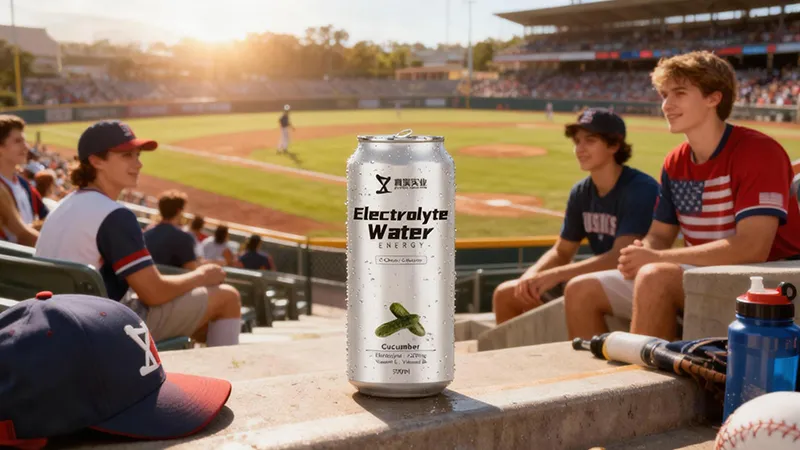
To visually illustrate the importance of Sustainable Packaging Solutions for Energy Drinks, we present our innovative product as an example.
The ZhenXi 500ml Cucumber Flavor Canned Electrolyte Energy Drink perfectly interprets why premium energy drinks must choose aluminum cans to preserve complex functional ingredients.
Facing the cost challenges of 2026, we have developed a unique Beverage Co-packing Pricing Strategy aimed at helping brands balance cost and quality.
Relying on the massive capacity of our 12 production bases, we possess strong bargaining power with upstream aluminum suppliers. We can lock in aluminum prices through forward contracts to hedge against raw material fluctuations for our clients. Although industry standard minimum order quantities are typically high, we offer flexible solutions for growing brands:
We are more than just manufacturers. As seen in the cucumber energy drink case above, we offer a comprehensive solution:
In summary, despite the upward pressure on aluminum raw material prices currently seen in 2026, from a Total Cost of Ownership perspective, the Aluminum Can remains the optimal solution for Energy Drink OEM. Its savings in logistics efficiency, extension of shelf life, and contribution to brand premium are sufficient to offset raw material increases and deliver a higher Return on Investment (ROI) for you.
In the battle of Aluminum Can vs PET Bottle, choosing aluminum is choosing quality and long-termism. We are ready to leverage our advantages in capacity, technology, and supply chain to safeguard your brand.
Worried about 2026 aluminum prices? Contact us for a customized quote and lock in your production slot now.
Q: How do you ensure stability in OEM pricing given the aluminum price fluctuations in 2026?
A: We operate 12 production bases with a massive throughput of raw materials, granting us powerful bargaining capabilities with upstream aluminum suppliers. We lock in raw material prices through centralized procurement and long-term supply agreements. For long-term OEM clients, we typically offer a "price locking mechanism" for a certain period, helping you avoid short-term market volatility and ensuring your product costs remain controllable.
Q: I am a new brand, and the MOQ of 300,000 printed aluminum cans is too high for me. Are there any solutions?
A: We fully understand the concerns of new brands. While the standard MOQ for direct printed aluminum cans is 300,000 (determined by the aluminum can printing process), we offer flexible alternatives. You can choose the "Blank Can + Shrink Sleeve" mode. The MOQ for this mode is lower (subject to specific agreements and potential setup fees), making it ideal for a Rapid Market Launch or multi-flavor testing. Once sales stabilize, we can seamlessly switch to the more cost-effective printed can process.
Q: Is the "BPA Free" inner coating you mentioned standard? How much does it increase the cost?
A: BPA Free inner coating is a premium option we offer, highly recommended for clients exporting to North American and European markets where regulations on food contact materials are increasingly strict. Compared to standard water-based modified epoxy resin coatings, the cost of BPA Free coating involves a nominal additional fee, but this helps your braBPA-free significant compliance risks and win over health-conscious consumers. We recommend confirming this requirement during the product definition phase.


