A custom aluminum can may look ready for launch while one question remains open: will its inner coating suit the drink after filling, heat treatment, storage, and transport? Artwork approval cannot answer that. The liquid, the can body, and the end need review as one package.
For a non alcoholic beer OEM project, liner compatibility should be checked before a large printed-can order is released. Fruit acids, carbonation, salts, aroma systems, and thermal processing can change the contact environment. Early testing gives buyers a basis for choosing the can and coating route.
Identical dimensions do not create identical internal conditions. A malt-led alcohol-free beer, a citrus fruit beer, and a sweet carbonated drink can differ in acidity, dissolved gas, ingredients, and processing. Packaging selection should therefore follow the confirmed liquid rather than the artwork schedule.
Beverage pH is useful, but it should not be the only indicator. Organic acids, mineral salts, fruit components, sweeteners, flavor preparations, and dissolved carbon dioxide may work together in ways that affect the package. Two drinks with similar pH values can still behave differently because their formulas and heat histories are not the same.
Carbonated beverage packaging also carries internal pressure after sealing. Pressure alone does not prove a coating problem, but it makes can-body and can-end performance more important. Buyers reviewing the non-alcoholic beer range should treat each formula as a separate packaging case. A beer-led product and a fruit-led product may use the same can size while needing different test attention.
An aluminum can coating may look normal before filling and respond differently after warming, pasteurization, or another thermal process. Testing should reproduce the planned production conditions as closely as practical. Coating adhesion, appearance, odor, and contact performance should be reviewed after the intended heat route, not only after room-temperature storage.
Inner coatings and sealants require different physical and chemical performance when the filling contents or processing conditions change. Representative filling tests are therefore needed before commercial approval. Where pasteurization or high-temperature treatment at 121°C applies, the coating should not peel, discolor, or blister. These points support project-specific testing rather than a universal liner claim.
A packaging supplier cannot select a useful test route from a flavor name alone. “Lemon non alcoholic beer” does not reveal measured pH, carbonation, ingredient structure, or thermal exposure. Buyers can protect confidential formulation details while still sharing the inputs needed for beverage can testing.
The brief should state the beverage category, measured pH, carbonation status, filling process, and any warming or sterilization step. It should also identify the proposed can, can end, coating option, target shelf life, and likely storage environment. If the formula is still changing, that should be stated before printed cans are ordered.
The 250ml Lemon Non-Alcoholic Craft Beer illustrates a smaller aluminum can and a lemon-led alcohol-free product direction, but it is not a compatibility standard for every citrus formula. A new formula still needs its own coating review because pH, ingredients, carbonation, and processing may differ.
|
Test or process input |
Example technical reference |
Practical reason |
|
Thermal exposure |
Up to 121°C when applicable |
Review coating after the heat route |
|
Higher-risk storage |
Above 30°C and 60% RH |
Review moisture and can-end risk |
|
Chloride in process water |
Below 10 ppm |
Reduce corrosive residue exposure |
|
Sulfate in process water |
Below 15 ppm |
Reduce corrosive residue exposure |
|
Warmer outlet |
At least 2°C above dew point |
Limit condensation on the end |
These are technical prevention references, not universal release specifications. Final conditions should match the formula, equipment, water system, supplier guidance, and market.
Formula confidentiality does not require a vague brief. Buyers can limit full formula access under an NDA while still sharing measured pH, carbonation status, relevant acids or salts, heat conditions, and ingredients known to affect packaging. This controlled disclosure gives the testing team enough information to distinguish a routine packaging choice from a combination that needs closer review.
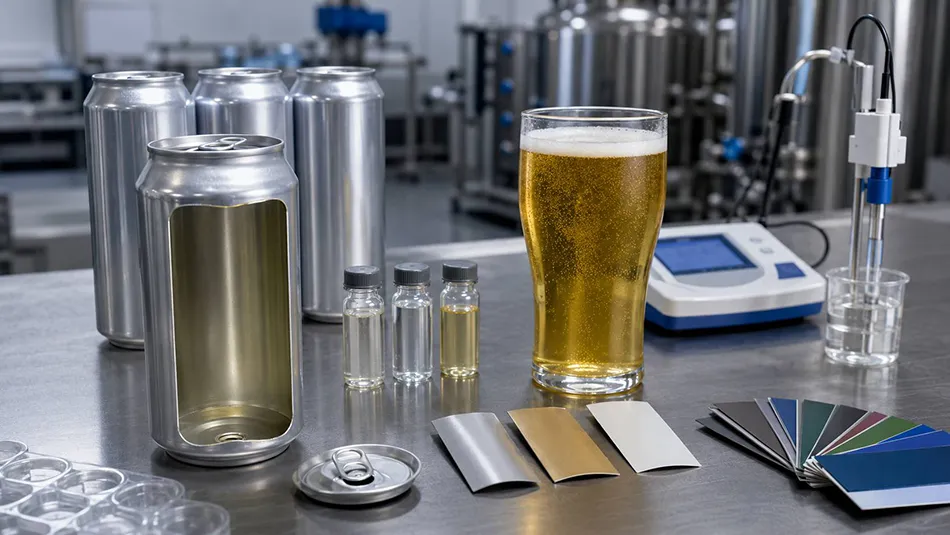
Compatibility work should not wait for a leak or visible failure. Smaller changes may appear earlier and justify investigation. Results should be assessed across the liquid, coating, can body, and end instead of assigning every observation to the liner immediately.
Possible warning signs include coating discoloration, blistering, loss of adhesion, visible spots, an unusual metallic note, product color change, or an odor absent from the approved liquid. None of these signs alone proves the root cause. A flavor change may come from oxidation, thermal exposure, ingredients, or storage rather than direct coating failure.
A can coating compatibility test should include untreated reference liquid and filled-can samples held under defined conditions. The team should record what changed, where it appeared, and whether it repeats across several cans. Comparing one suspect sample with one fresh sample is not enough for a commercial conclusion. Beverage can testing becomes more useful when observations are coded, dated, photographed, and linked to the same formula and packaging lot.
The can end has a scored opening area under stress from internal pressure. Moisture and contaminants can create a corrosive environment around that score. Residual sterilization water, beverage splash, conveyor lubricant, chlorides, sulfates, high temperature, and high humidity may increase risk. This is separate from a general inner-wall coating question, although both belong in the same package review.
Drying and storage controls matter after filling. End surfaces should not remain wet when cans enter cartons or pallets, and warehouse airflow should allow moisture to leave. For carbonated beverage packaging, pressure, end design, water quality, and storage conditions need to be considered together. A suitable liner cannot by itself offset the risks created by a wet, contaminated end or poorly ventilated storage.
The most expensive option is not automatically the best fit. Buyers need an option suitable for the beverage, process, market requirement, and commercial plan. This discussion should happen before sampling and printing commitments are fixed.
ZhenXi aluminum can information lists common water-based modified epoxy resin and BPA-free inner coating options. The options differ in cost and should be raised early. A BPA-free requirement may come from the buyer, retailer, market, or brand policy, but the term does not by itself confirm suitability for a particular liquid.
The aluminum can coating should be reviewed with the contents and process data. Buyers should request relevant food-contact information, supplier documentation, and a test route for the proposed combination. The can end and sealing materials also belong in that review. Treating the body coating, end coating, and beverage formula as unrelated purchasing items can leave gaps that only appear after filling.
Printing is highly visible, so it often receives attention before the package system is settled. That order can create inventory risk if the liquid-package combination still needs a technical change.
A practical release sequence is:
Artwork can develop in parallel, but the final print release should not overtake the packaging decision. The OEM and ODM beverage service connects formula discussion, sample testing, packaging design, filling, and production planning. This helps place compatibility review before printed inventory becomes difficult to change.
The buyer remains responsible for destination-market requirements and final approval. The supplier should provide a clear route for samples, packaging selection, filling coordination, and records without presenting one coating as a universal answer.
At ZhenXi, we can connect beverage requirements with can formats, coating discussions, white-can samples, filling preparation, production, and packing. Our project review covers the beverage contents, measured pH, and thermal route because these inputs shape the compatibility test plan.
For additional context, Why Aluminum Cans Are the Preferred Choice for Beverage Packaging covers aluminum can structure and beverage use without replacing project-specific compatibility work.
Can liner compatibility should be assessed through the actual liquid, can, end, and production route. Beverage pH matters, but carbonation, ingredients, heat, process water, drying, and storage also affect the finished package.
Non alcoholic beer OEM buyers should finalize the liquid direction, share relevant inputs, test the package, review repeatable observations, and only then release large-scale printing. This gives both sides a clearer basis for selecting the aluminum can coating before inventory is committed.
When the formula and can format are ready, check beverage and can compatibility before printing with the product type, measured pH, carbonation route, heat process, target can, and planned market.
Q: Can the same liner work with every non alcoholic beer formula?
A: It should not be assumed. Formulas can differ in acidity, salts, fruit ingredients, carbonation, and thermal treatment. Each important liquid-package combination should be reviewed before commercial printing and filling.
Q: Should beverage can testing happen before artwork approval?
A: Artwork development can begin earlier, but final print release should follow confirmation of the proposed can, coating, end, and beverage combination. This reduces the risk of holding printed inventory that needs a technical change.
Q: Does BPA-free automatically mean better compatibility?
A: No. BPA-free is a coating requirement or option, not proof that the coating suits every beverage. Suitability still depends on the formula, processing route, supplier documentation, and representative filling and storage tests.


