A newly approved drink can taste clean and hold its carbonation in the first week. That does not show how it will perform after sea freight, warehouse storage, retail handling, and months inside an aluminum can.
For a non alcoholic beer ODM project, the shelf-life claim should follow the final formula, package, process, and storage conditions. The validation program begins once that product route is stable enough to test.
A shelf-life claim must cover both package integrity and agreed product quality during storage.
A product may remain microbiologically acceptable while its market quality declines. Aroma can fade, fruit notes can become dull, bitterness may feel harsher, or carbonation may fall below the approved drinking profile. Color, sediment, foam, sweetness, acidity, and aftertaste can also move over time.
Alcohol free beer quality control should separate safety criteria from commercial sensory criteria. Microbiological checks, package integrity, and processing records address one part of the decision. Sensory comparison addresses another. Buyers should define which changes are unacceptable, which can be monitored, and which remain normal for the product style. A fruit-led alcohol-free beer may tolerate slight color movement yet reject a stale aroma. A beer-style product may place more weight on foam, bitterness, and malt character.
Export stock can spend weeks in transit, wait at a port, enter a warm warehouse, and move through several distributors before reaching retail. Temperature cycles, humidity, light exposure during handling, and slow stock rotation can place added pressure on the liquid and package.
The test plan should reflect the intended route rather than an ideal laboratory shelf. Buyers reviewing the non-alcoholic beer range should avoid carrying one conclusion across every SKU. A malt-led formula, a citrus product, and a softer tropical flavor may not age in the same way, even when they use a similar aluminum can. Storage conditions should therefore be chosen from the likely export route, not copied from an unrelated product.
A useful program combines a baseline, scheduled reviews, storage conditions, and written acceptance criteria.
Real-time beverage stability testing follows the product under conditions that resemble its intended storage route. Day 0 creates the reference, and later checks compare the same formula and package against it. Samples should come from one production or pilot lot and use consistent records.
The timing below is a project-planning example, not a fixed ZhenXi test specification.
|
Review point |
Example timing |
Main review focus |
|
Baseline |
Day 0 |
Flavor, color, carbonation, foam, package condition |
|
Early signal check |
2–4 weeks |
Rapid aroma, sediment, pressure, or appearance changes |
|
Midpoint review |
3–6 months |
Oxidation notes, sweetness balance, color, can condition |
|
Target claim review |
9–12 months |
Final commercial quality against agreed criteria |
|
Retained units |
3 coded cans per point |
Repeat checks and investigation support |
The target period should follow the proposed commercial claim. A shorter study does not support a longer claim without a suitable method, and retained units should remain available for repeat checks.
An accelerated shelf life test uses a more demanding condition to reveal change patterns sooner. It can compare two formulas, identify a sensitive flavor system, or show that one package route needs more review while the real-time program continues.
The result should not be converted mechanically into a calendar claim. Heat can accelerate some reactions more than others, and aroma loss under one condition may not mirror actual warehouse aging. An accelerated shelf life test works best as a comparative tool: it can show that Formula A changes faster than Formula B, or that one liquid-package combination needs adjustment. The commercial claim should still rely on a plan suitable for the actual product, package, and market.
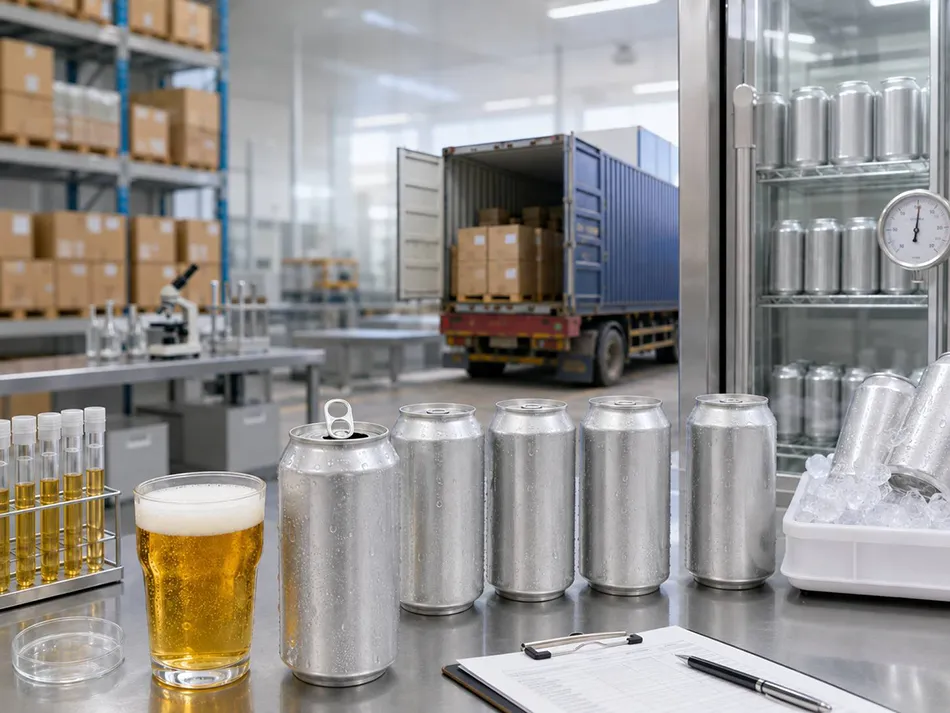
A useful report records what changed and whether it affects safety, drinking quality, label accuracy, or package performance.
A sealed can may remain intact while the drink loses its intended profile. Fruit aroma may become flatter. Malt notes can seem heavier after a bright aroma declines. Sweetness may appear stronger when acidity or carbonation changes. Sediment can become visible, and foam may collapse faster than it did in the approved sample.
Beverage stability testing should compare the full drinking experience. Samples should be served at a consistent temperature and reviewed at similar times after opening. Notes such as “less fresh” are too broad. More useful comments identify lower opening aroma, darker color, longer bitter finish, weaker bubbles, or visible sediment after standing. These records help an ODM team decide whether the formula, processing route, oxygen control, or storage plan needs adjustment.
The aluminum can is part of the stability system. Inspection should cover leakage, deformation, unusual pressure behavior, can-end condition, internal coating concerns, and changes around seams or scored areas. Outer cartons and printed surfaces may also need review when export storage involves humidity or long handling periods.
A formula can pass an early sensory review and still require package investigation later. The reverse is also possible: the can may remain physically sound while the liquid no longer meets the approved flavor range. Alcohol free beer quality control works better when the liquid and package are reviewed together rather than by separate teams using unrelated records.
An existing product can guide planning, but its shelf-life statement cannot be copied to a new formula without review.
A fruit-led formula may depend on volatile aroma compounds that decline before the malt base changes. A beer-style formula may be more sensitive to oxidation, foam loss, or bitterness movement. Carbonation level, headspace, thermal treatment, can size, and inner coating route can also change the result.
The 500ml OEM Non Alcoholic Craft Beer provides a practical beer-style reference with a 500ml standard aluminum can, customizable alcohol content, formula options, and shelf-life requirements. It should still be evaluated as its own liquid-package combination rather than used as proof for every future SKU.
Not every adjustment requires a completely new program, but material changes should be assessed before the previous conclusion is reused. The project team should review:
The decision is sequential: identify the change, judge its likely effect, and decide whether targeted checks or broader revalidation are appropriate. This also helps purchasing, R&D, production, and quality teams work from the same change record.
A shelf-life statement should identify the SKU, formula version, package, storage conditions, and production route it covers.
Buyers should ask whether the period applies to unopened cans, what temperature and light conditions are expected, and whether freezing or prolonged heat is excluded. They should also check when the clock begins: production date, filling date, or another defined point. A shelf-life conclusion should be traceable to the tested package and formula version.
Acceptance criteria matter as much as the date. A report may consider a product acceptable even though its aroma becomes lighter, provided the change remains within an approved range. Another brand may reject the same movement because aroma is central to its positioning. The criteria should be agreed before launch so later decisions do not shift according to commercial pressure.
The buyer remains responsible for its destination-market label and final commercial claim. The manufacturer can help connect formula status, sample preparation, filling conditions, package selection, production records, and retained samples.
At ZhenXi, we can align formula and sample discussion with aluminum can selection, filling, warming or sterilizing, coding, packing, and warehousing. Our OEM and ODM beverage service also connects formulation, package design, sample testing, production, and export coordination around the final product.
Teams finalizing product claims may also review Non Alcoholic Beer vs Zero Alcohol Beer: What Private Label Buyers Need to Confirm. Alcohol wording and shelf-life wording answer different questions, but both need to match the tested product and approved label.
Shelf life validation for a non alcoholic beer ODM launch should begin with the final or near-final formula, package, and process. The program then needs a Day 0 reference, scheduled real-time checks, carefully interpreted accelerated work, retained samples, and written acceptance criteria.
A useful result shows what was tested, what changed, and whether the liquid and aluminum can remained suitable for the export route. When the product route is ready, plan the stability checks before your export launch with the formula status, package, market, storage conditions, and proposed claim.
Q: Can an accelerated shelf life test replace real-time testing?
A: No automatic substitution should be assumed. Accelerated work can compare formulas and reveal change patterns sooner, while real-time testing provides evidence closer to the intended storage route.
Q: Does every non alcoholic beer SKU need a separate stability review?
A: Key differences should be assessed separately. A new flavor, can format, coating option, carbonation level, or thermal process can change the risk profile. The conclusion must still cover the actual SKU.
Q: What should buyers check in a stability report?
A: Buyers should check the formula and package identity, storage conditions, review dates, sensory and package criteria, retained-sample plan, deviations, and the exact scope of the final shelf-life conclusion.


