A sample can taste right in a meeting room and still behave differently during commercial production. That does not automatically mean the formula is poor or the factory made an error. Small samples and full production tanks do not share the same mixing volume, ingredient handling, or heat exposure.
For a non alcoholic beer OEM project, the task is to turn the preferred sample into a production reference that can be checked again. Golden sample approval, beverage scale-up, and clear release points make that possible. The aim is to define which differences are acceptable and which ones need investigation before shipment.
Flavor drift often begins before filling. A recipe may stay the same on paper while the finished drink changes because raw materials, mixing order, or temperature are different. Buyers should examine the route between the sample bench and the commercial tank rather than judge the final can alone.
A laboratory sample may be mixed in a small vessel where ingredients disperse quickly, and adjustments are easy. Commercial production uses larger tanks, longer transfer routes, and fixed operating steps. Sweetness may feel stronger after chilling and carbonation, while fruit aroma may become less obvious after warming or sterilizing.
During beverage scale up, the production team must translate the sample into a repeatable mixing order, time, temperature, and filling condition. Notes on aroma, first sip, bubbles, bitterness, and finish give the factory something useful to follow. Without those details, “match the sample” leaves too much room for personal interpretation and makes later comparison difficult.
Ingredients with the same commercial name do not always perform in exactly the same way. Malt bases, fruit preparations, acids, sweeteners, and aroma ingredients can vary between lots. A substitution may affect aroma strength or aftertaste even when the dosage remains unchanged.
Good batch consistency starts with recording the approved ingredient source, formula version, and permitted alternatives. Buyers need not manage every material code, but they should know when a change needs a fresh sample or written consent. For fruit-led products, a bright grape or lemon note can move quickly from clean to too sweet or too close to soda. The non-alcoholic beer range can help teams compare beer-led and fruit-led references before defining the standard.
A golden sample should be treated as a controlled reference, not a can left in an office refrigerator. Its identity, storage condition, formula version, and written comments make later comparison more reliable.
One can is rarely enough for golden sample approval. It may be opened, damaged in transit, or stored under conditions that change the drinking experience. A small retained set gives the buyer, factory, and quality team something to compare at several production points. The figures below are project-planning examples rather than fixed ZhenXi specifications.
|
Reference item |
Numeric planning example |
Practical purpose |
|
Retained approved cans |
3–6 units |
Comparison during first production |
|
Sensory review areas |
5 points |
Aroma, sweetness, bitterness, bubbles, finish |
|
Review gates |
3 stages |
Pre-run, first fill, batch release |
|
Internal reviewers |
2–4 people |
Reduce one-person preference bias |
|
Serving temperature |
4–8°C |
Keep tasting conditions comparable |
Each can should carry a sample code and approval date. The record should also identify the formula version and aluminum can format. A retained reference without basic identification can become difficult to use once several samples or revisions are circulating inside the project.
Words such as fresh, smooth, balanced, and premium sound positive, but they do not tell a production team what to adjust. Useful notes are more concrete: stronger opening aroma, less sweetness after several sips, a shorter bitter finish, finer carbonation, or more malt beneath the fruit note.
Those points can be checked against the first commercial cans. A reference such as the ZhenXi 250ml Grape Flavored Non-Alcoholic Craft Fruit Beer can support discussion about fruit aroma, beer identity, carbonation, and a smaller aluminum can format. It is not a universal standard for other formulas. Clear language makes the approval useful to purchasing, R&D, production, and quality teams.
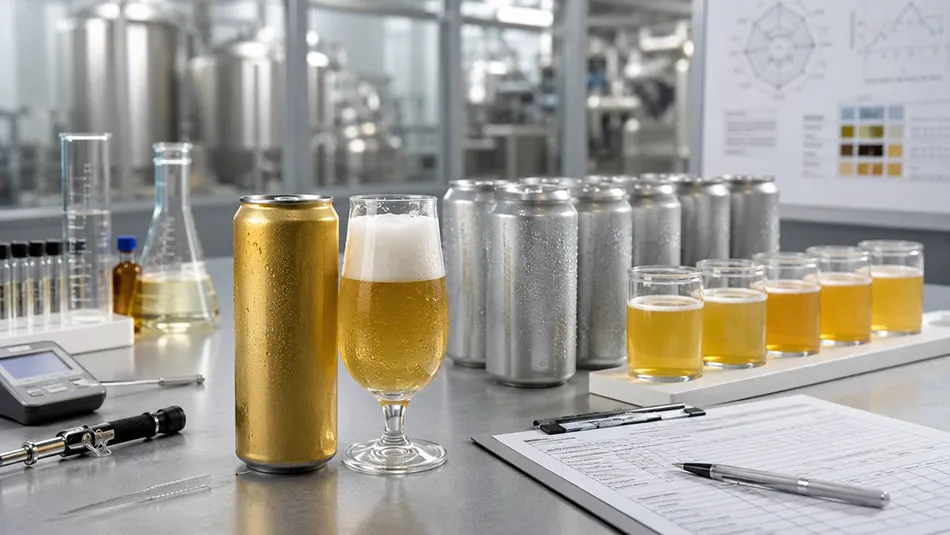
Drift should not be checked only at the end. A finished batch is expensive to change. A practical three-gate review plan can give both sides earlier opportunities to find a mismatch while correction remains practical.
The first gate takes place before the main run. It checks the approved formula, sample code, intended raw materials, alcohol wording, and packaging plan. It should identify substitutions, revised dosages, or changes requested after the final tasting.
In alcohol free beer manufacturing, even a small change should be judged by its effect rather than convenience alone. If an aroma preparation is replaced, the team may need a bench confirmation before the production tank is released. If the alcohol claim changes, the label and records may also need review. Gate one is not another full development round. It is a short control point confirming that the production brief still matches what the buyer approved.
The second gate uses cans taken near the beginning of filling. Appearance alone is not enough. Aroma, sweetness, bitterness, carbonation, foam, and finish should be checked under agreed serving conditions. This is where the approved sample and new cans can be tasted side by side.
A first-fill comparison should not create panic over every slight difference. It should show whether the commercial drink remains within the agreed profile. In alcohol free beer manufacturing, flavor may settle after processing, so the quality team should follow the planned timing. When a material difference appears, the decision to continue, pause, or investigate should be recorded rather than left to informal messages.
The final gate connects sensory review with traceability. Batch coding, retained samples, production records, and finished-product checks should point to the same lot. This is where batch consistency becomes a release decision rather than a general promise. Buyers do not need every machine setting, but they should know what evidence supports release and who can approve it.
This short sequence keeps the release discussion traceable without creating another long approval process. It also gives repeat orders a clearer baseline because future batches can be compared with both the original golden sample and the first accepted commercial run.
Sensory review contains human judgment. Serving temperature, time after opening, glassware, food, and tasting order can all change perception. A sensible review system controls those variables before declaring that a batch has failed.
Two reviewers may describe the same drink differently. One notices sweetness first; another focuses on fruit aroma or bitterness. Taste the reference and batch at the same temperature, use the same serving format, and avoid comparing a fresh can with one that has stood open.
A meaningful deviation should be repeatable and tied to approved criteria. “The drink feels different” is weak feedback. “The grape aroma is lower in three coded cans while sweetness stays within the reference range” is useful. A complaint should also identify the batch code, storage history, number of cans checked, and exact difference. This approach protects batch consistency without turning minor sensory variation into a production dispute.
The buyer owns the market decision and final product preference. The supplier’s job is to connect that approved direction with factory execution. Company information matters only when it shows how the handover is managed.
At ZhenXi, we connect sample discussion with blending, homogenizing, mixing, filling, warming or sterilizing, coding, packing, palletizing, and warehousing. We do not describe commercial production as a perfect copy of a small trial. The more realistic aim is to keep the drink within an agreed sensory and production range, then document material changes before release.
Buyers can review the OEM and ODM beverage service when assigning responsibilities for formula work, samples, aluminum can packaging, and production. The workflow covers requirement discussion, formulation, packaging design, sample testing, mass production, can filling, and export coordination.
A related guide on private label checks before non-alcoholic beer production can also help align product wording, sampling, and packaging before the gates are fixed.
Moving from a preferred sample to a commercial batch is a controlled translation, not a single approval email. A strong non alcoholic beer OEM project records the sample, defines sensory language, checks raw materials, reviews first filled cans, and keeps retained units. Beverage scale up is easier to manage when each team knows what it is comparing and who can release the batch.
Golden sample approval should give the factory a usable target while leaving room to judge normal variation fairly. Clear boundaries help buyers protect flavor, compare repeat orders, and discuss deviations without vague comments.
When the first production route is ready, review the quality gates for your commercial batch with the sample code, formula status, sensory priorities, aluminum can format, and planned launch timing.
Q: What is a golden sample in non alcoholic beer OEM production?
A: It is the approved reference used to compare later production. A useful golden sample includes retained cans, a sample code, formula version, storage guidance, and written sensory criteria.
Q: Can commercial production taste exactly like a laboratory sample?
A: A commercial batch should stay close to the approved profile, but small differences may occur because production volume, raw materials, carbonation, and processing conditions change. The buyer and supplier should define which differences remain acceptable.
Q: When should buyers approve the first commercial batch?
A: Approval should follow the agreed quality gates. Buyers should review the first filled cans, batch records, retained samples, coding, and final sensory result before the lot is released for shipment.


