In 2026, the global adaptogenic beverages market is projected to reach $3.37 billion, growing at a CAGR of 12.2%. Within this, the adaptogen energy drink segment alone is expected to hit $1.74 billion, with an impressive 16.8% growth rate. What’s driving this surge is a global shift toward natural, functional energy—and the rediscovery of Traditional Chinese Medicine (TCM)’s powerful philosophy of “Medicine and Food Homology.”
In 2026, the global adaptogenic beverages market is projected to reach $3.37 billion, growing at a CAGR of 12.2%. Within this, the adaptogen energy drink segment alone is expected to hit $1.74 billion, with an impressive 16.8% growth rate. What’s driving this surge is a global shift toward natural, functional energy—and the rediscovery of Traditional Chinese Medicine (TCM)’s powerful philosophy of “Medicine and Food Homology.”
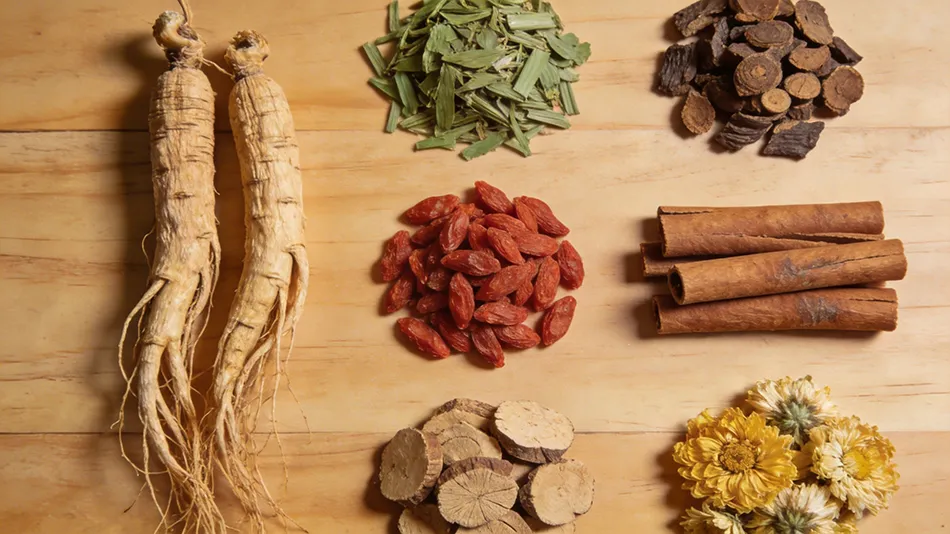
For thousands of years, TCM has used herbs such as ginseng, goji berry, and astragalus to combat fatigue and restore vitality. Today, these ingredients are being transformed into modern herbal energy drinks, offering sustained energy without the jitters, crashes, or dependency associated with synthetic caffeine.
For global beverage brands, this is not just a trend—it’s a category-defining opportunity in the fast-growing herbal energy drinks and adaptogen beverage market, especially for brands working with experienced OEM beverage manufacturers.
Why Traditional Chinese Herbs Are Entering the Global Energy Drink Market
The “Medicine and Food Homology” Philosophy
The concept of “Medicine and Food Homology” (药食同源) is foundational to TCM. It asserts that many natural ingredients function as both food and medicine, enabling daily consumption to support long-term health.
China’s National Health Commission has officially approved 106 substances that can be used in both food and medicinal applications. This list includes:
- Ginseng
- Goji Berry
- Polygonatum
- Ginger
- Jujube
This regulatory clarity provides a strong foundation for global product development, making it easier for brands to formulate compliant herbal beverages.
The Limitations of Synthetic Caffeine
Traditional energy drinks rely on synthetic caffeine, which often leads to:
- Short-term stimulation followed by crashes
Caffeine delivers a rapid spike in alertness, but this is often followed by a sharp decline in energy levels. This “energy crash” can negatively impact productivity and lead to repeated consumption, creating dependency.
- Anxiety and heart palpitations
High caffeine intake can overstimulate the nervous system, causing increased heart rate, nervousness, and anxiety—especially among sensitive consumers or those under stress.
- Sleep disruption and long-term fatigue
Caffeine can interfere with sleep cycles, reducing overall recovery quality. Over time, this leads to accumulated fatigue rather than sustainable energy improvement.
A PepsiCo patent (2011) highlighted the need for alternative energy solutions. Research showed that herbal formulations containing eleuthero, goji berry, and polygonatum:
- Improved endurance
- Reduced fatigue markers
- Delivered longer-lasting energy in over 80% of subjects
This multi-target mechanism makes herbal energy drinks fundamentally different—and more sustainable.
Global Market Validation
| Indicator |
Data |
| Global adaptogenic beverage market (2026) |
$3.37B |
| Adaptogen energy drink segment |
$1.74B |
| CAGR (2025–2030) |
16.6–16.8% |
| US adults reporting anxiety (2024) |
43% |
The rise in stress and demand for natural wellness solutions is accelerating adoption worldwide.
Key Herbal Ingredients in TCM Energy Drinks
Core Adaptogens from TCM
| Herb |
TCM Function |
Modern Science |
ZhenXi Application |
| Ginseng |
Boosts vitality |
Anti-fatigue, endurance |
Fermented ginseng drinks |
| Goji Berry |
Nourishes liver |
Antioxidant |
Functional blends |
| Polygonatum |
Energy support |
Synergistic effect |
Ginseng blends |
| Ashwagandha |
Stress relief |
Cortisol reduction |
Export formulas |
| Reishi |
Immunity |
Polysaccharides |
Premium formulations |
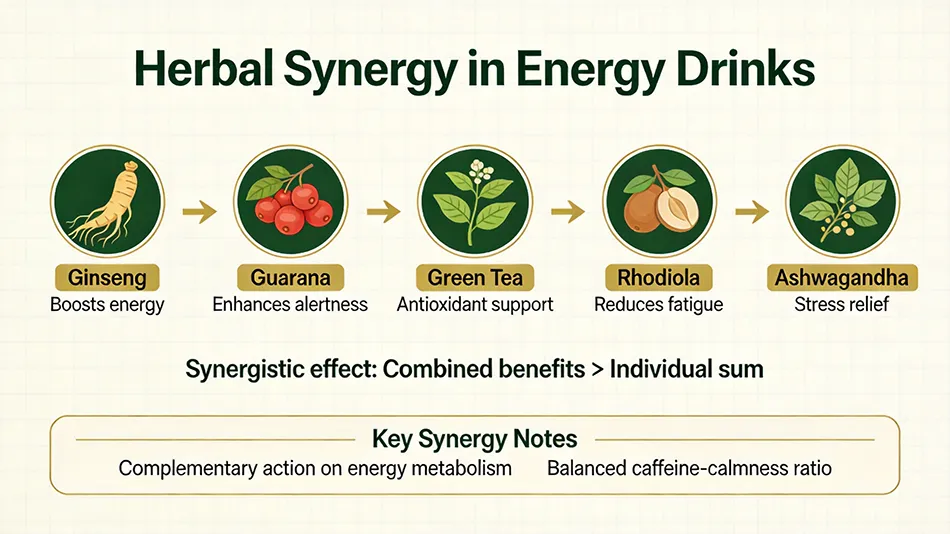
The Synergy Effect
- Holistic energy regulation across multiple systems
Unlike caffeine, which primarily stimulates the central nervous system, TCM herbal combinations work across multiple biological pathways, including metabolic regulation, immune support, and hormonal balance. This results in a more stable and sustained energy release, aligning with modern consumer expectations for “clean energy.”
- Enhanced endurance and measurable anti-fatigue effects
Clinical and experimental studies show that combinations such as ginseng, goji berry, and polygonatum significantly improve endurance performance. They reduce fatigue-related biomarkers such as blood lactic acid and serum urea while increasing glycogen storage, making them highly suitable for functional energy drink formulations.
- Improved safety and broader consumer acceptance
Herbal energy formulations avoid the overstimulation commonly associated with high caffeine intake. This makes them ideal for a wider consumer base, including professionals, students, and health-conscious individuals seeking daily energy support without side effects.
- Premium positioning through multi-functional benefits
By combining energy, stress relief, and immune support into a single formulation, brands can position herbal energy drinks as premium functional beverages rather than commodity products—allowing for higher margins and stronger brand differentiation.
Market Trends and Product Innovation (2025–2026)
Key Product Launches
- Fermented ginseng energy drinks
These products use advanced fermentation technology to increase the concentration and bioavailability of ginsenosides, making them more effective in delivering sustained energy and improving endurance.
- Adaptogen and mushroom blends
Modern formulations combine traditional herbs with functional mushrooms such as lion’s mane and cordyceps, targeting both physical energy and cognitive performance.
- Low-sugar functional beverages
Brands are reducing sugar content while maintaining taste through natural sweeteners and flavor masking technologies, aligning with global health trends.
Regional Market Dynamics
- North America: Mature adaptogen market
Consumers are already familiar with adaptogens such as ashwagandha and ginseng, making it easier for new herbal energy drinks to gain acceptance and scale quickly.
- Asia-Pacific: Fastest growth region
Strong cultural familiarity with TCM ingredients like goji berry and ginseng drives rapid adoption, especially among younger consumers seeking healthier alternatives.
- Europe: Regulation-driven innovation
Strict regulatory frameworks push brands to develop cleaner, scientifically validated formulations, resulting in high-quality and premium-positioned products.
Formulation Science: From Ancient Wisdom to Modern Production
Technical Challenges
- Taste masking for global markets
Herbal ingredients such as ginseng and reishi often carry strong bitterness or earthy notes. Successfully commercializing these beverages requires advanced flavor masking systems, natural sweeteners, and fruit-based flavor pairing strategies to ensure global consumer acceptance.
- Stability of active compounds during processing
Bioactive components such as polyphenols and saponins are highly sensitive to heat, oxygen, and pH levels. Without proper process control, their functional benefits can degrade significantly during production and storage.
- Standardization across large-scale production
Natural raw materials vary by origin, season, and processing methods. Achieving consistent taste and efficacy across batches requires strict raw material sourcing standards and process standardization—this is a key barrier for many small manufacturers.
- From traditional claims to scientific validation
Modern markets demand evidence-based positioning. Successful products must translate TCM theories into measurable functional benefits supported by lab data, clinical references, or ingredient science.
Modern Processing Technologies
| Technology |
Application |
Advantage |
| Fermentation |
Ginseng |
Higher bioavailability |
| Low-temp grinding |
Beans/herbs |
Nutrient retention |
| Ultrafine pulverization |
Powders |
Better absorption |
ZhenXi’s Formulation Capabilities
- Extensive formulation library for rapid commercialization
With over 50 validated formulations across energy drinks, herbal beverages, and functional categories, ZhenXi enables brands to shorten development cycles and reduce formulation risks.
- Fast-track development (4–12 weeks)
From concept ideation to pilot production, ZhenXi’s integrated R&D system allows brands to quickly validate and launch new products in response to market trends.
- Clean label and health-driven innovation
Formulations can be developed without artificial additives, preservatives, or colors, aligning with global clean-label and wellness trends.
- Future-proof packaging compliance (BPA-NI)
ZhenXi’s packaging solutions comply with upcoming EU BPA regulations, ensuring long-term export readiness and reducing regulatory risks.
👉 Explore product formats like 473ml red energy and 473ml black energy for high-demand SKUs.
👉 Learn packaging options via 473ml Aluminum Beverage Cans.
Regulatory and Compliance Considerations
China Framework
All ingredients align with the 106 approved food-medicine substances list.
International Compliance
| Market |
Requirement |
ZhenXi Support |
| USA |
FDA GRAS |
Full documentation |
| EU |
EFSA + BPA ban |
BPA-NI coating |
| Middle East |
HALAL |
Certification available |
| Global |
ISO/HACCP |
Full compliance |
How ZhenXi Industry Powers Global Herbal Energy Drink Brands
Company Profile
- 20+ years of OEM beverage expertise
ZhenXi has accumulated deep experience in formulation, production, and export, serving global beverage brands across multiple categories.
- 12 production bases for scalable manufacturing
This multi-location production network ensures both flexibility and capacity, enabling seamless transition from pilot batches to large-scale supply.
- 55 advanced production lines
Equipped with internationally leading machinery, ensuring high efficiency, consistency, and product quality.
- Flexible MOQ for market entry
Starting from just one container, ZhenXi allows brands to test new products without excessive inventory risk.
- Fast and reliable delivery (20–25 days)
Short lead times help brands respond quickly to market demand and reduce time-to-market.
Suppliers like Hainan ZhenXi provide a fully integrated system—from raw materials to filling and delivery. Their 100% on-time delivery rate and 80% reorder rate demonstrate strong execution and client trust.
Case Study: Fermented Ginseng Energy Drink
A North American brand partnered with ZhenXi to develop a TCM-based energy drink:
- Formula based on traditional tonic concepts
- Fermented ginseng for higher potency
- Added botanicals for synergy
- Optimized flavor for global consumers
Result:
- Successful market entry
- Strong repeat orders
- Long-term ODM partnership
Why Choose ZhenXi for Your Herbal Energy Drink
- Rapid product development
With an established R&D system and standardized formulation library, ZhenXi can significantly reduce time-to-market, allowing brands to respond quickly to emerging trends.
- Flexible MOQ for different stages
Whether launching a new product or scaling an existing line, ZhenXi supports flexible order quantities, reducing inventory risk for growing brands.
- Comprehensive global compliance support
From FDA documentation to EU and HALAL certifications, ZhenXi ensures that products meet the regulatory requirements of target markets.
- Integrated packaging and manufacturing
By combining can production, printing, and beverage filling, ZhenXi simplifies the supply chain, improves efficiency, and ensures consistent product quality.
👉 Learn more about TCM beverage concepts: What Is a Five Elements Energy Drink? Ingredients, Benefits & TCM Beverage Trends
👉 Ready to start? Visit Contact Us to request samples.
Future Outlook: TCM Herbal Energy Drinks Through 2030
Market Projections
| Segment |
2026 |
2030 |
CAGR |
| Adaptogenic drinks |
$3.37B |
$5.29B |
11.9% |
| Energy segment |
$1.74B |
$3.22B |
16.6% |
Key Trends
- Fermented herbal ingredients
Fermentation is increasingly used to enhance the bioavailability and effectiveness of herbal compounds, making products more functional and appealing to health-conscious consumers.
- Multi-adaptogen formulations
Combining multiple adaptogens such as ginseng, ashwagandha, and mushrooms allows brands to target energy, stress, and cognitive performance simultaneously.
- RTD (ready-to-drink) convenience
Consumers prefer convenient formats, and RTD beverages are rapidly replacing powders and capsules as the dominant delivery method.
- Sustainable aluminum packaging
Aluminum cans are gaining popularity due to their 100% recyclability, durability, and suitability for global distribution.
Conclusion & Action Plan
Key Takeaways
- TCM herbal energy drinks are a confirmed high-growth category
With the adaptogen energy drink segment projected to reach $1.74 billion in 2026 and maintain double-digit growth, this category represents a long-term opportunity rather than a short-term trend.
- “Medicine and Food Homology” offers both cultural and regulatory advantages
Backed by thousands of years of application and supported by an official list of 106 approved substances, TCM provides a rare combination of tradition, credibility, and compliance readiness.
- Formulation technology is the key competitive barrier
Success in this category depends not only on ingredient selection, but also on advanced technologies such as fermentation, flavor masking, and stability control.
- ZhenXi enables faster and lower-risk market entry
With integrated OEM capabilities, flexible MOQ, and global compliance support, ZhenXi helps brands reduce development risk and accelerate commercialization.
Action Steps
- Select approved herbal ingredients
Carefully review the “medicine and food homology” list and identify ingredients that align with your product concept and target market preferences.
- Define product positioning
Decide whether your product will focus on pure herbal energy, a hybrid with caffeine, or a functional wellness beverage targeting stress, immunity, or cognitive performance.
- Validate regulatory compliance
Ensure that all ingredients and claims meet the requirements of your target markets, including FDA, EU, or HALAL standards.
- Launch a pilot batch
Start with small-scale production to test flavor, packaging, and consumer acceptance before scaling up to full production.
Call to Action
Ready to bring a Traditional Chinese Herbal Energy Drink to your market?
Contact ZhenXi Industry for a free consultation. From concept to shelf-ready product, we help you launch faster and scale globally.
FAQ
1. What are herbal energy drinks?
Herbal energy drinks are beverages formulated with plant-based ingredients such as ginseng, goji berry, or adaptogens. Unlike traditional energy drinks, they provide sustained energy by supporting the body’s natural metabolic and stress-response systems rather than relying solely on stimulants.
2. Are herbal energy drinks better than caffeine-based drinks?
Herbal energy drinks are often considered a healthier alternative because they deliver smoother, longer-lasting energy without the spikes and crashes associated with caffeine. They are also less likely to cause anxiety, sleep disruption, or heart palpitations.
3. Can formulations be customized?
Yes. OEM manufacturers like ZhenXi provide end-to-end customization, including ingredient selection, flavor development, sweetness adjustment, and functional positioning based on your target market.
4. What is the typical MOQ for herbal energy drink production?
For export-oriented production, the MOQ is عادة one container (approximately 50,000–70,000 cans). However, flexible solutions are available for pilot testing and new product launches.
5. Are Traditional Chinese herbal ingredients allowed in international markets?
Many TCM ingredients are permitted globally, especially those listed under China’s “medicine and food homology” catalog. However, compliance depends on local regulations such as FDA (USA) or EFSA (EU), and formulations may need adjustment accordingly.


