Kombucha drink, called Combucha abroad, is a traditional folk acidic beverage with a long history. Its origin can be traced back to the Qin Dynasty in ancient my country. In the early 19th century, kombucha was brought to Tsarist Russia by Southeast Asian merchants, and was later cultivated and applied in the Caucasus area. Until the 1990s, a Russian female priest from Japan was brought back to Japan from the Caucasus for training. Finally, it spread from Japan to all parts of the world. Kombucha has been cultivated and circulated among the Chinese people for a long time and is one of the traditional drinks for daily consumption by the people. Because there is tea and sugar in the raw materials, the brewed tea soup is cooled and kombucha is added and fermented to obtain kombucha.
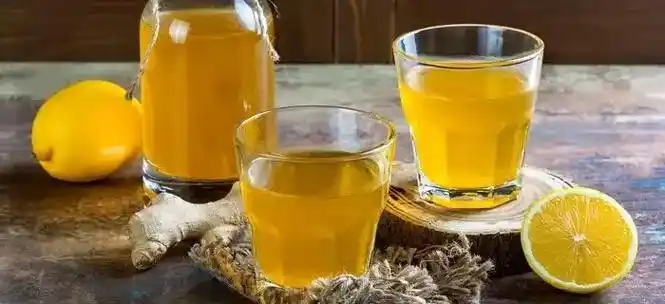
Kombucha's "Fungi" (SCOBY) is a symbiotic bacteria composed of acetic acid bacteria, yeasts, lactic acid bacteria, etc. Yeast decomposes sucrose into glucose and fructose, thereby producing carbon dioxide and ethanol. On this basis, acetic acid bacteria begin to reproduce, convert glucose into gluconic acid, and use ethanol to produce acetic acid, and form cellulose, which eventually forms floating bacteria. Colloidal bacteria film on the liquid surface.
1. Raw materials:
Water: appropriate amount. To make kombucha, avoid mineral water, excessive minerals and chlorine, because it can destroy or destroy the microsystems, and water with an acid or base value of 7 or 7 is better.
Tea: Safe and pesticide-free whole-leaf original tea is the better choice.
Sugar: 300g. Choose natural sucrose (because there are fewer impurities) or organic sugar cubes.
Kombucha raw liquid: 1000ml
2. Steps
Make tea: Fermented tea needs to be soaked in 90 degrees water for 10 minutes (if it is Pu'er tea or darker fermented tea, soak until the water cools); green tea needs to be soaked in 90 degrees water for 3 minutes; fruit tea needs to be soaked in 85 degrees Soak in water for 3-5 minutes, then soak it coldly again. Do not make tea directly in cold water, because tea leaves contain bacteria and other contaminants. After cooling with tea, pour it into a glass jar and add kombucha stock solution. Seal the jar with a sealing towel and put the lid on it but do not tighten it. Konjacchini requires a small amount of oxygen.
Add sugar: You can adjust the amount of sugar according to your preferences, but remember: the more sugar you add, the more sour the kombucha you make, and the more alcohol you produce.
Add fruit: When soaking fruit, choose seasonal organic fruits, wash them thoroughly and peel them. Natural pureed fruits can bring a wonderful flavor and texture, provided they are not using any additives, as are homemade fruit syrup. Kombucha can only be added (secondary fermentation) at least 14 days after making kombucha - a better way is to add fruit 48 hours before drinking or refrigerating.
Fermentation: Fermentation is about 10 days at room temperature at 20 degrees. Successful fermentation will have healthy milky white/tan bean caps. If there are blue and green different bacteria, it means that the fermentation has failed.
Save Kombucha: Ripe original Kombucha can be stored at room temperature. Kombucha with fruit added should be stored in an environment with a temperature of 6 degrees: at this temperature, fermentation will basically stop. All mature kombuchas should be stored in sealed bottles to keep them bubbles.
Fermentation precautions: The bacterial membrane is not a species of kombucha. The bacterial membrane is a glue-like block woven by the fine fibers secreted by kombucha, also known as a cellulose membrane. The bacterial membrane contains only a single wood acetic acid bacteria, which has little effect and helps fermentation.
There is an elastic film on the surface of mature kombucha, which is generally called a pellicle. Its main component is cellulose metabolized by acetic acid bacteria.
Many people think that this film is SCOBY, but this view is somewhat biased. In fact, the bacterial flora attached to the bacterial film plays a key role in the fermentation process. Of course, you can use other people's bacterial membranes as bacterial strains, but the premise is to ensure that the bacterial strains are still active.
The main components of bacterial film and coconut are similar. In the Philippines, people will cultivate a thick bacterial film on coconut water or pineapple juice mixed with sugar water and then cook it into candy called nata.
You can use black tea, green tea, white tea, oolong tea, black tea or other types of tea, but avoid two types of tea: unclean tea (improperly stored tea, tea with pesticide residues, tea grown from contaminated soil ); teas with stronger flavor and aroma such as Earl Tea, because the added essential oils may inhibit fermentation. You can use tea bags or bulk tea, or you can also enjoy making the tea stronger or lighter.
Acid substances will be produced during the fermentation of kombucha. Metal and stainless steel containers may be exposed to acid for a long time, which may cause metal corrosion. Kombucha is aerobic fermentation. The fermentation occurs on the surface that is exposed to oxygen. It is best to use a large container and not fill it up, so that there can be more surface area fermentation. In addition to wide-mouth glass jars, lead-free ceramic containers can also be used.
It may be that your fermented species has failed, or it may be that the solution is overheating and causing the introduced species to die. In addition, maybe the temperature of the place where you place the fermented seeds is too low, try placing them in a warmer place. Chlorine-containing water may also inhibit fermentation.
Brown flocs may sometimes be yeast clusters that will wrap some of the sediments of the tea leaves; they may also be forming bacterial membranes. If it precipitates to the bottom of the container, it is possible that it is a mixture of discarded yeast and bacteria.


