A non alcoholic fruit beer OEM project can look simple at first: choose a fruit flavor, control alcohol, fill the drink into an aluminum can, and prepare for launch. In real production, the work is more detailed. Fruit aroma can become too sweet. Beer body can become thin after alcohol reduction. Packaging can look attractive on screen, but loses impact after printing. These issues matter because private label buyers are not only buying a drink; they are building a repeatable product for retail, export, or channel testing.
For beverage brands, the best starting point is a practical check of formula, flavor, packaging, sample testing, and production planning. This guide focuses on the concerns behind non alcoholic beer OEM projects, especially when the product uses grape or other fruit flavors.
Fruit flavored non alcoholic beer sits between two familiar categories. It should feel more adult than soda, but lighter and easier to approach than traditional beer. That middle position is useful for sober-curious consumers, workday drinking, light social meals, and retail trial purchases. It also creates a product risk. If the grape note is too direct, the drink may taste like sparkling juice. If the malt base is too strong, new consumers may find it heavy. A non alcoholic fruit beer OEM project should define this balance before bulk production starts. Buyers need to decide whether the finished drink should lean toward craft beer, fruit refreshment, or a clean alcohol-free social drink. This decision affects sweetness, acidity, carbonation, label wording, and first-order planning. It also affects the sales channel. Private label non alcoholic beer for convenience stores, cafés, hotels, and export distributors may need different can sizes, label styles, and flavor intensity.
For any non alcoholic beer OEM project, the alcohol claim needs careful confirmation. Different markets may define non alcoholic, alcohol free, and low alcohol in different ways, so brands should avoid strong claims unless testing and local label review support them. Formula work should also consider pH, carbonation, sweetness, foam behavior, and storage conditions. Grape is attractive because it gives a familiar fruit profile and a softer entrance than strong hop bitterness, but the formula should not depend on sweetness alone. A good grape flavored non alcoholic beer needs a clean fruit opening, mild malt body, enough acidity to prevent a syrupy finish, and a beer-like aftertaste that does not feel empty. This is where non alcoholic beer ODM support can help turn a target taste into a workable sample.
|
Product planning point |
Practical reference |
|
Product example volume |
250 ml |
|
Product shelf life |
12 months above |
|
Typical delivery time |
20–25 days |
|
Minimum order quantity |
1 container |
|
Common canning sizes for service planning |
250 ml / 330 ml / 500 ml |
Fruit flavor helps a private label non alcoholic beer stand out, especially when the market already has many plain lager-style alcohol-free options. Grape can work well because it is recognizable, colorful, and suitable for a lighter social drink. The challenge is restraint. Too much candy-like aroma can weaken the beer identity, while too little fruit aroma makes the product less distinct on the shelf. Foam also changes perception. A stable, clean foam gives a more beer-like visual cue and helps separate the drink from fruit soda. For custom non alcoholic beer, carbonation should be tested with flavor, not after flavor, because bubbles change sweetness perception and aroma release. A practical sample round can compare one version with a stronger grape aroma, one with higher acidity, and one with more malt body, then judge each sample chilled and after several minutes in the glass.
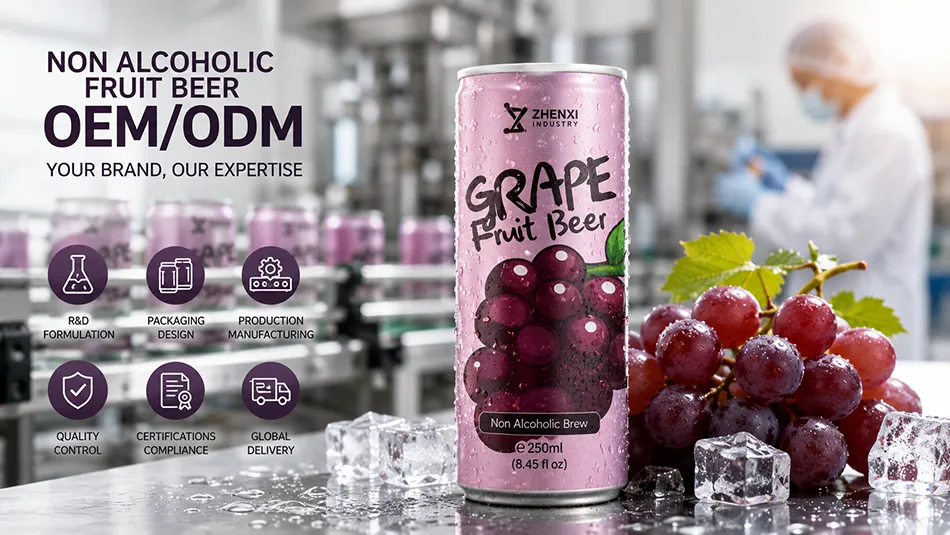
Small-format aluminum cans can be practical for fruit-led non alcoholic beer. A 250 ml size reduces the pressure of the first purchase, especially when consumers are trying a new flavor or category. It can also fit lighter drinking occasions, lunch breaks, sampling packs, and mixed-flavor retail sets. The 250ml Grape Non-Alcoholic Craft Fruit Beer is a useful reference for brands considering a canned, grape-led, alcohol-free fruit beer direction. It uses an aluminum can format and supports private label positioning, which gives buyers a more concrete starting point than a blank formula brief. For broader flavor planning, the non-alcoholic beer collection can also help buyers compare fruit-style directions.
Packaging is part of product quality, not just decoration. For fruit beer, color and finish can strongly affect consumer expectations. A purple grape design may signal fruit refreshment, while a darker craft layout may suggest a more beer-led taste. The risk comes when the digital design does not match printing reality. Before mass production, buyers should prepare editable artwork, font files, logo authorization, trademark documents, and any required warning or nutrition content. We usually prefer early design checking because color separation, proofing, and sample confirmation can prevent costly changes after the production schedule is fixed. This is also where packaging and liquid testing should connect, especially when coating, pH, filling conditions, or heat treatment need confirmation.
Non alcoholic beer ODM is most valuable when a buyer has a product direction but still needs technical shaping. A brand may want a fruit flavored non alcoholic beer for younger retail consumers, yet still need help deciding sweetness, carbonation, can size, and label direction. The process should move from requirement discussion to formula testing, design, sample approval, and mass production. This is also where OEM beverage service support can reduce coordination work for brand owners, because formula, packaging, filling, and export planning need to move together rather than separately. ZhenXi Industrial works across beverage and aluminum can packaging, with production resources and inspection equipment for large-scale beverage projects. For this topic, the relevant value is direct: we can discuss fruit beer direction, help with sample planning, and support canned production for brands that want a more defined fruit beer route.
A short checklist can keep the project focused before quotation and sampling.
A first order should not begin only because the sample tastes good once. It should begin when the product direction, label claim, packaging artwork, can size, and production terms are aligned. The buyer should also decide whether this is a single launch or the start of a flavor series. For readers who want more background on the brewing side, the related ZhenXi blog on how non alcoholic beer is made can help connect formula choices with taste, foam, and alcohol-control methods. If your team is preparing a private label alcohol-free beer or a custom non alcoholic beer line, share your target flavor, market, can size, and launch plan through our project inquiry page. A clear brief makes the first sample round much more useful.
Q: What should a brand confirm first in a non alcoholic beer OEM project?
A: The first point is product positioning. A brand should confirm whether the drink is meant for retail trial, export distribution, cafés, hotels, or social drinking occasions. After that, the supplier can help match the formula, fruit flavor, alcohol claim, can size, and packaging direction more efficiently.
Q: Is grape a good flavor for non alcoholic fruit beer?
A: Grape can be a strong option because it is familiar, easy to recognize, and suitable for a lighter alcohol-free beer style. The key is balance. The product should not taste only sweet. It still needs acidity, malt body, foam, and a clean finish to feel more like beer than soda.
Q: Why is packaging important for private label non alcoholic beer?
A: Packaging shapes the first expectation before tasting. Can size affects trial willingness, while color, surface finish, and label wording affect shelf appeal. For this product type, early artwork checking and proofing can reduce printing risks and help the final product match the intended market position.


