
According to legend, ginseng over 100 years old will "escape"; purple light will shine where ginseng grows; taking ginseng can bring people back to life and make them immortal. Are these legends groundless or true?
Let us take you deep into the hinterland of Changbai Mountain to explore the origin and development story of ginseng, which is regarded as the "king of herbs" by the Chinese.
The word "ginseng" was first seen in oracle bone inscriptions, and its roots are like human hands and feet. Wild ginseng seeds, with only a 1% survival rate, also have very demanding requirements for the growth environment, but it has survived on this planet for 65 million years.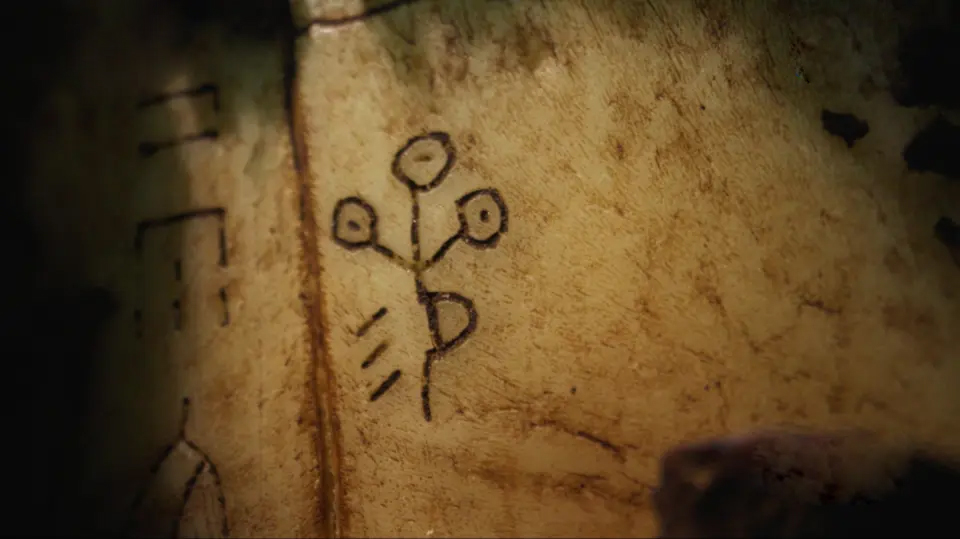
Ginseng seems to have many magical connections with humans. Its seeds fall to the ground and germinate, just like the cycle of human life, which is about 280 days. When it needs to save energy for self-repair, it will choose to sleep.
As early as more than 2,000 years ago, the "Shennong's Herbal Classic" of the Han Dynasty recorded that ginseng can nourish the heart, liver, spleen, lungs, and kidneys, and has the effects of improving eyesight and calming the mind, resisting fatigue, and resisting aging. From the perspective of medicinal value, ginseng is the well-deserved "king of herbs".
"There are ginseng below and purple air above." Why is there such a fairy-tale-like saying?
Changbai Mountain is the authentic production area of ginseng. Ginseng grows on the slopes of mountains and forests at an altitude of 500 to 1,100 meters, with tall coniferous and broad-leaved mixed trees as the top, medium-height shrubs as the waist, and herbs taller than ginseng as the bottom. Multiple layers of ecological barriers are intertwined and densely covered, and only ultraviolet and infrared rays with strong penetrating power provide the necessary lighting conditions for ginseng. Nature generously created a giant greenhouse 128 kilometers long and 88 kilometers wide for the "king of herbs".
Legend has it that the club bird can help people find ginseng, but according to the big data statistics of the fourth national survey of Chinese medicine resources, it is not birds that like ginseng, but alpine chipmunks living in the big forests of Changbai Mountain.
At the end of July and the beginning of August every year, pine nuts are not yet ripe, but ginseng has grown red fruits. Chipmunks will use the cheek pouches on both sides of their mouths to steal a large number of ginseng fruits and build "granaries" near the caves. When ginseng seeds encounter suitable natural conditions, ginseng seedlings will grow.
According to expert statistics, in the mid-20th century, the annual output of wild ginseng in the Changbai Mountain authentic production area declined from 100,000 jin in the late Ming and early Qing dynasties to less than 200 kilograms per year, and wild ginseng was almost extinct.
After the founding of New China, four national surveys of Chinese medicine resources were carried out to explore the Chinese medicine resources existing on every inch of land in China, providing an important basis for the protection, development and rational use of Chinese medicine resources.
In 2012, ginseng was included in the list of medicine and food by the state, and it was detailed that ginseng of 5 years and below can be eaten, and ginseng of more than 5 years is used as medicine. Since then, ginseng has entered the homes of ordinary people and has become a good health product.
China is the main production area of ginseng, and now it is also the country with the largest ginseng trading volume in the world. During the peak season of ginseng trading, people in the ginseng trading market in Changbai Mountain area will bring out the best ginseng to compete with each other. Ginseng has driven the development of related industries and helped rural revitalization and environmental protection.
Treatment of neurasthenia and mental illness: Ginseng can regulate the central nervous system and treat neurasthenia. For patients with excitatory neurasthenia, it is often paired with Polygala and Ziziphus jujuba seeds; for patients with depression, it is often paired with Scutellaria baicalensis and Dragon Bone; for patients with autonomic dysfunction and spontaneous sweating, it is paired with Schisandra chinensis, White Peony Root, and Floating Wheat. After taking ginseng, patients can reduce or eliminate symptoms such as headache, palpitations, insomnia, forgetfulness, and general weakness, and gain weight. Ginseng is also effective for asthenic and depressive mental illness, schizophrenia, mental illness caused by poisoning or infectious diseases, and degenerative mental illness. Ginseng can also improve people's memory, improve work efficiency, enhance physical endurance and the accuracy of motor organs.
Treatment of cardiovascular diseases: Ginseng can improve the contraction ability and frequency of the heart, excite the heart, speed up blood flow, promote metabolism in the body, and then adjust the body's nutritional status, slow down physical decline, and enhance resistance. Ginseng saponins can activate phospholipid protease and promote the biosynthesis of phospholipids, thereby preventing coronary artery and aorta atherosclerosis. Ginseng has a certain effect on various heart diseases (coronary heart disease, angina pectoris, myocardial malnutrition, etc.) and anemia.
Treatment of diabetes: Ginseng can stimulate the secretion function of the endocrine system, enhance the function of the pituitary adrenal cortex system, and has the effect of lowering blood sugar. Taking ginseng can reduce urine sugar in patients with mild diabetes, improve the systemic symptoms of patients with moderate diabetes, and eliminate or alleviate symptoms such as thirst, sweating, and weakness. Taking ginseng can also reduce the amount of insulin used.
Treatment of sexual dysfunction: Ginseng can significantly enhance sexual function, which is called strengthening the essence and nourishing the kidney in traditional Chinese medicine. Ginseng has significant effects on paralysis-type and premature ejaculation-type impotence, and is also effective for cortical and spinal impotence caused by neurasthenia (not effective for mental impotence). Ginseng can improve sperm motility and can treat azoospermia and asthenozoospermia.
Treatment of digestive system diseases such as stomach and liver: Ginseng can promote the secretion of digestive juice, increase the total acidity of gastric juice, improve the symptoms of spleen and stomach weakness such as upper abdominal distension, diarrhea, vomiting, etc., make stomach pain disappear, increase appetite, and normalize bowel movements. For example, ginseng is combined with other Chinese medicines to make Sijunzi Decoction. Ginseng can also promote the synthesis of liver protein and nucleic acid, and can prevent acute hepatitis from turning into chronic hepatitis.
Enhance human immunity and assist in the treatment of cancer: Ginseng can improve the body's resistance to cancer cells, improve the patient's physical condition, prevent cancer cell metastasis, and delay tumor growth and the expansion of cancer lesions. Ginseng can also prevent leukopenia caused by anticancer drugs.
Enhance the hematopoietic function of bones: Ginseng can promote the metabolism of RNA, DNA, protein, cholesterol, fat and sugar, promote the mitosis of bone marrow cells, increase the number of red blood cells, white blood cells and nucleated cells in the blood, and thus enhance the hematopoietic function of the bone marrow. Ginseng can protect against radiation damage to the bone marrow.
Surgery: Ginseng juice, leaves and powder can promote the rapid healing of wounds and ulcers. Ginseng paste has anti-inflammatory and detumescent effects.
Greatly replenish vital energy: suitable for vital energy exhaustion. a. Qi deficiency and exhaustion, symptoms include pale complexion, palpitations, uneasy sweating, and weak pulse. b. Qi exhaustion and loss of yang, the above symptoms are accompanied by cold sweat and cold limbs. It is often used with aconite.
Tonify the spleen and lungs: It can treat spleen and lung qi deficiency. a. Weak spleen and stomach, poor appetite and loose stools, fatigue and weakness, vomiting and diarrhea, pale tongue and slow pulse. b. Lung Qi deficiency, cough, asthma, fatigue, worse with movement, spontaneous sweating, weak pulse, easy to catch cold.
Producing fluid and quenching thirst: used for thirst caused by fluid damage and thirst. a. Thirst caused by fluid damage, heat damage to Qi and Yin, fever, thirst, sweating, fatigue, weak pulse, often used with gypsum and Rhizoma Anemarrhenae. b. Internal heat and thirst, constant thirst, weak pulse, belong to internal heat and insufficient Qi and Yin. Often used with Yin-nourishing and heat-clearing drugs.
Calming the mind and increasing intelligence: Mainly used to treat restlessness, insomnia and forgetfulness caused by insufficient Qi and blood, often used with heart-nourishing and calming drugs. In addition, it can also be used to treat blood deficiency, impotence and deficiency of the body due to evil, all of which take the function of this product to produce blood, strengthen the body due to Qi and Yang, and strengthen the body and eliminate evil.


