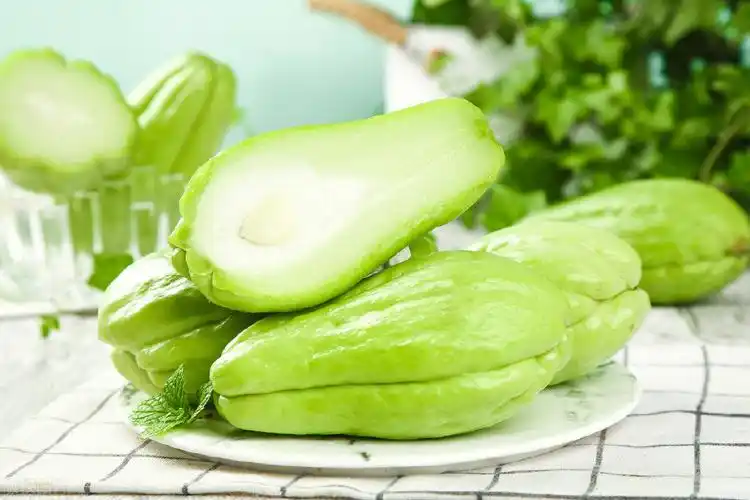
Because it contains a variety of nutrients that maintain heart health, it is also known as the "heart umbrella", which is very suitable for people with heart disease and high blood pressure:
1.High blood pressure reducer - potassium
The potassium content in chayote is as high as 170 mg. It is a high-potassium and low-sodium vegetable. Eating chayote regularly can help us regulate the sodium level in the body, thereby reducing the sodium content in the blood, helping to dilate blood vessels, stabilize blood pressure, and reduce the burden on the heart. It is a health vegetable for patients with cardiovascular disease and kidney disease.
2.Longevity element - selenium
Chayote is rich in selenium, with 30-53 micrograms of selenium per 100 grams. It is called the "selenium library in vegetables" and has a higher selenium content than loofah, bitter melon and other melons. Selenium is a famous "anti-cancer element" and an essential trace element for the human body. It has a strong antioxidant function and enhances the ability of immune cells to identify and eliminate cancer cells. It participates in regulating thyroid function, metabolism, blood circulation, and can also maintain normal immune function.
3.Accelerate metabolism - vitamin B2, vitamin B9
The vitamin B2 content of chayote is higher among fruits and vegetables, at 0.1 mg/100 g, which is 2.5 times that of watermelon and 5 times that of apple. Bitter melon is only 0.03 mg/100 g. It can promote the development of the body and the regeneration of cells, while maintaining the level of reduced glutathione in the body and protecting the liver. Chayote is rich in folic acid (vitamin B9), which is nearly 15 times that of apple. Adequate intake of folic acid can not only promote metabolism in the body and enhance resistance, but also help prevent atherosclerosis and cardiovascular diseases.
4.Lubricating the intestines and facilitating bowel movements - dietary fiber
Among many "melons", the dietary fiber content of chayote is also good, which is 6 times that of watermelon and cantaloupe, 2.4 times that of cucumber, and 1.5 times that of papaya and honeydew melon. This is very helpful in enhancing satiety, promoting gastrointestinal motility, and maintaining intestinal health.
5.Strengthen immunity - calcium, iron, zinc
Chayote has high content of calcium, iron and zinc, which are involved in the formation of many enzymes in the human body. When the body lacks these enzymes, it can lead to different degrees of weakening and disorder of immune function. Therefore, eating chayote regularly can regulate the body's immune function.
In the eyes of Chinese medicine practitioners, chayote is a Chinese medicine with many functions such as regulating qi and middle qi, soothing the liver and relieving cough. "Southern Fujian Folk Chinese Herbal Medicine" records that it "soothes the liver and regulates qi, harmonizes the middle qi and resolves phlegm, promotes qi and relieves pain, and opens the chest and relieves diaphragm." Chayote has a certain therapeutic effect on indigestion, thick and greasy tongue coating, chest tightness and bloating, vomiting and coughing, and nervous stomach pain.
There are many ways to eat chayote. Fresh melon can be sliced or shredded, stir-fried with meat or vegetables, cold salad, soup, hot pot, and dumpling filling. Common home cooking methods include chayote fried eggs, cold chayote, stir-fried chayote, chayote fried shrimp, etc. However, since chayote is a warm food, people with yin deficiency, body heat, and weak constitution should eat less.
It is rumored that chayote can cause cancer because chayote will produce carcinogen acrylamide after high-temperature frying. Therefore, it is rumored that chayote should never be eaten. It is undeniable that chayote does produce acrylamide after high-temperature cooking. This is because the Maillard reaction occurs during the frying process, thus forming acrylamide, but the content is extremely low.
"Food and Chemical Toxicology" points out that the upper limit of safe intake of acrylamide for carcinogenicity is 2.6μg/kg. For example, for a person weighing 60kg, the upper limit of safe intake is 156μg, which means that he needs to eat more than ten kilograms of stir-fried chayote in one go. The amount that ordinary people eat on a daily basis is far from reaching the upper limit and will not harm their health.
Although acrylamide is a neurotoxic substance, it is identified as a Class 2A carcinogen by the World Health Organization. But acrylamide is not that scary. Class 2A carcinogens mean that its carcinogenicity to the human body is still unclear. Therefore, there is no need to worry too much. Normal consumption of chayote does not cause cancer.
First, look at the appearance. The skin of fresh chayote is tender, smooth and free of foreign matter, and the longitudinal grooves are shallow.
The second is to look at the hardness. Pinch it with your hands. If it is relatively hard, it means that the chayote has more water and the flesh is relatively full and full.
The third is to smell the smell. Fresh chayote will have a fragrant fruity smell.


