Wolfberry, soaked in water and boiled in soup, has become the "hottest" in the health industry today. As a tonic medicine that has been passed down for thousands of years, the leaves are collected in spring, the flowers are collected in summer, the seeds are collected in autumn, and the roots are collected in winter... a plant is full of treasures. What are the effects of wolfberry? What kind of environment has created this unique medicinal variety? Let's explore the little-known secrets of wolfberry together.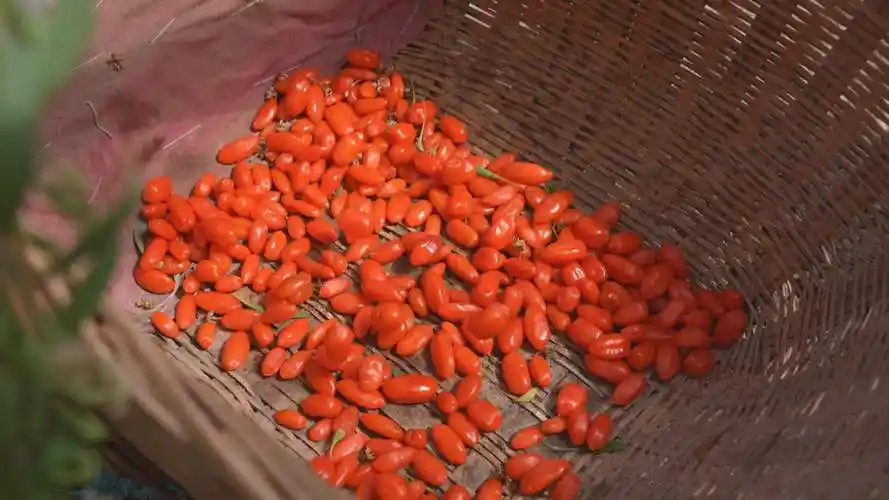
Wolfberry is a perennial woody plant. Fresh wolfberry fruit looks like a pocket tomato. If you cut it horizontally and magnify it, it is easy to mistake it for a red pepper. That's because they are indeed "close relatives" and belong to the Solanaceae family. Eggplant also belongs to the Solanaceae family. What is unexpected is that wolfberry, pepper, and eggplant all have medicinal value, but why is only wolfberry considered to be able to take on the responsibility of health preservation? There are about 80 species of Lycium barbarum in the world, distributed in six continents except Antarctica, but the only Chinese medicinal resource of Lycium barbarum recorded in the current "Chinese Pharmacopoeia" is Ningxia Lycium barbarum.
Zhongning, Zhongwei, Ningxia, is the authentic production area of Lycium barbarum. The average altitude here is high, and the annual evaporation is ten times the precipitation. The Qingshui River flows through here with a large amount of saline, gypsum and minerals. Lycium barbarum has a unique root system and can survive in a saline environment. It can also absorb minerals from the river water and turn them into its own medicinal ingredients. This unique geographical environment breeds high-quality medicinal Lycium barbarum.
Polysaccharides: Natural active substances, can enhance human immunity. The easiest way to judge the amount of Lycium barbarum polysaccharides is to soak it in water directly. Lycium barbarum with high polysaccharide content tends to float on water. If it sinks to the bottom of the cup, it means that it contains more monosaccharides that have not been synthesized into polysaccharides. Most of the nutrients in wolfberry are water-soluble, so "soaking wolfberry in a thermos cup" is not just a buzzword on the Internet, it is indeed one of the effective ways to obtain the nutrition of wolfberry. Of course, if you want to absorb all the medicinal effects of wolfberry, it is best to eat the soaked wolfberry together.
Betaine: The chemical name is 1-carboxyl-N, N, N-trimethylaminoethyl lactone, which is similar to amino acids in chemical structure and belongs to the quaternary ammonium base class. Betaine is one of the main alkaloids in wolfberry fruit, leaves, and petioles. The effect of wolfberry on lipid metabolism or anti-fatty liver is mainly caused by the betaine it contains, which acts as a methyl donor in the body. Research on wolfberry betaine is limited to the determination of content, extraction process and physiological effects on wolfberry plants (enhancing salt tolerance) in China. There are few studies on the pharmacological and pharmacological effects of wolfberry betaine.
Wolfberry pigment: Wolfberry pigment is a variety of coloring substances present in wolfberry berries and is an important physiologically active component of wolfberry seeds. It mainly includes ~ carotene, lutein and other colored substances. The carotenoids contained in wolfberry have very important medicinal value. Many studies have proved that wolfberry seed pigments have the effects of improving human immune function, preventing and inhibiting tumors, and preventing atherosclerosis. Carotene is the main active ingredient of wolfberry pigments, which has important physiological functions such as anti-oxidation and as a synthetic precursor of vitamin A.
As a Chinese medicinal material with both medicinal and edible origins, wolfberry now has a variety of uses. In the eight-treasure tea that is indispensable for Ningxia people's breakfast, sesame crisps, rose fragrance, longan warmth... How to match the eight treasures, everyone has their own preferences. But what is indispensable is the local wolfberry in Ningxia, which not only adds a sweet flavor to the eight-treasure tea, but also conquers diners with a simple preparation method.
In addition to sweet wolfberries, the fourth national survey of Chinese medicine resources also discovered a new species of wolfberry-Tibetan bitter wolfberry. Now the scientifically cultivated bitter wolfberry has a survival rate of over 90% in Ningxia and has also produced fruits.


