Why Does Roasting Affect the Flavor of Coffee?
By Barista
October 6th, 2025
379 views
Roasting can maximize or diminish the inherent characteristics of coffee beans. Many chemical reactions occur during the roasting process, which in turn alter or transform the flavor compounds in coffee. We are grateful for this gift. If you grind raw coffee beans into a powder and brew it, you will get a coffee with herbal notes and astringency.
Roasting can maximize or diminish the inherent characteristics of coffee beans. Many chemical reactions occur during the roasting process, which in turn alter or transform the flavor compounds in coffee. We are grateful for this gift. If you grind raw coffee beans into a powder and brew it, you will get a coffee with herbal notes and astringency. Roasting transforms the compounds in coffee beans into pleasant flavors and makes the beans more soluble, allowing us to extract flavor compounds when brewing coffee with water. In fact, about 200 volatile compounds in raw coffee beans are converted into over 1,000 volatile compounds after roasting.
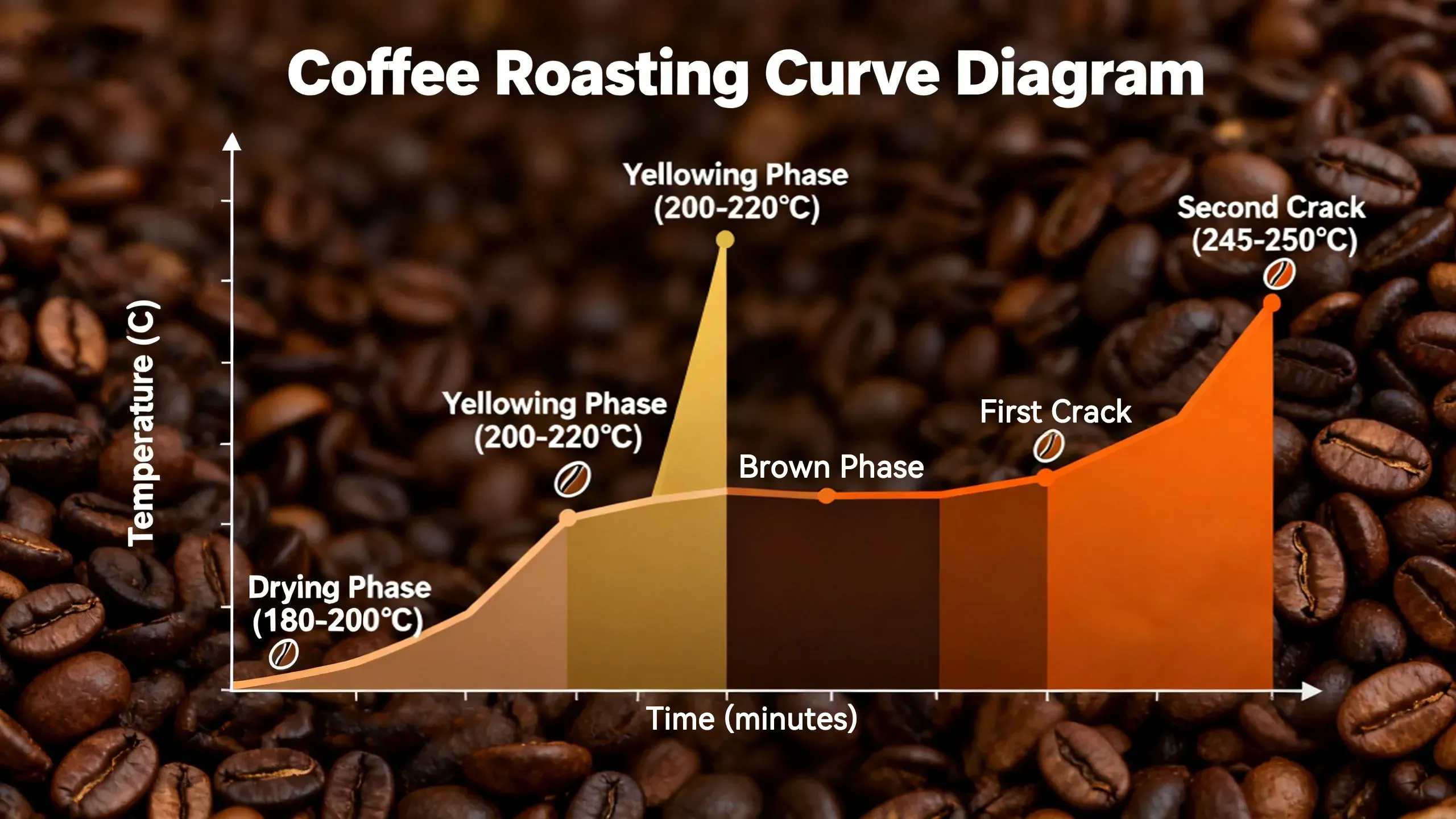
After roasting, trigonelline and caffeine remain almost intact, but sugars, amino acids, polysaccharides, and chlorogenic acids decrease significantly, while lipids and organic acids increase slightly. Many compounds change through heat-induced reactions, one of which is the Maillard reaction—the same reaction that creates the delicious browned flavors in cooked vegetables and meats. According to a scientific paper, the molecular products of the Maillard reaction (called "melanoidins") are largely of 'unknown structure.' We only know that this reaction produces large amounts of carbon dioxide and a range of volatile compounds, forming the unique aroma of coffee (thus affecting its flavor) and giving coffee its brown color.
In the roasting curve, time and temperature affect the flavor of coffee. But remember: roasting cannot magically make a coffee bean acquire flavor characteristics it does not naturally possess. Even the most skilled roaster cannot turn low-quality coffee into high-quality coffee solely through roasting. However, a roaster can suppress the potential flavors of coffee beans.
Generally speaking, coffee beans roasted at lower temperatures for a shorter period (usually called "light" and "medium" roasts) highlight the bean's natural characteristics. They have complex aromas and flavors, meaning you can smell and taste multiple flavor notes simultaneously, ranging from fruity and floral to nutty and chocolatey. Coffee roasted at higher temperatures for longer periods (usually called "dark roast") tends to emphasize the extreme flavors produced by the roasting process itself, such as 'burnt/acrid, ash/smoky, sour, pungent, coffee, and roasted' notes. These roasting flavors often overshadow the natural flavors of the coffee bean.
If you want to develop your palate and explore a wide variety of coffee flavors, drinking only dark roast coffee is far from enough. Traditional coffee roasting companies tend to favor dark roasts. What about that very popular coffee company? Compared to roasting with modern techniques that preserve the beans' original characteristics, their 'golden roast' is at best a medium-dark roast. Of course, which coffee you like is a matter of personal preference. But if you want to experience various flavors, you need to try coffee roasted using different techniques.
Each country has its own coffee preferences. Generally, France and Italy tend to produce traditionally roasted coffee. The United States, the United Kingdom, Australia, Japan, and some Nordic countries are developing a coffee culture around modern roasting techniques, but that is just the tip of the iceberg.
Previous
Why Do the Origin and Processing Methods Affect the Flavor of Coffee?
Read More
Next
Why Do Brewing and Drinking Methods Affect the Flavor of Coffee?
Read More


